

GOST Certified Manual Brick Machine Manufacturer for Sale
GOST certification no longer exists as a standalone document for machinery exports to the Eurasian Economic Union.
To legally export a manual brick machine to Russia, Kazakhstan, Belarus, or Armenia, you must obtain an EAC Declaration of Conformity under the relevant Technical Regulations of the Customs Union (TR CU). The term "GOST" is now colloquially used to refer to this EAC compliance process, but customs authorities strictly require the EAC mark and valid declaration number on both the commercial invoice and the equipment nameplate.
I still remember the smell of hydraulic oil and wet concrete dust in the assembly workshop in Linyi. Back then, my job was tightening bolts on QT series frames, not worrying about paperwork. But when I moved to the export desk, the reality of international trade hit hard. One shipment to a port in Central Asia was held up because the serial number on the certificate differed by a single digit from the steel plate riveted to the machine frame. The container sat idle while we scrambled to verify the discrepancy. That delay cost more than the profit margin on that single unit. It taught me that for a GOST certified manual brick machine manufacturer for sale, the technical documentation is just as critical as the hydraulic pressure settings.
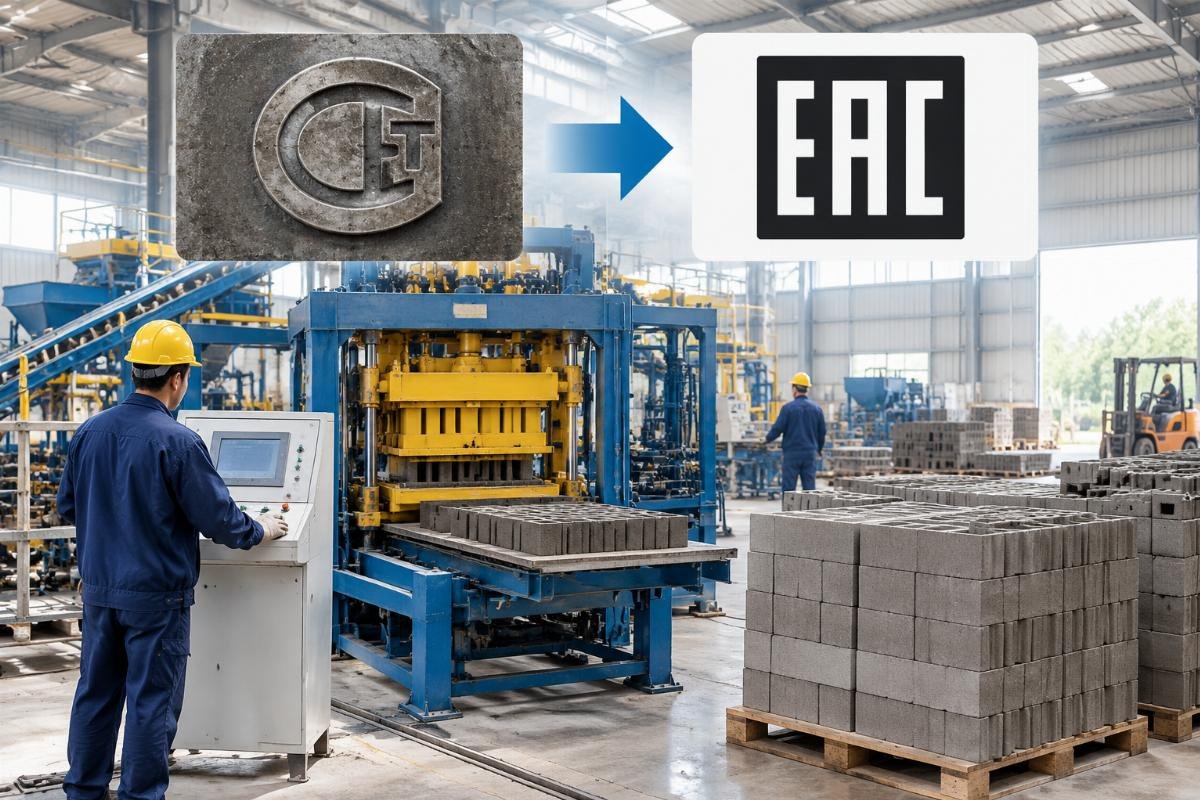
Understanding this shift is vital for any buyer looking to import construction equipment into the CIS region. The regulatory landscape has changed, and relying on outdated advice can lead to seized cargo.
Is GOST Still Valid for Brick Machines?
The short answer is no, not in the way most exporters think.
Many buyers still ask for a "GOST certificate" because that was the standard for decades. However, since the formation of the Eurasian Economic Union (EAEU), the national GOST standards of individual member states have been largely replaced by unified Technical Regulations (TR CU). For machinery like block makers, this means compliance is governed by supranational rules rather than local Russian or Kazakh decrees [NEED_CITE: history of GOST to EAC transition in EAEU member states].
The confusion arises because the technical requirements within the TR CU often reference specific GOST standards for testing methods. So, while you are technically getting an EAC Declaration, the lab tests might still follow GOST protocols. This nuance is where many non-specialized suppliers fail. They provide a generic quality certificate instead of the mandatory safety declaration.
When sourcing from a GOST certified manual brick machine manufacturer for sale, you need to ensure they understand this distinction. A simple ISO 9001 certificate is not sufficient for customs clearance in Moscow or Minsk. The equipment must bear the EAC mark, which looks similar to the CE mark but is legally distinct and mandatory for the Eurasian market.
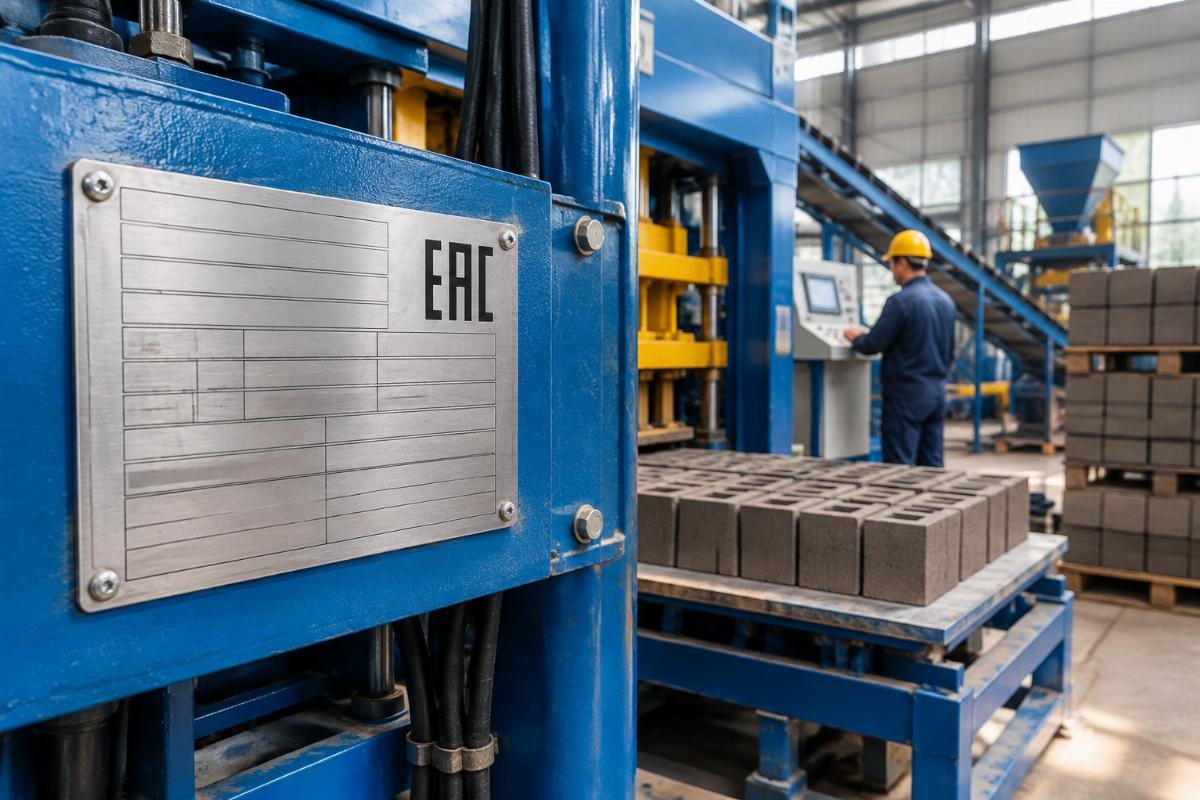
Failure to recognize this transition leads to the most common pitfall: assuming that CE certification covers the CIS region. It does not. The European CE mark and the Eurasian EAC mark are parallel systems with different technical directives. A machine compliant with EU machinery directives may still lack specific safety features required by TR CU regulations, such as particular emergency stop configurations or guarding standards unique to the Eurasian bloc.
Which Technical Regulations Apply?
Identifying the correct Technical Regulation is the first step in avoiding classification errors.
For manual and semi-automatic block machines, the primary regulation is usually TR CU 010/2011 "On Safety of Machinery and Equipment." This regulation covers the mechanical safety aspects, ensuring that moving parts are guarded and that the machine does not pose a risk to the operator during normal use.
However, if the brick machine includes electrical components, such as motors, control panels, or PLCs, it may also fall under TR CU 004/2011 "On Safety of Low-Voltage Equipment" and TR CU 020/2011 "Electromagnetic Compatibility of Technical Means." This is where the complexity increases. A purely manual lever-operated machine might only need TR CU 010, but a semi-auto model with an electric vibrator motor triggers additional requirements.
| Component Type | Applicable TR CU Regulation | Documentation Requirement |
|---|---|---|
| Mechanical Structure Only | TR CU 010/2011 | Declaration of Conformity |
| With Electric Motor (<1000V) | TR CU 010 + TR CU 004 | Combined Declaration or Separate Certs |
| With Electronic Control Unit | TR CU 010 + TR CU 020 | Full Technical File Audit |
Sourcing from a knowledgeable GOST certified manual brick machine manufacturer for sale ensures that these overlapping regulations are handled correctly. If a supplier treats a semi-automatic machine as purely mechanical, the electrical components will be flagged at customs, leading to delays or fines.
I once reviewed a technical file where the supplier had listed the machine under a HS code for "hand tools" to avoid the stricter machinery regulations. This misclassification is dangerous. Customs officers in the EAEU are trained to look for motorized equipment disguised as manual tools. The duty rate difference is significant, but the penalty for misdeclaration is far worse, often involving the confiscation of the goods.
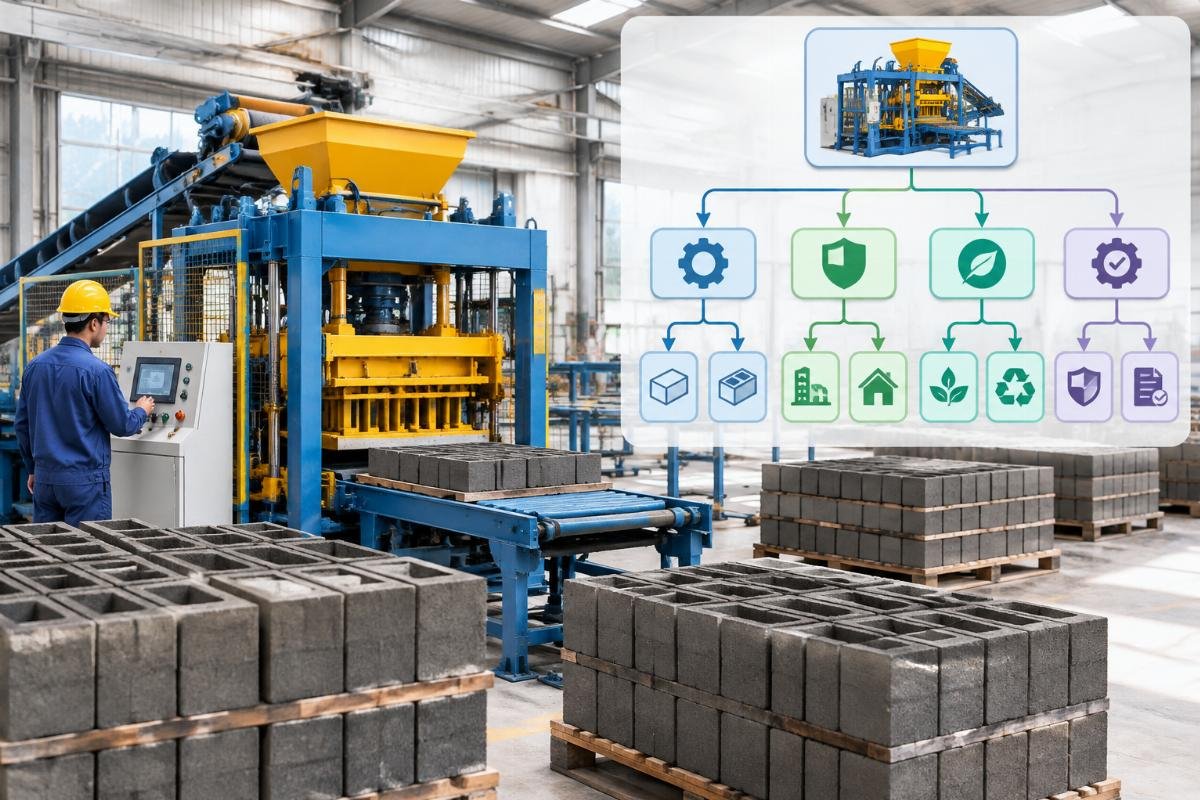
Common Documentation Pitfalls
Minor inconsistencies in paperwork cause the majority of customs delays.
The most frequent issue I encounter is the mismatch between the physical nameplate and the certificate. The EAC declaration must list the exact model name, serial number range, and manufacturer details as they appear on the machine. If the certificate says "QT4-15" but the nameplate reads "QT4-15A," customs may reject the document. This seems trivial, but bureaucratic rigidity in CIS countries is high.
Another critical pitfall is the language of the technical documentation. The operation manual, passport, and safety instructions must be in Russian or the official language of the importing country (e.g., Kazakh for Kazakhstan). English-only manuals are not accepted for final clearance. Many exporters translate these documents using automated tools, resulting in nonsensical technical terms that confuse inspectors and raise suspicions about the product’s origin and safety.
When evaluating a GOST certified manual brick machine manufacturer for sale, ask to see a sample of their Russian-language technical passport. Check if the terminology is accurate. Does it use the correct terms for hydraulic pressure, mold vibration frequency, and maintenance intervals? Poor translation suggests a lack of attention to detail that likely extends to the manufacturing process itself.
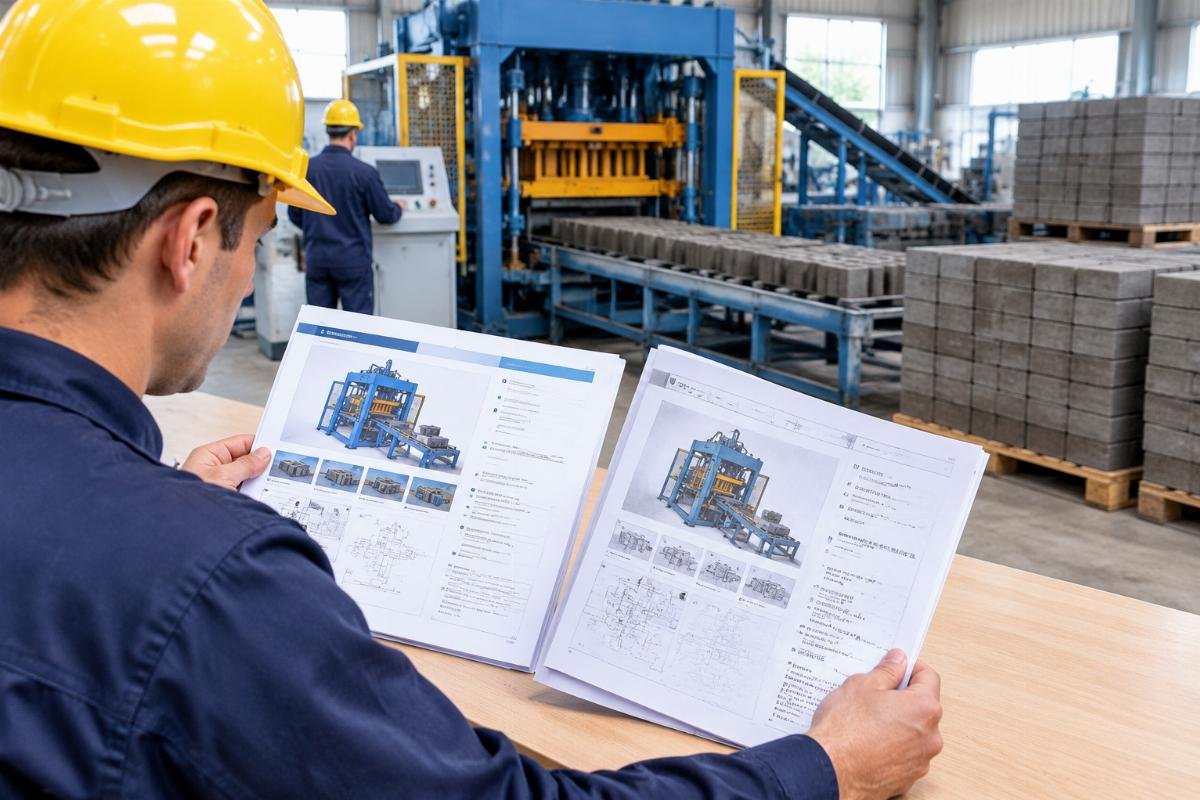
Additionally, the contract specifications must align with the certificate. If the sales contract lists optional accessories that are not included in the certified scope, it can create discrepancies. The safest approach is to ensure the certificate covers the base machine and all standard configurations exported to the region.
How to Verify Your Supplier’s Certificate?
Trust but verify using the official EAEU registry.
Fake certificates are a persistent problem in international trade. Some unethical suppliers generate PDF documents that look authentic but have no backing in the official database. To protect your investment, you must independently verify the certificate number.
The Eurasian Economic Commission maintains a public registry of issued declarations and certificates. You can search by the certificate number or the applicant’s name. If the certificate does not appear in the registry, it is invalid. This step takes minutes but saves weeks of potential headache.
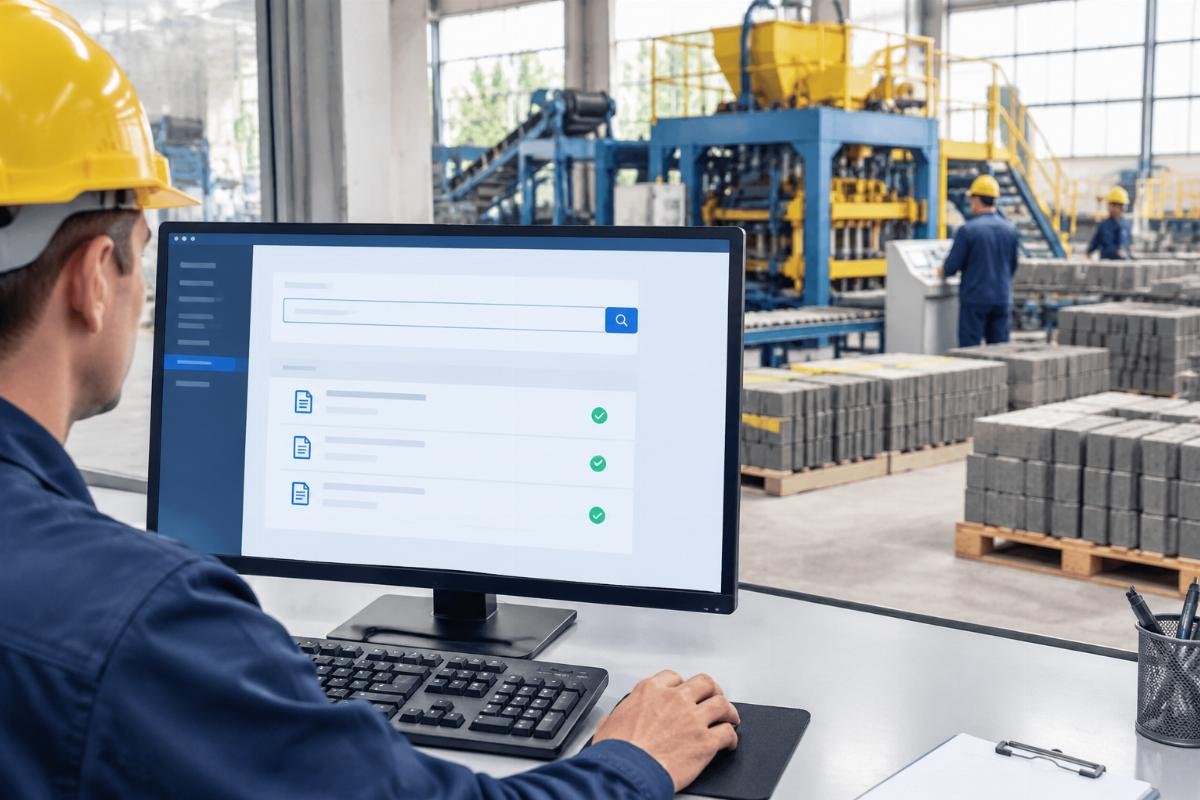
When dealing with a GOST certified manual brick machine manufacturer for sale, request the scan of the original declaration and the registration number. Perform the check yourself. Do not rely on the supplier’s assurance that "it is registered." Also, check the validity period. EAC declarations have a fixed lifespan, typically one to five years depending on the production scheme chosen. Ensure the certificate is currently valid and covers the production date of your specific unit.
Another red flag is the certification body. Not all agencies are accredited to issue declarations for machinery. Verify that the issuing body is accredited by the EAEU member states. An certificate issued by a non-accredited entity is worthless at the border.
Ensuring Smooth Customs Clearance
Alignment between commercial invoices and certification details is key.
Even with a valid EAC certificate, clearance can stall if the commercial invoice does not mirror the certificate’s data. The description of goods on the invoice should match the product name in the declaration. Include the certificate number and date on the invoice itself. This proactive step helps customs officers quickly cross-reference documents.
Pre-shipment inspection is also advisable. Before the machine leaves the factory, verify that the EAC mark is permanently affixed to the equipment. It should be durable and visible. Also, ensure that the Russian-language manual and warranty card are packed inside the crate or attached to the machine. Missing documents upon arrival mean the cargo cannot be cleared until replacements are sent, incurring storage fees.
Working with an experienced GOST certified manual brick machine manufacturer for sale simplifies this process. They should offer pre-verified technical files and nameplate customization to match the certificate exactly. This level of service indicates a supplier who understands the end-to-end logistics of exporting to the CIS region, not just the manufacturing aspect.
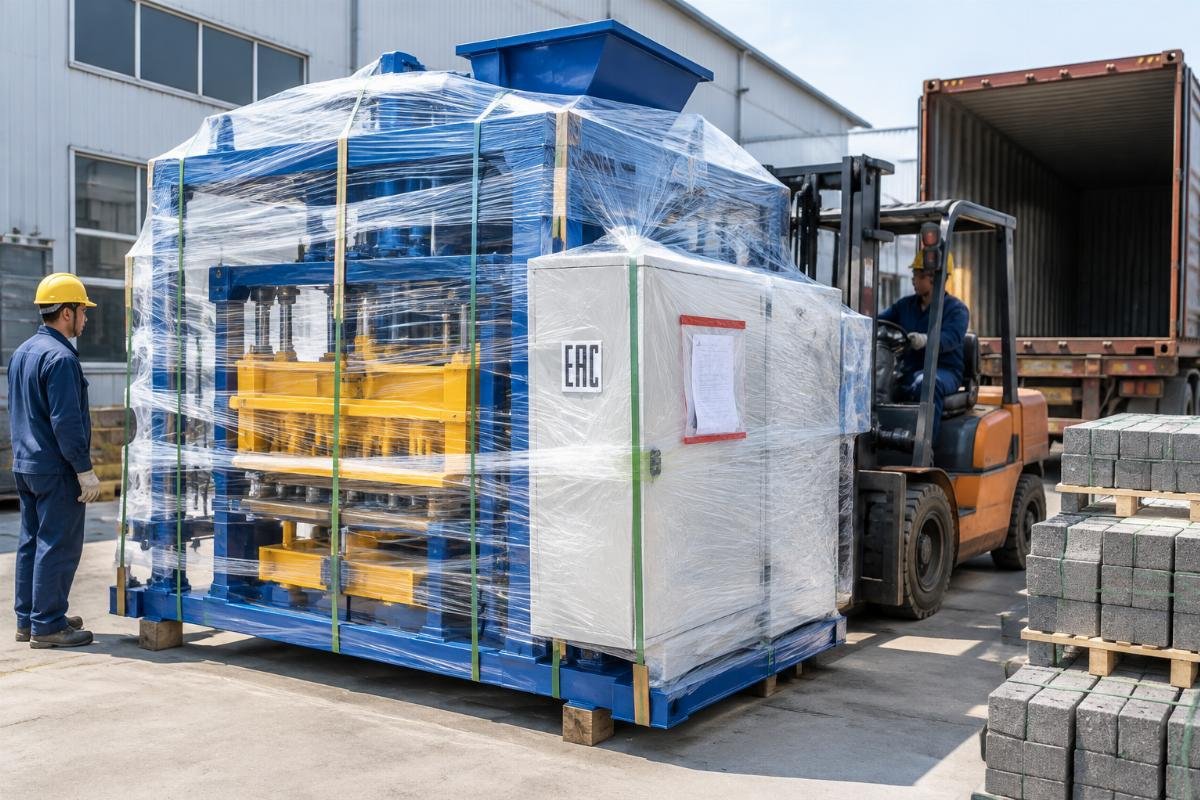
By focusing on these details, you mitigate the risk of delays. The goal is not just to buy a machine, but to ensure it arrives at your site ready for installation and operation. Compliance is not a barrier; it is a pathway to smooth market entry.
Conclusion
Compliance with EAC regulations is non-negotiable for exporting brick machines to the CIS region.
Success depends on accurate technical documentation, correct HS code classification, and strict alignment between physical markings and paper certificates. Buyers must verify certificates through official registries and ensure all manuals are properly translated. Partnering with a supplier who prioritizes these regulatory details ensures a seamless delivery and faster project startup.

Industry expert sharing insights about concrete machinery, block making technology and turnkey production solutions.
View all posts →

Leave a Reply