

Manual Brick Machine for Multi-Site AAC Block Production
Automation is not always the answer for emerging market contractors.
For investors targeting affordable housing projects across dispersed locations in Latin America and Africa, standardizing on a manual brick machine offers superior risk management compared to high-capacity automated lines. This approach minimizes single-point failure risks, eliminates dependency on unstable grid power, and allows for rapid deployment of production units directly at remote construction sites, ensuring consistent material supply without the logistical burden of long-distance transport.
I still remember the humidity sticking to my shirt as I stood on the dock in Veracruz, watching a container swing open. The client, a mid-sized contractor expanding into rural housing, had just received his shipment. He wasn’t looking for a museum piece; he needed twenty workers to start producing blocks immediately. When a hydraulic cylinder on a semi-automatic unit leaked during the initial test, the entire site fell silent. The cost wasn’t just the repair part; it was the idle wages of two dozen laborers and the delayed concrete pour for the foundation. That moment clarified why many seasoned operators in these regions prefer robust, mechanically simple equipment over complex electronic systems. [NEED_CITE: impact of equipment downtime on labor costs in construction projects]
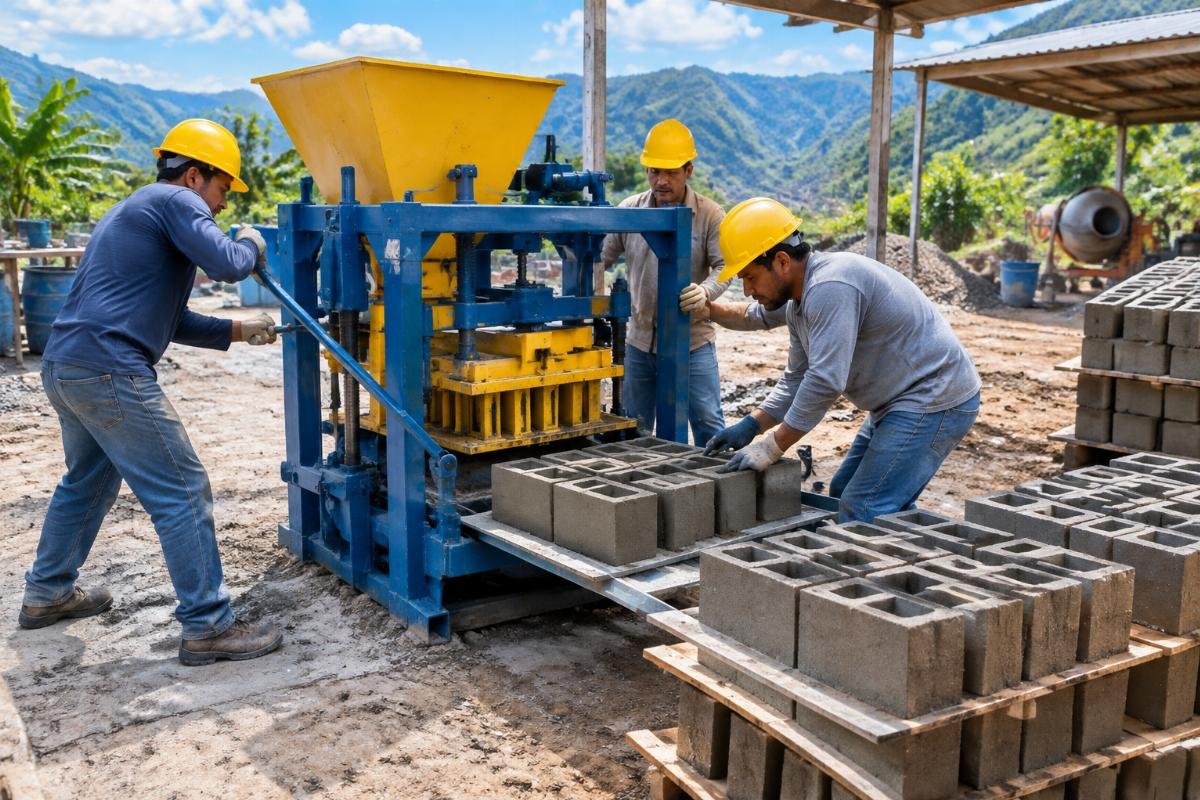
The logic is straightforward. When your project spans multiple villages or distant plots, moving a massive automated plant is impossible. You need equipment that fits in a pickup truck, runs on human power or small generators, and can be fixed with basic tools. This is where the strategic value of a manual brick machine becomes clear. It transforms production from a centralized bottleneck into a distributed asset.
Why Choose Manual Machines for Multi-Site Expansion?
Flexibility and low capital expenditure allow for rapid deployment in areas with limited infrastructure.
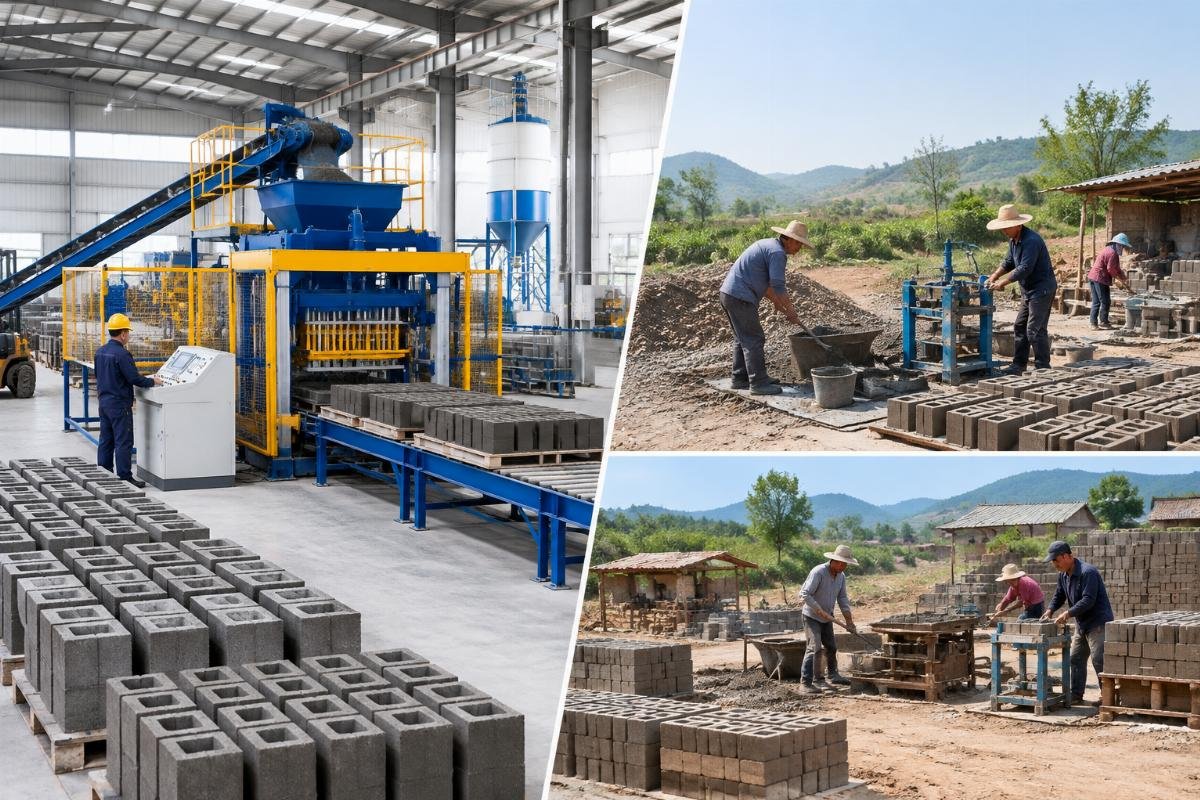
In many developing regions, the greatest challenge isn’t the demand for blocks, but the logistics of getting them to the point of use. Transporting heavy concrete blocks over poor roads consumes fuel and time, often exceeding the production cost itself. By deploying smaller, mobile production units, contractors can produce materials exactly where they are needed.
Consider a housing project in East Africa that required simultaneous construction in five different rural communities. Using a single large automated plant would have meant transporting thousands of blocks daily over unpaved roads, leading to high breakage rates and delivery delays. Instead, the project manager deployed compact manual units to each site. These machines required no three-phase power, relying instead on local labor for operation. The result was a significant reduction in transport costs and a steady supply of fresh blocks for each masonry team. [NEED_CITE: logistics cost analysis for concrete block distribution in remote areas]
| Feature | Centralized Automated Plant | Distributed Manual Units |
|---|---|---|
| Power Requirement | High (Three-phase industrial grid) | Low/None (Human or small generator) |
| Mobility | Low (Requires heavy lifting equipment) | High (Can be moved by light truck) |
| Initial Investment | Very High | Low |
| Maintenance Complexity | High (Requires specialized technicians) | Low (Basic mechanical knowledge) |
| Production Location | Single fixed site | Multiple dispersed sites |
This model also lowers the barrier to entry for local entrepreneurs. A community leader can start a small production hub with minimal financing, creating local jobs while supplying nearby projects. The manual brick machine serves as the core of this decentralized economy, providing a reliable tool that does not demand sophisticated technical support.
The Hidden Cost of Downtime in Emerging Markets
Local repair capabilities and spare parts logistics outweigh theoretical maximum output.
It is a common misconception that higher hourly output equals higher profitability. In reality, for small to medium enterprises, consistency is more valuable than peak speed. An automated line might produce thousands of blocks per hour, but if a sensor fails and the only replacement part is weeks away by air freight, the entire operation halts.
I recall a client in Colombia who faced this exact scenario. His advanced semi-automatic line stopped due to a minor electrical fault. The local technician could not diagnose the PLC error, and the manufacturer’s support team was in a different time zone. The machine sat idle for days. In contrast, a neighbor using a simpler manual setup continued production without interruption. When a wear part broke on the manual unit, the local welder fabricated a temporary fix within hours, keeping the workflow alive. [NEED_CITE: average response time for technical support in emerging markets]
The key insight here is that the "cost" of a machine includes not just its purchase price, but the risk of stoppage. Manual machines have fewer components that can fail. There are no sensitive sensors, complex wiring harnesses, or proprietary software to troubleshoot. If a lever bends, it can be straightened. If a mold wears out, it can be replaced with locally sourced steel. This resilience is critical in regions where supply chains are fragile.
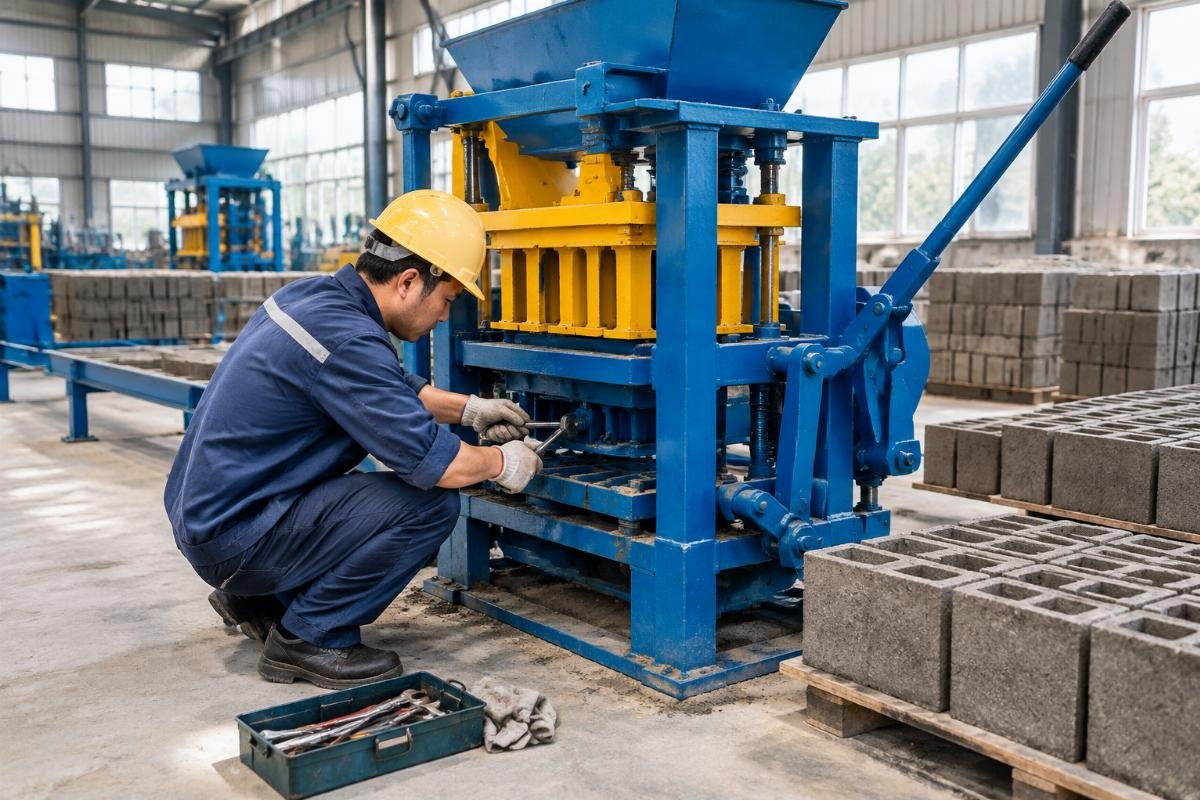
Furthermore, the availability of spare parts is a major factor. For complex automated systems, spare parts are often proprietary and must be shipped from the manufacturer’s home country. For manual units, most wearing parts are standard mechanical components available in local hardware stores. This independence from global logistics networks provides a layer of security that automated systems cannot match.
Standardizing Operations Across Dispersed Sites
Uniform training and simple mechanical designs reduce skill gaps among local workers.
When operating across multiple sites, maintaining consistent quality is a challenge. Different teams may have varying levels of experience, leading to inconsistent block density and strength. Standardizing on a single type of equipment simplifies this process.
A manual brick machine has a fixed operating procedure. The amount of material to load, the pressure to apply, and the release mechanism are all physical actions that can be taught quickly. Unlike automated systems that require understanding of digital interfaces and programming, manual operations rely on muscle memory and visual cues. This makes it easier to train new workers, who are often recruited from the local community with no prior industrial experience.
In a recent project in Southeast Asia, a contractor implemented a standardized training program for operators of manual units across ten different sites. The training focused on proper mixing ratios, mold filling techniques, and compaction force. Because the machines were identical, a supervisor could move between sites and immediately identify issues. If a worker at Site A was producing weak blocks, the supervisor could observe their technique and correct it, knowing that the same correction would apply at Site B. [NEED_CITE: effectiveness of standardized operational procedures in multi-site construction]
| Training Aspect | Automated Line Operator | Manual Machine Operator |
|---|---|---|
| Learning Curve | Steep (Weeks to months) | Shallow (Days) |
| Required Background | Technical/Electrical knowledge | None |
| Troubleshooting Skill | Diagnostic software usage | Visual inspection and manual adjustment |
| Transferability | Low (Specific to machine model) | High (Universal mechanical principles) |
This standardization also extends to maintenance. Since all sites use the same manual brick machine, spare parts inventory can be consolidated. A broken mold from one site can be replaced by a spare from another, minimizing downtime. The simplicity of the design ensures that every operator understands how the machine works, fostering a sense of ownership and care.
From Installation to Profit: A Turnkey Approach
Vendor support in commissioning and operator training ensures immediate production readiness.
Buying the machine is only the first step. The real value lies in getting it to produce saleable blocks from day one. Many suppliers ship equipment and leave the buyer to figure out the rest. This approach often leads to frustration, especially for first-time investors who may not understand the nuances of concrete mix design or curing processes.
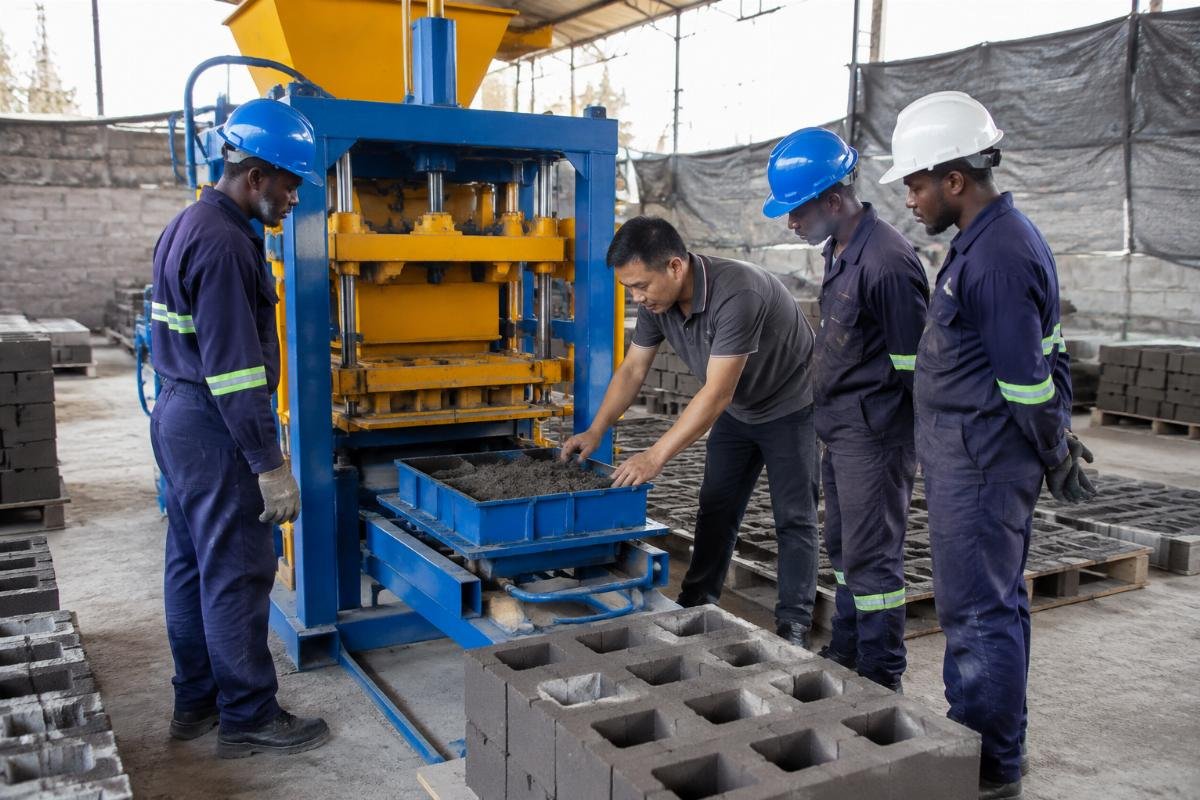
A true turnkey solution involves more than just delivering the hardware. It includes guidance on site preparation, foundation requirements, and raw material sourcing. For example, the type of cement and aggregate used can significantly affect the performance of a manual press. Too much water, and the blocks will crumble; too little, and they won’t hold together. Expert advice on these parameters is crucial for success.
In my experience, the most successful projects are those where the supplier provides comprehensive on-site support. This includes assisting with the initial setup, calibrating the molds, and training the first batch of operators. It also means having a channel for ongoing support, such as remote diagnostic assistance or access to technical documentation. [NEED_CITE: importance of post-sale support in industrial equipment adoption]
For instance, when introducing a new manual brick machine to a market, it is essential to consider local conditions. In humid coastal areas, corrosion resistance becomes a priority. In dusty inland regions, air filtration for any auxiliary engines is key. A supplier who understands these regional differences can tailor the package to ensure longevity and performance. This level of attention transforms a simple transaction into a partnership, reducing the risk for the investor and increasing the likelihood of long-term success.
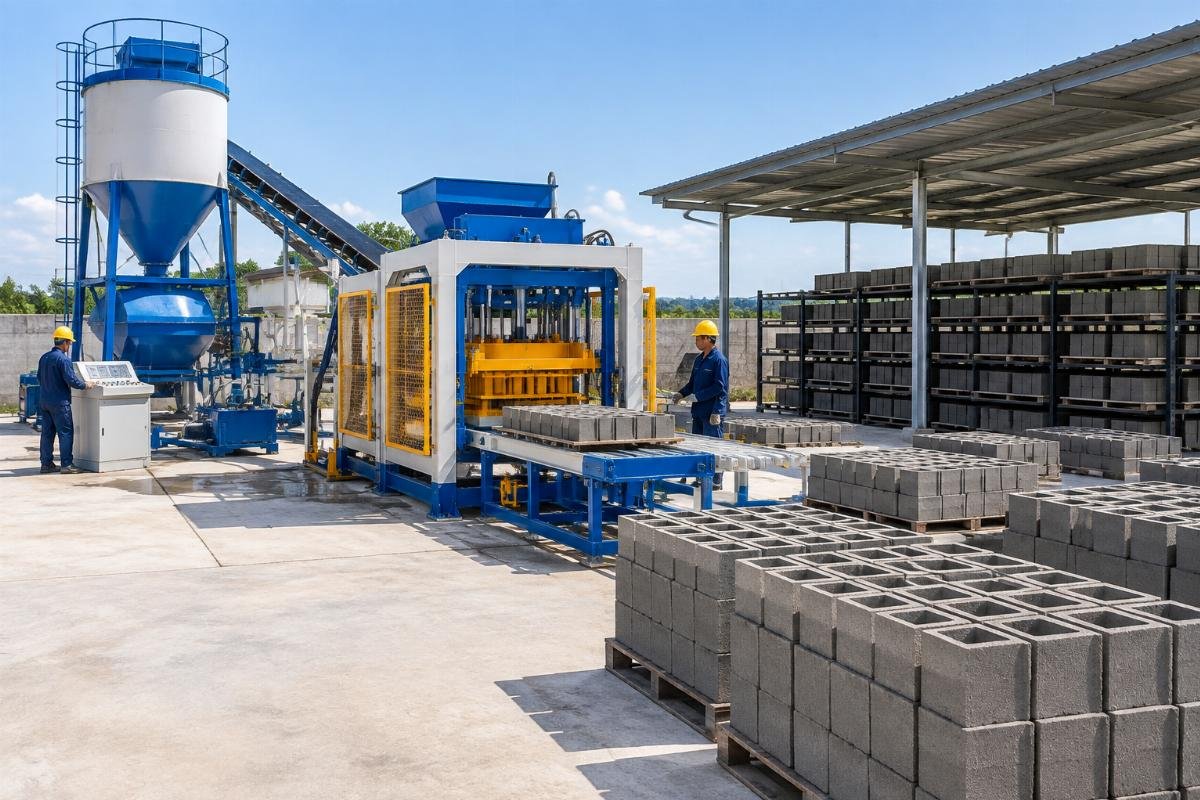
Moreover, the financial aspect cannot be ignored. A turnkey provider often helps with ROI analysis, helping the buyer understand how many blocks need to be sold to break even. This financial clarity is vital for securing funding and managing cash flow in the early stages of the business. By addressing both the technical and commercial aspects, a comprehensive support system ensures that the investment delivers the expected returns.
Conclusion
Simplicity drives sustainability in multi-site construction projects.
For contractors and investors in emerging markets, the choice of equipment should align with the realities of the local environment. A manual brick machine offers the flexibility, reliability, and ease of maintenance required for successful multi-site operations. By focusing on practical deployment rather than theoretical capacity, businesses can achieve stable growth and consistent quality. The key is not just buying a machine, but adopting a system that empowers local workers and minimizes operational risks.

Industry expert sharing insights about concrete machinery, block making technology and turnkey production solutions.
View all posts →
Leave a Reply