

Paver Block Machine Preventive Maintenance Schedule
Most factory manuals are written for clean, climate-controlled European workshops, not for the dusty, humid realities of emerging market production sites.
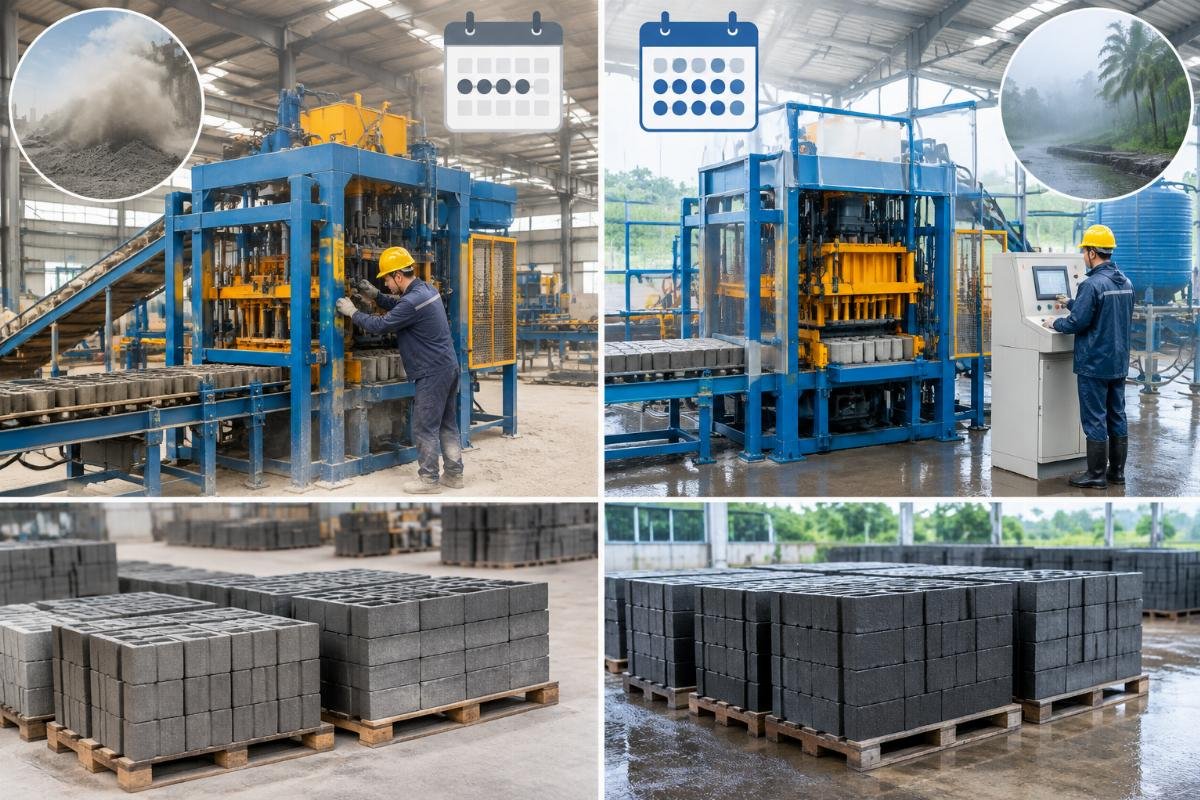
A rigid Paver Block Machine Preventive Maintenance Schedule that ignores local environmental stressors will fail. Effective maintenance requires adapting inspection intervals to specific climate conditions, dust levels, and operator skill sets to prevent catastrophic failures such as motor burnout or mold jamming. The goal is not to follow a calendar blindly, but to establish a rhythm of care that matches the intensity of your production environment.

I still remember the call from a client in Lagos during the peak of the rainy season. Their QT6-15 line had been down for three weeks. Two vibration motors had burned out, and the main mold was seized solid. The plant manager insisted it was a manufacturing defect. When I arrived, the first thing I checked was not the electrical cabinet, but the maintenance logbook. It was blank. The operators had never been shown how to use a grease gun, and the moisture from the heavy rains had ingress into the unprotected bearings. This was not a quality issue; it was a maintenance gap. That experience reinforced a critical truth: a Paver Block Machine Preventive Maintenance Schedule must be living document, adjusted for the reality on the ground.
Why Standard Schedules Fail in Harsh Climates?
Manufacturer guidelines often suggest lubrication every 500 hours or bolt checks every month. In a controlled factory, this works. In the field, these intervals can be dangerously optimistic. Dust acts as an abrasive paste when mixed with grease, and humidity accelerates corrosion on exposed steel surfaces.
Consider the difference between a plant in a temperate zone and one in the Sahel region. In high-dust environments, air filters clog within days, not weeks. If the hydraulic system breathes in contaminated air, seal wear accelerates dramatically. [NEED_CITE: impact of particulate contamination on hydraulic seal life per ISO 4406 standards]. Similarly, during rainy seasons, the risk of water ingress into electrical cabinets and vibration motor housings increases exponentially. A schedule that does not account for these seasonal shifts is merely a suggestion, not a safeguard.
The key is to move from time-based maintenance to condition-based triggers. Instead of waiting for a fixed date, operators should be trained to recognize early warning signs. For instance, if the vibration amplitude feels inconsistent or if there is a slight change in the sound of the hydraulic pump, these are immediate cues for inspection, regardless of the calendar. This adaptive approach ensures that the Paver Block Machine Preventive Maintenance Schedule remains relevant and effective, preventing minor issues from escalating into major breakdowns.
Critical Daily Checks to Prevent Catastrophic Failure
Daily checks are the first line of defense. They do not require advanced technical skills, but they demand consistency. The focus should be on visual inspections and basic operational checks that can prevent immediate line stoppages.
- Mold Alignment and Clearance: Before starting the shift, check the mold alignment. Misalignment causes uneven block density and can lead to mold jamming. Look for any visible gaps or signs of wear on the guide columns.
- Hydraulic System Inspection: Walk around the machine and look for any signs of oil leaks on hoses and connections. A small leak today can become a major burst tomorrow. Check the hydraulic oil level in the tank.
- Sensor Cleanliness: PLC sensors control the automatic cycle. Dust and concrete slurry can obscure photoelectric sensors, causing misfeeds or incomplete cycles. Wipe all sensors with a clean, dry cloth. [NEED_CITE: common causes of PLC sensor failure in concrete machinery].
- Vibration System Visual Check: Ensure that the vibration motors are securely mounted. Loose anchor bolts can lead to frame cracks over time. Listen for any unusual noises during the initial test run.
A common mistake is assuming that "automatic" means "maintenance-free." In reality, automated lines rely heavily on sensors and precise mechanical movements. If a sensor is dirty, the entire automation logic fails. Operators must understand that their daily visual checks are critical to the machine’s intelligence. By integrating these simple steps into the start-of-shift routine, you create a culture of vigilance that supports a robust Paver Block Machine Preventive Maintenance Schedule.
The Right Way to Lubricate Vibration Systems
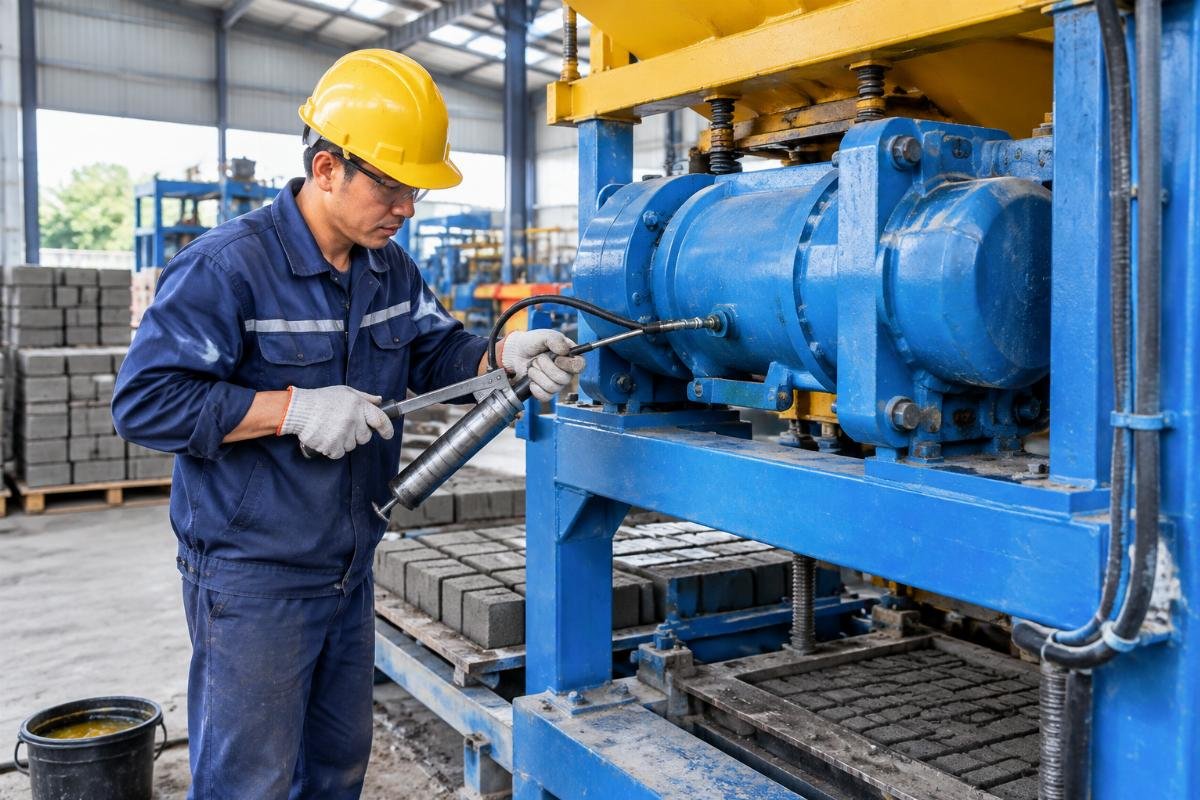
Lubrication is perhaps the most misunderstood aspect of maintenance. Many operators believe that "more grease is better." This is a dangerous myth. Over-greasing attracts dust and creates a thick paste that clogs bearings, leading to overheating and premature failure. Under-greasing, on the other hand, causes metal-on-metal contact and rapid wear.
The vibration system is the heart of the block machine. It subjects bearings to extreme stress. Proper lubrication requires using the correct type of grease—typically a high-temperature, lithium-based grease—and applying it in the right quantity.
- Identify Key Points: Focus on the vibrator bearings and guide columns. These are the high-stress points that require regular attention.
- Clean Before Greasing: Always wipe the grease nipple clean before attaching the grease gun. Injecting dirt into the bearing is worse than no grease at all.
- Apply Moderate Pressure: Pump grease until you see a slight purge of old grease from the seal. Do not continue pumping after this point.
- Frequency Adjustment: In dusty conditions, increase the frequency of lubrication but keep the volume moderate. In wet conditions, ensure that the grease used has good water resistance properties.
In Ethiopia, I observed a plant where hydraulic seals were wearing out prematurely. The root cause was not poor quality seals, but excessive dust ingestion due to inadequate air filter maintenance and improper lubrication practices. By adjusting the lubrication routine to include more frequent, smaller applications of grease and stricter air filter cleaning, the seal life extended significantly. This case highlights why a generic Paver Block Machine Preventive Maintenance Schedule must be tailored to local conditions.
Monthly Electrical and Hydraulic Health Audits
While daily checks catch immediate issues, monthly audits identify developing problems before they cause failure. These checks require a bit more technical knowledge and should be performed by a qualified maintenance technician.
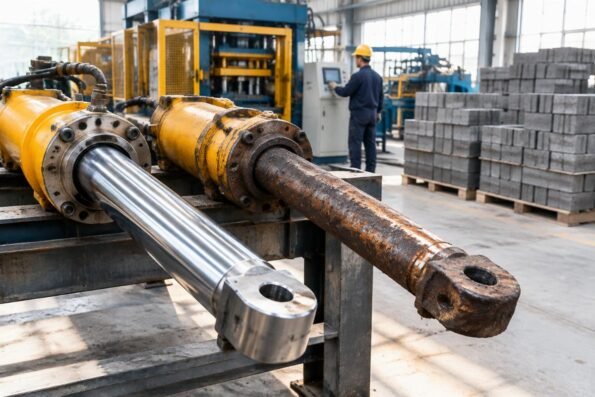
Hydraulic Oil Quality Test: Hydraulic oil degrades over time due to heat and contamination. Monthly, check the oil for discoloration or a burnt smell. If possible, perform a simple viscosity test or send a sample for laboratory analysis. Contaminated oil can damage pumps and valves, leading to expensive repairs. [NEED_CITE: recommended hydraulic oil testing frequency for heavy machinery].
Electrical Cabinet Dust Removal: Dust is conductive when mixed with moisture. Open the electrical cabinet and use compressed air to remove dust from PLC modules, relays, and contactors. Ensure that all cable connections are tight and free from corrosion. Check the insulation resistance of the main motors to prevent short circuits.
Vibration Amplitude Measurement: Use a vibration meter to check the amplitude of the vibration motors. Consistent amplitude ensures uniform block density. A drop in amplitude may indicate worn bearings or loose mounting bolts. Record these values to track trends over time.
These monthly audits provide a health snapshot of the machine. They allow you to plan for parts replacement during scheduled downtime rather than reacting to unexpected breakdowns. By incorporating these technical checks into your Paver Block Machine Preventive Maintenance Schedule, you extend the lifespan of critical components and maintain consistent production quality.
Training Operators for Sustainable Maintenance
The best maintenance schedule is useless if the people operating the machine do not understand its importance. In many emerging markets, operators may have limited technical training. Therefore, maintenance instructions must be simple, visual, and integrated into their daily workflow.
Instead of complex textual manuals, use pictorial checklists. Show pictures of what a "good" grease level looks like versus a "bad" one. Use color-coded tags to indicate which points need daily attention and which need weekly care. This visual approach bridges language and literacy gaps, empowering local teams to take ownership of the equipment.
During a project in Nigeria, we implemented a simple shift-handover protocol. Each operator had to sign off on a visual checklist before leaving their shift. This simple act increased accountability and reduced ignored lubrication tasks. The result was a noticeable reduction in unplanned downtime.
Training should not be a one-time event. Regular refresher sessions help reinforce good habits. When operators understand that their actions directly impact the machine’s performance and their own job security, they become active participants in maintenance. This cultural shift is essential for the long-term success of any Paver Block Machine Preventive Maintenance Schedule. At Shiyue, our turnkey solutions include customized, pictorial maintenance guides and on-site training tailored to local operator skill levels, ensuring that knowledge transfer is effective and sustainable.

Conclusion
Maintenance is not a cost; it is an investment in production stability.
A successful Paver Block Machine Preventive Maintenance Schedule adapts to local climate and operational realities rather than sticking to rigid factory defaults. By focusing on daily visual checks, proper lubrication techniques, and regular technical audits, you can significantly reduce downtime and extend equipment life. Empowering operators with simple, visual tools ensures that these practices become part of the daily culture, protecting your investment and ensuring consistent output.

Industry expert sharing insights about concrete machinery, block making technology and turnkey production solutions.
View all posts →
Leave a Reply