

Paver Block Machine Alignment & Calibration: Factory-Direct Supplier
A two-millimeter tilt in the base frame is not a minor imperfection; it is the primary cause of inconsistent block density and premature mold failure.
Proper alignment and calibration are not optional adjustments but critical prerequisites for dimensional accuracy and mold longevity. Ignoring transport-induced shifts leads to immediate production waste and client disputes. The core of Paver Block Machine Alignment and Calibration Standards lies in verifying horizontal levelness with industrial laser tools, synchronizing dual vibration motors via phase meters, and ensuring mold platen parallelism within strict tolerances before any concrete is mixed.
I still remember the humidity hitting my face as we opened a container at the port of Santos. The salt air was thick, clinging to the steel of a QT8-15 line destined for a housing project in Brazil. The local installation team had arrived with water levels and a sense of urgency. They assumed the machine, bolted down at the factory in Linyi, would remain perfectly static after weeks of ocean freight. They were wrong. The violent rolling of the ship had shifted the heavy vibration assembly by a fraction that seemed negligible to the eye but was catastrophic for production. Without laser calibration for QT machines, they spent days adjusting by guesswork. The resulting pavers had a thickness variance of several millimeters across the pallet. The client rejected the entire first batch. That loss was not due to poor concrete mix design; it was a failure to adhere to basic Paver Block Machine Alignment and Calibration Standards. [NEED_CITE: impact of transport vibration on heavy machinery alignment]
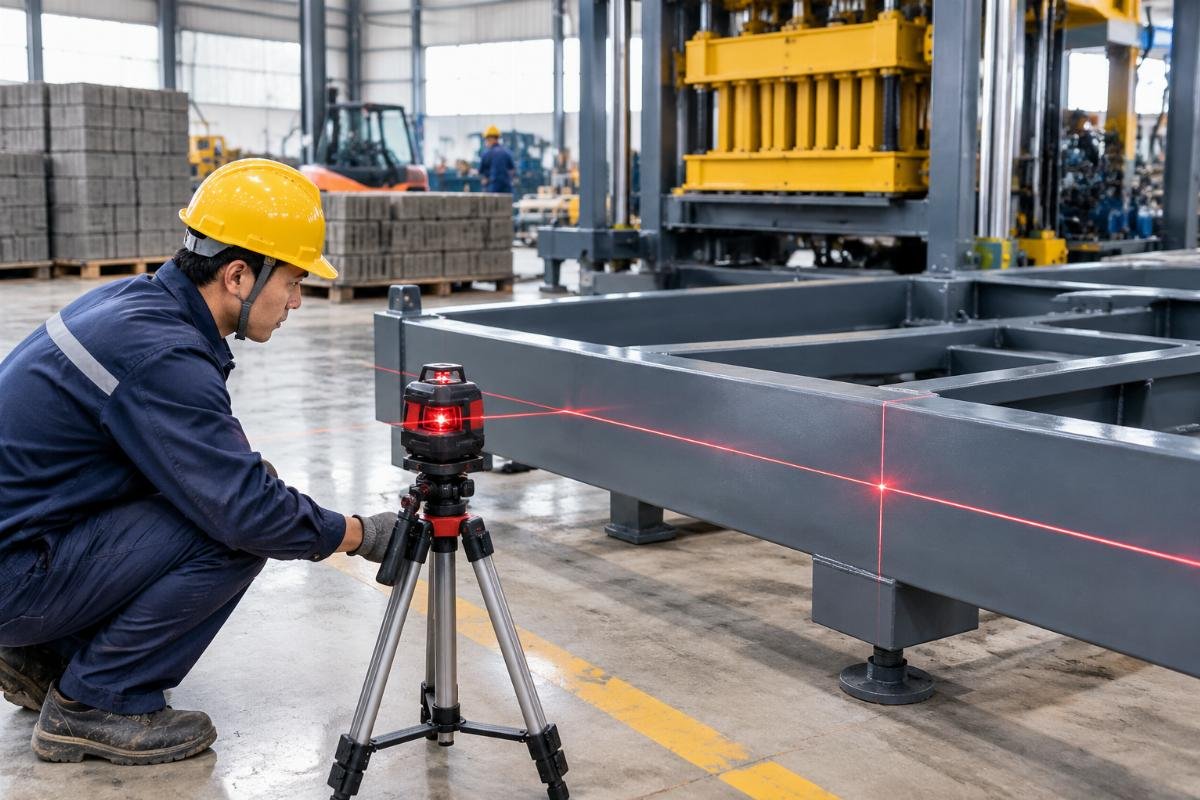
This experience reshaped how I approach every shipment. Alignment is not just about making the machine look straight; it is about ensuring the physics of vibration works uniformly. When the base is off, the energy distribution becomes uneven, leading to weak spots in the blocks and excessive wear on the mold guides.
Why Does Machine Alignment Matter for Paver Quality?
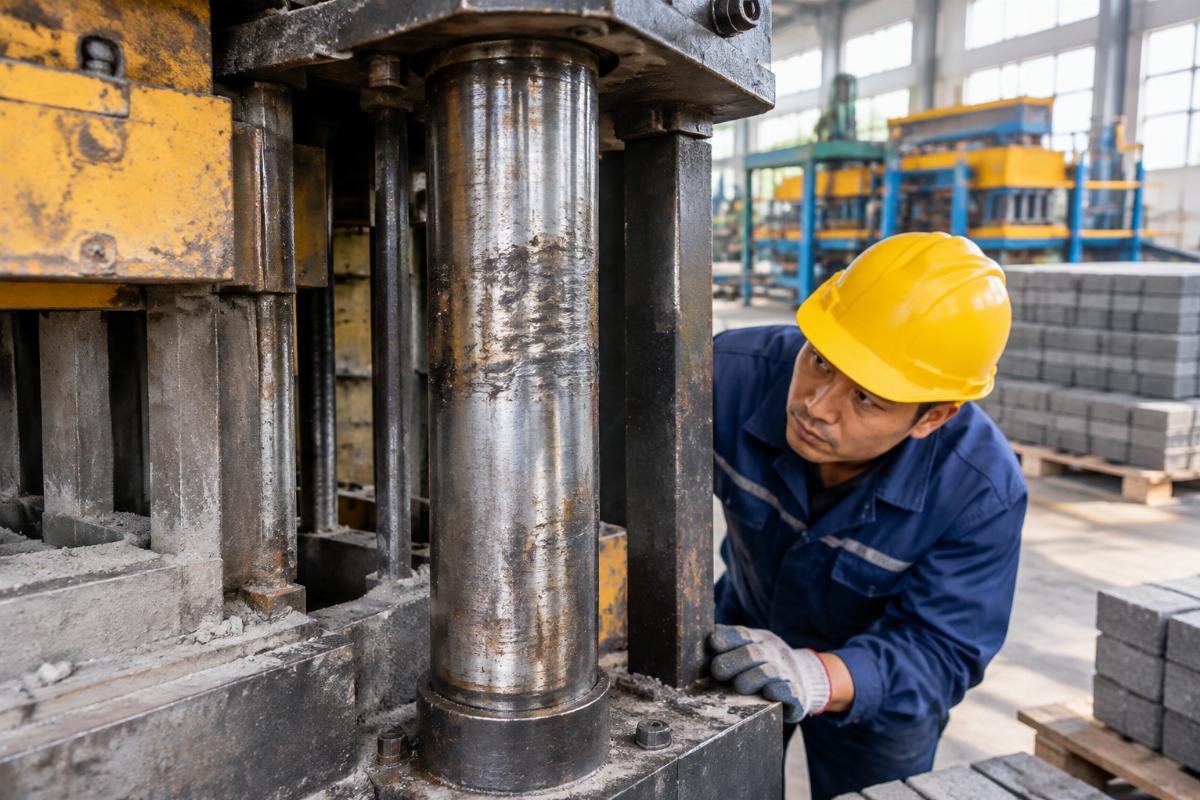
Misalignment causes dimensional errors and premature wear that far exceed the cost of proper setup. Many plant managers view leveling as a one-time task during installation, assuming it holds indefinitely. This is a dangerous misconception. The dynamic forces generated by high-frequency vibration tables are immense. If the machine frame is not perfectly horizontal, these forces do not transfer vertically into the concrete mix. Instead, they create lateral shear stresses that distort the mold cavity and strain the guide columns.
The result is inconsistent density. Blocks may appear solid on the surface but contain voids internally, leading to low compressive strength and high water absorption. Furthermore, misaligned molds bind during the lifting cycle. This friction generates heat and wears down the precision-ground surfaces of the mold plates. Over time, this leads to flash on the block edges and a shortened mold lifespan. Adhering to Paver Block Machine Alignment and Calibration Standards prevents these issues by ensuring that every vibration cycle is efficient and directed solely towards compaction. [NEED_CITE: relationship between vibration directionality and concrete compaction efficiency]
Consider a scenario in a humid port environment where corrosion can accelerate wear on adjustment bolts. If the initial alignment is not robust and verified with precise tools, minor shifts occur rapidly. A base frame deviation of even a small margin can cause uniform thickness variance across the entire pallet. This is not a defect in the hydraulic system or the PLC logic; it is a fundamental geometric error. Correcting it requires more than tightening bolts; it requires a systematic re-verification of the machine’s plane.
What Are the Critical Tolerances for Frame and Vibration Table?
Understanding the limits of acceptable deviation is crucial for any technician. While general construction equipment may allow for broader tolerances, precast concrete production demands higher precision. The main frame must be leveled to ensure that the vibration table moves in a true vertical plane. Any tilt introduces a horizontal component to the vibration, which reduces compaction efficiency and increases noise.
| Parameter | Standard Tolerance | Impact of Exceeding Limit |
|---|---|---|
| Main Frame Horizontal Level | <1mm per meter | Uneven density, lateral mold wear |
| Vibration Table Parallelism | Minimal deviation across corners | Variable block height, flash formation |
| Mold Platen Flatness | Within manufacturer specification | Poor surface finish, sticking issues |
| Motor Synchronization Phase | Near-zero phase difference | Reduced vibration amplitude, structural stress |
These values are not arbitrary. They are derived from the mechanical requirements of high-frequency vibrators and the need for consistent product dimensions. Using a water level or a simple spirit level is often insufficient for detecting these minute deviations over the length of a large QT series machine. Industrial laser levels provide the necessary accuracy to verify that the frame is truly horizontal. [NEED_CITE: ISO standards for construction equipment safety and precision]
In many rush installations, technicians skip these checks to save time. However, the time saved is illusory. Without proper verification, the machine will require repeated trial runs to adjust the mold height and vibration time manually. This process consumes significant amounts of raw material and labor. In contrast, a machine calibrated to Paver Block Machine Alignment and Calibration Standards from the start will produce saleable blocks within the first few cycles. The reduction in commissioning time is substantial, allowing the plant to reach full productivity much faster.
How to Perform Laser Calibration Step-by-Step?
Performing a precise calibration requires the right tools and a methodical approach. The process begins with the base frame and moves upward to the vibration system and mold assembly. This sequence ensures that each component is aligned relative to a stable foundation.
- Prepare the Foundation: Ensure the concrete foundation is fully cured and clean. Place the machine on the designated mounting points. Do not tighten the anchor bolts completely yet; leave them slightly loose to allow for micro-adjustments.
- Level the Main Frame: Set up an industrial laser level on a stable tripod outside the machine footprint. Project the laser beam onto the main frame rails. Measure the height at multiple points along the length and width of the frame. Adjust the shims under the mounting feet until the deviation is within the specified tolerance. This step is critical for establishing the reference plane for all subsequent checks. [NEED_CITE: procedure for laser leveling of industrial machinery]
- Verify Vibration Table Parallelism: Once the frame is level, check the vibration table. Use feeler gauges to measure the gap between the table and the fixed frame at four corners. The gaps should be uniform. If they are not, adjust the tension of the suspension springs or rubber mounts until parallelism is achieved. Uneven suspension leads to wobbling, which damages the machine structure.
- Synchronize Vibration Motors: For machines with dual vibration motors, synchronization is key. Use a phase meter to check the electrical phase of both motors. They must rotate in perfect sync to generate a unified vertical force. If the phases are mismatched, the vibrations will cancel each other out partially, reducing compaction power and causing excessive stress on the motor mounts. Adjust the wiring or controller settings as needed.
- Check Mold Platen Parallelism: Finally, install the mold and check its alignment with the vibration table. Use feeler gauges to ensure the mold bottom sits flat against the table. Any gap here will cause concrete leakage and uneven block height. Adjust the mold mounting bolts until the fit is snug and uniform.
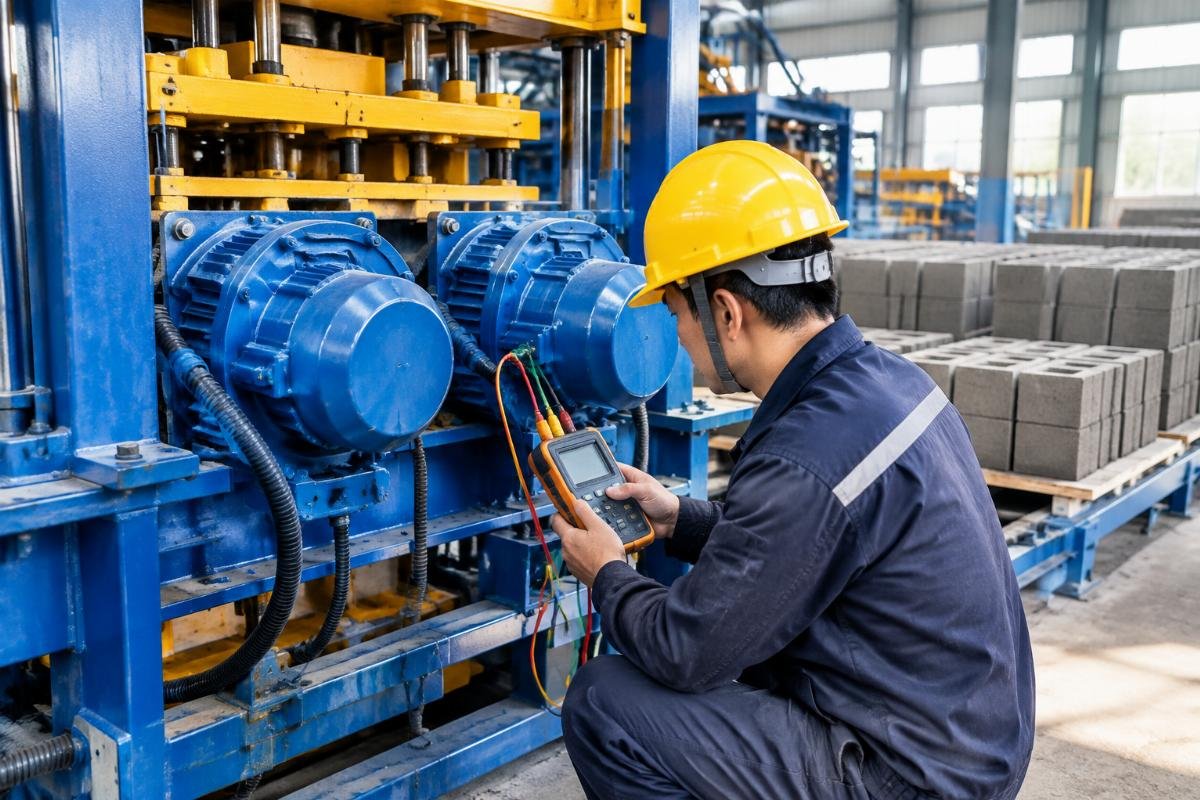
At Shiyue, we include pre-shipment calibration services and provide digital calibration tools with our QT series turnkey solutions. This minimizes on-site risks and ensures that the machine arrives ready for final verification rather than major adjustment. By following these steps, technicians can ensure that their Paver Block Machine Alignment and Calibration Standards are met, leading to consistent production quality.
Common Calibration Errors and How to Avoid Them?
Even with the best intentions, errors occur. The most common mistake is relying on visual inspection or rudimentary tools like water levels. While these methods might work for rough construction, they lack the precision needed for high-quality paver production. A water level is susceptible to temperature changes and air bubbles, leading to inaccurate readings. This often results in a machine that appears level but is actually tilted, causing the production issues described earlier.
Another frequent error is ignoring the impact of port handling. Heavy machinery is subject to significant shocks during loading, unloading, and transit. Container handling equipment often drops loads or shifts them abruptly. These impacts can loosen bolts, shift heavy components, and distort frames. Assuming that factory settings remain intact after shipping is a risky assumption. Mandatory re-verification upon arrival is essential to catch these shifts before they cause damage. [NEED_CITE: effects of logistics shock on precision machinery]
Rough port handling is a reality in many regions. In Latin America and Africa, where infrastructure projects are booming, port conditions can be challenging. Technicians must be prepared to make adjustments on-site. Having the right tools, such as laser levels and phase meters, is crucial. Without them, the installation team is forced to rely on trial and error, which wastes time and materials.
To avoid these errors, establish a strict protocol for incoming inspection. Check all bolts for tightness, verify frame levelness, and test motor synchronization before starting production. Document these checks to create a baseline for future maintenance. This proactive approach prevents costly rejections and ensures that the machine performs as designed. Adhering to Paver Block Machine Alignment and Calibration Standards is not just about initial setup; it is about maintaining integrity throughout the machine’s lifecycle.
When to Recalibrate Your Block Machine?
Calibration is not a one-time event. Over time, vibration, load cycles, and environmental factors can cause shifts in the machine’s alignment. Regular recalibration is necessary to maintain product quality and extend equipment life.
Schedule recalibration based on usage hours and major maintenance events. After any significant repair, such as replacing vibration motors or suspension springs, realignment is mandatory. Additionally, perform routine checks every few months or after a certain number of production cycles. Look for signs of misalignment, such as uneven block height, increased noise, or excessive mold wear.
Pre-calibrated units reduce on-site commissioning time significantly. By starting with a well-aligned machine, the frequency of major adjustments is reduced. However, regular monitoring ensures that minor shifts are caught early before they become major problems. This proactive maintenance strategy aligns with best practices for precast concrete production and helps maximize the return on investment. [NEED_CITE: maintenance schedules for vibrating machinery]
Implementing a paver machine maintenance checklist that includes alignment checks can help plant managers stay on top of these requirements. Simple tools like feeler gauges and spirit levels can be used for routine checks, while laser levels should be used for more detailed assessments. By integrating these checks into the regular maintenance routine, plants can ensure consistent quality and minimize downtime.
Conclusion
Precision alignment is the foundation of profitable block production.
Ignoring Paver Block Machine Alignment and Calibration Standards leads to wasted material, damaged molds, and unhappy customers. By using proper tools like laser levels and phase meters, and by verifying alignment after shipping and during regular maintenance, plant operators can ensure their machines perform at their best. This attention to detail transforms a piece of heavy machinery into a reliable asset for construction projects.

Industry expert sharing insights about concrete machinery, block making technology and turnkey production solutions.
View all posts →
Leave a Reply