

Cement Silo Component Replacement Schedule for Sale
Following the OEM manual strictly in the Middle East is a fast track to unplanned downtime.
A rigid, time-based Cement Silo Component Replacement Schedule for Sale often fails because it assumes temperate operating conditions. In harsh climates like Saudi Arabia or the UAE, high ambient heat and fine particulate dust accelerate wear rates significantly. To maintain uptime, plant managers must shift from calendar-based replacements to condition-based monitoring, adjusting intervals for pneumatic seals, filter cartridges, and discharge valves based on local environmental stressors and production volume.
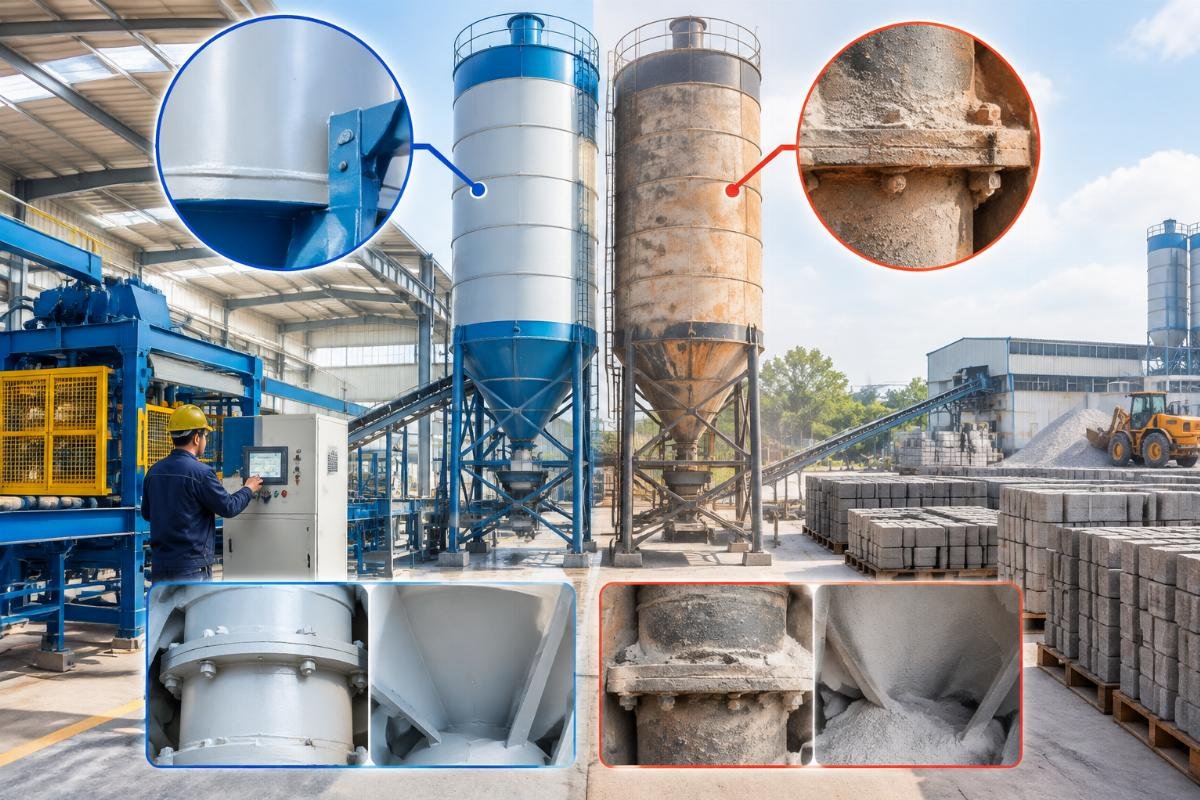
The gap between theoretical maintenance plans and field reality is widest in regions with extreme weather. I have stood on catwalks in Riyadh where the air temperature hovered near fifty degrees Celsius, watching maintenance teams struggle with filters that clogged within days rather than months. The manufacturer’s handbook might suggest a six-month replacement cycle for certain rubber components, but under direct sun exposure and constant thermal cycling, those same components can degrade in half that time. This discrepancy is not a defect in the equipment but a mismatch between generic guidelines and specific site conditions. Understanding this dynamic is critical for anyone sourcing a Cement Silo Component Replacement Schedule for Sale that actually protects their investment.
Why Standard Schedules Fail in Harsh Climates
Most original equipment manufacturer (OEM) manuals are written based on testing in controlled or moderate environments. They provide a baseline, not a universal law. [NEED_CITE: ISO standards for maintenance planning in varying environmental conditions]. When these static schedules are applied to sites in the MENA region or parts of Africa, they ignore two primary accelerants of wear: thermal degradation and abrasive particulate matter.
Heat acts as a silent killer for elastomers. Pneumatic seals, gaskets, and diaphragm valves rely on the elasticity of rubber compounds to maintain airtight integrity. In high-temperature zones, the molecular structure of these materials breaks down faster, leading to hardening, cracking, and eventual failure. A seal that lasts two years in Northern Europe might become brittle and leak within months in the Gulf summer. This is not a matter of poor quality but of chemical physics.
Dust presents a different challenge. Fine cement powder and airborne sand do not just sit on surfaces; they infiltrate moving parts. In areas prone to sandstorms, the concentration of fine particulates in the air can overwhelm standard filtration systems. If a plant operates during a dust storm, the load on the silo top filter increases exponentially. A monthly cleaning schedule becomes insufficient, and a quarterly replacement cycle becomes a guarantee of motor burnout due to back-pressure.
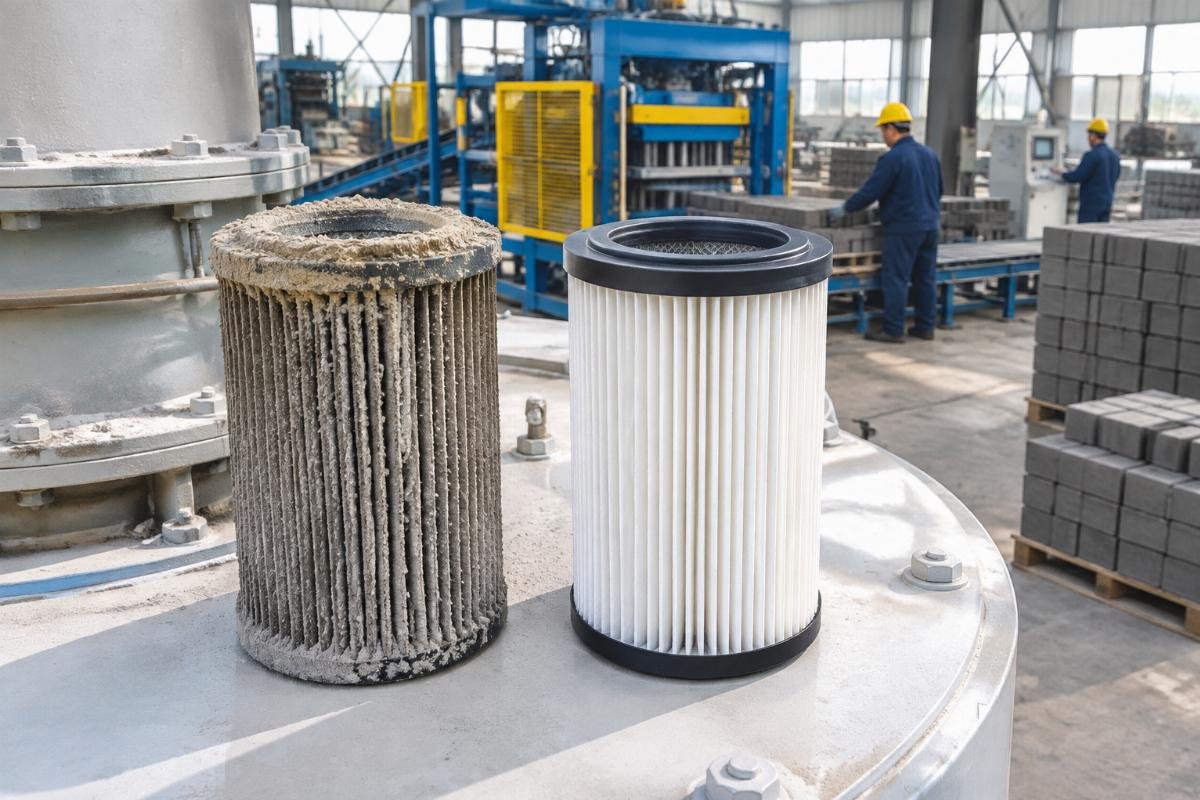
The solution is not to discard the OEM guidance entirely but to treat it as a starting point for a dynamic plan. A useful Cement Silo Component Replacement Schedule for Sale should include adjustment factors for local climate data. For instance, if the average daily temperature exceeds a certain threshold, the replacement interval for all rubber-based components should be halved. Similarly, during known dust seasons, filter inspection frequencies must increase from monthly to weekly. This adaptive approach prevents the "run-to-failure" mindset that plagues many operations in harsh environments.
Critical Components and Their Real-World Lifespan
Not all parts wear out at the same rate. Understanding which components are most vulnerable allows for targeted maintenance. The three most critical areas in a cement silo system are the filtration unit, the pneumatic sealing system, and the discharge mechanism.
The silo top filter is the lungs of the system. Its primary job is to allow air to escape during filling while trapping cement dust. When filters clog, pressure builds up inside the silo. This can trigger safety valves or, in worse cases, damage the silo structure or blow out gaskets. In clean environments, pulse-jet filters may last for several thousand cycles. However, in dusty conditions, the fabric media can become blinded by fine particles that the pulse cleaning cannot dislodge. [NEED_CITE: Technical bulletin on filter media blinding mechanisms].
Pneumatic seals are found in butterfly valves, slide gates, and air locks. These components undergo constant friction and compression. In hot climates, the lubrication within these seals can dry out or migrate, increasing friction and wear. A leaking seal does not just waste compressed air; it allows moisture to enter the system, leading to cement hardening and blockages.
Discharge valves, such as rotary airlocks or screw conveyors, handle the physical movement of material. High-volume production wears down the clearances between the rotor and the housing. Once these clearances exceed specific tolerances, efficiency drops, and energy consumption rises. Monitoring these gaps is more effective than relying on a fixed time interval.
| Component | Standard Environment Indicator | Harsh Climate Indicator | Maintenance Action |
|---|---|---|---|
| Filter Cartridge | Differential pressure stable | Rapid pressure spike | Increase cleaning frequency; replace when cleaning fails |
| Pneumatic Seals | Elastic, no visible cracks | Hardened, surface checking | Replace proactively before leakage occurs |
| Discharge Valve Lining | Minimal wear | Visible grooving | Monitor clearance; replace lining at threshold |
Sourcing a reliable Cement Silo Component Replacement Schedule for Sale means ensuring that the supplier understands these variations. Shiyue, for example, provides factory-direct spare parts that are compatible with various silo models, emphasizing durability for harsh conditions. Quick availability via express shipping ensures that when a filter does fail unexpectedly, the replacement is on-site before production halts completely.
How to Build a Dynamic Replacement Plan
Creating a maintenance plan that works requires shifting from time-based to condition-based monitoring. This involves regular inspections and data collection rather than just marking dates on a calendar.
First, establish a baseline for differential pressure across the silo filter. Install gauges if they are not present. Record the pressure reading after each cleaning cycle. A gradual increase indicates normal loading, but a sudden jump suggests blinding or damage. [NEED_CITE: Best practices for monitoring baghouse filter performance].
Second, implement a visual inspection routine for seals and valves. During scheduled downtime, check the condition of pneumatic seals for signs of hardening or cracking. Use a simple touch test: if the rubber feels hard or sticky, it is nearing the end of its life. Do not wait for a leak to appear.
Third, track production tonnage. Wear on discharge valves is directly related to the volume of material processed, not just the passage of time. A plant running three shifts a day will wear out valves much faster than one running a single shift. Set replacement thresholds based on cumulative tonnage rather than months.
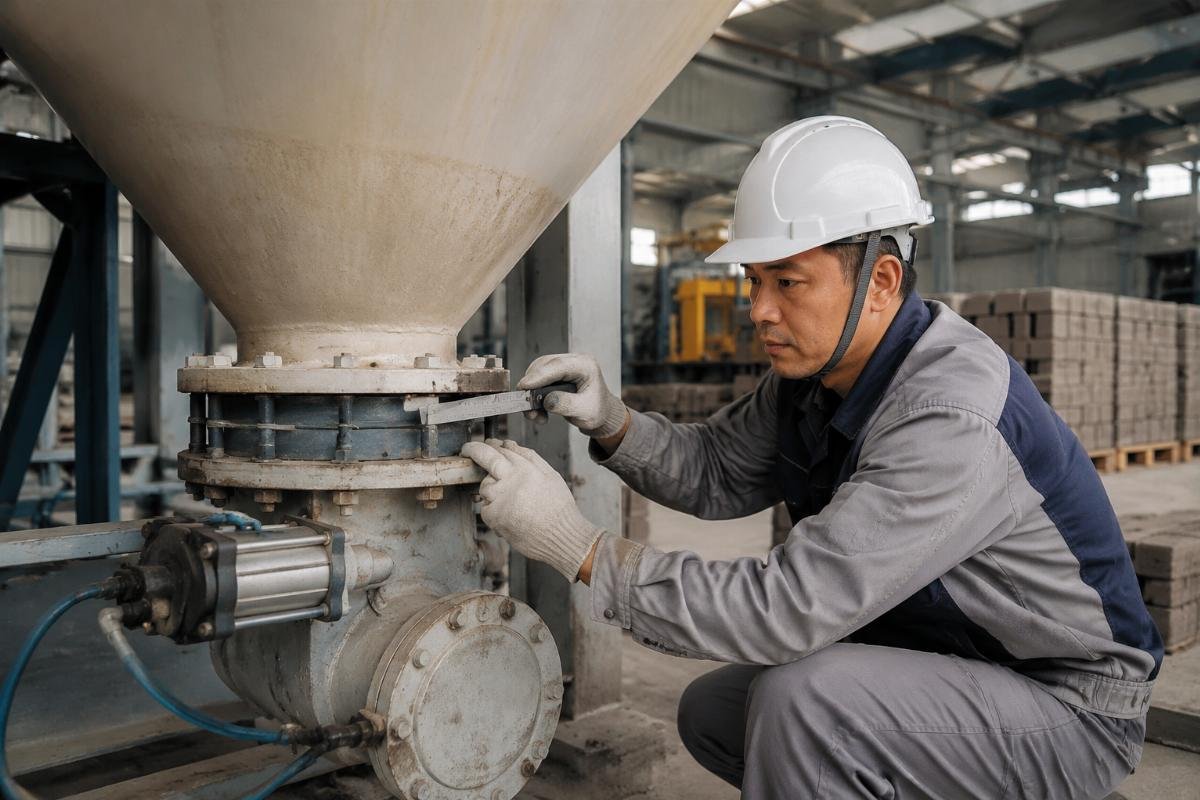
This dynamic approach requires discipline but pays off in reduced downtime. It also allows for better inventory management. Instead of stocking a full year’s worth of parts based on a conservative estimate, you can stock parts based on actual consumption rates. When looking for a Cement Silo Component Replacement Schedule for Sale, ask if the provider offers guidance on setting these condition-based triggers.
Cost-Benefit of Preventive vs. Reactive Maintenance
The argument for preventive maintenance is often framed in terms of safety and reliability, but the financial case is equally compelling. Reactive maintenance—fixing things only when they break—is expensive. The cost of a failed filter is not just the price of the new cartridge. It includes the labor for emergency repair, the potential damage to other components from over-pressure, and most significantly, the loss of production revenue during downtime.
In a precast concrete plant, every hour of downtime can delay multiple projects. The cost of a few extra filter cartridges or seal kits is negligible compared to the penalty clauses for late delivery or the idle time of a ready-mix fleet waiting for cement. [NEED_CITE: Economic analysis of preventive maintenance in construction material production].
Moreover, reactive repairs often lead to secondary damage. A leaking seal can allow moisture into the silo, causing cement to harden and block the discharge system. Clearing a blocked silo is a hazardous and labor-intensive task that can take days. Preventive replacement of a cheap seal avoids this catastrophic scenario entirely.
Investing in a robust Cement Silo Component Replacement Schedule for Sale is an insurance policy against these hidden costs. It ensures that small, predictable expenses replace large, unpredictable ones. Suppliers who offer comprehensive support, including remote diagnostic assistance and quick spare parts delivery, add further value by minimizing the duration of any necessary interventions.
Conclusion
Static maintenance schedules are inadequate for harsh operating environments.
A successful maintenance strategy adapts to local conditions, prioritizing condition-based monitoring over rigid calendars. By understanding the accelerated wear caused by heat and dust, plant managers can prevent costly failures and ensure continuous production. A well-structured Cement Silo Component Replacement Schedule for Sale serves as a vital tool in this process, bridging the gap between theoretical design and field reality.

Industry expert sharing insights about concrete machinery, block making technology and turnkey production solutions.
View all posts →
Leave a Reply