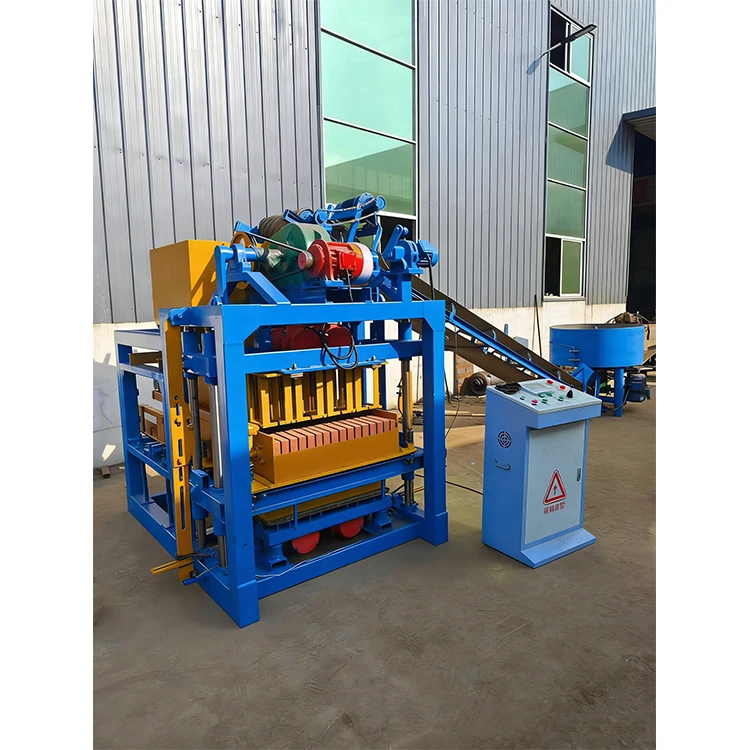
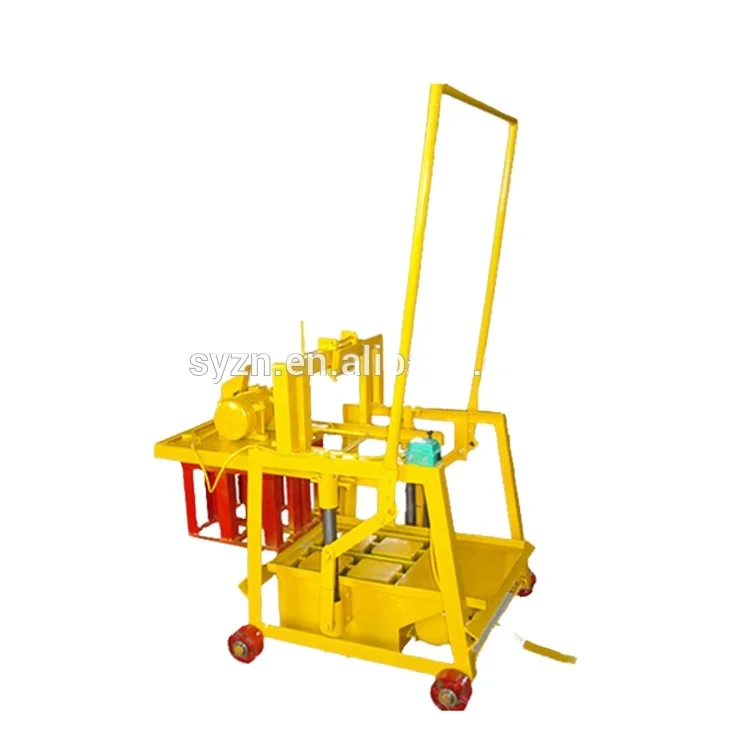
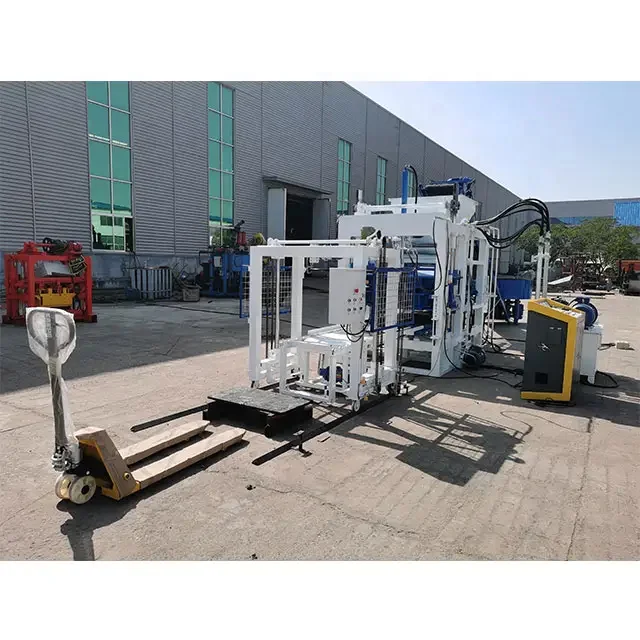
Matched System Design — the QT5-15 automatic block machine, its moulds, pallets, and handling equipment are specified as one integrated line rather than sourced from separate suppliers, so capacity figures reflect the actual block format you plan to produce.
Technical Specifications
| Parameter |
Value |
| Product Type |
Automatic Concrete Block Making Machine |
| Model |
QT5-15 |
| Overall Dimensions |
7400 × 1950 × 2800 mm |
| Vibration Frequency |
0–60 Hz |
| Vibration Form |
Platform Vibration |
| Moulding Mode |
Automatic loading, vibration moulding |
| Pallet Size |
1100 × 550 mm |
| Molding Cycle |
15–20 s (basis not stated in source) |
| Overall Power |
32 kW |
| Vibration Force |
80 kN |
| Total Mass |
5000 kg |
| Demolding Method |
Hydraulic |
| Recommended Factory Area |
1000 m² |
| Control System |
PLC with touch screen interface |
| Hydraulic System |
Independent integrated hydraulic station |
| Output — Hollow Block 400×200×200 mm |
900–1200 pcs/h, 7200–9600 pcs/8hr (based on 5 pcs/mould, 15–20s cycle) |
| Output — Hollow Block 400×150×200 mm |
1080–1440 pcs/h, 8640–11520 pcs/8hr (based on 6 pcs/mould, 15–20s cycle) |
| Output — Solid Brick 240×115×53 mm |
5760–7680 pcs/h, 46080–61440 pcs/8hr (based on 32 pcs/mould, 15–20s cycle) |
| Output — Rectangular Paver 200×100×60 mm |
3600–4500 pcs/h, 28800–36000 pcs/8hr (based on 25 pcs/mould, 20–25s cycle) |
| Output — Zigzag Paver 225×112.5×60 mm |
2304–2880 pcs/h, 18432–23040 pcs/8hr (based on 16 pcs/mould, 20–25s cycle) |
| Automation Level |
Automatic (PLC-controlled pallet feeding, material feeding, vibrating, demoulding) |
| Raw Material Compatibility |
Fly ash (up to 70%), slag, gangue, sand, crushed stone, cement, water |
| Mould Change |
Quick replacement for multi-format production |
| Voltage & Frequency |
Configurable to buyer’s site requirements |
| Language Options |
PLC display language configurable before dispatch |
| Standards |
CE declared where applicable |
| Warranty |
1 year for whole machine (excluding spare parts) |
Application Suitability
| Application |
Material or Output |
| Hollow block production |
Crushed stone, sand, cement, water; fly ash blends up to 70% |
| Solid brick production |
Fine sand, cement, and industrial residue blends |
| Rectangular paving block |
Crushed stone, sharp sand, cement for outdoor surfaces |
| Zigzag interlocking paver |
Graded aggregate and cement for high-traffic pedestrian areas |
| Industrial residue utilization |
Fly ash, slag, and gangue converted into structural block formats |
Why a Single Output Number Misleads Every Block Plant Buyer
The QT5-15 produces different volumes depending entirely on which mould is installed and what cycle time the material allows.
When an automatic block machine manufacturer quotes a single hourly output figure, that number usually assumes the fastest block format in the catalogue — often a small solid brick with a short cycle. For a buyer planning to run 400×200×200 mm hollow blocks as the primary product, the real shift output can be considerably lower than the headline number. The QT5-15 data sheet shows this clearly: hollow block output and solid brick output differ by a wide margin on the same machine, because the mould cavity count and the vibration time needed for each format are fundamentally different. [NEED_CITE: how block format and cycle time affect daily output calculations]

Where the QT5-15 Sits in the Shiyue Machine Range
The Shiyue lineup covers semi-automatic machines for small workshop volumes, mid-tier automatic lines like the QT5-15, and high-capacity fully automatic plants. This model occupies the middle tier, aimed at buyers who have outgrown manual pallet handling and egg-laying machines but are not yet ready to commit to the footprint and capital of a top-tier line. For a first-time block plant entrepreneur or a contractor adding block production to an existing yard, the QT5-15 provides PLC-controlled automation across pallet feeding, material loading, vibration, and hydraulic demoulding without requiring a dedicated operator at every station. The automatic block machine manufacturer range is structured so that a buyer can identify their tier by daily output target and available factory area before narrowing down further.
Scaling from Semi-Automatic to Full Line Integration
A block press does not run in isolation. Raw material feeding, mixing, pallet supply, stacking, and curing rack handling all have to match the press cycle so the machine is never left waiting. With the QT5-15, the recommended factory area is 1000 m², which must accommodate the curing zone sized to the 1100×550 mm pallet. Buyers who already own forklifts and curing racks need to confirm that the pallet dimensions and spacing are compatible before ordering — a mismatch here causes delays on day one that no amount of press adjustment can fix. [NEED_CITE: pallet size compatibility with existing curing infrastructure]
Reading the Specs That Actually Shape Block Quality
The vibration system on the QT5-15 delivers 80 kN of force across a 0–60 Hz frequency range through platform vibration. Vibration force and frequency together determine how densely the concrete mix is compacted inside the mould cavity, which directly governs block compressive strength and surface finish. A mix with high fly ash content requires different vibration tuning than one based on crushed stone aggregate, and the PLC touch screen interface allows operators to adjust cycle parameters without stopping the line. The independent integrated hydraulic station sits apart from the main vibration platform, protecting seals and valves from continuous shock loading — a design choice that extends maintenance intervals on hydraulic wear parts. The 32 kW overall power rating covers all drives and the hydraulic pump simultaneously, so a buyer’s electrical supply must be sized for peak draw, not average consumption.
The Cost of Skipping Configuration Before Shipment
When voltage, frequency, and PLC display language are not confirmed before the machine leaves the factory, the consequences arrive on site: electricians spending days rewiring panels, operators staring at instructions they cannot read, and production delayed while replacement components are shipped internationally. I have watched a contractor in the Gulf region lose nearly three weeks because the control interface was in a language the crew could not operate, and the local voltage did not match the factory default. [NEED_CITE: voltage and frequency standards by export market] These are not defects — they are configuration choices that should have been locked during the ordering process.
Why Buyers Place Repeat Orders on This Tier
Every specification on the QT5-15 is set against the buyer’s actual mix design, local aggregate availability, and target block format rather than pulled from a catalogue default. Moulds are designed and supplied for the specific formats the buyer’s market demands, including custom drawings when standard options do not cover a local requirement. The machine, mould, pallet, and handling equipment are specified as one matched system, eliminating the integration gaps that appear when components come from separate suppliers. Factory testing covers the configured block format before shipment, so the buyer receives a test record showing output under the conditions they agreed to, not a generic benchmark. [NEED_CITE: factory acceptance testing practices for block making machinery]
Documentation & Verification
- Line layout and capacity calculation stating the block format assumed for each output figure
- Machine specification sheet confirming voltage, frequency, and PLC display language
- Mould drawing and format list showing included and optional block formats
- Hydraulic and electrical schematic for on-site maintenance reference
- Factory test record on the buyer’s configured block format before dispatch
- Packing photographs verifying machine condition at the point of loading
Installation, Commissioning & Support
- 1000 m² factory area required, with level concrete floor rated for the 5000 kg machine mass
- 32 kW electrical supply on a dedicated circuit matching confirmed voltage and frequency
- Machine shipped fully assembled after factory test; pallet and mould crates arrive in the same container
- On-site commissioning includes PLC parameter tuning for the buyer’s local mix design
- Operator training covers mould change procedure, daily vibration plate inspection, and hydraulic station checks
- Wear parts and mould list provided so first replacements can be ordered before stock runs out
Preparing Your Inquiry
To receive an accurate configuration proposal, share the primary block format and daily output target you need the QT5-15 to meet, along with the local aggregate and cement type available at your site. Include the voltage and frequency at your facility, the preferred PLC display language, and the pallet or forklift specifications you already use so the line layout accounts for your existing equipment from the start.
Frequently Asked Questions
Q: Where does the QT5-15 sit in the Shiyue automatic machine range, and when should a buyer step up?
A: The QT5-15 is the mid-tier option, suited to buyers producing several thousand hollow blocks per shift who need PLC automation but do not yet require the output or factory footprint of a high-capacity line. Buyers whose daily target exceeds what a single QT5-15 can deliver on their primary block format should evaluate the next tier up in the automatic block machine manufacturer range.
Q: Why does hollow block output differ from solid brick output on the same QT5-15?
A: Output depends on the number of cavities per mould and the cycle time each format requires. The solid brick mould has more cavities per cycle than the hollow block mould, so hourly throughput is higher even though the machine platform is identical. Always check capacity per specific block format rather than relying on a single headline number.
Q: What automation level does the QT5-15 include as standard, and can it be upgraded?
A: Standard automation covers PLC-controlled pallet feeding, material loading, vibration, and hydraulic demoulding via touch screen interface. Additional automation such as automatic stacking or cubing can be discussed during the line layout stage, allowing a buyer to start with core automation and expand as production volume grows.
Q: What factory area and site conditions does the QT5-15 require?
A: The recommended factory area is 1000 m², which must include space for raw material storage, the machine line, and a curing zone sized to the 1100×550 mm pallet. The floor must support the 5000 kg machine mass on a level concrete surface, with a dedicated 32 kW electrical supply at the confirmed site voltage and frequency.
Q: Which voltage and control language configurations are available, and when must they be confirmed?
A: Voltage, frequency, and PLC display language are all configurable to the buyer’s destination market requirements. These must be confirmed before production begins so the electrical panel and touch screen interface are built to the correct specifications — changes after the machine leaves the factory cause significant commissioning delays on site.

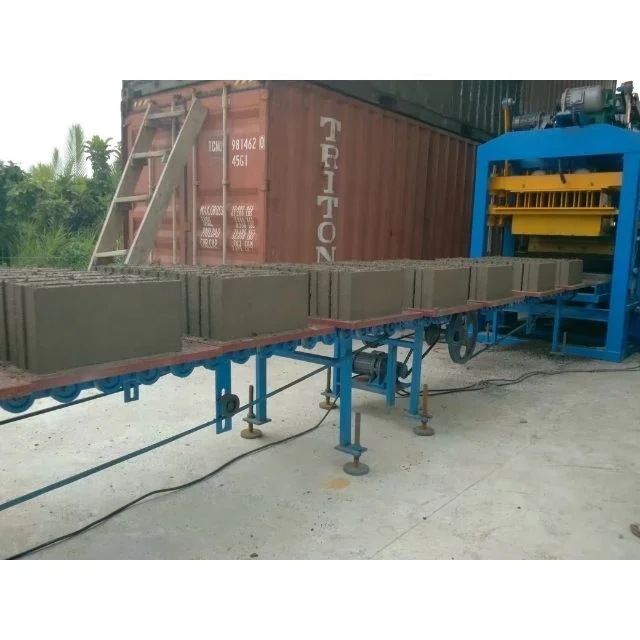 Automatic block machine