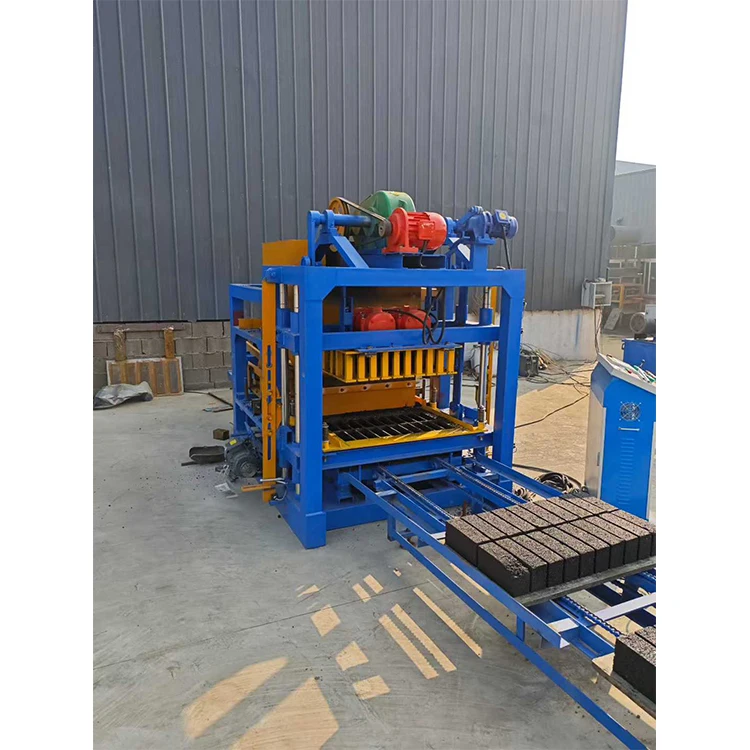
Matched System Sizing — Every QMJ2-45 ships with a mould and mixer spec’d against the buyer’s actual block format, not a catalogue default.
Technical Specifications
| Parameter |
Value |
| Model |
QMJ2-45 |
| Product Type |
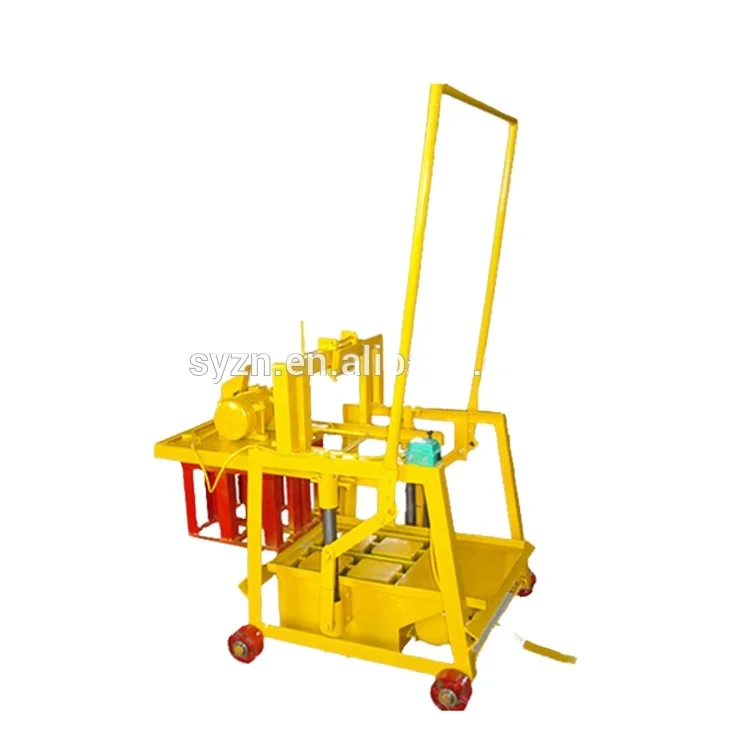
Mobile Egg-laying Block Machine |
| Rated Power |
1.5 kW |
| Voltage & Frequency |
Customizable to local supply (basis to be confirmed) |
| Control System |
Manual operation |
| Overall Dimensions |
1000 × 800 × 1300 mm |
| Net Weight |
215 kg |
| Output Capacity |
Approx. 1000 pcs/day based on 400×200×200mm hollow block format (basis to be confirmed for other formats) |
| Cycle Time |
45 s per mould cycle (basis to be confirmed) |
| Mould Format (Standard) |
400 × 200 × 200 mm (2 pcs per mould) |
| Vibration Type |
Mold box vibration |
| Automation Level |
Manual / egg-laying mobile |
| Pallet Requirement |
Not applicable (egg-laying type) |
| Basic Equipment Included |
JQ350 Mixer |
| Warranty |
1 year (excluding wearing parts) |
| Assembly State |
Fully assembled, nude packing |
Application Suitability
| Application |
Material or Output |
| On-site hollow block production |
Crushed stone, sand, and cement mixes laid directly on concrete ground |
| Small entrepreneurship block plant |
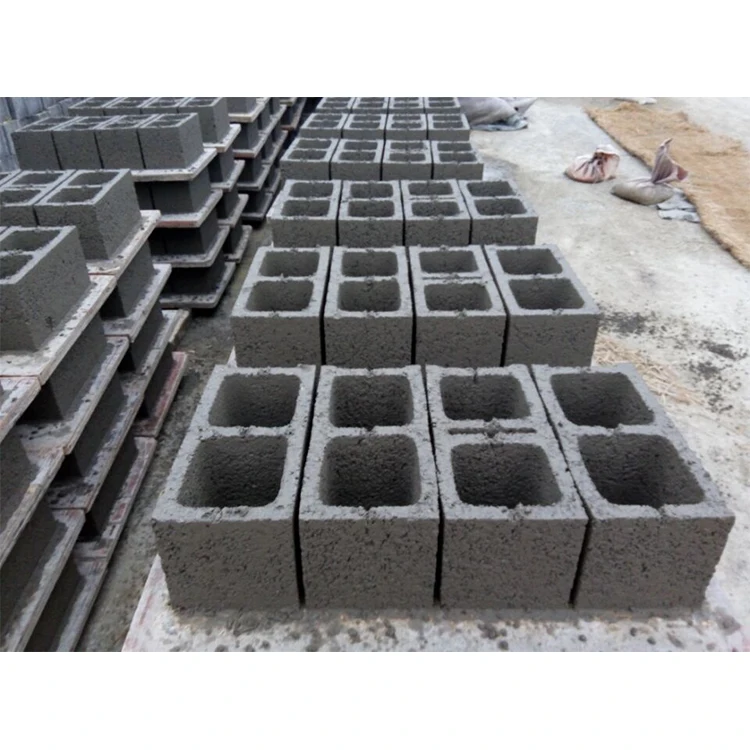
400×200×200mm hollow blocks for local sale |
| Housing project contractor supply |
Hollow blocks produced adjacent to the build site without fixed plant infrastructure |
| Remote or rural construction sites |
Low-power block production where utility capacity is limited |
What "1000 Pieces per Day" Actually Means for a Mobile Block Machine
Capacity figures on any mobile block machine manufacturer listing are only as useful as the format and shift assumptions behind them.
A buyer comparing two machines based on a single daily output number is comparing unknowns. One supplier’s 1000-piece day may assume an eight-hour shift on a lightweight block; another may assume ten hours on a dense aggregate mix that slows the cycle. When the QMJ2-45 is quoted at 1000 pieces per day, that figure references the 400×200×200mm hollow block at a 45-second cycle — change the format to a smaller solid block or switch to a heavier local aggregate, and the real throughput shifts accordingly. I have watched contractors arrive at a project site expecting a certain daily volume, only to find their local volcanic aggregate required vibration tuning that cut output noticeably below the brochure figure. [NEED_CITE: aggregate density impact on block machine cycle time]

Placing the QMJ2-45 Within a Complete Machine Range
The QMJ2-45 sits at the entry tier of a block machine range that extends through semi-automatic and fully automatic lines. For a buyer surveying options, the value of this mobile egg-laying unit is clear: minimal site preparation, no pallet system, no curing racks, and a single 1.5 kW power draw. It lets an entrepreneur or contractor validate their market demand before committing to a fixed plant. When volume outgrows what one operator can feed and move, the step up to a pallet-based semi-automatic machine becomes the natural next conversation.
Where On-Site Mobility Pays Off
A housing project with six months of block demand does not justify building a permanent batching plant, conveyor system, and curing yard. The QMJ2-45 rolls onto a prepared concrete slab and lays blocks in rows across the available ground. The egg-laying method means no pallet purchase, no pallet return loop, and no pallet storage — the three things that add cost and space to a stationary line. For contractors moving between project sites, the 215 kg weight keeps transport practical on a flatbed truck. [NEED_CITE: mobile egg-laying block production site requirements]
Reading the Specs That Matter Most
Mold box vibration on this machine is tuned for the 400×200×200mm hollow format, which means the vibration force and frequency are matched to move that specific volume of wet concrete into the mould cavity evenly. Using a denser aggregate or switching to a solid block format may require vibration adjustment to maintain consistent block density. The 1.5 kW total power draw is low enough for a portable generator in areas where grid connection is unreliable — a practical detail that matters on remote job sites. The included JQ350 mixer is sized to feed one QMJ2-45 without bottlenecking the 45-second cycle, so the operator is not left waiting for the next batch. Voltage and frequency are configurable, which is critical because a 220V/60Hz market and a 380V/50Hz market require different motor winding; shipping a machine with the wrong configuration delays commissioning by weeks.
The Cost of Skipping Configuration Questions Before Order
Ordering a mobile block machine without confirming local aggregate density, available voltage, or target block format leads to problems that surface only after the container is opened. I have seen machines arrive with motors wound for a voltage the site cannot supply, requiring a full motor swap before the first block is laid. Equally common is the buyer who assumed the standard mould matched their market, only to discover the local demand is for a 150mm-thick wall block, not the 200mm format the machine ships with. [NEED_CITE: voltage mismatch delays in exported machinery commissioning]
Why Sourcing Through a Single-Focus Block Machinery Supplier Matters
Block machines are the only product category here, which means the QMJ2-45 is not bundled from separate press, mixer, and mould vendors — the system is spec’d as one unit. Mould options beyond the standard 400×200×200mm hollow format are available, and custom mould drawings can be reviewed before production. Configuration is set against the buyer’s local aggregate test report and target format, not pulled from a default list. Capacity calculations are stated per block format so buyers can compare tiers honestly. Installation support and operator training are included, along with a wearing parts list at delivery so the first replacement order can be placed proactively.
Documentation & Verification
- Line layout with capacity calculation stating the 400×200×200mm block format assumed
- Machine specification sheet confirming destination voltage and frequency before production
- Mould drawing and format list showing available options beyond the standard hollow block
- Operation and maintenance manual with wearing parts list included at delivery
- Factory test record on the buyer’s confirmed block format prior to dispatch
Installation, Commissioning & Support
- Flat, cured concrete slab required as the egg-laying production surface for the QMJ2-45
- Dedicated 1.5 kW circuit at the confirmed local voltage and frequency for safe operation
- Machine ships fully assembled and ready for immediate on-site deployment
- First-run vibration tuning to match the buyer’s local aggregate density and mix design
- Wearing parts list provided so mould liners and vibration components can be reordered early
- Operator training covering mould change procedure and daily maintenance intervals
What We Need to Quote the Right Configuration
To match the QMJ2-45 to your actual production scenario, share the target block format and dimensions your market requires, the local aggregate type and available test data, and the voltage and frequency standard at the installation site. If you have an existing mixer or plan to source one locally, let us know so the line configuration can be adjusted accordingly.
Frequently Asked Questions
Q: How do I verify the daily output claim for the QMJ2-45?
A: The 1000 pcs/day figure is based on the 400×200×200mm hollow block at a 45-second cycle. Confirm your target block format, shift length, and local aggregate density so a realistic capacity calculation can be provided for your specific production scenario before you place an order.
Q: What voltage options are available and how is this confirmed?
A: The QMJ2-45 motor is wound to the buyer’s local voltage and frequency specification. Provide your site supply details at inquiry stage so the correct motor is fitted during production, avoiding rewinding or replacement delays after the machine arrives at your location.
Q: When should I consider stepping up from this mobile machine to semi-automatic?
A: The QMJ2-45 suits entry-level and on-site production. When daily volume demand exceeds what one operator can sustain, or when your market requires multiple block formats with fast changeovers, a pallet-based semi-automatic line becomes the appropriate next tier in the range.
Q: What other mould formats can this machine run?
A: Beyond the standard 400×200×200mm hollow block, custom moulds can be designed to buyer drawings. Share your target block dimensions and wall thickness requirements so a mould proposal and cycle time estimate can be prepared for each format you intend to produce.

 Automatic block machine