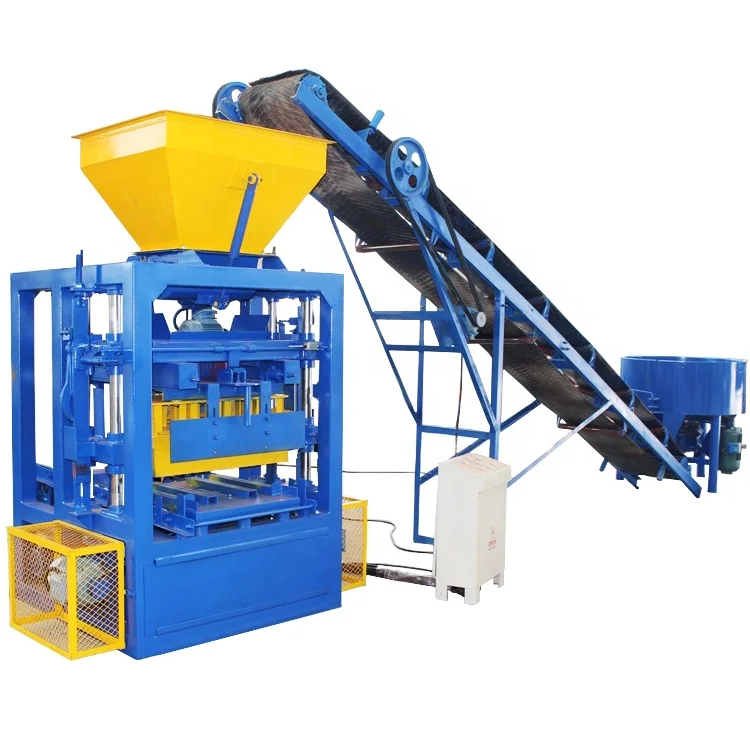
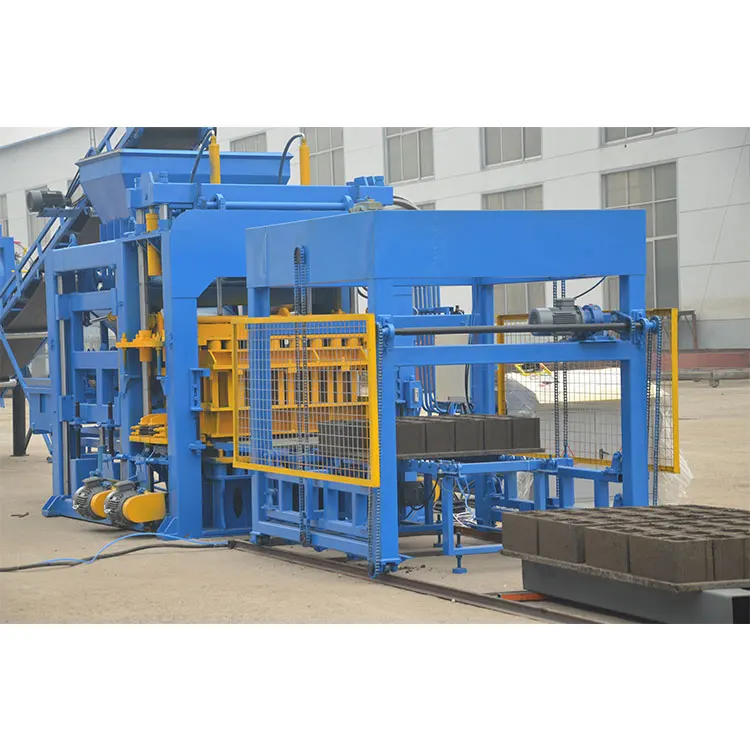
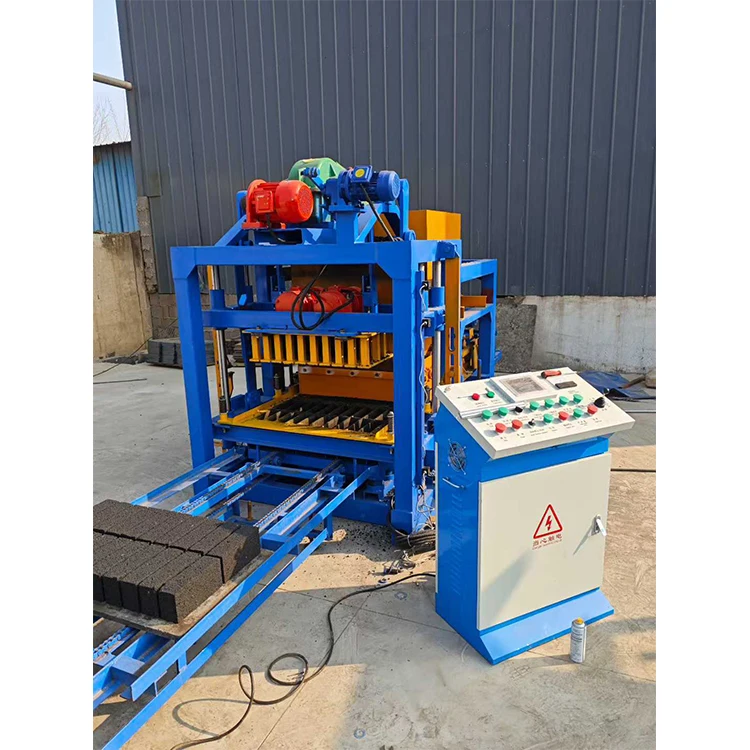
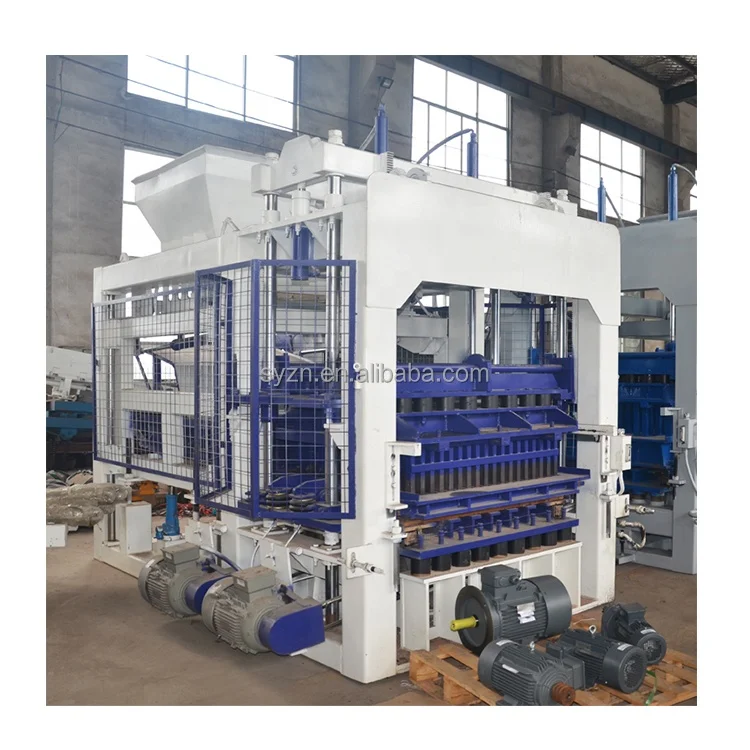
Single-focus block machinery engineering — Every QTJ4-25 configuration is specified as a matched system of press, mould, pallet and handling rather than assembled from separate suppliers, so cycle times align across the line.
Technical Specifications
| Parameter |
Value |
| Model |
QTJ4-25 |
| Product Type |
Automatic Concrete Block Making Machine |
| Control System |
PLC controlled, fully automatic |
| Machine Power |
16.58 kW |
| Molding Cycle |
25 seconds |
| Output Capacity |
4600 pcs / 8 hours (basis not stated in source — confirm block format / material / thickness) |
| Vibration System |
Vibration motor with large vibration box (non-hydraulic) |
| Automation Level |
Automatic pallet feeding, material feeding, scraping and block stacking |
| Pallet Size |
850 × 480 mm |
| Machine Weight |
5000 kg |
| Overall Dimensions (L×W×H) |
6400 × 1500 × 2700 mm |
| Frame Construction |
Thickened steel |
| Motor Brand |
Siemens |
| Voltage |
Configured to buyer’s local voltage and frequency |
| Raw Materials |
Concrete, sand, cement, fly ash, crushed stone, lime, water |
| Warranty |
One year, free parts supply during warranty period |
Application Suitability
| Application |
Material or Output |
| Hollow block production |
Concrete, crushed stone, cement, sand |
| Solid block production |
Fly ash, cement, lime, sand blends |
| Paver stone manufacturing |
Fine aggregate and cement mixes |
| Medium-output block plants |
Daily production for regional construction supply |
| First-time block plant setups |
Complete automated line for entrepreneurs |
What "4600 Pieces per 8 Hours" Actually Means for Your Daily Run
The quoted output figure only holds if the assumed block format matches what your market actually buys.
I have seen buyers place orders based on a headline capacity number, then discover that the figure was calculated on a thin paver while their revenue comes from 200 mm hollow blocks — where each cycle produces fewer units and the molding time runs longer. The daily shortfall becomes obvious only after commissioning, when the block yard is waiting for deliveries and the contractor is asking why the wall is not going up. An automatic concrete block making machine manufacturer should state the capacity per block format, not per press cycle, so you can plan your dispatch schedule honestly [NEED_CITE: block format impact on cycle count and daily output].

Where the QTJ4-25 Sits in the Full Machine Range
The QTJ4-25 occupies the mid-tier of our automatic block machine lineup, positioned between semi-automatic models that require manual pallet handling and high-capacity automatic lines designed for large-scale industrial plants. Buyers stepping up from egg-laying or mobile machines find this model bridges the gap: it delivers full PLC-controlled automation with integrated stacking, yet keeps the footprint manageable for a medium-sized workshop. As an automatic concrete block making machine manufacturer covering every output tier, we place this model where buyers need consistency and labour reduction without committing to a high-capacity line they cannot yet fill with orders.
Automation Coverage That Removes the Operator from the Cycle
Full automation on this model means the operator monitors the process rather than physically feeding each station. The pallet feeder loads boards into the press on signal, the material hopper charges the mould cavity and the scraper levels the surface, and the block stacker collects finished units for transfer to the curing area. This sequence repeats every 25 seconds without manual intervention at any station. For a plant owner upgrading from semi-automatic operation, the labour saving shows up immediately — one operator supervises the line while a second manages the curing yard and forklift movements [NEED_CITE: labour allocation in semi-automatic versus fully automatic block lines].
How Vibration, Pallet Size and Frame Design Shape Your Output
The vibration motor paired with a large vibration box compacts the concrete mix through high-frequency oscillation without relying on hydraulic pressure. This approach suits standard concrete mixes where sand, cement and aggregate proportions fall within common ranges, though it means the buyer should verify their local aggregate gradation before confirming the machine. The 850 × 480 mm pallet size dictates the mould layout and the number of blocks per cycle — choosing a pallet dimension that matches your existing curing racks and forklift capacity avoids costly reconfiguration after arrival. The thickened steel frame and Siemens motors are specified for continuous operation in medium-scale production environments where the machine runs multiple shifts per day. Voltage and PLC display language must be confirmed in writing before production begins, because a mismatch delays commissioning until the correct components arrive.
When the Wrong Configuration Costs More Than the Machine
A buyer who confirms voltage after shipment arrives will wait weeks for a transformer or a replacement control panel, while the concrete supplier holds raw material and the contractor’s schedule slips. Similarly, a pallet size chosen without checking the curing area dimensions leads to boards that do not fit the existing rack system, forcing an unplanned purchase of new racks or a reduction in curing capacity that bottlenecks the entire line. These problems are not machine defects — they are specification gaps that surface only when the equipment meets the buyer’s actual site conditions [NEED_CITE: common commissioning delays caused by unconfirmed electrical and pallet specifications].
Why Buyers Source the Complete Line from One Point
Block machinery is our single focus, which means the QTJ4-25 press, its moulds, pallets and the stacker are specified together as a system where cycle times match at every station. We configure the machine against the buyer’s actual mix design and local aggregate, not a catalogue default, because the vibration system must suit the material it will compact. Mould design covers the formats the buyer’s market sells, including custom drawings when a project demands non-standard dimensions. The automation level is selectable, so a buyer can start with the automatic stacker and later add upstream batching upgrades. Installation and commissioning support includes operator training on the PLC interface and the mould change procedure.
Documentation & Verification
- Line layout showing pallet flow from feeder through press to stacker with cycle timing
- Capacity calculation stating the exact block format and mix used for the output figure
- Mould drawing and format list covering hollow, solid and paver options available
- Voltage, frequency and PLC display language confirmation before production starts
- Factory test record with photographs taken on the buyer’s specified block format
- Packing list with machine dismantling detail for container loading reference
Installation, Commissioning & Support
- Foundation must support the 5000 kg machine weight and vibration forces during compaction cycles
- Electrical supply must match the confirmed voltage and provide a dedicated circuit for the 16.58 kW total load
- Machine arrives dismantled for container transport and is reassembled on the prepared foundation during commissioning
- PLC parameters are calibrated on-site against the buyer’s local aggregate and mix proportions
- Operator training covers the 25-second molding cycle, mould change sequence and stacker operation
- Wear parts list identifies vibration box components and mould liners for first replacement planning
What We Need to Quote the Right Configuration
To size the QTJ4-25 for your production target, we need the block formats your market sells, the daily volume required for each format, and the local aggregate and sand sources you plan to use. Confirm your site voltage, frequency and the PLC display language your operators will read. Let us know the dimensions of your curing area and the forklift capacity you have on site, so we can verify pallet compatibility before the machine enters production.
Frequently Asked Questions
Q: How is the 4600 pcs/8h capacity calculated and which block format does it assume?
A: That figure is based on a 25-second molding cycle, but the actual block count per cycle depends on the format on the pallet. A thin paver yields more pieces per cycle than a 200 mm hollow block. We provide a format-by-format capacity table so you know what to expect for the products your market actually orders.
Q: What voltage, frequency and PLC language options are available for my market?
A: The electrical system is configured to your local supply before production begins. We confirm voltage, phase and frequency in writing, and the PLC display language is set to match your operator team. This is verified at the factory test stage before dispatch.
Q: Which block formats can the QTJ4-25 produce and what is the cycle time per format?
A: The machine produces hollow blocks, solid blocks and paver stones using interchangeable moulds on the 850 × 480 mm pallet. The molding cycle is 25 seconds across formats, though the number of pieces per cycle varies with the mould layout for each product type.
Q: Where does the QTJ4-25 sit compared to semi-automatic and high-capacity models?
A: It occupies the mid-tier of our automatic range, offering full PLC automation with integrated stacking for medium-output plants. Buyers below this tier typically use semi-automatic machines with manual pallet handling, while those above move to high-capacity lines with larger pallets and faster cycle times.

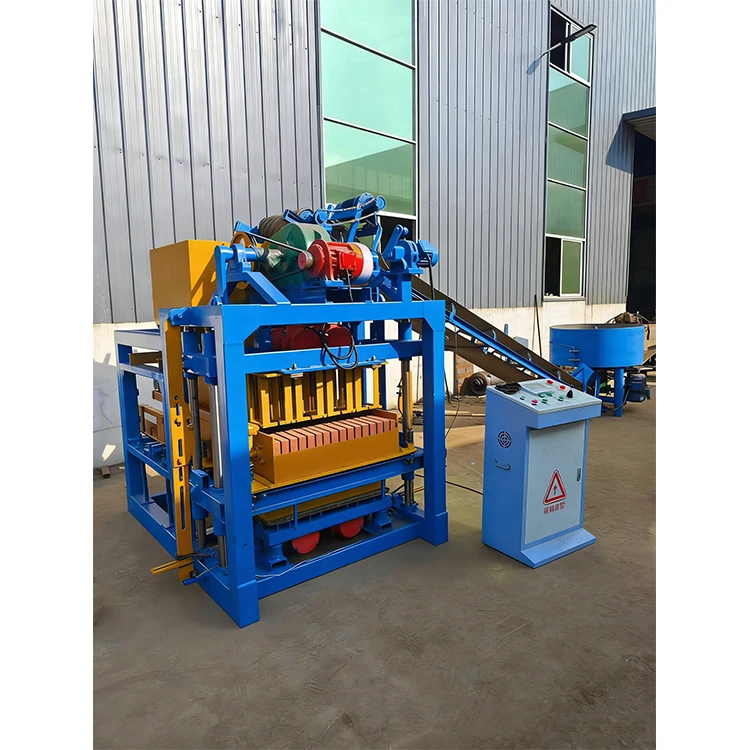
 Automatic block machine