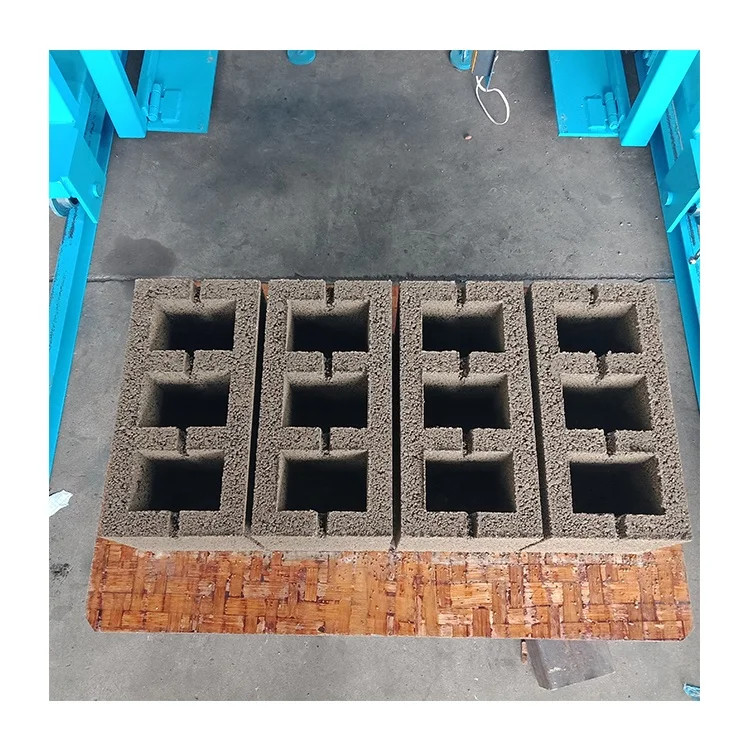
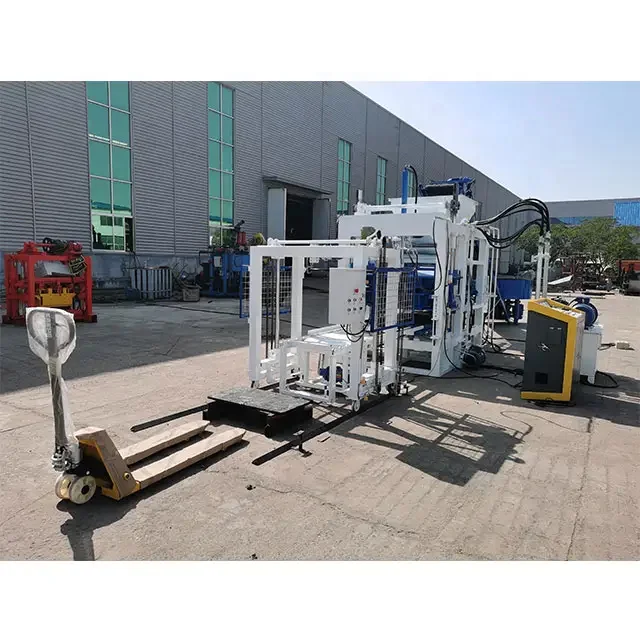
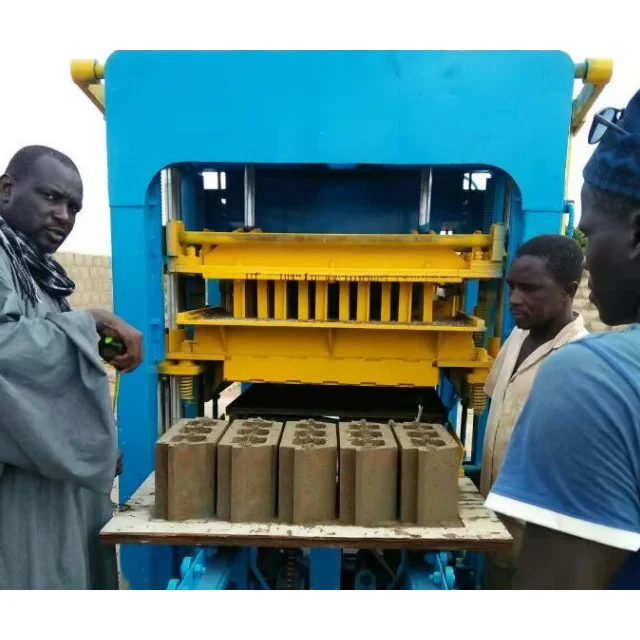
Matched System Configuration — the QT4-18 semi-automatic block machine, moulds, pallets, and handling equipment are specified together against your local aggregate and target block format, avoiding the mismatched-supplier gap that stalls commissioning.
Technical Specifications
| Parameter |
Value |
| Model |
QT4-18 |
| Product Type |
Semi-Automatic Concrete Block Making Machine |
| Overall Dimensions (L×W×H) |
2500×1750×2200mm |
| Rated Pressure |
16 MPa |
| Vibration Form |
Platform Vibration |
| Pallet Size |
950×550mm |
| Molding Cycle |
18-25s (basis not stated in source — confirm block format / material / thickness) |
| Overall Power |
27.5 kW |
| Control System |
PLC with frequency converter |
| Mould Lifting Mechanism |
Double-sided synchronous gears |
| Electrical Components |
Schneider brand (source value — verify against manufacturer catalog) |
| Material Feeder System |
Hopper, feeding box, feeding platform, conveyor system with distribution belt |
| Block Receiver |
Frame, conveyor system, idler wheels, motor and reducer with triangle belt |
| Supporting Equipment Options |
JQ500 concrete pan mixer, 8m/6m belt conveyor, stacker, block clamper, cement silo, batching plant, extra moulds, trolley |
| Mould Change Method |
Manual bolt release (M24 side bolts, upper mould bolts); conveyor-assisted extraction |
| Mould Included |
One free hollow mould; additional moulds available at extra cost and customizable |
| Assembly State |
Requires foundation preparation and cement pouring per installation drawing |
| Voltage & Frequency |
Configurable (confirm before commissioning) |
| PLC Display Language |
Configurable (confirm before commissioning) |
Application Suitability
| Application |
Material or Output |
| Small-to-medium block plants |
Hollow block, solid block, and paving block from crushed stone, river sand, and cement |
| On-site construction production |
Hollow and solid blocks for project-specific wall and foundation work |
| First plant setup for entrepreneurs |
Entry-tier block formats for local building material markets |
| Format expansion for existing manufacturers |
Additional paving or kerbstone formats added via custom moulds |
Why Cycle Time Means Nothing Without the Block Format
A cycle time of 18-25 seconds only translates to real daily output when the block format, mix design, and local aggregate are all stated alongside it.
Many quotations list cycles per hour as a headline figure, but omit which block size that number assumes. A 400×200×200mm hollow block and a 60mm interlocking paver demand very different vibration durations and feeding sequences. When the buyer’s local sand carries high clay content, vibration must extend to achieve proper compaction, and the actual output can fall well below the quoted figure. That gap between expectation and reality is where block plant investments stall [NEED_CITE: common causes of block plant underperformance in emerging markets]. The semi-automatic block machine for sale here ships with a capacity calculation that names the format behind every number.

Where the QT4-18 Sits in the Full Machine Range
The QT4-18 occupies the entry-to-mid tier of the semi-automatic category, positioned between single-unit mobile egg-laying machines and high-capacity fully automatic lines. For buyers surveying options for a first or replacement machine, this model offers a defined plant footprint with room to scale supporting equipment over time. The semi-automatic block machine for sale at this tier requires manual pallet handling at certain stations while automating the press cycle, material feeding, and block receiving — a balance that keeps initial investment contained without sacrificing consistent block quality.
Footprint and Infrastructure Before You Commit
This semi-automatic tier demands a prepared foundation with cured concrete footings, a covered curing area sized to the pallet dimensions of 950×550mm, and a three-phase power supply rated for the 27.5 kW overall load plus mixer and conveyor draw. Buyers who overlook the curing area calculation often find that wet blocks stack up faster than they can be moved, creating a bottleneck that no amount of press speed can fix [NEED_CITE: block curing space requirements relative to daily output]. Confirming site conditions before ordering prevents the situation where a machine arrives and waits weeks for electrical and civil work to catch up.
Pressure, Vibration, and Pallet Size as One Equation
The 16 MPa rated hydraulic pressure works in concert with platform vibration to compact the concrete mix into the mould cavity. Higher pressure alone does not guarantee block strength — the vibration must distribute the mix evenly before full pressure engages. The 950×550mm pallet size determines how many block units form per cycle and must align with the curing rack spacing and forklift capacity already on site. The distribution belt hopper feeds material uniformly across the mould box, reducing density variation from one side of the pallet to the other. Double-sided synchronous gears on the mould lifting mechanism keep demoulding aligned, preventing the edge chipping that occurs when one side of the upper mould releases before the other.
The Hidden Cost of Unmatched Supporting Equipment
When the pallet size is chosen without regard to the buyer’s existing curing racks and forklift, the result is a production line that outputs blocks the yard cannot handle. Pallets that are too large for the curing area force double-stacking before the concrete has set, crushing the bottom layer. Mould changes that consume most of a shift erase the format flexibility the buyer invested in, because the crew avoids switching formats altogether [NEED_CITE: mould change downtime impact on multi-format block plants]. These are not machine failures — they are specification failures that surface only after commissioning.
Why Source the QT4-18 Through This Channel
Block machinery as a single focus means the press, mould, pallet, and handling equipment are specified as one matched system rather than assembled from separate suppliers with incompatible tolerances. Configuration is set against the buyer’s actual mix design and local aggregate, not a catalogue default that assumes clean river sand. Mould design covers the formats the buyer’s market actually sells, including custom drawings for region-specific block profiles. The automation level is selectable, so a buyer can start with the QT4-18 in semi-automatic mode and add automatic stacking or cubing stations as volume grows. Installation support includes on-site commissioning with operator training on the specific PLC language confirmed before production.
Documentation & Verification
- Line layout and capacity calculation stating the block format assumed per cycle time
- Machine specification sheet with confirmed voltage, frequency, and PLC display language
- Mould drawing and format list covering the buyer’s target block profiles
- Pallet specification matched to curing area dimensions and forklift capacity
- Factory test record on the buyer’s specified block format before dispatch
- Hydraulic and electrical schematic for local maintenance reference
Installation, Commissioning & Support
- Foundation requires cured concrete footings per the installation drawing before the 2500×1750mm machine frame is positioned
- Three-phase power supply must accommodate 27.5 kW press load plus JQ500 mixer and conveyor circuits on dedicated breakers
- Machine ships partially dismantled for container loading and requires reassembly and alignment on-site
- PLC display language and voltage configuration confirmed in writing before the control panel is wired
- Operator training covers mould change procedure using the M24 bolt system and conveyor-assisted extraction
- Wear parts list identifies hydraulic seals and vibration motor components with reorder intervals
What We Need to Quote Accurately
To position the QT4-18 correctly within the full range and match the supporting equipment to your site, we need your target block format and dimensions, expected daily output, and a sample of the local aggregate you plan to use. Please also confirm the voltage and frequency standard at your site, the preferred PLC display language, and the pallet handling method you intend to use in the curing yard.
Frequently Asked Questions
Q: How is daily output calculated and which block format does the 18-25s cycle time assume?
A: The molding cycle range applies to a specific block format, wall thickness, and mix design that must be confirmed before the capacity calculation is finalized. A 400×200×200mm hollow block and a thinner paving block require different vibration durations. We provide a written capacity table stating the assumed format for every cycle time figure so your investment decision rests on real numbers, not a generic headline.
Q: Where does the QT4-18 sit compared to fully automatic and mobile block machines?
A: This model occupies the entry-to-mid tier of the semi-automatic block machine range. Mobile egg-laying machines suit on-site production without a fixed plant, while fully automatic lines add pallet stacking and cubing. The QT4-18 bridges the gap with automated pressing and feeding but manual pallet handling at some stations, offering an upgrade path as production volume grows.
Q: What plant footprint and foundation preparation does this tier require?
A: The QT4-18 frame measures 2500×1750mm and requires a level concrete foundation poured to the installation drawing. Beyond the press footprint, you must allocate space for the mixer, belt conveyor, block receiver, and a curing area sized to the 950×550mm pallet. Total plant footprint depends on your chosen supporting equipment configuration and daily output target.
Q: Which supporting equipment is included versus quoted separately?
A: The quotation covers the press with one hollow mould and the block receiver. Options such as the JQ500 pan mixer, belt conveyors, stacker, block clamper, cement silo, and additional moulds are configured and priced based on your line layout. This ensures every station in the line is matched to the press cycle rather than sourced independently.
Q: Can I start semi-automatic and upgrade to higher automation later?
A: Yes. The QT4-18 control system and mechanical interface allow additions such as automatic pallet feeding, stacking, and cubing stations as your production volume increases. The upgrade path is discussed during the initial configuration so that foundation and electrical provisions can accommodate future expansion without rework.

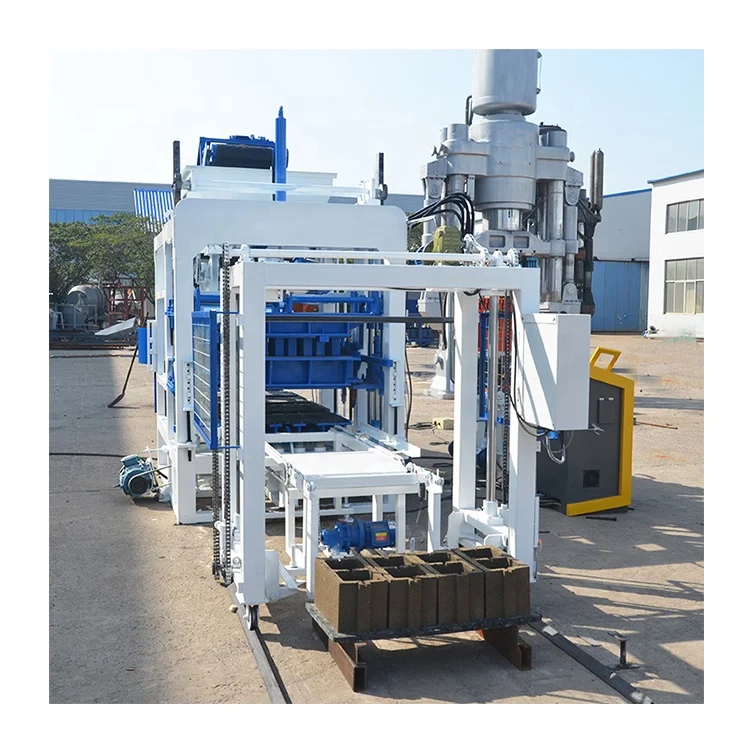
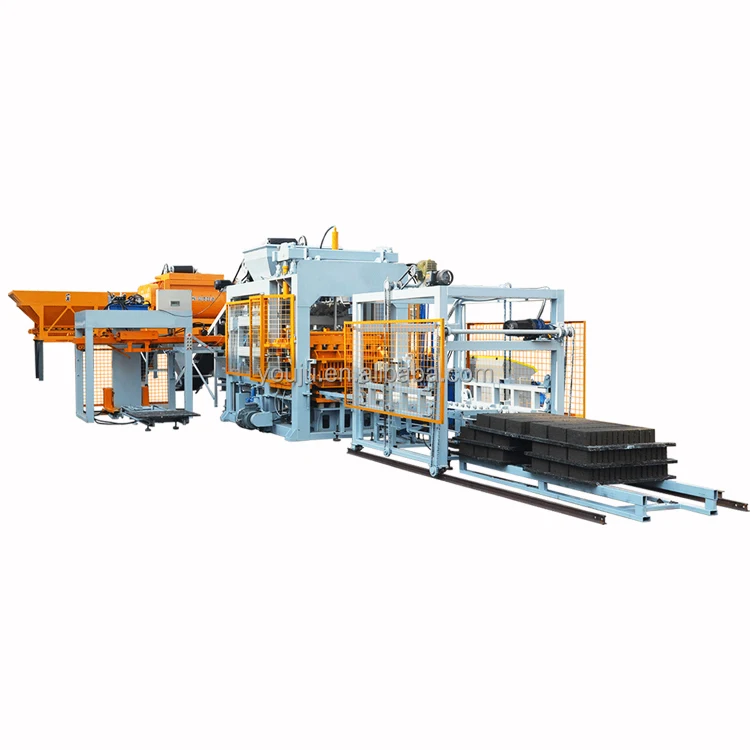 Semi automatic block