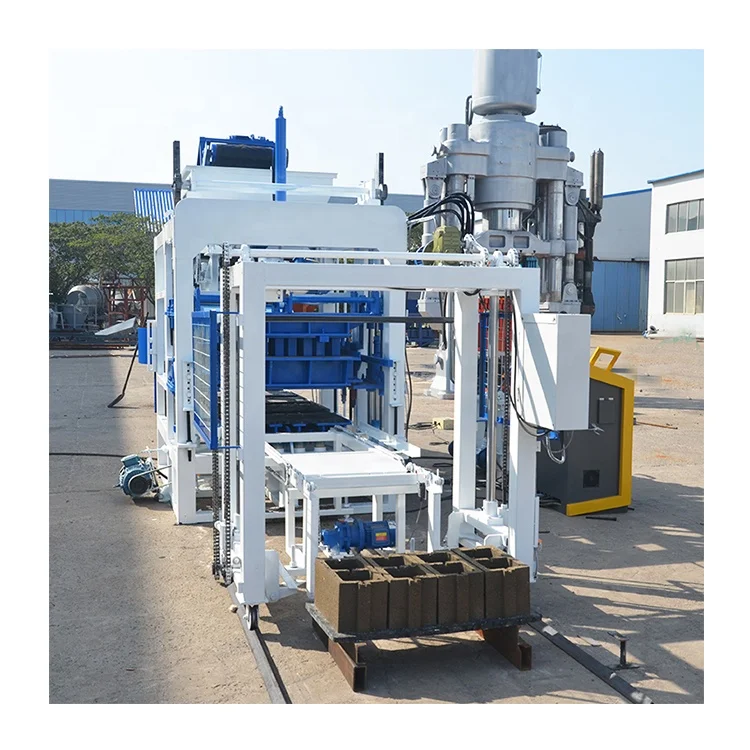
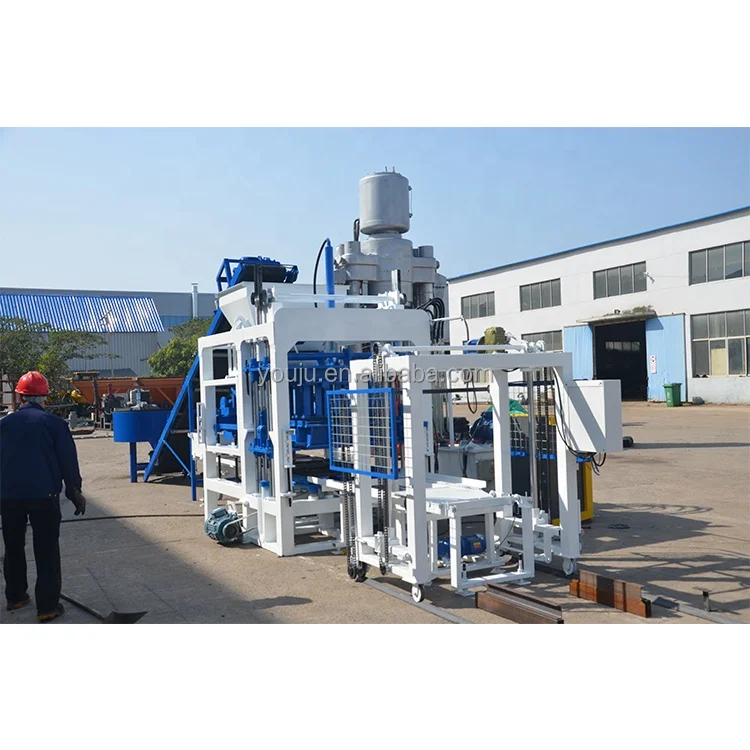
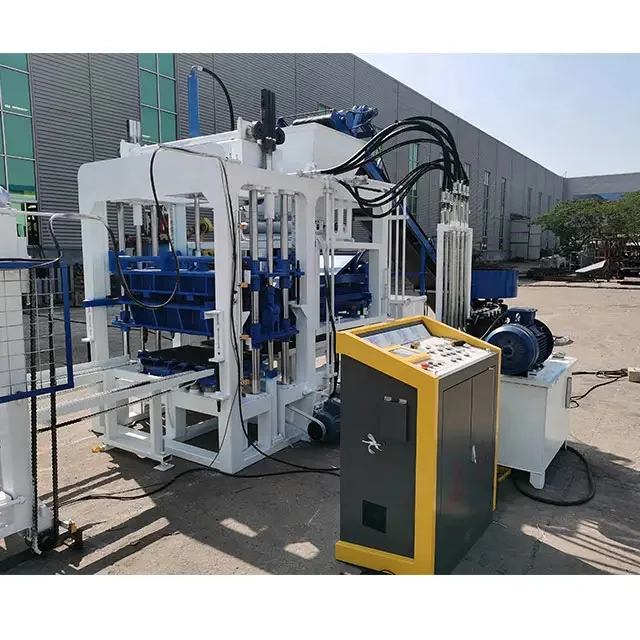
Integrated line configuration — the QTJ4-25 is specified alongside its pallets, moulds, and handling requirements as a single matched system, not sourced from separate suppliers.
Technical Specifications
| Parameter |
Value |
| Model |
QTJ4-25 |
| Product Type |
Semi-automatic Concrete Block Making Machine |
| Overall Dimensions (L×W×H) |
3000×1800×2680 mm |
| Total Mass |
3.5 T |
| Overall Power |
16.58 kW |
| Vibration Force |
60 kN |
| Main Vibration Form |
Platform Vibration |
| Vibration Frequency |
2800–4500 r/min |
| Pallet Size |
850×480 mm |
| Molding Cycle |
25 s |
| Demolding Method |
Mechanical |
| Guide Column |
Four guide columns, overlong guide design |
| Frame Material |
National standard manganese steel |
| Surface Treatment |
Chrome-plated |
| Output Capacity (Hollow Block) |
4640 pcs/day (8 hours) — based on 400×200×200 mm hollow block, 4 pcs/mould |
| Output Capacity (Multi-cellular) |
11200 pcs/day (8 hours) — based on 240×115×90 mm multi-cellular brick, 9 pcs/mould |
| Output Capacity (Solid Brick) |
26400 pcs/day (8 hours) — based on 240×115×53 mm solid brick, 21 pcs/mould |
| Factory Area |
300 m² |
| Warranty |
1 year for the whole machine (excluding spare parts) |
Application Suitability
| Application |
Material or Output |
| Small to medium block production plants |
Hollow blocks, solid blocks, and pavers using crushed stone, sand, and cement |
| On-site construction contracting |
Solid bricks and interlocking blocks from locally sourced gravel, fly ash, and slag |
| First block plant for entrepreneurs |
Multi-format production across hollow and solid formats on a single machine platform |
| Building material distribution |
Catalogue entry for cost-sensitive buyers needing mechanical vibration forming |
Why the Mould Specification Matters More Than the Cycle Time
A cycle time means nothing without the block format and cavity count that produced it.
When I first started commissioning semi-automatic block machines in East Africa, I watched buyers sign contracts based on a single headline output number. Once the container arrived, the daily volume on their actual bestselling block format fell well short of what they had budgeted for. The cycle time on the QTJ4-25 is 25 seconds, but the real daily tonnage depends entirely on whether you are pressing a four-cavity hollow block mould or a twenty-one cavity solid brick mould. This is why every capacity figure we quote names the exact format, mould cavity count, and shift length behind it [NEED_CITE: block production capacity calculation standards]. The semi-automatic block making machine for sale here is no exception — understanding its output tier relative to fully automatic lines prevents costly under-sizing.
Where the QTJ4-25 Sits in the Machine Range
This machine occupies the entry-to-mid tier of our semi-automatic range. It uses platform vibration with dual super motors and an upper mould vibration motor to deliver the 60 kN compaction force required for consistent block density. Buyers who need higher volumes or full pallet automation typically move to a hydraulic automatic tier, but for entrepreneurs establishing a first plant or contractors pressing blocks on a project site, this QTJ4-25 semi-automatic block making machine for sale offers a manageable footprint and investment level.
Matching Output Tiers to Your Actual Market Demand
The decision between a semi-automatic and a fully automatic line should be driven by the formats your market actually buys. If your local demand is split between hollow blocks for structural walls and pavers for driveways, the QTJ4-25 handles both through mould exchange on the same platform. A fully automatic line with integrated stacking and cubing only justifies its higher investment when a single format dominates your daily volume. We map each machine tier against your stated product mix before recommending a configuration [NEED_CITE: block plant investment planning by output tier].
Platform Vibration and Frame Rigidity Explained
The 60 kN vibration force is generated at 2800–4500 r/min across the platform, compacting the concrete mix from below while the upper mould vibration motor settles the top surface. This dual action matters because single-source vibration often leaves density gradients that cause weak corners on hollow blocks. The frame uses national standard manganese steel with reinforced welding to resist the constant seismic loading of vibration cycles. The four overlong chrome-plated guide columns prevent the mould box from tilting during the demolding stroke — a mechanical fault that ruins dimensional tolerance and causes pallet jams downstream.

When a Mismatched Pallet Derails the Entire Line
The 850×480 mm pallet size must align with the curing racks and forklift tines you already operate. I have seen plants where the machine was installed on schedule, but production stalled because the buyer’s existing forklift could not handle the loaded pallet weight, forcing a complete re-racking of the curing yard. The QTJ4-25 operates as a semi-automatic unit with mechanical demolding, meaning pallets are fed and collected manually or via a separate conveyor — confirming this handling scope before shipment prevents a bottleneck that no amount of press speed can overcome [NEED_CITE: pallet handling logistics in block production].
Why Configuration Verification Starts Here
We treat block machinery as a single focus, so the QTJ4-25 is never quoted as a standalone press. The machine, mould, pallet, and handling equipment are specified together against your local aggregate and target block format. Our mould design covers the formats your market actually sells, including custom drawings when standard cavity counts do not match your demand. The automation level is selectable, meaning a buyer can begin with this semi-automatic tier and plan an upgrade path. Installation support includes operator training on the specific mix design and vibration parameters required for your raw materials, addressing the inconsistency issues that arise when machines are configured against a catalogue default rather than a site sample.
Documentation & Verification
- Line layout and capacity calculation stating the QTJ4-25 block format and cycle time assumed
- Mould drawing and format list confirming cavity count for each target block size
- Pallet specification matched to the 850×480 mm size and your curing area layout
- Hydraulic and electrical schematic with voltage and frequency noted before production
- Factory test record on your specified mix design before dispatch
Installation, Commissioning & Support
- Foundation pad leveled for the 3000×1800 mm footprint within the 300 m² factory area
- Dedicated electrical circuit sized for the 16.58 kW overall power draw at confirmed voltage
- Mechanical demolding system calibrated on-site to match your concrete mix consistency
- Operator training on mould change procedure and vibration frequency adjustment for local aggregate
- Wear parts list covering guide columns and vibration box bearings with first-order lead time
Before You Request a Quote
To determine whether the QTJ4-25 is the correct tier for your operation, share your target block formats, the daily volume required for each, and the source of your local aggregate. We also need your site voltage, frequency, and the language required for any control interfaces. If you have existing curing racks or material handling equipment, provide the dimensions so we can confirm pallet compatibility across the full line.
Frequently Asked Questions
Q: How is the daily output of the QTJ4-25 verified for each block format?
A: Each capacity figure is tied to a specific block dimension, mould cavity count, and an eight-hour shift. For example, the 4640 pieces per day rating applies only to 400×200×200 mm hollow blocks pressed in a four-cavity mould at a 25-second cycle. We provide a written capacity calculation showing the assumed format so buyers can cross-reference against their actual market demand rather than relying on a single headline number.
Q: When should a buyer move from this semi-automatic tier to a fully automatic line?
A: The step up is justified when a single block format dominates your daily output and manual pallet handling becomes the bottleneck limiting press utilization. If your production is split across multiple formats requiring frequent mould changes, the QTJ4-25 semi-automatic range often remains the more practical configuration until total volume crosses into the high-capacity automatic tier.
Q: What electrical details must be confirmed before the QTJ4-25 enters production?
A: Voltage, frequency, and any PLC display language must be confirmed before the electrical cabinet is assembled. Arriving with a control panel configured for the wrong supply or an unreadable interface delays commissioning by weeks. We require written confirmation of these parameters alongside the local grid specification before production begins.
Q: What site preparation is needed for the 300 m² factory area requirement?
A: The QTJ4-25 requires a level foundation slab capable of supporting the 3.5-tonne machine mass plus dynamic vibration loading. The 300 m² area must also accommodate raw material storage, the pallet return path, and curing racks for the 850×480 mm pallets. Confirming the full site layout before shipment ensures the press is not left idle waiting for downstream space to be cleared.
Q: What is the lead time for replacement moulds and wear parts on the QTJ4-25?
A: Standard moulds and common wear parts such as guide column bushings and vibration motor bearings are stocked. For custom mould drawings or non-standard cavity configurations, the lead time is confirmed at the point of order. We recommend buyers place their first replacement order alongside the machine to avoid production pauses when initial wear occurs.

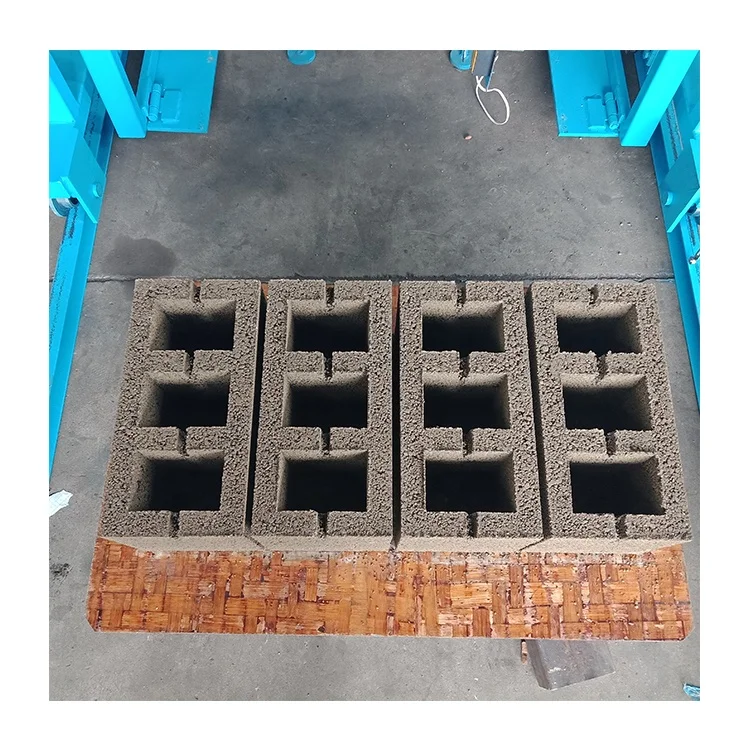
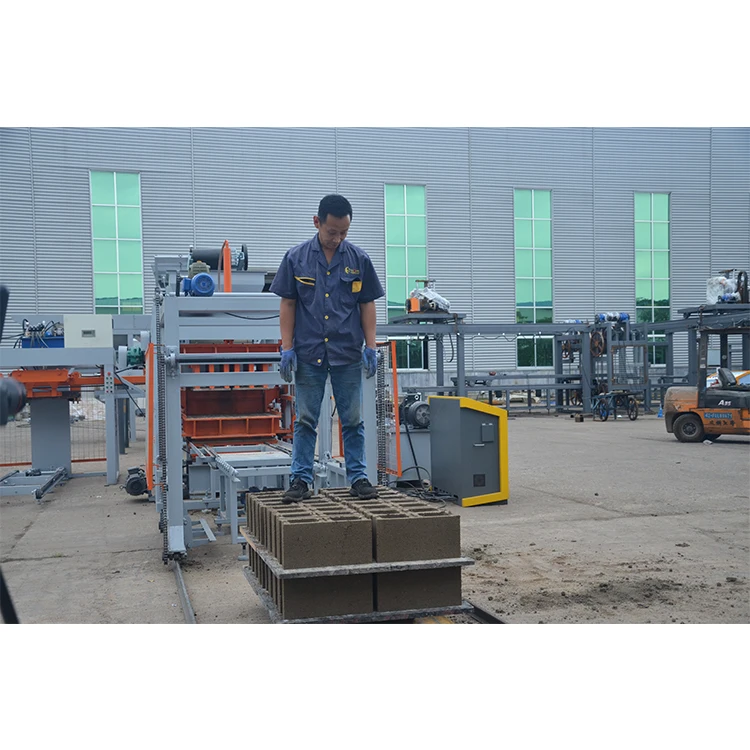 Semi automatic block