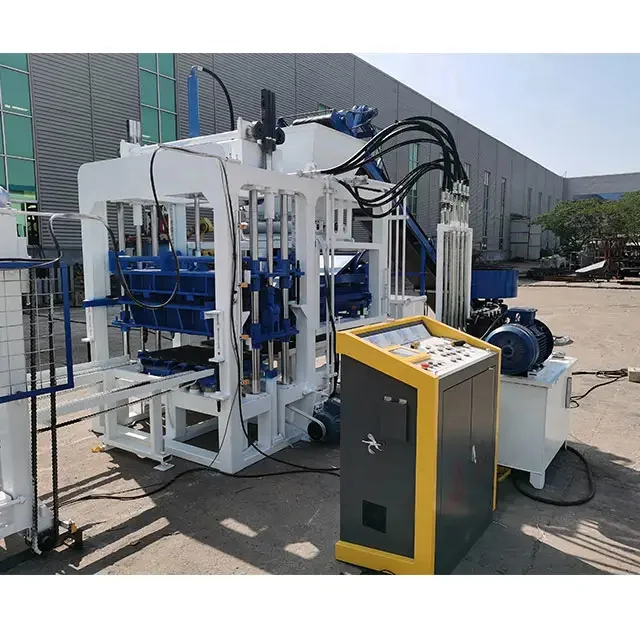
Matched System Delivery — The QT4-15 is specified as one integrated press, mould, pallet, and handling set rather than a collection of separate purchases, so cycle times and output figures reflect real line conditions.
Technical Specifications
| Parameter |
Value |
| Model |
QT4-15 |
| Product Type |
Automatic Concrete Block Making Machine |
| Overall Dimensions (L×W×H) |
7100 x 1600 x 2610 mm |
| Rated Pressure |
16 MPa |
| Vibration Form |
Platform Vibration |
| Pallet Size |
1020 x 570 mm |
| Molding Cycle |
15–25 s (basis not stated in source — confirm block format / material / thickness) |
| Overall Power |
27.5 kW |
| Control System |
PLC (electronic console) |
| Automation Level |
Automatic pallet feeding, block conveying, demoulding |
| Mould Change System |
Manual bolt-fixed upper and lower moulds with conveyor assistance |
| Block Formats Supported |
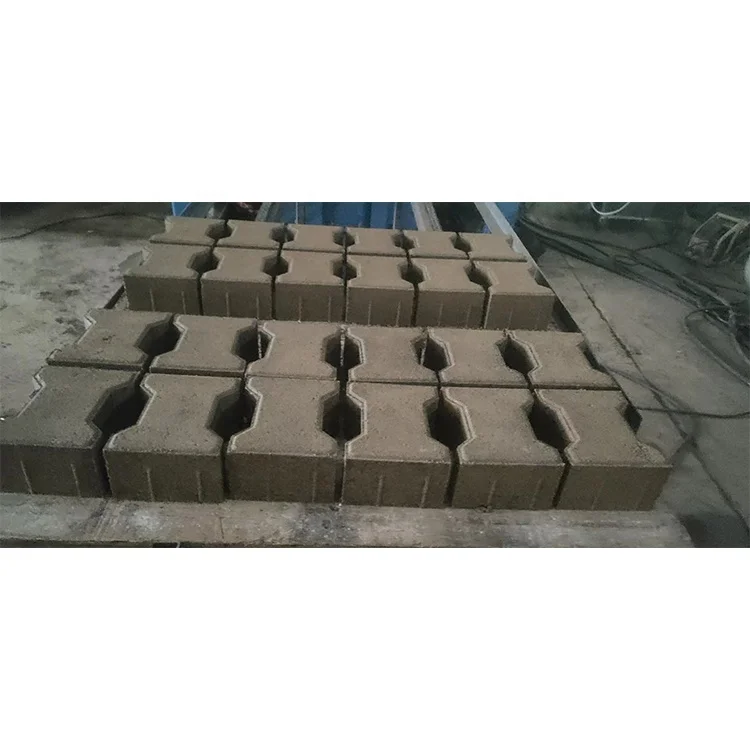
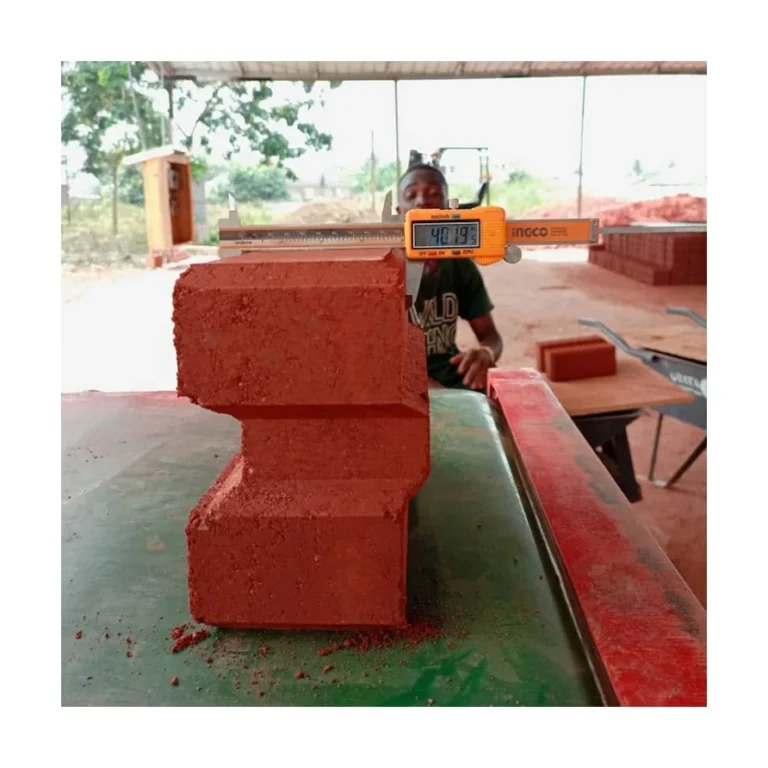
Hollow block, interlocking brick, paving block |
| Material Feeder |
Hopper, feeding box, feeding platform, conveyor system |
| Block Conveying |
Motor and reducer with triangle belt to front idler wheels |
| Voltage & Frequency |
Configurable (to be confirmed before production) |
Application Suitability
| Application |
Material or Output |
| Concrete hollow block production for building construction |
Crushed stone, sand, cement, fly ash aggregates |
| Interlocking paving block manufacturing for roads and walkways |
Fine aggregate mixes with pigment layers |
| On-site block production for housing and development projects |
Locally sourced sand and gravel with cement binder |
| Small to medium block plants upgrading from manual operations |
Standard concrete mixes across hollow and solid formats |
What "15–25 Seconds Cycle Time" Actually Means for Your Output
A cycle time without a block format attached is not a capacity figure — it is a starting point for calculation.
Many quotations list a single cycle range and leave the buyer to assume it applies equally to every mould on the list. In practice, a 150 mm solid block takes noticeably longer to compact and demould than a standard hollow block, and the difference compounds across a full shift. I once saw a project schedule built around a QT4-15 automatic block making machine manufacturer’s catalogue figure, only to discover on site that the published cycle assumed a lightweight hollow format the buyer was not even producing [NEED_CITE: block format assumptions in published cycle times]. The result was a daily shortfall that delayed masonry work by days. Stating which block format each capacity figure assumes before an order is placed removes this gap.

Where the QT4-15 Sits Across the Full Machine Range
The QT4-15 occupies the mid-tier position in the automatic block machine lineup, bridging the gap between semi-automatic machines that require manual pallet handling and high-capacity lines with full stacking and cubing. For a buyer surveying options, this tier offers automated pallet feeding and block conveying without the plant footprint or investment level of a larger press. The 7100 mm machine length and 27.5 kW total power draw keep infrastructure requirements moderate, making it a practical entry point for entrepreneurs setting up a first block plant or contractors replacing aging manual equipment.
Understanding Output Tiers Before You Commit
Choosing a tier is not just about peak capacity — it is about matching the machine to the daily volume your market actually absorbs. A QT4-15 automatic block making machine manufacturer will typically quote this model for buyers whose target output sits between workshop-scale production and full industrial line volumes. The 1020 x 570 mm pallet size determines how many blocks are pressed per cycle, and that pallet dimension must align with the curing racks and forklifts already on site [NEED_CITE: pallet size compatibility with existing curing infrastructure]. Buyers moving up from a mobile egg-laying machine will find the step to platform vibration and PLC control delivers consistent block density without requiring a complete plant redesign.
Pressure, Vibration, and Pallet Size — What the Numbers Mean on the Floor
The 16 MPa rated hydraulic pressure works together with platform vibration to compact the concrete mix into the mould cavity. Higher pressure alone does not guarantee stronger blocks — the vibration force must be matched to the buyer’s specific mix design and local aggregate gradation, otherwise the concrete either segregates or fails to fill the mould corners fully. The 1020 x 570 mm pallet size determines the mould footprint and therefore the number of blocks per cycle; selecting a pallet dimension without checking the curing area layout means blocks may have to be double-handled after pressing. The PLC-controlled electronic console manages the automatic pallet feeding and block conveying sequence, reducing the operator’s role to monitoring and mould changes. Mould changeover uses manual bolt-fixed upper and lower moulds with conveyor assistance, which keeps the mechanism simple but means format switching takes a measurable portion of a shift — a factor that must be included when calculating realistic daily output across multiple block types.
The Hidden Cost of Overlooking Pallet and Voltage Details
When a pallet size is chosen without regard to the curing area and forklift the buyer already owns, the result is double handling that erases the productivity gain of the automatic press. Similarly, when voltage, frequency, and PLC display language are not confirmed before production, the machine arrives on site and sits idle while transformers are sourced or control panels are rewired [NEED_CITE: voltage and frequency standards by export market]. These are not engineering failures — they are specification gaps that surface only after the container is unloaded. The cost is measured in idle crews and delayed project milestones rather than in the machine price itself.
Why Buyers Source This Tier Here
Block machinery is the single focus of this operation, so the QT4-15 is not sold as a standalone press but as part of a matched system that includes moulds, pallets, and handling equipment specified together. Configuration is set against the buyer’s actual mix design and local aggregate rather than a catalogue default, which means the 16 MPa pressure and vibration settings are validated before the machine ships. Mould design covers the formats the buyer’s market actually sells, including custom drawings when standard options do not match local demand. Automation level is selectable, so a buyer can start with the QT4-15’s automatic pallet feeding and block conveying and add stacking or cubing modules later. Installation support includes on-site commissioning and operator training so the crew is productive from the first production run.
Documentation & Verification
- Line layout and capacity calculation stating the block format assumed for each output figure
- Machine specification sheet with voltage, frequency, and PLC language confirmed before production
- Mould drawing and format list for every block type in the buyer’s product range
- Hydraulic and electrical schematic matching the as-built configuration
- Factory test record and packing photographs provided before shipment
Installation, Commissioning & Support
- Foundation plan sized to the 7100 x 1600 mm footprint and dynamic vibration load
- Dedicated power circuit rated for the 27.5 kW total draw at confirmed voltage and frequency
- Machine dismantled for container loading with reassembly guidance on site
- PLC console parameters set to the buyer’s mix design and target block format during commissioning
- Operator training covering mould change procedure and daily maintenance checkpoints
- Wear parts list with hydraulic seal and mould liner reorder references
What to Share When You Request a Proposal
To receive a configuration that reflects actual site conditions rather than a catalogue default, share the block formats your market demands along with the daily volume target for each. Include the local aggregate type and cement source so the mix design can be factored into pressure and vibration settings. Confirm the available voltage and frequency at the plant location, the PLC display language your operators need, and the pallet size that matches your existing curing racks and forklifts.
Frequently Asked Questions
Q: How is the 15–25 second molding cycle verified, and which block format does each figure assume?
A: The published cycle range is measured under specific conditions that depend on block format, wall thickness, and mix composition. Before an order is placed, the capacity calculation states the exact block format and mix design assumed for each output figure, so the buyer can compare quoted capacity against real production targets rather than a single unqualified number.
Q: Where does the QT4-15 sit compared to semi-automatic and higher-capacity models?
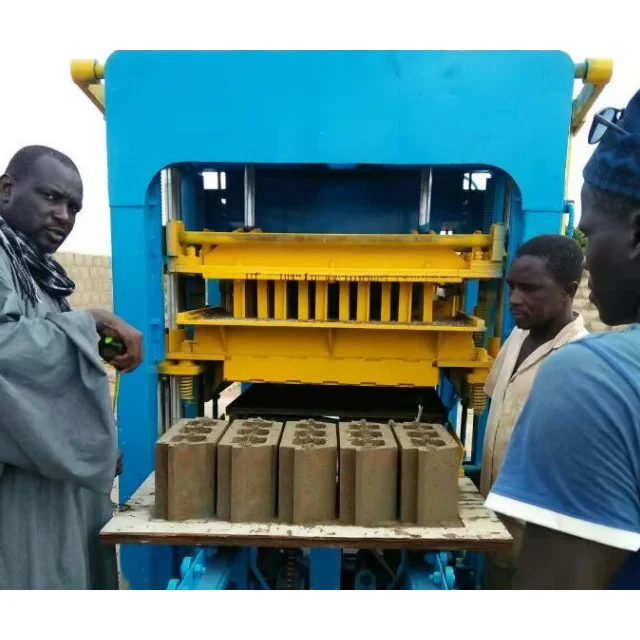
A: It occupies the mid-tier, offering automatic pallet feeding and block conveying without the footprint or investment of a full high-capacity line. Buyers stepping up from semi-automatic machines gain consistent cycle control, while those who do not yet need full stacking and cubing avoid paying for capacity they will not use.
Q: What plant footprint and foundation preparation does this tier require?
A: The machine itself measures 7100 x 1600 mm, but the working area must also accommodate the material feeder, pallet return path, and block conveying exit. A reinforced concrete foundation is required to absorb the platform vibration load, and the specification sheet provides exact anchor point positions before installation begins.
Q: Can I start with the QT4-15 and upgrade automation or add formats later?
A: Yes. The automation level is modular, so additional stations such as automatic stacking or cubing can be added as production volume grows. New mould formats can be designed and supplied to match market demand, with the manual bolt-fixed change system accepting custom upper and lower mould sets.
Q: What voltage, frequency, and PLC language options are confirmed before dispatch?
A: These are confirmed during the quotation stage, not after shipment. The buyer provides the plant’s electrical supply specification and preferred operator language, and the machine is built and tested to those parameters so commissioning can begin immediately upon arrival.

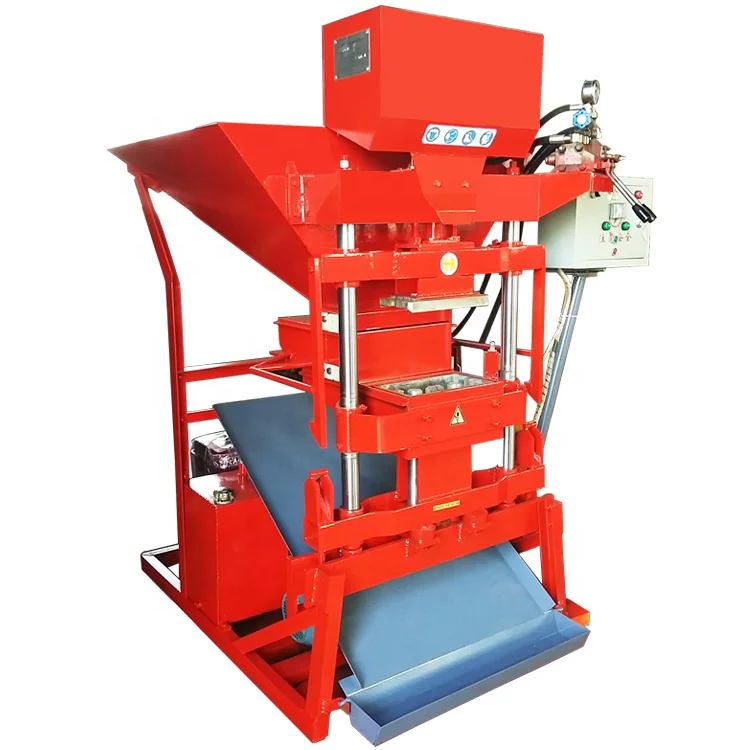 Semi automatic block