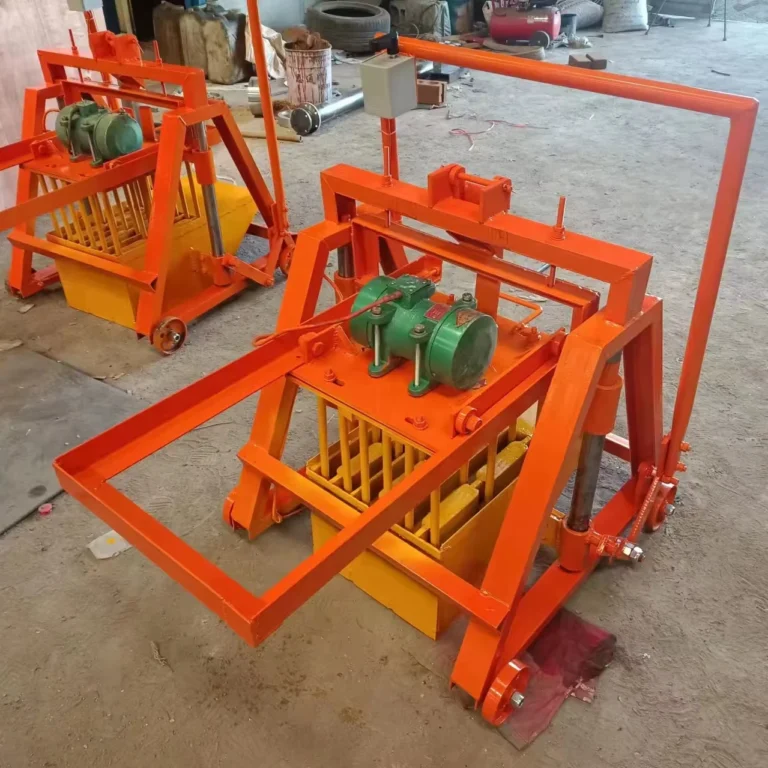
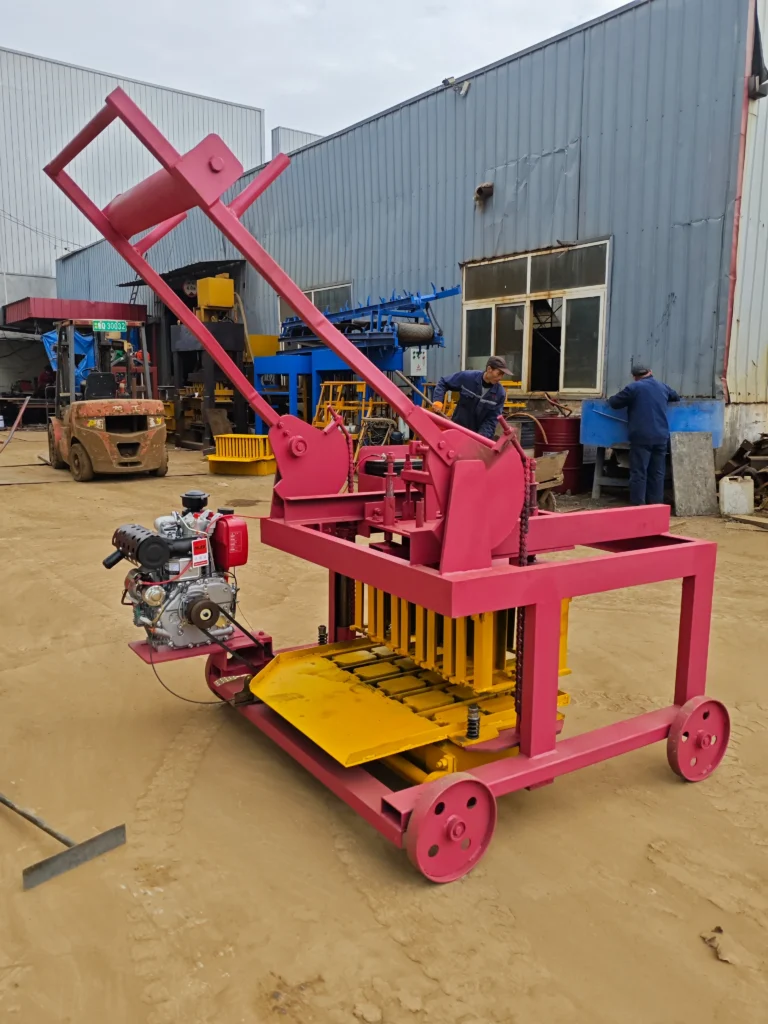
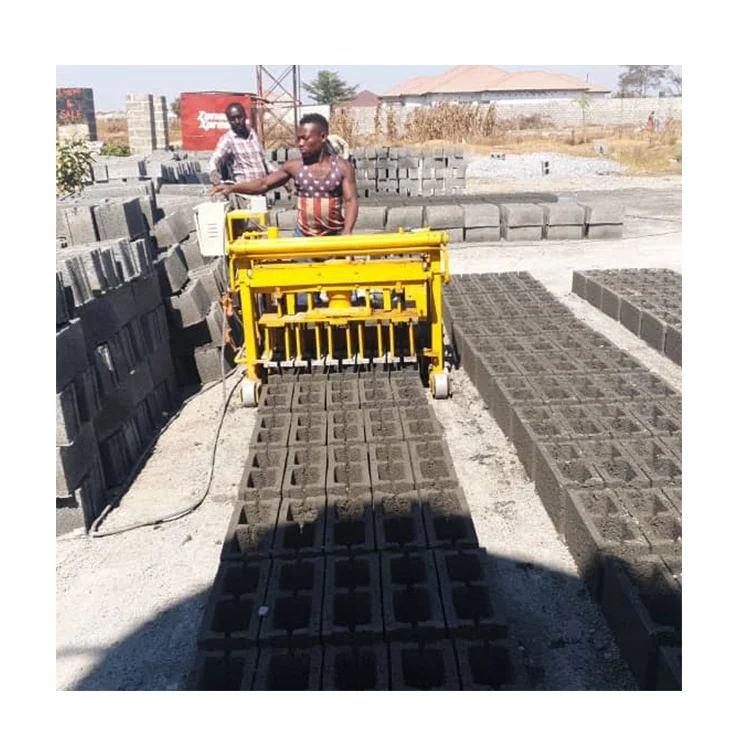
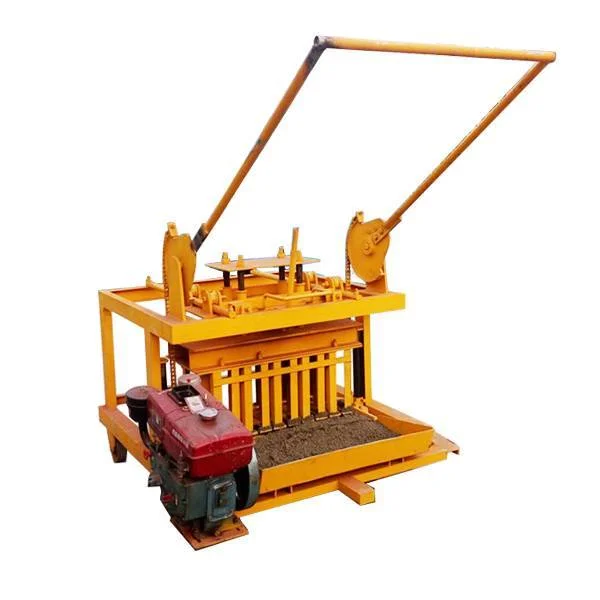
Integrated System Design — This QMY4-30 mobile block machine is specified as a matched set of mould, pallet, and vibration system based on your target block format and local aggregate, avoiding the mismatch that leaves buyers with impressive cycle times but disappointing daily output.
Technical Specifications
| Parameter |
Value |
| Product Type |
Mobile Block Machine |
| Mould Type |
Hollow block, solid block, paver (interchangeable) |
| Vibration System |
Electric motor-driven vibration |
| Forming Cycle |
Manual or semi-automatic sequence depending on configuration |
| Pallet Size |
Configurable based on target block format |
| Power Supply |
Voltage and frequency configurable for destination market |
| Mobility |
Self-propelled egg-laying design, no fixed curing racks required |
| Control System |
Available with basic push-button or PLC control |
Application Suitability
| Application |
Material or Output |
| On-site hollow block production |
Crushed stone, sand, cement, water |
| Solid block manufacturing for local projects |
Local aggregate blends, cement |
| Paving block production for walkways and yards |
Fine aggregate, cement, optional pigment |
| Remote construction sites without fixed plants |
Any locally sourced concrete mix |
Why a Mobile Block Machine Demands a Mix-Specific Setup
A mobile block machine is only as productive as the match between its vibration force and your actual raw material.
I have stood on sites in West Africa where a newly arrived egg-laying machine produced blocks that crumbled at the edges after curing. The sand sourced from the nearby riverbed had a high clay content, which absorbed vibration energy differently than the clean crushed granite the machine was configured for at the factory. The blocks left the mould looking acceptable, but the internal density was uneven, leading to breakage during handling and a rejection rate that wiped out the planned daily volume [NEED_CITE: effect of clay content in sand on concrete block density]. Buyers often focus on the cycle time quoted in the brochure without asking which block format and which aggregate blend that figure assumes. The QMY4-30 mobile hollow block machine must be tuned to your specific conditions before it leaves the factory.

Placing the QMY4-30 Within the Block Machine Range
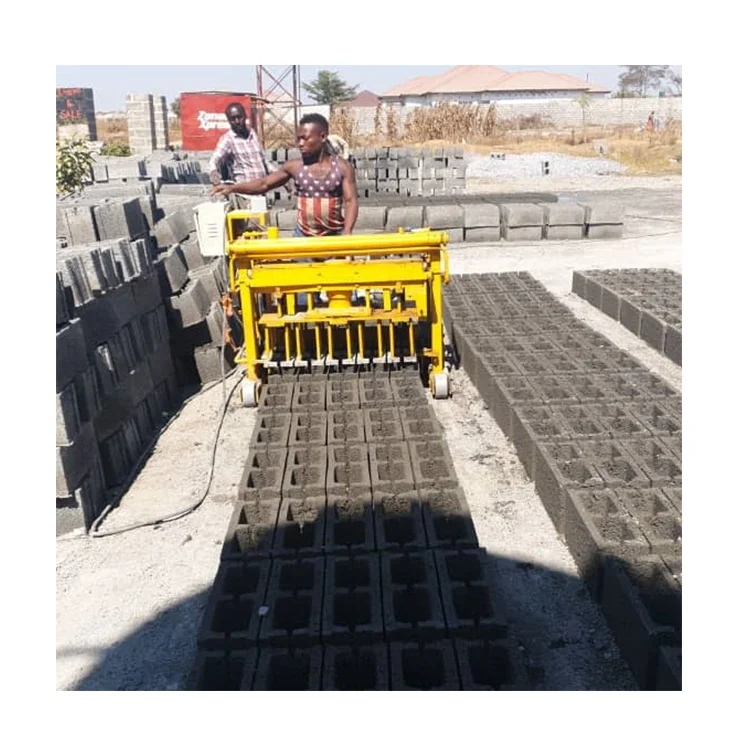
The QMY4-30 mobile hollow block machine sits at the entry point of the range, designed for buyers who need to produce blocks directly on a project site without investing in fixed curing racks, pallet return systems, or a dedicated plant building. It lays blocks onto the ground and moves forward, leaving the blocks to cure in place. This approach eliminates pallet costs entirely but requires a large, flat, and well-compacted production area.
Who Benefits from an Egg-Laying Configuration
Contractors running housing developments, road-side paver projects, or remote infrastructure work benefit most from this format. The machine arrives on a flatbed truck, is lowered into position, and begins producing within hours of setup. For buyers producing multiple block formats, the trade-off is that mould changes on a mobile unit take longer than on a stationary press, so the QMY4-30 mobile hollow block machine is best committed to one or two high-volume formats rather than frequent changeovers [NEED_CITE: typical mould change procedures on mobile block machines].
Understanding the Vibration and Pressure Balance
In mobile block machine design, the electric motor-driven vibration must compact the concrete mix sufficiently to hold its shape immediately after the mould lifts, without the support of a heavy hydraulic press. The vibration frequency and amplitude determine how well fine particles settle around the aggregate. If the amplitude is too low for a coarse aggregate blend, voids remain inside the block, reducing compressive strength. If the frequency is too high for a fine, clay-rich sand, the mix liquefies and the block slumps before it can be laid. The pallet size and mould cavity count are selected together so that each block receives consistent vibration energy across its entire volume.
The Cost of Skipping the Material Test
When a mobile block machine is configured for a generic mix and arrives at a site where the local sand behaves differently, the first sign of trouble is inconsistent block weight from one cycle to the next. Operators then spend weeks adjusting water content and vibration duration by trial and error, burning through cement and losing production days. In some cases, the only solution is to replace the local sand with a more expensive imported aggregate, which was never part of the project budget [NEED_CITE: material substitution costs in concrete block production]. This is avoidable when the mix is tested and the machine parameters are set before shipment.
Why Sourcing Through This Range
Block machinery is the single focus of this product line, so the QMY4-30 mobile hollow block machine is specified with its mould and vibration system as a matched set rather than assembled from separate catalogue items. The configuration is set against your target block format and local aggregate, not a default showroom setting. Moulds are available for the formats your market actually sells, and custom mould drawings can be produced to buyer specifications. The automation level is selectable, allowing a buyer to start with basic controls and plan an upgrade path later. Installation support includes on-site commissioning and operator training so the crew understands how to adjust for material variation from the first day.
Documentation & Verification
- Line layout showing required flat production area dimensions for the mobile unit
- Machine specification sheet with vibration motor rating and mould cavity count
- Mould drawing and format list confirming block dimensions before production
- Voltage and control language confirmation matched to destination site
- Factory test record using sample aggregate shipped by the buyer
Installation, Commissioning & Support
- Level, compacted ground surface required across the full production and curing area
- Dedicated power circuit matching confirmed voltage and frequency at the site
- Machine offloaded and assembled on-site with vibration system checked before first run
- Initial production run supervised to set cycle timing for the buyer’s actual mix
- Operator training covering mould change procedure and daily vibration motor inspection
- Wear parts and mould replacement list provided with part numbers for reordering
What to Prepare Before Requesting a Quote
To size the QMY4-30 mobile hollow block machine correctly, we need to know the exact block format and dimensions you intend to produce, the source and type of your local sand and aggregate, and your target daily output based on a standard shift length. Please also confirm the available voltage and frequency at your site, along with the language required for the control interface if PLC is selected. Sharing a sample of your raw material allows a factory test before the configuration is finalized.
Frequently Asked Questions
Q: Does a mobile block machine need pallets to operate?
A: No. The egg-laying design of the QMY4-30 mobile hollow block machine places blocks directly onto a prepared ground surface, eliminating the need for curing pallets entirely. This reduces ongoing consumable costs but requires a large, flat, and well-compacted area for production and curing to take place side by side.
Q: Can I switch between hollow blocks and paving blocks on this machine?
A: Yes, the mould is interchangeable, but each format requires its own dedicated mould set. Mould changes on a mobile unit involve aligning and securing the new mould to the vibration table, which takes longer than on a stationary hydraulic press, so planning production runs around one format at a time is more efficient.
Q: What ground preparation is needed before the machine arrives?
A: The production area must be flat, compacted, and free of debris across the entire zone where blocks will be laid and cured. A concrete slab or well-rolled gravel base is typical. Any unevenness causes the machine to tilt during laying, resulting in blocks with inconsistent height.
Q: How is the machine powered on a remote site without grid electricity?
A: The QMY4-30 mobile hollow block machine requires a stable power supply at the confirmed voltage and frequency. On sites without grid access, buyers typically use a diesel generator sized to handle the vibration motor starting current. Generator specifications should be confirmed before shipment to avoid under-powering the unit.

 Mobile block machine