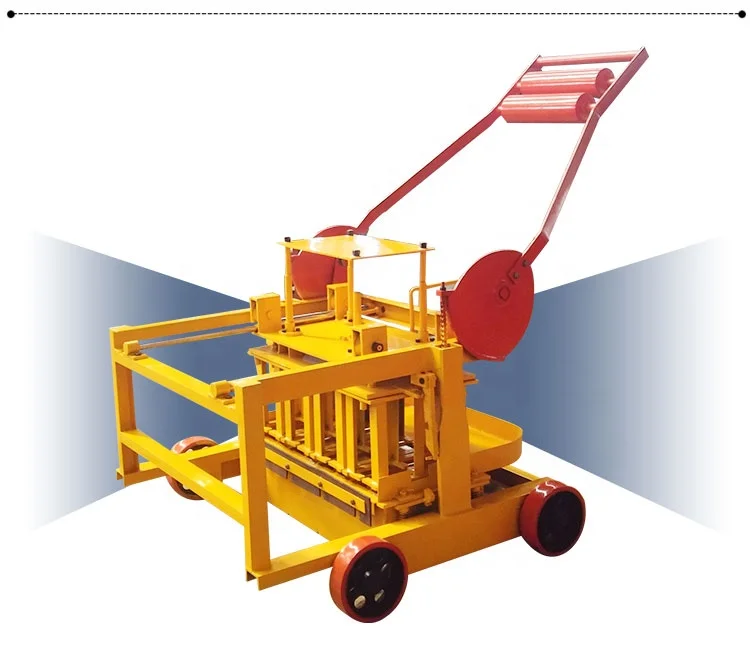
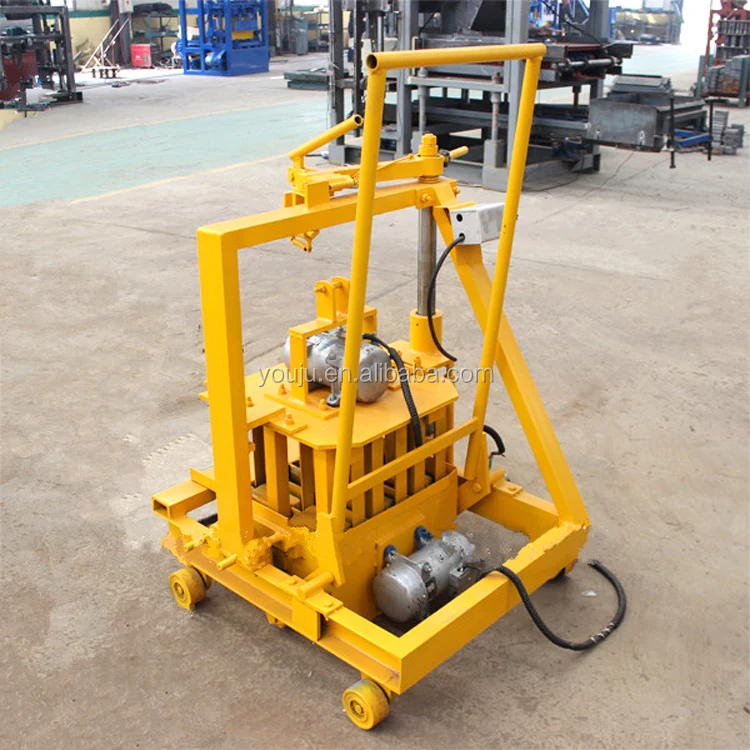
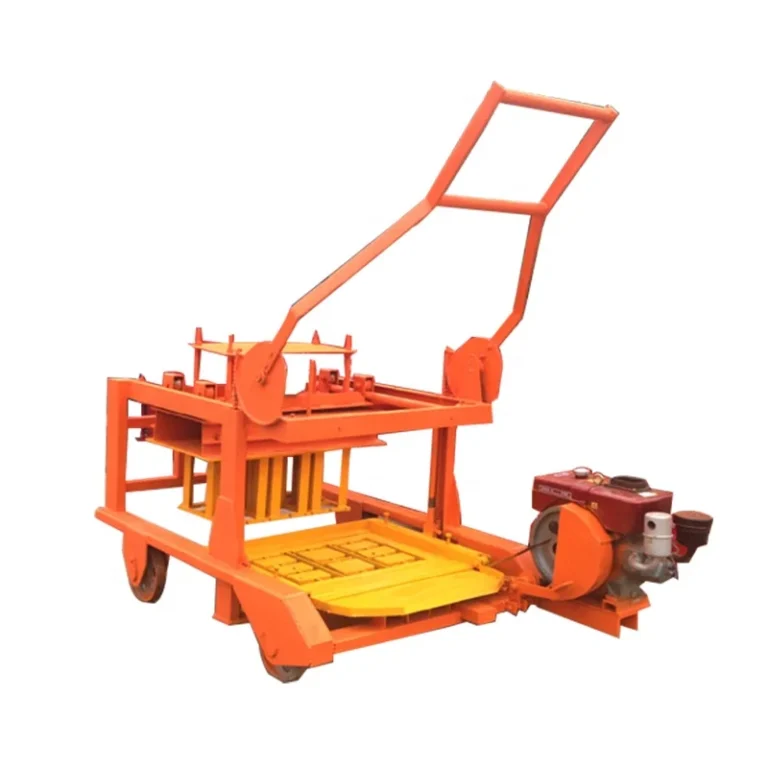
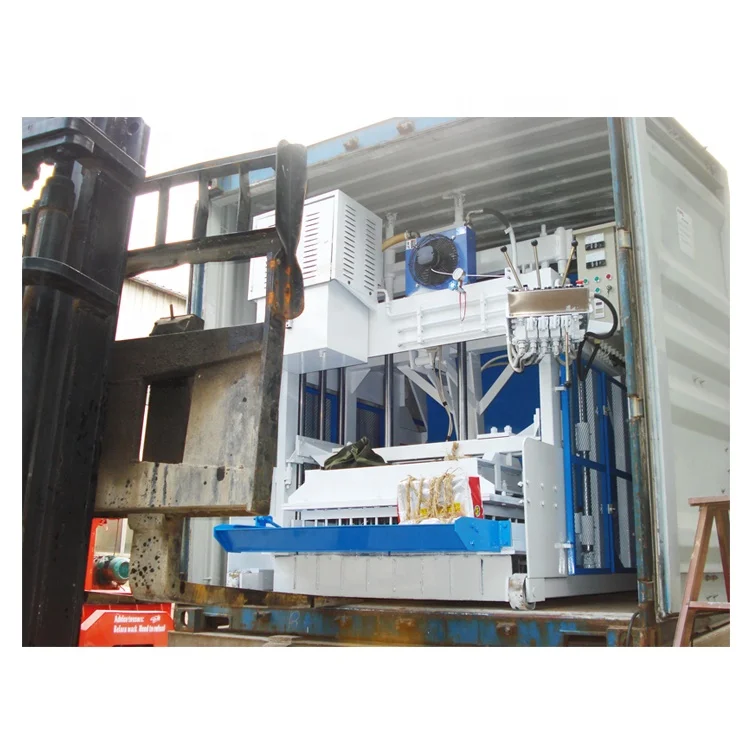
Matched System Configuration — Every QMY4-30 mobile block making machine ships with press, mold, and pallet specified together for your local aggregate, eliminating the mismatch between quoted capacity and actual site output.
Technical Specifications
| Parameter |
Value |
| Model |
QMY4-30 |
| Product Type |
Mobile Block Making Machine |
| Rated Power |
5 kW |
| Overall Dimensions (L×W×H) |
1200 × 1200 × 1100 mm |
| Net Weight |
950 kg |
| Cycle Time |
30 seconds per cycle |
| Automation Level |
Manual operation (mobile egg-laying type) |
| Assembly State |
Mobile, no fixed plant foundation required |
| Raw Materials |
Cement, sand, crushed stones, slag |
| Mould Format |
Changeable — hollow block and solid brick |
| Output Capacity |
480 pcs/hour based on 400×200×200 mm hollow block, 4 pcs/mold |
| Output Capacity |
600 pcs/hour based on 400×150×200 mm hollow block, 5 pcs/mold |
| Output Capacity |
840 pcs/hour based on 400×100×200 mm hollow block, 7 pcs/mold |
| Daily Output (8 hrs) |
3,840 pcs based on 400×200×200 mm hollow block |
| Daily Output (8 hrs) |
4,800 pcs based on 400×150×200 mm hollow block |
| Daily Output (8 hrs) |
6,720 pcs based on 400×100×200 mm hollow block |
| Hydraulic Pressure |
(basis not stated in source — confirm with manufacturer) |
| Vibration Force |
(basis not stated in source — confirm with manufacturer) |
| Pallet Size |
(basis not stated in source — confirm with manufacturer) |
| Warranty |
One year guarantee |
Application Suitability
| Application |
Material or Output |
| On-site hollow block production at housing developments |
Crushed stone and cement mix, 400×200×200 mm format |
| Contractor block supply for masonry walls |
Sand and cement blend, 400×150×200 mm format |
| Small-scale startup brick plant |
Cement with slag aggregate, solid brick format |
| Remote project block manufacturing without fixed plant |
Local sand and crushed stone, changeable mold formats |
What "480 Blocks per Hour" Actually Means on Your Site
Capacity figures only matter when tied to the exact block format, cycle time, and mold cavity count you will run.
Too many buyers I have worked with in West Africa and South Asia signed off on a mobile block making machine manufacturer quote that promised a single hourly number. Once the machine arrived and they loaded local sand with high clay content, the actual output dropped sharply because the mix would not release cleanly from the mold at the quoted cycle rate. The QMY4-30 produces 480 pieces per hour based on a 400×200×200 mm hollow block at 4 cavities per mold with a 30-second cycle — change the format to a 100 mm partition block and the figure shifts to 840 pieces per hour at 7 cavities. [NEED_CITE: block format assumptions in capacity quotations across the industry]

Where This Mobile Block Making Machine Manufacturer Tier Fits
The QMY4-30 sits at the entry point of the range, designed for buyers who need block production without investing in a fixed batching plant, conveyor system, or curing rack infrastructure. It lays blocks directly on a flat concrete floor and moves forward after each cycle, which is why contractors working on remote housing projects choose this egg-laying format over stationary presses. Understanding where this tier sits helps you decide whether to start here and scale later, or move straight to a semi-automatic line.
Matching the Machine to Your Real Job Site
Every site I have commissioned in regions with unreliable grid power has taught me that a 5 kW rated machine must be paired with a generator or dedicated circuit that can handle startup surge. The QMY4-30 draws power for vibration and hydraulic functions within that 5 kW envelope, but the local voltage and frequency must be confirmed before the motor is wound at the factory. A machine built for 380V/50Hz arriving in a market running 440V/60Hz will burn out its motor within the first week of operation. [NEED_CITE: voltage and frequency mismatches causing motor failures in exported machinery]
Reading the Spec Sheet Beyond the Headline Numbers
The 30-second cycle time applies across all mold formats, meaning the press completes one compaction sequence every half minute regardless of whether you are running 200 mm hollow blocks or solid bricks. What changes is the cavity count: a 400×200×200 mm mold holds 4 cavities while a 400×100×200 mm mold holds 7, which is why the hourly output nearly doubles between those two formats. The 950 kg net weight gives the machine enough mass to stay stable during vibration without a bolted foundation, but it also means the machine can be loaded into a standard pickup truck for relocation between sites. Mold changeover is manual — you unbolt the current mold, lift it off, and seat the replacement, which is practical when you are running one or two formats per day rather than switching every hour.
The Cost of Skipping the Mix Design Conversation
I have watched contractors lose entire weeks of production because they ordered a machine configured for clean river sand, then fed it local laterite soil with high clay content that stuck to the mold walls and produced blocks with crumbling corners. The vibration force and compaction pressure must match your actual aggregate gradation, not a laboratory ideal. When those parameters are wrong, blocks fail compressive strength tests at the site lab, the masonry crew rejects the batch, and you are left hand-stacking broken blocks while the project schedule slips. [NEED_CITE: aggregate variation effects on concrete block compressive strength]
Why Buyers Choose This Source for Mobile Block Equipment
Block machinery is our single focus, so the QMY4-30 is specified as a matched system — the press, mold, and pallet dimensions are confirmed together before the order is placed, rather than assembled from separate suppliers who each assume the other handled compatibility. Machine configuration is set against your local aggregate and target block format, not pulled from a catalogue default. Mold design covers the formats your market actually sells, with custom drawings available for non-standard dimensions. The automation level is selectable within the range, so you can start with manual egg-laying operation today and move to a semi-automatic line when volume justifies the investment. Installation support includes on-site commissioning and operator training so your crew understands cycle timing, mold change procedure, and daily maintenance before the first production run.
Documentation & Verification
- Line layout and capacity calculation stating the block format assumed for each QMY4-30 output tier
- Machine specification sheet with rated power, dimensions, and cycle time confirmed for your order
- Mold drawing and format list showing compatible hollow block and solid brick dimensions
- Voltage and control language confirmation signed off before factory production begins
- Factory test record on your specified block format before dispatch
- Operation and maintenance manual covering mold change, lubrication points, and daily checks
Installation, Commissioning & Support
- Flat concrete floor required with minimum area to accommodate the 1200 × 1200 mm machine footprint plus block laying path
- Dedicated electrical circuit matching confirmed voltage and frequency for the 5 kW motor
- Machine arrives fully assembled as a single mobile unit requiring no foundation bolts
- On-site commissioning includes first-cycle block production using your local raw materials
- Operator training covers 30-second cycle pacing, manual mold change, and daily vibration base inspection
- Wear parts list provided with recommended reorder intervals for mold liners and vibration springs
What We Need to Configure Your Machine
To size the QMY4-30 correctly for your project, share the block formats your market sells most, the type and source of sand or crushed stone available locally, and the voltage and frequency at your site. If you already have a curing area or plan to lay blocks directly on the ground, let us know the space dimensions so we can calculate realistic daily movement patterns.
Frequently Asked Questions
Q: How is daily output calculated and which block format does it assume?
A: Each daily output figure is tied to a specific block size and cavity count. The QMY4-30 produces 3,840 pieces in 8 hours based on 400×200×200 mm hollow blocks at 4 cavities per mold, 4,800 pieces based on 400×150×200 mm blocks at 5 cavities, and 6,720 pieces based on 400×100×200 mm blocks at 7 cavities, all at a 30-second cycle time.
Q: What voltage and frequency options are available for my market?
A: The motor and control wiring are configured at the factory to match your local supply. You must confirm the exact voltage and frequency before production begins. Machines have been shipped for markets running 220V through 440V at either 50 Hz or 60 Hz, and this confirmation prevents commissioning delays when the machine arrives on your site.
Q: How long does mold change take and what formats can I add later?
A: Mold change on the QMY4-30 is a manual unbolt-and-lift procedure practical for switching between one or two formats per shift. Additional molds for hollow blocks, solid bricks, or custom dimensions can be ordered separately and are designed to seat onto the same vibration base without machine modification.
Q: What raw material mix does this mobile block machine require?
A: The QMY4-30 runs cement combined with sand, crushed stones, or slag. The specific proportions must match your local aggregate gradation and clay content so that blocks release cleanly from the mold and achieve target compressive strength. We confirm your mix design before finalizing machine configuration.
Q: Where does this mobile tier sit compared to semi-automatic and automatic lines?
A: The QMY4-30 is the entry-level mobile option requiring no fixed plant, pallet system, or conveyor infrastructure. Semi-automatic lines add stationary pressing with pallet feeding, and fully automatic lines add stacking and cubing. Many buyers start with mobile production to establish market demand before investing in higher automation tiers.

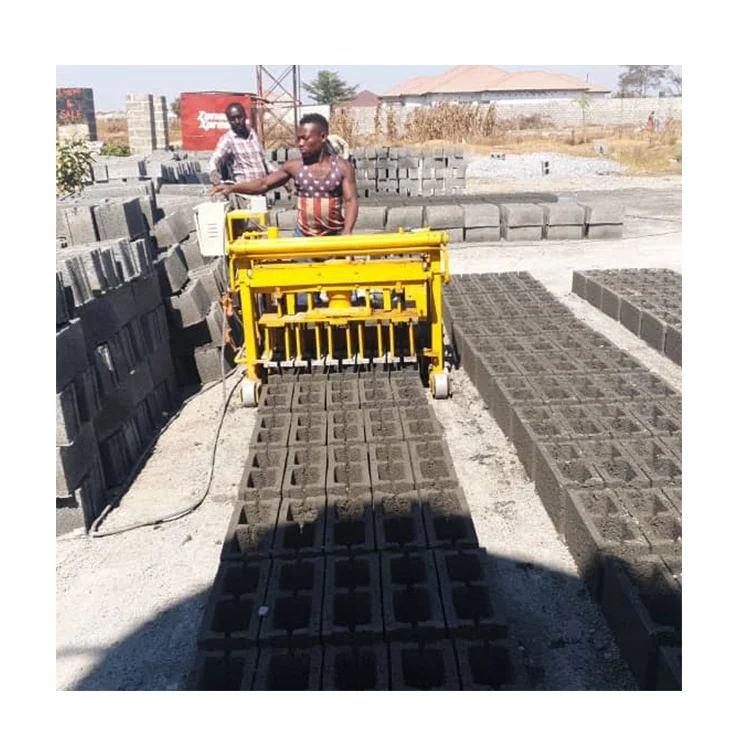
 Mobile block machine