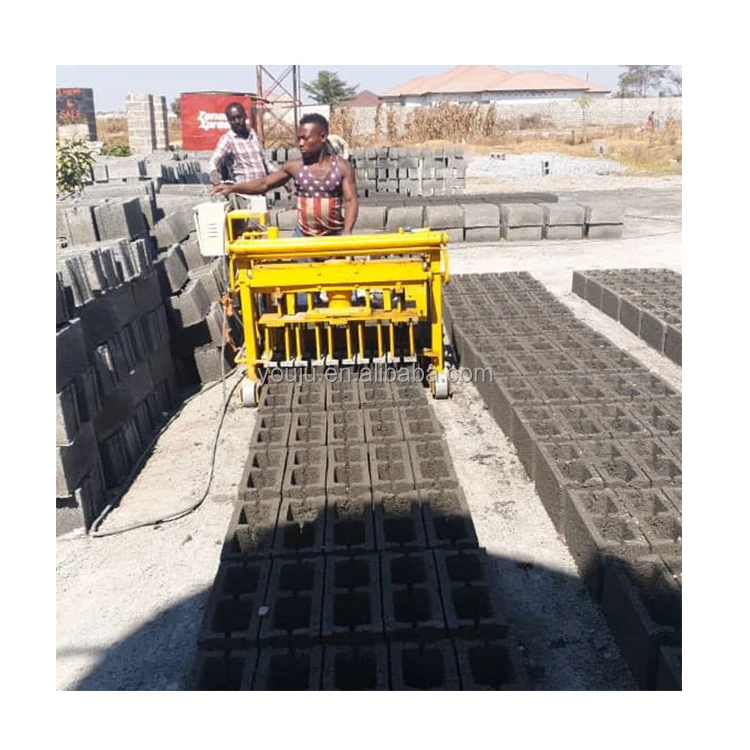
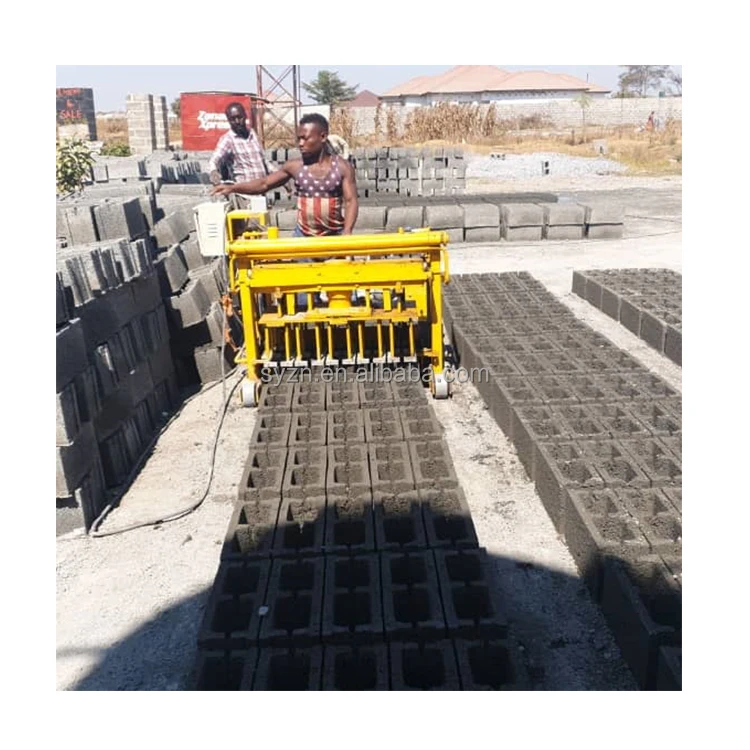
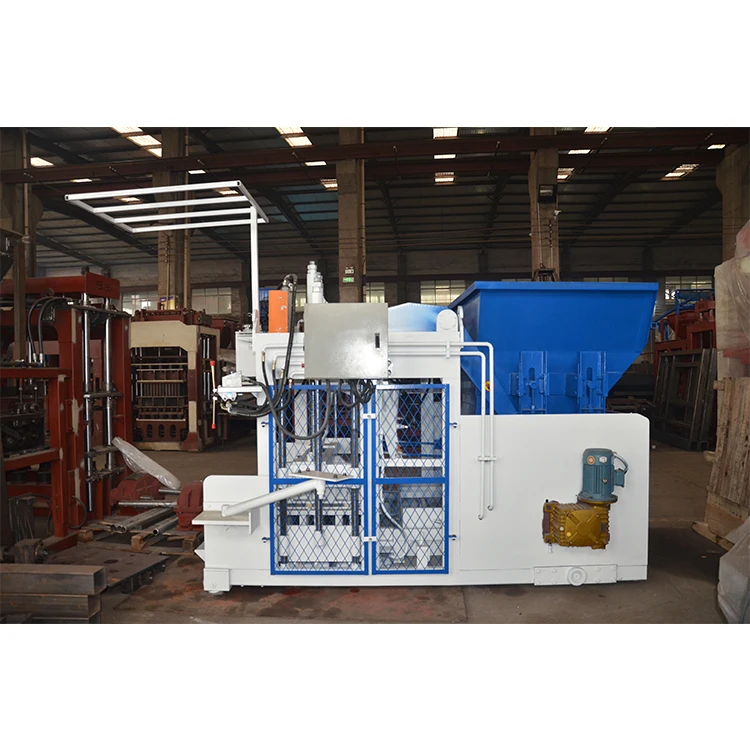
Positioning the QMJ2-45 — Every capacity figure on this page ties to a specific hollow block format and cycle time, matching our focus on giving buyers honest output data before they invest.
Technical Specifications
| Parameter |
Value |
| Model |
QMJ2-45 |
| Product Type |
Mobile Concrete Block Making Machine |
| Machine Type |
Mobile egg-laying, manual operation |
| Brick Format 1 |
400×200×200mm hollow brick, 2 pcs/mould |
| Capacity (Format 1) |
160 pcs/hour, 1280 pcs/8hr (basis: 25-30s cycle) |
| Brick Format 2 |
400×150×200mm hollow brick, 3 pcs/mould |
| Capacity (Format 2) |
240 pcs/hour, 4800 pcs/8hr (basis: 25-30s cycle) |
| Brick Format 3 |
400×100×200mm hollow brick, 4 pcs/mould |
| Capacity (Format 3) |
320 pcs/hour, 2560 pcs/8hr (basis: 25-30s cycle) |
| Molding Cycle |
25-30 seconds |
| Pallet Requirement |
None (pallet-free egg-laying) |
| Labor Requirement |
1 to 3 workers |
| Control System |
Manual (no PLC) |
| Automation Level |
Manual mobile |
| Mould Change |
Supports different hollow brick formats |
| Standards |
ISO9001:2000, CE (verify certificate validity and scope) |
Application Suitability
| Application |
Output Context |
| On-site hollow block production for building contractors |
Pallet-free laying directly on prepared ground, no fixed plant needed |
| First-time block production with minimal investment |
Small workspace footprint, manual operation with 1-3 workers |
| Remote housing project block supply |
Mobile movement across project site, multiple hollow formats available |
| Space-constrained urban construction yards |
Egg-laying design eliminates curing rack and pallet storage area |
Why "1280 Blocks per Day" Can Mislead a First-Time Buyer
Capacity only means something when you know exactly which block size and cycle time it was measured against.
I have watched buyers take a single daily output number from a quotation, plan their entire project schedule around it, and then find their real production falling short once the machine arrives and the local aggregate behaves differently than the test mix. The gap usually comes down to one thing: the quoted figure assumed a format the buyer never intended to make [NEED_CITE: common causes of capacity shortfall in small block plants]. When you are sourcing a mobile block making machine for sale, the first question should never be about price. It should be about which block format the capacity number assumes, what cycle time was used, and whether your local raw material will hold the same molding rhythm.

Where the QMJ2-45 Sits in a Growing Block Operation
This machine occupies the entry tier for buyers who need hollow blocks on their own site without committing to a stationary plant. The egg-laying design means blocks are laid directly onto the ground as the machine moves forward, removing the need for pallets, curing racks, and the forklift infrastructure that a stationary line demands. For a contractor producing blocks beside a housing project or an entrepreneur testing market demand before scaling, the QMJ2-45 provides a starting point that can later be supplemented by semi-automatic or fully automatic lines from the same range.
How Pallet-Free Operation Changes Your Site Layout
On a conventional block line, pallets represent a recurring cost and a logistics problem: they must be stored, fed into the press, carried with wet blocks to the curing area, and then returned. The QMJ2-45 eliminates that entire loop. The machine lays each block directly on a prepared concrete floor, and workers move it forward to the next position [NEED_CITE: pallet logistics costs in small-scale block production]. This matters most in remote project sites where pallet supply chains do not exist and where curing space is simply the open ground around the machine.
Reading the Capacity Table Without Getting Burned
The three capacity figures in the specification table — 1280, 2560, and 4800 pieces per eight-hour shift — each assume a different hollow brick format and a consistent 25-30 second molding cycle. The 4800 figure applies only to the 400×150×200mm format at three pieces per mould; it does not translate to the larger 400×200×200mm hollow block. Hydraulic pressure and vibration force must also match the buyer’s local aggregate, because a mix that is too sandy or too dry will extend the cycle time as operators compensate for poor compaction. Mould change between formats is manual and requires the operator to swap the mould box, so the practical daily output also depends on how many format changes the shift plan includes.
What Happens When Mix Design and Vibration Are Not Matched
I once spent three days on a site adjusting parameters because the buyer’s local red soil mixed with stone chips was too loose for the vibration setting that worked with standard river sand. The blocks crumbled on demoulding, and daily output dropped to roughly half of what the buyer had planned. The QMJ2-45 is a manual machine, which means the operator controls the feed and cycle rhythm — but if the mix does not suit the vibration force available, no amount of operator skill will recover the lost density [NEED_CITE: relationship between aggregate grading and block strength in egg-laying machines]. Buyers who skip a trial run with their actual raw material before committing to a production schedule often discover the mismatch only after the first week of wasted cement.
Why Sourcing from a Single-Focus Block Machinery Supplier Matters
Our product range covers only block machines, their moulds, pallets, and handling equipment, which means every QMJ2-45 proposal includes a capacity calculation that states the block format assumed. Mould options are matched to the hollow formats the buyer’s market actually sells, and custom mould drawings are available if the local standard differs. The configuration conversation starts with the buyer’s local aggregate and target block strength, not a catalogue default. Voltage, frequency, and control language are confirmed before production begins, reducing the chance of commissioning delays after the machine arrives. Documentation includes a machine specification sheet, mould format list, and factory test record specific to the ordered configuration.
Documentation & Verification
- Capacity calculation sheet stating each hollow block format and its corresponding cycle time
- Machine specification sheet with hydraulic pressure and power requirement details
- Mould drawing and format list for all ordered hollow brick sizes
- Voltage, frequency, and site condition confirmation form before production
- Factory test record on the buyer’s specified block format before dispatch
Installation, Commissioning & Support
- Prepared concrete floor required for egg-laying operation, level within tolerance stated in the manual
- Power source verification for the QMJ2-45 motor rating before first start-up
- Mould box installation and alignment checked during on-site commissioning
- Operator training on manual feed rhythm and 25-30 second cycle management
- Wear parts list and mould replacement schedule provided at handover
- Daily maintenance checklist covering vibration components and hydraulic connections
What to Include in Your Inquiry
To size this machine correctly for your project, share the hollow block formats your market requires, your target daily output per format, the type of aggregate available locally, and the voltage and frequency at your site. If you are comparing the QMJ2-45 against a stationary line, let us know your available workspace and whether you plan to scale production volume in the near future.
Frequently Asked Questions
Q: How is the daily output verified and what block format is each capacity figure based on?
A: Each output figure in the specification table ties to a specific hollow block dimension and a 25-30 second molding cycle. The 1280 pieces per shift applies to the 400×200×200mm format at two pieces per mould, while the 4800 figure applies to the 400×150×200mm format. We provide a capacity calculation document with every proposal stating these assumptions clearly.
Q: What voltage and frequency options are available for different target markets?
A: Voltage and frequency are confirmed during the proposal stage based on your site’s electrical supply. We collect this information before production begins and record it on the specification sheet so that the motor, wiring, and any control components match your local grid standard on arrival.
Q: How does the QMJ2-45 fit within the full range from mobile to fully automatic lines?
A: The QMJ2-45 sits at the entry point as a pallet-free mobile machine for on-site production with minimal investment. Buyers who outgrow its manual operation and output can move to semi-automatic stationary lines with pallet handling, and later to fully automatic lines with batching and stacking, all within the same supplier range.
Q: What site conditions and space are needed to operate a pallet-free egg-laying machine?
A: The QMJ2-45 requires a level, prepared concrete floor for block laying and enough open ground around it for wet blocks to cure in place. No pallet storage or curing rack infrastructure is needed. The machine moves freely within the workspace, making it suitable for constrained or remote project sites.
Q: What mould formats are available and how long does a mould change take?
A: Standard mould options cover 400×200×200mm, 400×150×200mm, and 400×100×200mm hollow bricks. Mould change is manual and involves swapping the mould box on the machine. Custom mould designs are available to buyer drawings for formats not covered by the standard range.

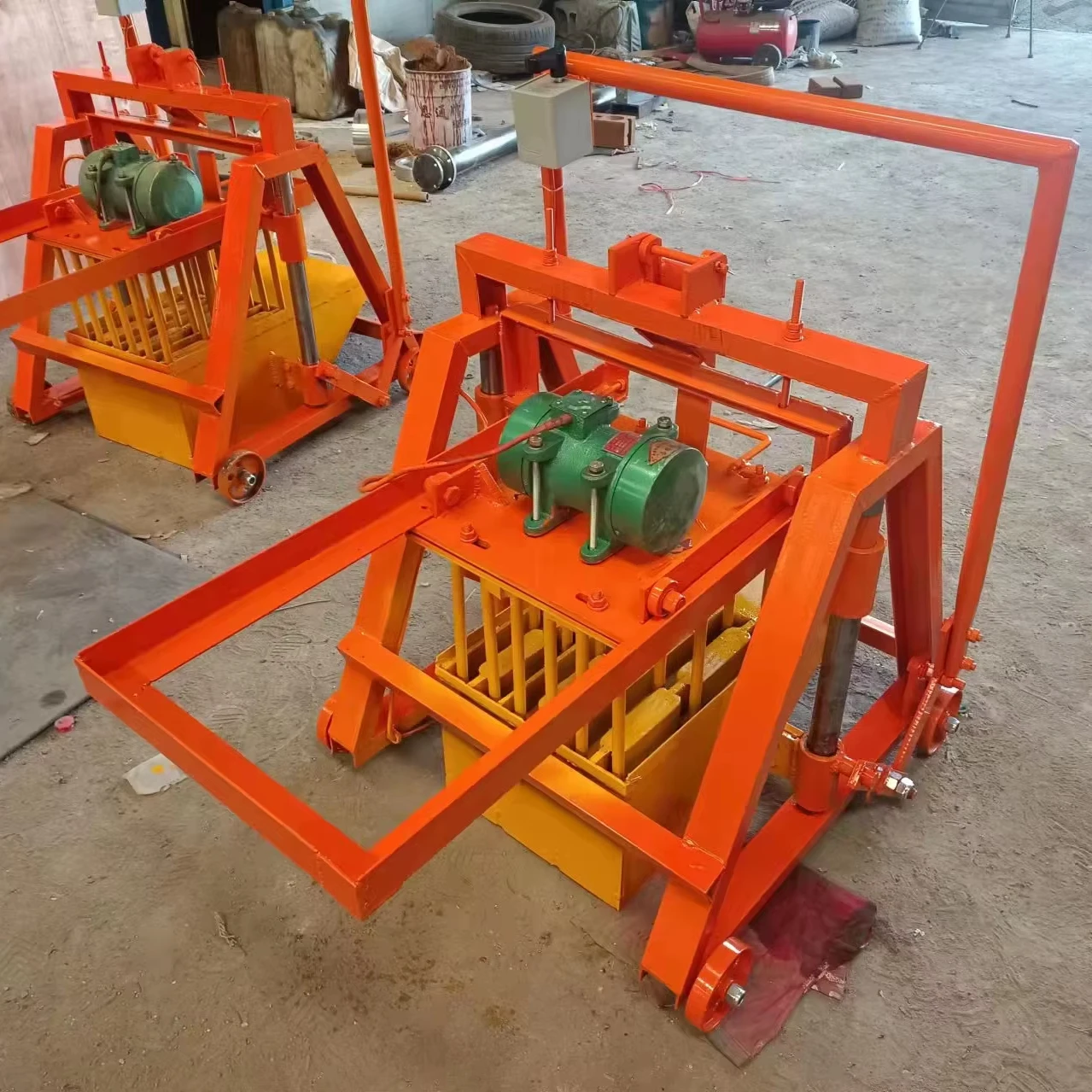
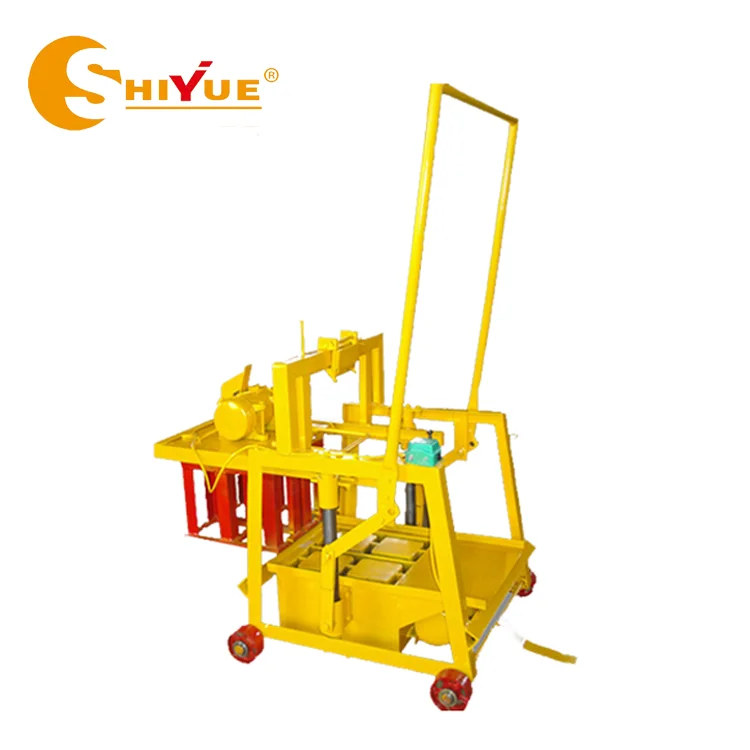 Mobile block machine