Single-Source System Match — Machine, mould, pallet and handling are specified as one coordinated line rather than assembled from separate suppliers, so the QMJ4-45 arrives with engine, cycle timing and block format aligned to your site conditions.
Technical Specifications
| Parameter |
Value |
| Model |
QMJ4-45 |
| Product Type |
Mobile Egg Laying Block Making Machine |
| Molding Capacity |
4 pcs/mould (basis: standard hollow block format) |
| Molding Cycle |
40–45 s |
| Vibration Frequency |
2400 r/m |
| Vibration Method |
Mold vibration (twice-vibration molding core) |
| Productivity (400×200×200 mm hollow block, 8-h shift) |
3000 pcs/day |
| Productivity (400×150×200 mm hollow block, 8-h shift) |
3500 pcs/day |
| Productivity (400×120×200 mm hollow block, 8-h shift) |
4500 pcs/day |
| Total Power |
6 kW |
| Power Source |
Diesel or petrol engine |
| Pallet Requirement |
None — egg-laying type, produces directly on ground |
| Demold Method |
Manual |
| Turning Method |
Manual |
| Automation Level |
Manual / mobile egg-laying |
| Stacking Method |
Manual |
| Mould Format Options |
Hollow block 400×200×200 mm, 400×150×200 mm, 400×120×200 mm |
| Voltage & Frequency |
Not applicable (engine-powered) |
| Warranty |
1 year (source value — verify against manufacturer catalog) |
Application Suitability
| Application |
Material or Output |
| On-site hollow block production at construction job sites |
Cement, crushed stone, sand, water — no fixed plant required |
| Remote housing and development projects |
Diesel or petrol powered; no grid dependency |
| First block plant for entrepreneurs |
Minimal infrastructure; no pallet inventory needed |
| Small-scale paving brick and standard brick runs |
Interchangeable moulds within listed formats |
Why "4500 Pieces a Day" Can Mislead You Before the Machine Arrives
Every output figure above is tied to a specific hollow block size and an eight-hour shift.
Capacity numbers printed in a catalogue rarely mention which block format they assume. A mobile egg laying block machine manufacturer quoting a single daily figure without stating the mould size and shift length is leaving out the variable that matters most. I have watched contractors take delivery, run a test with a larger hollow block, and find real output barely half the brochure claim — not because the machine underperformed, but because the expectation was built on a smaller format. [NEED_CITE: common causes of capacity shortfall in block machine procurement]

Where the QMJ4-45 Sits in the Range
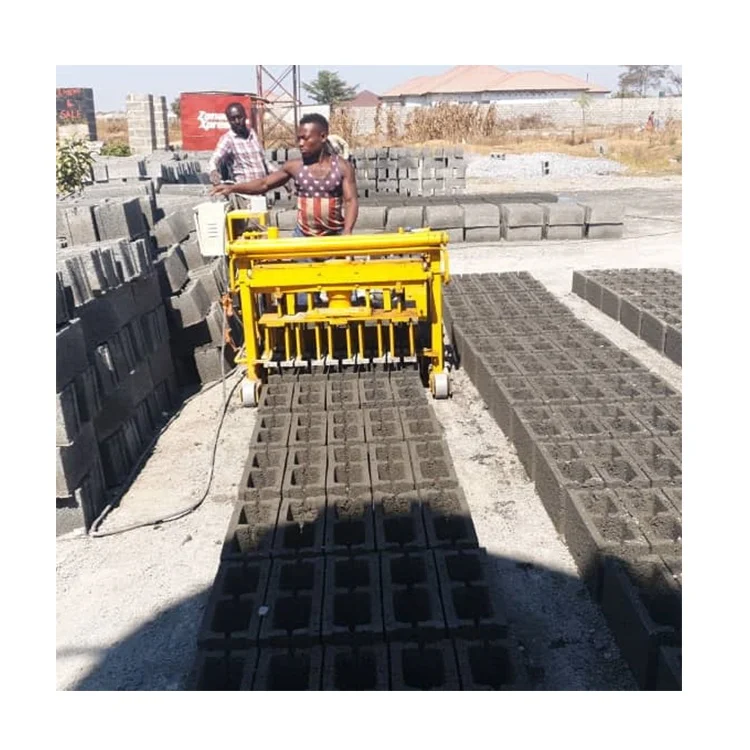
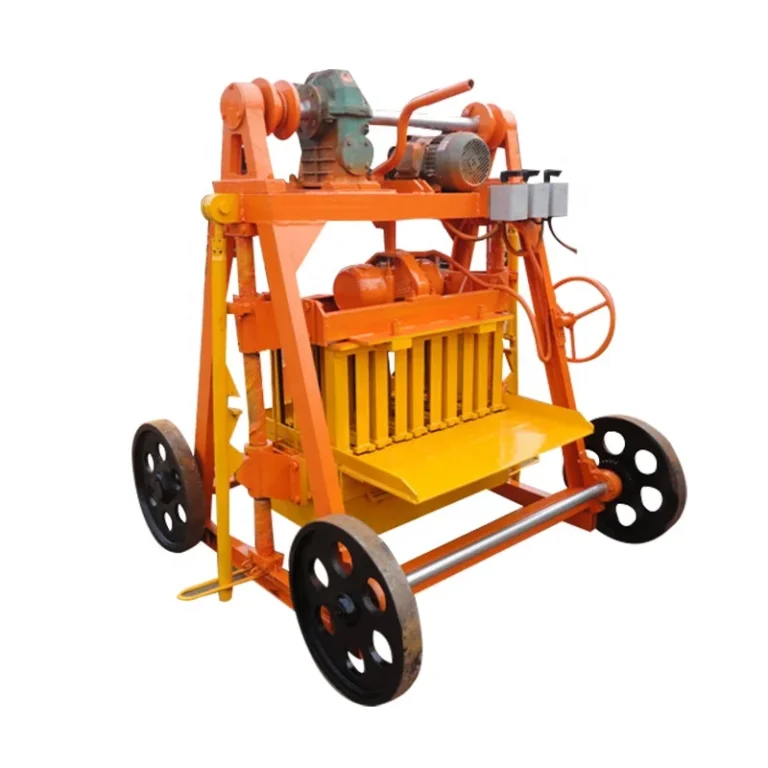
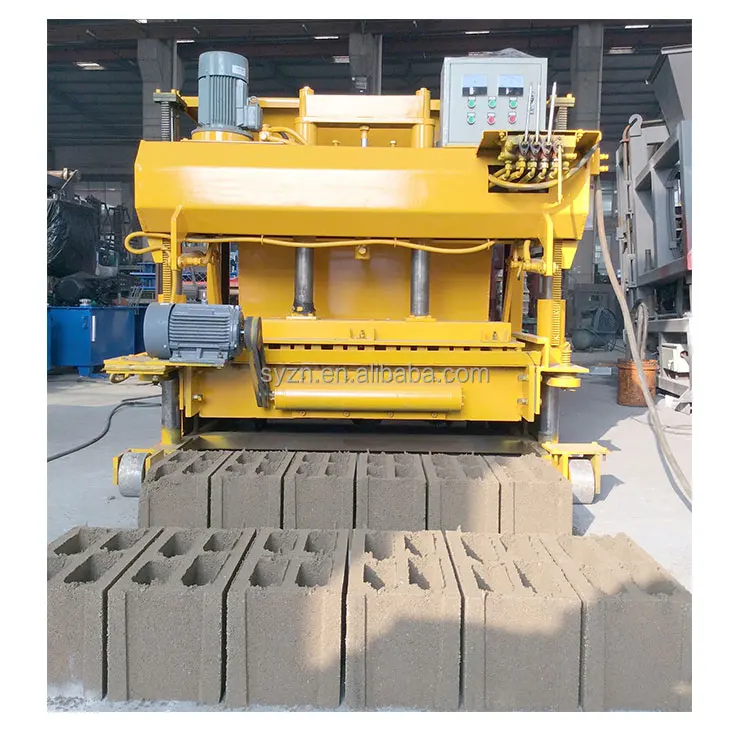
The QMJ4-45 occupies the entry tier of the mobile egg laying block machine manufacturer lineup. It is built for buyers who need blocks at an existing work site but are not ready to invest in a fixed plant, conveyor system, or pallet inventory. The egg-laying design means the machine walks along the ground, depositing each mould of blocks directly on a prepared surface and moving forward for the next cycle. This eliminates pallet purchase, pallet storage and the forklift that a stationary press demands, keeping initial capital low and site footprint flexible.
Engine Independence on Remote Sites
Diesel or petrol power removes the single biggest constraint on remote production: grid electricity. In Southeast Asian project sites where temporary power is unreliable or metered at a premium, an engine-driven mobile egg laying block machine manufacturer configuration lets the crew start, stop and relocate without coordinating with an electrical contractor. The 6 kW total draw is well within the capacity of a small single-cylinder diesel, and fuel sourcing is as simple as the nearest filling station. [NEED_CITE: off-grid power challenges in remote construction block production]
What the Twice-Vibration Core Actually Does for Block Density
Earlier versions of this class relied on a single vibration source, which often left the bottom corners of a hollow block less compacted than the top face. The twice-vibration molding core in the QMJ4-45 introduces a secondary vibration pulse within the same 40–45 second cycle. The first pulse settles the mix into the mould cavity; the second compresses it further before the mould lifts. The practical result is more even density from top to bottom, which shows up as consistent compressive strength when blocks are tested at the curing yard. This matters especially when local aggregate contains volcanic ash or lightweight pumice that tends to segregate under single-pulse vibration.
The Hidden Cost of Skipping the Aggregate Conversation
One contractor I worked with ordered a mobile unit for a Philippine housing project. Trial runs with standard river sand produced clean blocks, so the machine shipped. On arrival the crew switched to a local volcanic aggregate blend that was cheaper and readily available. The mix was stickier and heavier; the 2400 r/m vibration frequency that handled sand easily could not fully compact the new blend, and blocks emerged with soft corners and low strength. An entire week of production was scrapped before mould clearances and vibration timing were reworked. That episode changed how I approach every inquiry: the first question is always about local aggregate gradation, not machine price. [NEED_CITE: aggregate gradation impact on block molding pressure]
Why Buyers Source This Machine Through Us
Block machinery is the only product line the company builds, so the QMJ4-45 arrives as a matched system — engine, mould, and cycle parameters are set against your stated block format, not pulled from a generic catalogue default. Mould design covers the three hollow block sizes listed above, and custom drawings are available when your market sells a format outside that range. Automation is selectable, so a buyer starting with the manual QMJ4-45 today can move to a semi-automatic press later without abandoning the knowledge gained on this machine. Installation support includes operator training on your actual mix, and wear parts are itemized so the first replacement order is already identified before the container leaves the factory.
Documentation & Verification
- Capacity calculation sheet stating which hollow block format each output figure assumes
- Mould drawing and format list for all three listed hollow block sizes
- Engine specification with fuel grade and consumable filter part numbers
- Hydraulic and electrical schematic for on-site troubleshooting
- Factory test record on your target block format before dispatch
- Operation and maintenance manual in the language you specify
Installation, Commissioning & Support
- Prepared concrete floor recommended; compacted gravel acceptable for temporary sites
- Engine oil and coolant top-up before first 45-second cycle test
- Mould clearance adjustment to match your local aggregate particle size
- Vibration frequency verification at 2400 r/m with a handheld tachometer
- Operator training covering manual demold, turning and stacking sequence
- Wear parts list supplied so first replacement order can be placed early
Before You Send an Inquiry
Tell us the hollow block sizes your market sells, the daily volume you need to hit, and the raw materials available at your site — especially the type and gradation of sand or aggregate. Let us know whether you will run diesel or petrol, and confirm the ambient temperature range so the engine specification matches your climate.
Frequently Asked Questions
Q: What is the real daily output, and which block format is it based on?
A: Output depends entirely on the mould in use. With the 400×120×200 mm hollow block mould and an eight-hour shift, the QMJ4-45 produces up to 4500 pieces. Switch to the 400×200×200 mm mould and output drops to around 3000 pieces in the same shift. Always confirm which format the quoted figure assumes.
Q: Can the machine run on local fuel, and what engine options are available?
A: The QMJ4-45 is available with either a diesel or a petrol engine. Diesel is preferred on most construction sites for lower running cost, while petrol suits markets where petrol stations are more accessible. Specify the fuel grade available in your region so the carburetor or injector is set correctly before shipment.
Q: What block formats and mould sizes are compatible with this model?
A: Standard moulds cover three hollow block sizes: 400×200×200 mm, 400×150×200 mm and 400×120×200 mm. Each size yields four blocks per mould cycle. Custom mould drawings can be produced if your market requires a different hollow block dimension or a solid brick format.
Q: Does the machine require a prepared concrete floor, or can it produce on compacted ground?
A: A smooth concrete floor gives the best block base finish and easiest machine movement. Compacted gravel or hard-packed earth is workable for temporary sites, though the operator will need to level the surface more frequently to keep block dimensions consistent across a shift.
Q: What spare parts and moulds should be ordered with the first machine?
A: The recommended first-order list includes vibration springs, mould liner plates, and engine consumables such as fuel filters and drive belts. If you plan to produce more than one block size, order the additional moulds at the same time to avoid mould-change downtime waiting for a separate shipment.

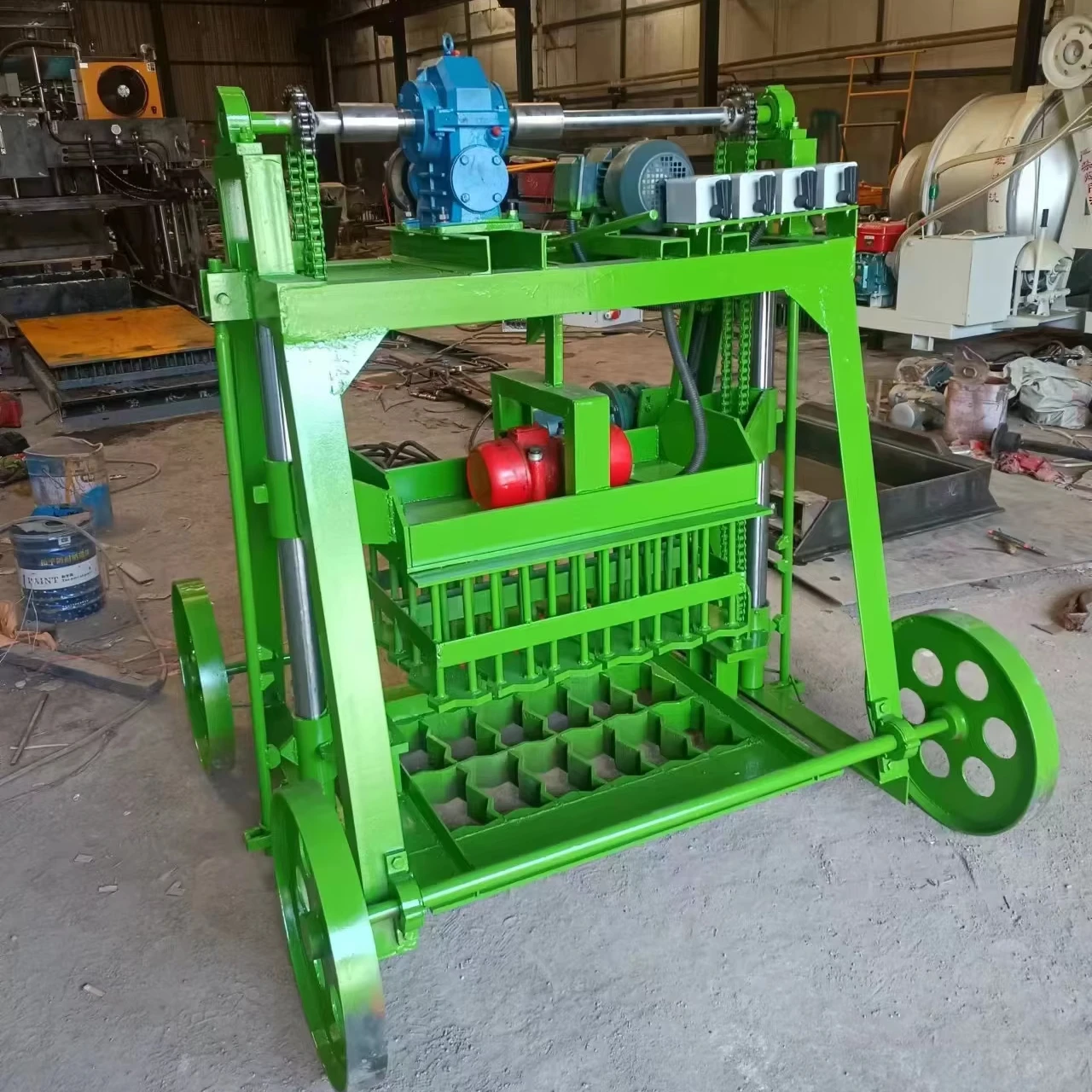
 Mobile block machine