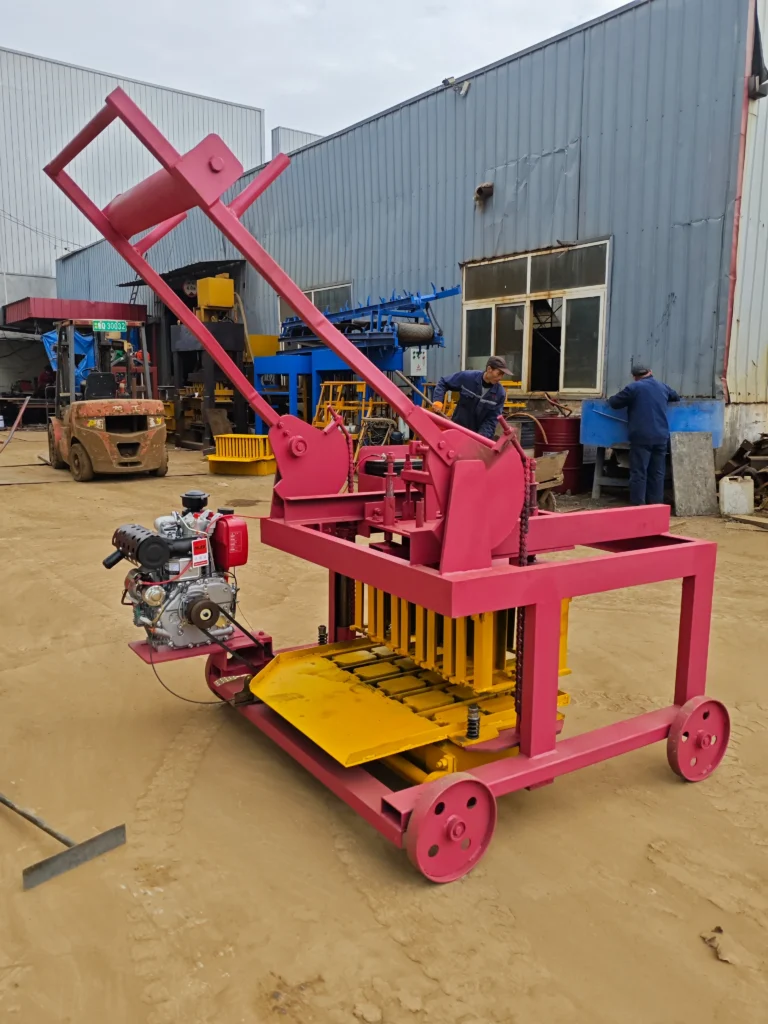
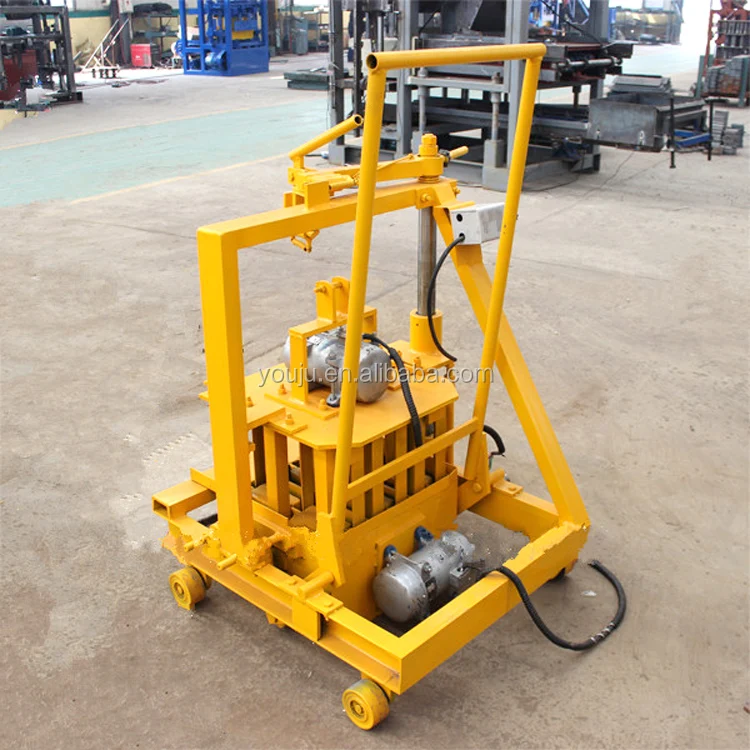
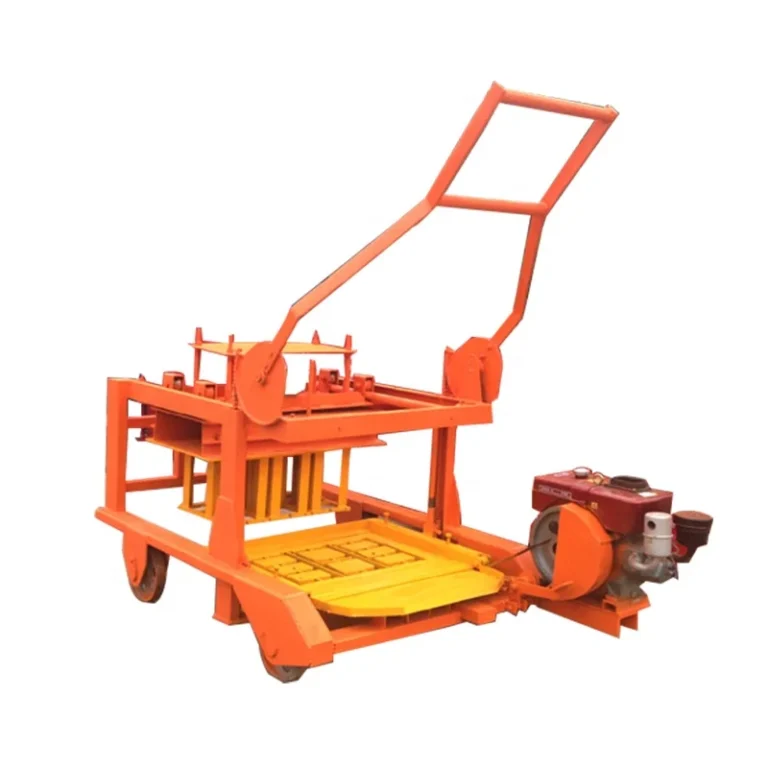
Matched System Design — The QMY6-25 mobile block machine is specified as a complete egg-laying unit with mould, power, and movement configured around your actual block format, not assembled from separate catalog pages.
Technical Specifications
| Parameter |
Value |
| Model |
QMY6-25 |
| Product Type |
Mobile Concrete Block Making Machine |
| Main Vibration Form |
Three-dimensional excitation |
| Overall Power |
9.6 kW |
| Moving Method |
Automatic movement with hydraulic steering |
| Overall Dimension (L×W×H) |
2000 × 2100 × 1650 mm |
| Moulding Cycle |
25–30 s |
| Vibration Frequency |
3200 Hz |
| Pallet Requirement |
No pallet required (egg-laying type) |
| Operator Count |
1 person |
| Output Capacity |
1080 pcs/h based on 400×200×200mm hollow block; 1260 pcs/h based on 400×150×200mm hollow block; 1620 pcs/h based on 400×120×200mm solid block; 1800 pcs/h based on 400×100×200mm solid block |
| Voltage & Frequency |
Basis not stated in source (confirm with buyer local grid) |
| Control System |
Basis not stated in source (confirm PLC or manual) |
| Hydraulic Pressure |
Basis not stated in source (confirm MPa) |
| Net Weight |
Basis not stated in source (confirm against manufacturer catalog) |
| Warranty |
1 year for whole machine (excluding spare parts) |
| Certification |
CE (verify against actual certificate for this model) |
Application Suitability
| Application |
Material or Output |
| On-site hollow block production for building contractors |
Concrete mixed with local crushed stone, river sand, and cement |
| Small-scale solid block plant for entrepreneurs |
Standard concrete mixes without pallet inventory or curing rack investment |
| Housing project block supply at remote locations |
Pallet-free egg-laying production directly on prepared ground surfaces |
| Format diversification for existing block producers |
Interchangeable moulds for hollow and solid block formats on the same chassis |
What "8600 Blocks per Shift" Actually Means for Your Site
Quoted capacity figures only hold true when the block format, mix design, and ground conditions match the assumptions behind the test.
When a mobile block machine manufacturer states a shift output without specifying which block size that number assumes, the real daily count on your site can fall far short of what you planned around. A 400×200×200mm hollow block takes a different cycle and draws a different material volume than a 400×100×200mm solid block, yet both figures often appear under a single headline number. I have seen project schedules break because the procurement team planned on the higher solid-block figure while the site actually needed hollow blocks for wall construction [NEED_CITE: common discrepancies between quoted and actual block machine output]. As a mobile block machine manufacturer, we state every capacity figure next to the exact block dimensions it was measured against, so your daily planning starts from a realistic baseline.

Where the QMY6-25 Fits in the Full Machine Range
The QMY6-25 sits at the entry tier of mobile block production, designed for buyers who need blocks on-site without investing in a fixed plant, pallet inventory, or curing rack infrastructure. Its egg-laying design means the machine lays each block directly on the ground and moves forward automatically through hydraulic steering, requiring only one operator. Compared to semi-automatic stationary machines that demand pallets and a separate stacking station, this mobile block machine removes the largest consumable cost from small-scale production.
Choosing Between Mobile, Semi-Automatic, and Automatic Tiers
The decision between a mobile unit and a stationary line comes down to your daily volume requirement, available curing area, and whether your project moves between locations. Mobile machines like the QMY6-25 suit contractors producing blocks at the building site or entrepreneurs starting with low initial investment. Semi-automatic stationary machines suit buyers who need higher daily output and can allocate space for pallets and curing racks. Fully automatic lines suit established plants targeting consistent high-volume supply [NEED_CITE: block plant investment tiers and capacity planning]. The QMY6-25 occupies the tier where pallet cost elimination matters most — when every pallet purchased is a line item that a small operation cannot absorb.
Reading the Specifications Against Your Production Reality
The 9.6 kW overall power rating reflects the combined draw of the vibration motor and hydraulic steering system, which is typical for a machine of this footprint operating without a conveyor-fed batching station. The three-dimensional excitation at 3200 Hz is engineered to compact concrete evenly across both hollow and solid mould cavities, though the actual density achieved depends on how well your local aggregate gradation matches the vibration profile. A 25–30 second moulding cycle means the machine completes one press roughly every half minute, but sustained cycle time across a full shift depends on how quickly your team feeds material and how level your ground surface is. The 2000 × 2100 × 1650 mm overall dimension keeps the machine compact enough to maneuver within a typical building site while still accommodating moulds for blocks up to 400 mm in length.
The Cost of Overlooking Ground Preparation and Mix Matching
Skipping ground leveling before the machine arrives leads to uneven block bases and inconsistent compaction, because the egg-laying design transfers vibration directly through the mould into the surface below. Running a mix with high clay content in the sand without adjusting vibration frequency produces blocks that crumble during handling, even when the machine itself is functioning within specification [NEED_CITE: effect of aggregate clay content on concrete block strength]. These issues surface weeks after commissioning and are often blamed on the machine rather than the site conditions it was asked to work in.
Why Source This Mobile Block Machine Here
Block machinery is our single focus, which means the QMY6-25 is not a sideline product adapted from a broader catalog — the machine, mould, and hydraulic steering are specified together as one matched unit. We configure each proposal against the buyer’s actual block format and local aggregate rather than quoting a default configuration. Mould options cover the hollow and solid sizes your market actually buys, with custom drawings available for formats outside the standard range. Automation level is selectable, so a buyer starting with the QMY6-25 can later move to a stationary line without relearning the control logic. Installation support includes on-site commissioning and operator training so your team runs the machine correctly from the first shift.
Documentation & Verification
- Line layout and capacity calculation stating which block format each output figure assumes
- Machine specification sheet with confirmed voltage, frequency, and control language for your grid
- Mould drawing and format list matching the block sizes your local market sells
- Factory test record and packing photographs provided before container loading
- Operation and maintenance manual covering daily checks and mould change procedure
Installation, Commissioning & Support
- Site ground preparation guidance matched to the pallet-free egg-laying design of the QMY6-25
- Power supply confirmation for the 9.6 kW total load against your local voltage and frequency
- Hydraulic steering calibration during on-site commissioning to ensure straight-line travel
- Operator training covering mould change, vibration adjustment, and daily maintenance routines
- Wear parts list identifying hydraulic seals and vibration motor components to stock for the first year
- Mould and spare parts availability for ongoing format changes and routine replacement
Before You Request a Quote
Send us the exact block dimensions your market requires, the type of sand and aggregate available locally, and your target daily output so we can match the QMY6-25 configuration to your actual production conditions. Include your local voltage and frequency along with the preferred control language so the electrical system is built correctly before dispatch. If you are comparing this mobile block machine against a stationary option, tell us your available curing area and whether pallet handling infrastructure already exists on your site.
Frequently Asked Questions
Q: How is the output capacity verified and which block format does each figure assume?
A: Every output figure on this page is stated alongside the exact block dimensions it was measured against. The 1080 pieces per hour figure assumes a 400×200×200mm hollow block, while the 1800 pieces per hour figure assumes a 400×100×200mm solid block. We provide a capacity calculation document with your quotation that maps each format to its realistic shift output, so planning is never based on a single blanket number.
Q: What voltage, frequency, and control language will be configured for my country?
A: These parameters are confirmed during the proposal stage before production begins. We need your local grid specifications and preferred display language so the electrical system and controls are built to match. This step prevents commissioning delays that occur when a machine arrives configured for a different voltage standard than the site supply.
Q: Can I add more block formats later by ordering additional moulds?
A: Yes, the QMY6-25 accepts interchangeable moulds for different hollow and solid block sizes within its moulding envelope. We supply mould drawings and format lists so you can see which sizes fit the machine before ordering. Additional moulds can be produced to custom drawings if your market requires a format outside the standard range.
Q: What are the installation and operator training arrangements after arrival?
A: We provide on-site installation and commissioning support that includes hydraulic steering calibration, vibration parameter adjustment to your mix, and operator training on daily operation and mould changes. The training covers the specific controls and maintenance routines of the QMY6-25 so your team operates the machine correctly from the first production shift.

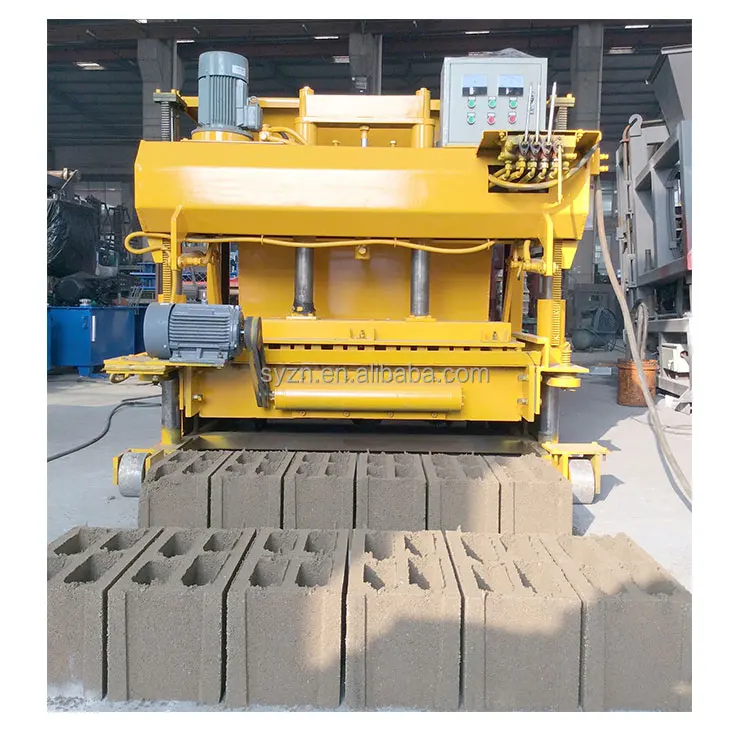
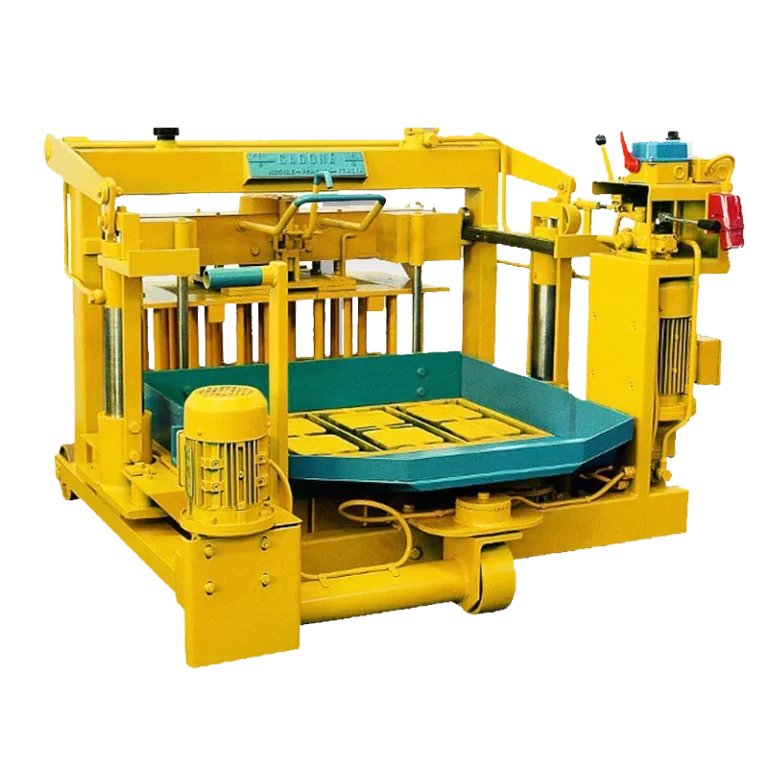 Mobile block machine