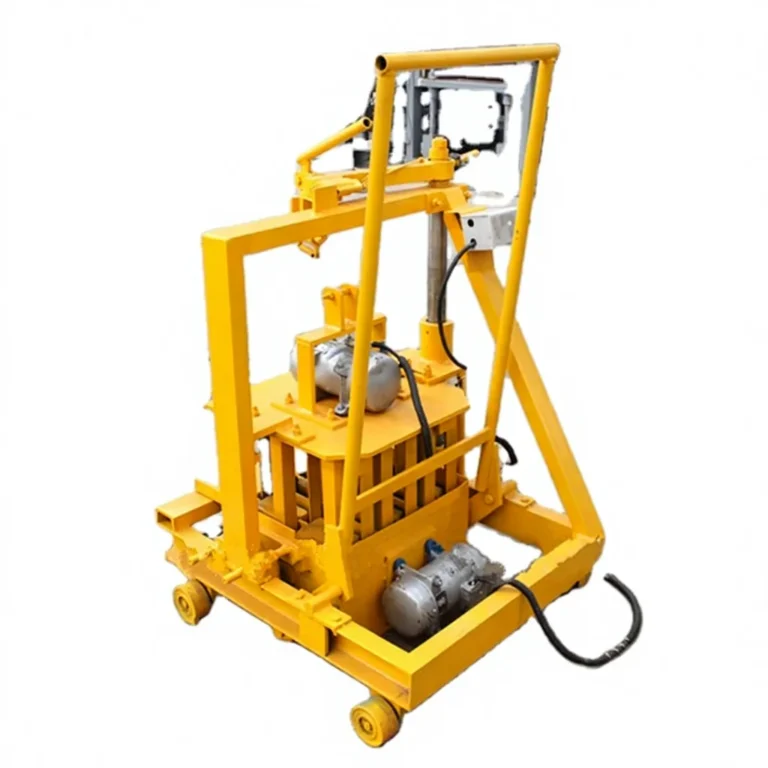
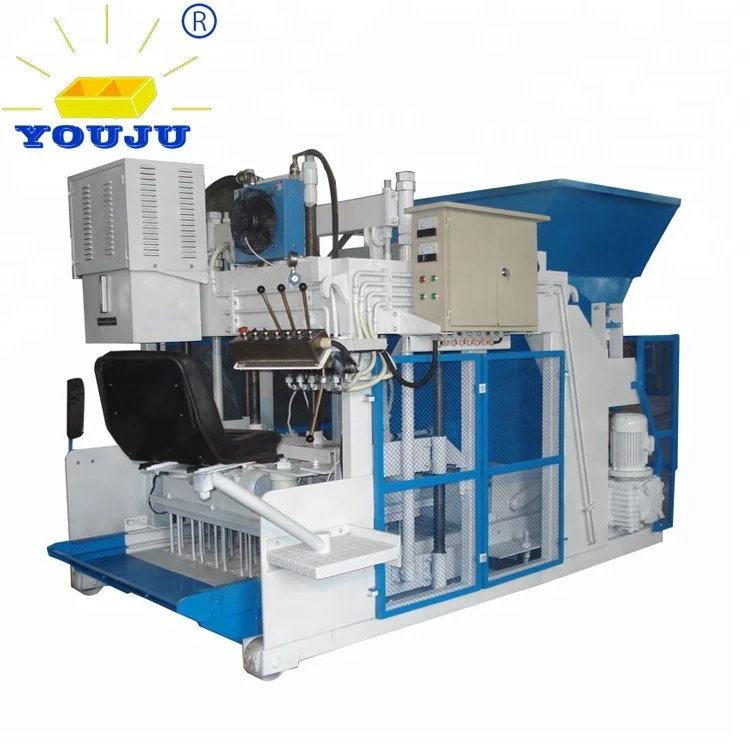
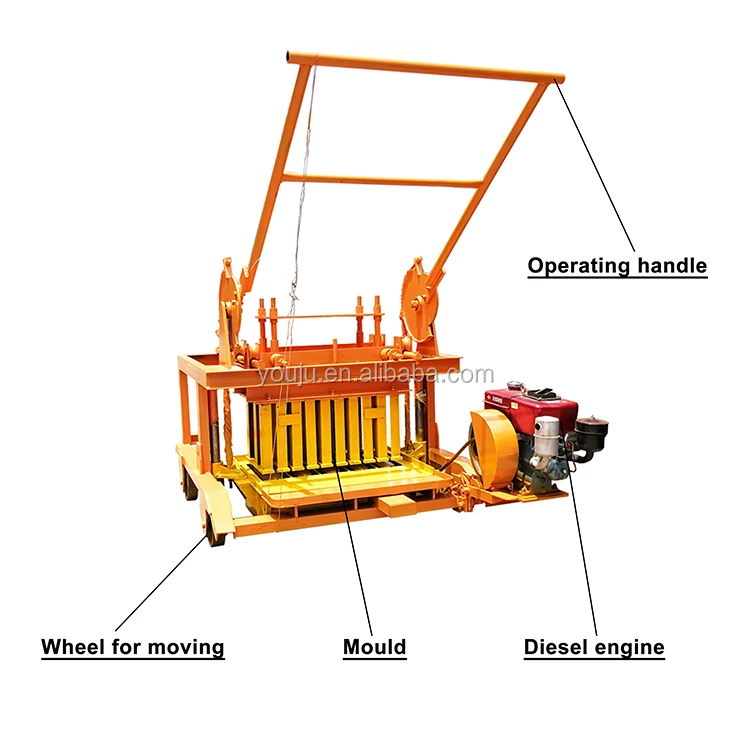
Single Focus — QMY4-30 is engineered as one matched system where machine, mould, pallet and handling are specified together rather than assembled from separate suppliers.
Technical Specifications
| Parameter |
Value |
| Model |
QMY4-30 |
| Product Type |
Mobile Concrete Block Making Machine |
| Rated Power |
5 kW |
| Molding Cycle Time |
30 seconds |
| Overall Dimensions (L×W×H) |
1200 × 1200 × 1100 mm |
| Net Weight |
950 kg |
| Automation Level |
Manual |
| Mould Format |
Changeable (hollow block and solid brick) |
| Output Capacity |
480 pcs/h (based on 400×200×200mm hollow block, 4 pcs/mould) |
| Output Capacity |
600 pcs/h (based on 400×150×200mm hollow block, 5 pcs/mould) |
| Output Capacity |
840 pcs/h (based on 400×100×200mm hollow block, 7 pcs/mould) |
| Daily Output |
3,840 pcs/8h (based on 400×200×200mm hollow block) |
| Daily Output |
4,800 pcs/8h (based on 400×150×200mm hollow block) |
| Daily Output |
6,720 pcs/8h (based on 400×100×200mm hollow block) |
| Raw Materials |
cement, sand, crushed stones, slag |
| Voltage & Frequency |
(basis to be confirmed) |
| Control System |
(basis to be confirmed) |
| Hydraulic Pressure |
(basis to be confirmed) |
| Vibration Force |
(basis to be confirmed) |
Application Suitability
| Application |
Material or Output |
| Small-scale block production |
cement, sand, crushed stones, slag |
| On-site block making for construction contractors |
hollow block and solid brick production without a fixed plant |
| Startup block manufacturing |
3,840 to 6,720 pcs per 8-hour shift depending on format |
| Remote project sites |
Manual operation with changeable moulds |
The "Output Per Hour" Question Every Buyer Should Ask
Every capacity figure we quote is tied to a specific block format and mould cavity count.
When sourcing a mobile block making machine for sale, you will see capacity numbers like "1200 pieces per hour" that sound impressive until you ask which block size that assumes. A machine making small solid bricks will always show a higher number than one making large hollow blocks, yet both might be the same machine with a different mould installed. This gap between quoted capacity and realistic daily output is where most buyer disappointment originates [NEED_CITE: concrete block output calculation standards].
The QMY4-30 operates on a 30-second moulding cycle. Whether that translates to 480 pieces or 840 pieces per hour depends entirely on how many cavities the active mould has for your chosen block format. I have watched contractors order machines based on the highest output number on the spec sheet, only to discover their primary product is the format that runs at the lowest rate.

Where the QMY4-30 Sits on the Mobile Block Machine Range
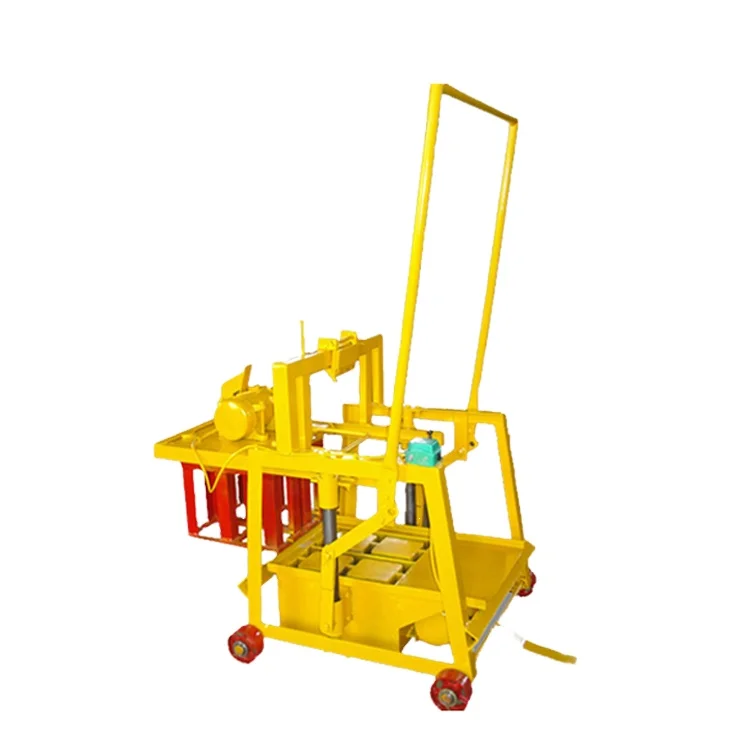
The QMY4-30 occupies the entry tier of the mobile block making machine for sale range, designed for buyers who need block production capability without the commitment of a fixed plant. At 950 kg and 1200 × 1200 × 1100 mm, it is compact enough to move between job sites while producing hollow blocks and solid bricks using cement, sand, crushed stone and slag mixes. This tier serves entrepreneurs evaluating their first machine and contractors who need blocks produced directly at their construction site.
Manual Operation and What It Means for Your Crew
At the manual automation level, the QMY4-30 requires operators to handle pallet feeding and block removal by hand. This keeps the investment at the lowest point in the mobile range but means your daily output depends on crew rhythm and pallet availability. Buyers moving from a semi-automatic fixed plant should account for the labour difference when comparing tiers. For contractors producing blocks on their own site where labour is available and budget is the primary constraint, manual operation is a practical fit [NEED_CITE: labour requirements for manual block machines].
Reading the Specs That Actually Affect Your Output
The 5 kW rated power drives the vibration system that compacts the mix into the mould. For mobile machines in this class, vibration force must be matched to your specific mix design and local aggregate; a mix that works in one region may produce weak blocks in another if the vibration characteristics are not adjusted. The 30-second cycle time is the baseline rhythm, and any delay in pallet handling or mould change extends that cycle, reducing your actual daily output.
Mould change time is often overlooked until the first format switch on site. If changing from hollow block to solid brick takes most of a shift, the flexibility you paid for disappears. The QMY4-30 supports changeable moulds for both formats, but the time required depends on the mould change system and operator familiarity.
What Happens When Voltage Is Confirmed After Shipment
A mobile block making machine for sale configured for the wrong voltage becomes a stationary weight until a transformer arrives. I have seen sites lose two weeks because the local supply was 440V and the machine was wired for 380V. The motor trips immediately, and no amount of on-site adjustment fixes a voltage mismatch. This is why voltage, frequency and control display language must be confirmed before the machine leaves the factory, not after it arrives at your project site [NEED_CITE: industrial motor voltage standards by region].
Why Sourcing From a Single-Focus Supplier Matters
Block machinery as a single focus means the QMY4-30 machine, its moulds, pallets and handling equipment are specified as one matched system. When you source from suppliers who assemble from separate vendors, the pallet size may not match your curing area, and the mould may not align with the formats your local market actually sells. Our configuration process starts with your target block format, daily output requirement, local raw material and site conditions before any quotation is issued. Mould design and supply covers the formats your market demands, including custom drawings for region-specific formats. Automation level is selectable so you can start manual and add automation later if your volume justifies it.
Documentation & Verification
- Line layout showing the block format assumed for each output figure
- Machine specification sheet confirming rated power and cycle time
- Mould drawing and format list for hollow block and solid brick
- Voltage and control language confirmation before dispatch
Installation, Commissioning & Support
- Ground must be level and compacted to support 950 kg machine weight during operation
- 5 kW power requirement demands a dedicated circuit at the confirmed local voltage
- Machine arrives assembled; mould installation and test run on your mix design
- Operator training covers cycle rhythm, pallet handling and mould change procedure
- Wear parts list and mould maintenance schedule provided at commissioning
Before You Request a Quotation
To size the QMY4-30 against your project, share your primary block format dimensions, target daily output and the local aggregate you plan to use. We also need your site voltage and frequency so the motor is configured correctly before shipment. If you are comparing the mobile tier against a semi-automatic fixed plant, let us know your available labour and curing space so the full line can be scoped accurately.
Frequently Asked Questions
Q: How is the QMY4-30 capacity verified for my specific block format?
A: Every output figure is stated with the exact block dimensions and mould cavity count assumed. When you provide your target format, we supply a capacity calculation sheet showing pieces per hour and per 8-hour shift for that specific product, so you can compare machines on a like-for-like basis.
Q: When should a buyer move from the QMY4-30 to a higher tier?
A: Step up when your daily volume exceeds what manual pallet handling can sustain, or when you need multiple block formats with faster mould change times. The next tier adds semi-automatic pallet feeding and stacking, reducing labour while increasing consistency across shifts.
Q: What electrical details must be confirmed before the machine ships?
A: Voltage, frequency and PLC display language must match your site supply and operator preference. We confirm these before production so the motor and control system are configured correctly, avoiding the two-week transformer wait that delays commissioning.
Q: Can the QMY4-30 produce formats specific to my local market?
A: Yes. Beyond standard hollow block and solid brick moulds, we design custom moulds to buyer drawings. Provide your market-specific format dimensions and we will supply a mould drawing for approval before manufacture.

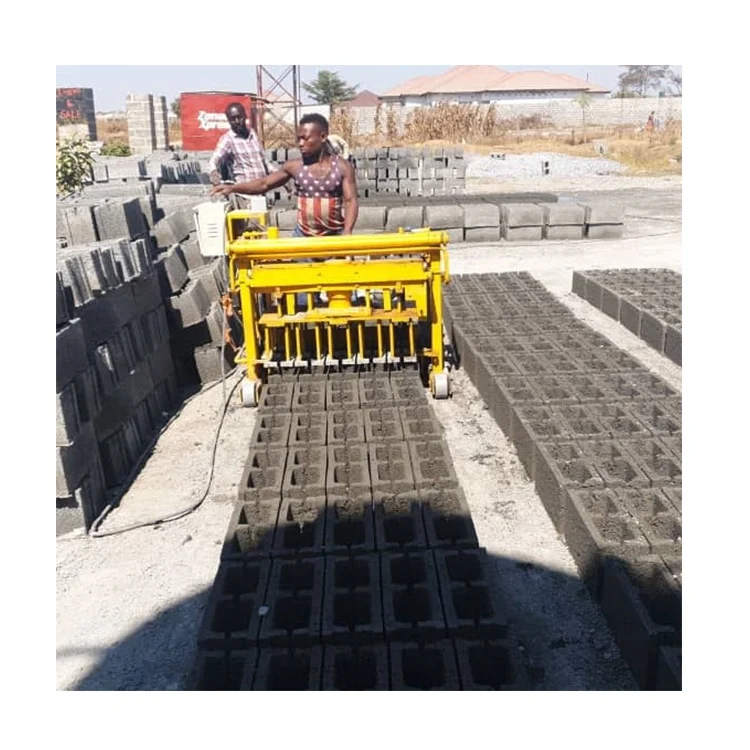
 Mobile block machine