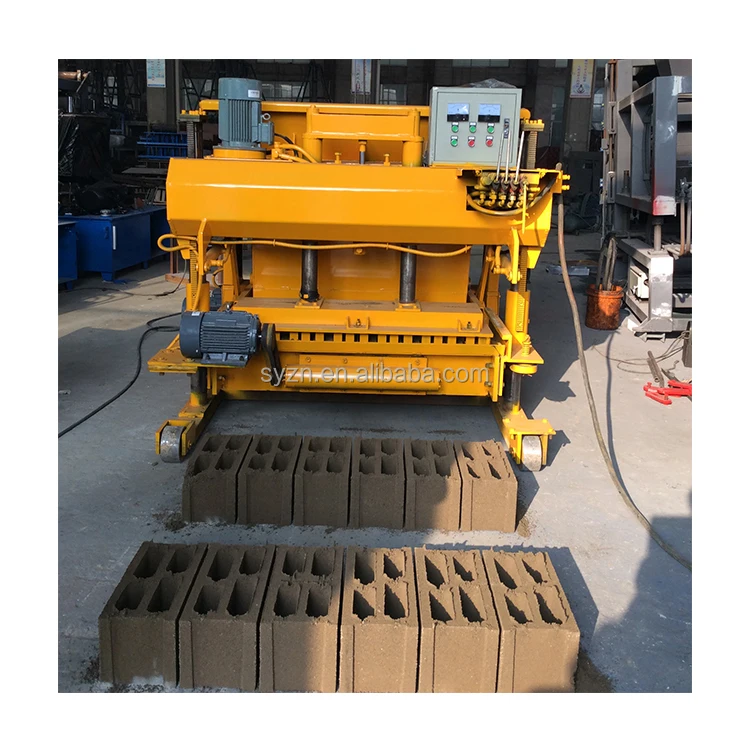
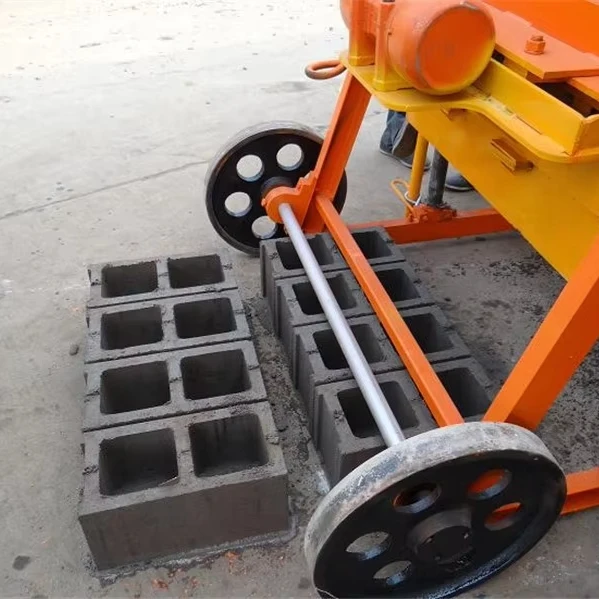
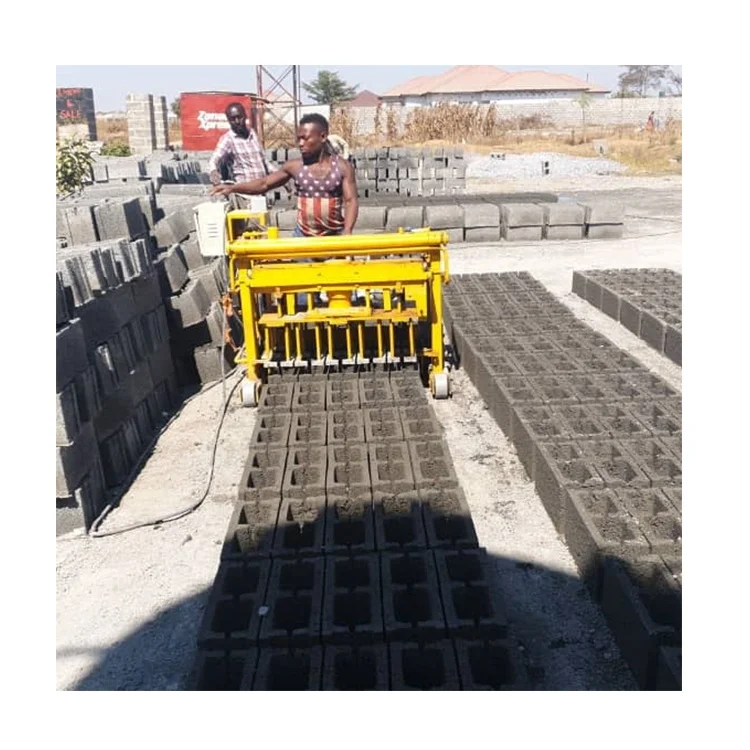
Single-focus block machinery — the QMJ4-45 sits at the entry point of our range, specified as one matched system with mould and engine rather than assembled from separate suppliers.
Technical Specifications
| Parameter |
Value |
| Model |
QMJ4-45 |
| Product Type |
Mobile Egg Laying Block Making Machine |
| Molding Capacity |
4 pcs/mould (400×200×200 mm hollow block) |
| Molding Cycle |
45 s (400×200×200 mm hollow block, 4 pcs/mould) |
| Vibration Frequency |
2400 r/min |
| Vibration Method |
Mould vibration with twice-vibration of molding core |
| Demold Method |
Manual |
| Turning Method |
Manual |
| Total Power |
6 kW |
| Power Source |
Diesel / petrol engine |
| Mould Format Options |
400×200×200 mm (4 pcs/cycle) · 400×150×200 mm (5 pcs/cycle) · 400×120×200 mm (6 pcs/cycle) |
| Output Capacity |
3000 pcs/8 h on 400×200×200 mm · 3500 pcs/8 h on 400×150×200 mm · 4500 pcs/8 h on 400×120×200 mm |
| Pallet Size |
Not applicable (egg laying — blocks laid directly on ground) |
| Automation Level |
Manual operation |
| Control System |
Manual |
| Voltage & Frequency |
Not applicable (engine powered) |
| Warranty |
One year for the whole machine |
Application Suitability
| Application |
Material or Output |
| On-site hollow block production at construction zones |
Cement, crushed stone, sand and local aggregate |
| Housing project block supply without fixed plant |
Standard hollow blocks in 200 mm, 150 mm and 120 mm wall thickness |
| Remote site production without grid electricity |
Diesel or petrol engine powered, no electrical infrastructure required |
| First-time block plant setup with minimal capital |
Multicellular bricks, paving bricks and standard bricks with mould change |
What the Quoted Output Figure Leaves Out
Daily capacity means nothing without the block format attached to it.
Many mobile egg laying block making machine for sale quotations list a single daily number. That figure could assume the largest hollow block, or the smallest, and the difference on this machine is roughly 1500 pieces per eight-hour shift between the 400×200×200 mm and the 400×120×200 mm formats. A buyer planning around the higher number but producing the larger block will fall short of project deadlines before the first week ends. [NEED_CITE: block format assumptions in capacity quotations across the industry]
Engine-Powered Production Without Grid Dependence
The QMJ4-45 runs on a diesel or petrol engine rather than an electric motor connected to the grid. This removes the most common delay on remote construction sites — waiting for temporary power installation before production can begin. Contractors move the mobile egg laying block making machine for sale directly onto the work zone and start laying blocks on prepared ground the same day it arrives.
Where the QMJ4-45 Sits in the Shiyue Range
This machine is the entry tier. It produces blocks without pallets, without a fixed plant footprint, and without a batching line. Buyers who need higher volume, consistent block strength across shifting mix designs, or automatic stacking will move up to the semi-automatic or fully automatic tiers in our range. The QMJ4-45 is the starting point for entrepreneurs and site contractors who want production running before capital commitments scale up. [NEED_CITE: entry-level block plant setup requirements by region]
Reading the Specs Against Your Actual Site
The 45-second molding cycle applies to the 400×200×200 mm hollow block at four pieces per mould. When you switch to the 120 mm wall thickness mould producing six pieces per cycle, the cycle time stays in the same range but daily output climbs because each cycle yields more units. Vibration at 2400 r/min with the twice-vibration molding core produces higher block density than single-vibration designs, which matters when your local aggregate includes softer materials like red laterite soil. The 6 kW total power rating is modest, keeping fuel consumption manageable across a full shift on engine power. Pallets do not enter the equation — the egg-laying design deposits each block directly on the ground, so your curing area is simply the flattened and cleared floor space surrounding the machine path.

When the Wrong Mould Choice Catches Up
A buyer who selects the machine based on the highest quoted daily figure but only orders one mould format discovers, after arrival, that the local market actually demands a wall thickness the machine cannot produce without a second mould purchase. The lead time for an additional mould, shipped separately, pushes production back by weeks. Ground conditions also catch buyers off guard — egg-laying machines require a flat, firm surface, and soft or uneven terrain causes freshly laid blocks to lean or crack before curing begins. [NEED_CITE: ground preparation standards for mobile egg laying block production]
Why Source This Machine Through Shiyue
Block machinery is our single focus, which means the QMJ4-45 engine, mould, and vibration system are specified together rather than matched after the fact. Capacity calculations we provide state the block format assumed for every output figure — no generic daily number without context. Mould options cover the three hollow block sizes the buyer’s market actually sells, with custom mould design available to buyer drawings. The automation level is selectable, so a buyer starting with the QMJ4-45 can plan an upgrade path to semi-automatic and fully automatic lines within the same supplier ecosystem. Installation support includes operator training on the specific mould formats ordered.
Documentation & Verification
- Line layout and capacity calculation stating the hollow block format assumed for each output tier
- Mould drawing and format list confirming the three wall thickness options included in your order
- Factory test record on your specified block size before dispatch
- Operation and maintenance manual covering engine servicing and mould change procedure
- Wear parts list for vibration components and mould liner replacements
Installation, Commissioning & Support
- Flat and firm ground surface required for egg-laying path, no fixed foundation needed
- Diesel or petrol engine eliminates electrical hookup — no voltage or frequency confirmation required
- Manual demold and turning mean no hydraulic line commissioning on arrival
- Operator training covers the 45-second cycle rhythm and mould change across the three block sizes
- One-year warranty on the whole machine with wear parts list supplied before shipment
What to Include in Your Inquiry
Tell us which hollow block size your local market moves in the highest volume — that determines the mould we configure first and the daily output figure we calculate for your proposal. Share the local aggregate type and cement source so we can confirm the vibration force matches your mix. If you plan to scale up eventually, mention your target output for the next two years so we can map the upgrade path from this mobile egg laying block making machine for sale into the semi-automatic or automatic tiers.
Frequently Asked Questions
Q: How is the daily output of the QMJ4-45 calculated across different block sizes?
A: Output is stated per specific hollow block format. For the 400×200×200 mm block at four pieces per mould, the machine produces roughly 3000 pieces per eight-hour shift. The 400×150×200 mm format yields around 3500, and the 400×120×200 mm format reaches approximately 4500 in the same shift length. Always confirm which format the quotation assumes.
Q: Can I add more mould formats after the initial purchase?
A: Yes. The QMJ4-45 accepts additional moulds for hollow block sizes within its molding envelope, as well as multicellular bricks and paving bricks. Mould change is manual and does not require specialist tooling. Order the additional formats with the machine or request them later as your market demand shifts.
Q: What is the upgrade path from the QMJ4-45 to higher automation levels?
A: The QMJ4-45 is the entry point in the Shiyue range. Buyers who outgrow manual operation can move to a semi-automatic machine with pallet-based production, then to a fully automatic line with batching, stacking and cubing. Mould investments from the QMJ4-45 do not carry over, but the production knowledge and market relationships do.
Q: What ground conditions does the egg-laying machine require on site?
A: The surface must be flat, firm and cleared of debris. Soft or uneven ground causes freshly laid blocks to shift before initial set. No fixed foundation or curing rack is needed — blocks cure in place on the ground. Plan the production path so the machine loops back without disturbing blocks laid earlier in the shift.
Q: How are spare parts and mould replacements supplied after the first year?
A: A wear parts list covering vibration components, mould liners and engine consumables is provided before shipment. Replacement parts and new moulds are supplied on request with lead times confirmed at inquiry. Keeping the wear parts list on hand allows you to order before stock runs out rather than after a production stoppage.

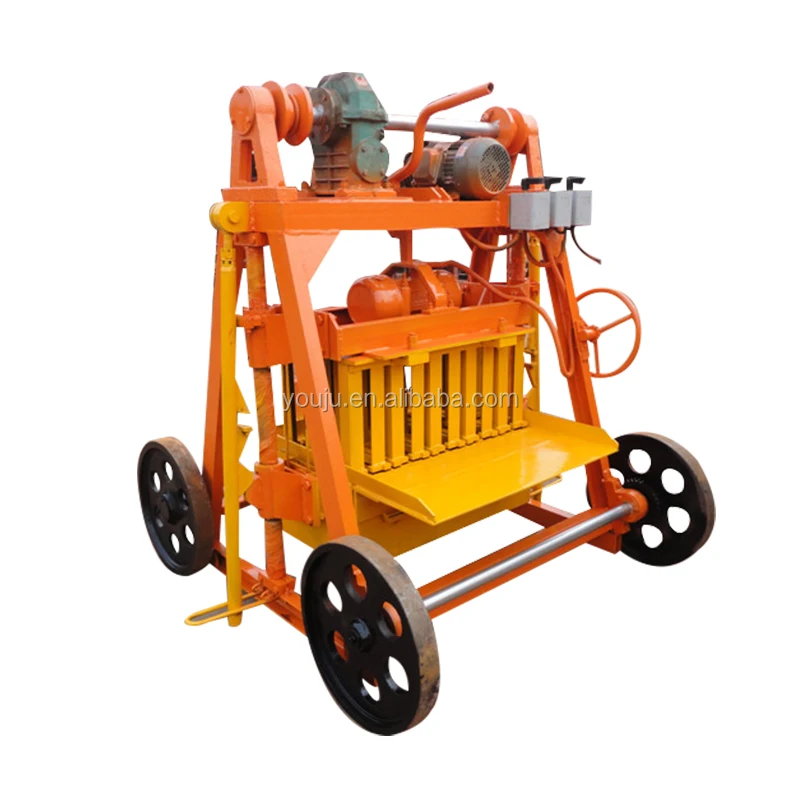
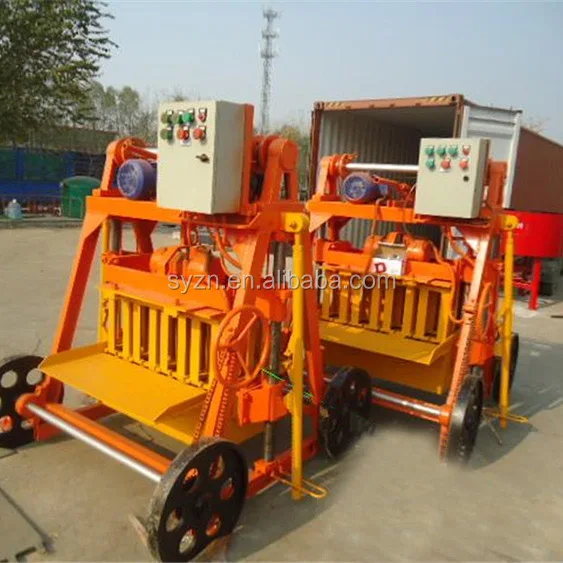 Mobile block machine