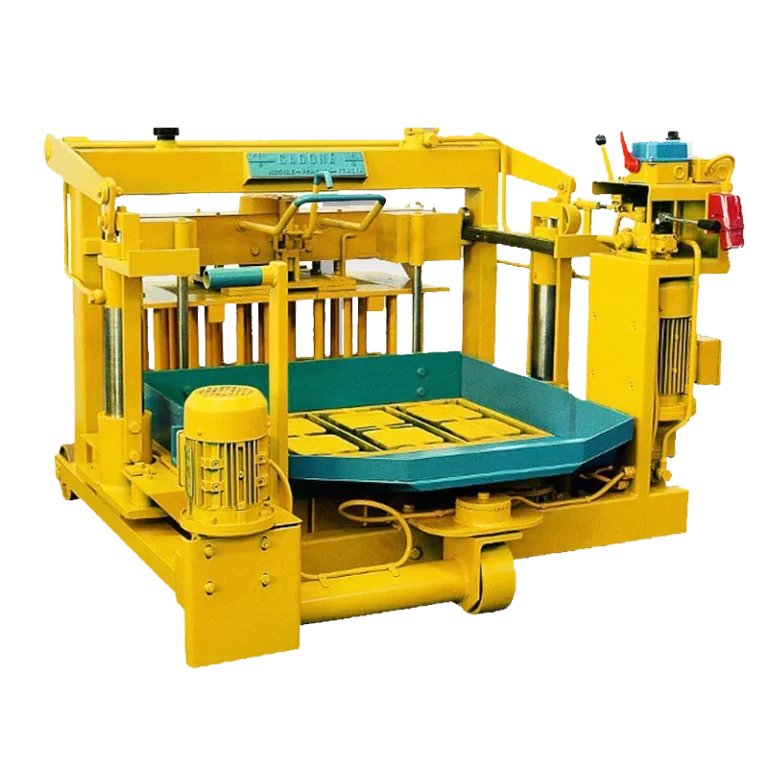
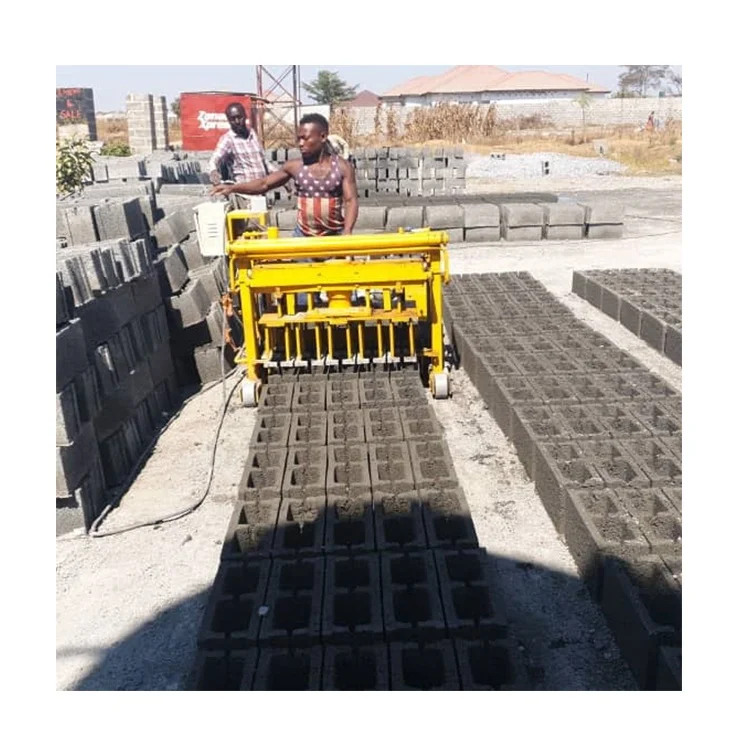
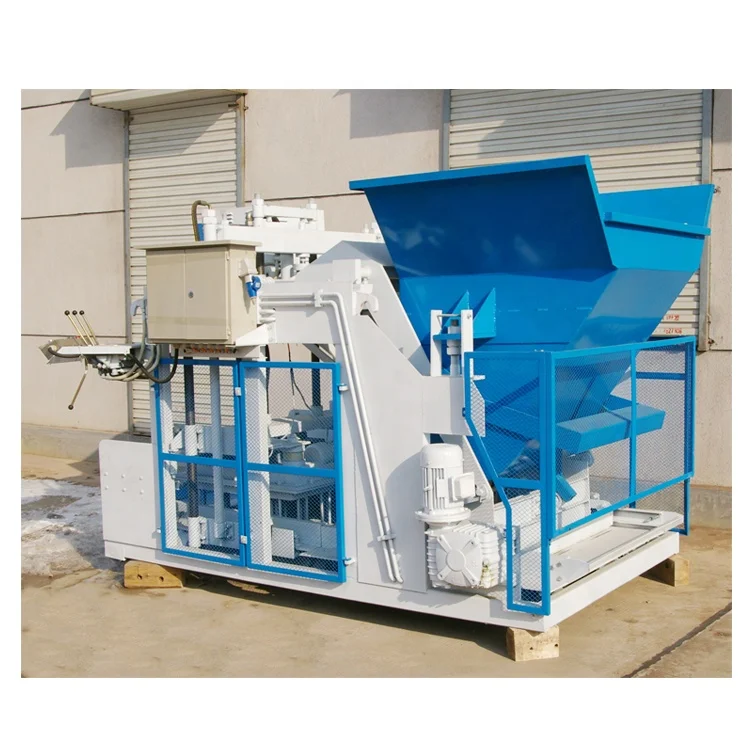
Single-focus configuration — the QMJ4-45 egg laying mobile block machine is specified as a complete matched system of press, mould, and handling, not assembled from separate suppliers, so your first production run arrives tuned to your actual block format rather than a catalogue default.
Technical Specifications
| Parameter |
Value |
| Product Type |
Egg Laying Mobile Block Machine |
| Model |
QMJ4-45 |
| Rated Power |
7.4 kW |
| Molding Cycle |
45 s |
| Output Capacity |
2400 pcs/8 hours (basis not stated in source — confirm block format / material / thickness) |
| Mould Format Examples |
400×200×200 mm hollow block (4 pcs/mould, ~300 pcs/h); 400×150×200 mm block (5 pcs/mould, ~400 pcs/h) (basis not stated in source) |
| Raw Materials |
Concrete, sand, cement, fly ash, lime, gypsum |
| Pallet Requirement |
No pallets required (egg-laying type) |
| Guide Mechanism |
Four-pole oriented with ultralong orientation bearing |
| Control System |
Manual force control combined with jog control |
| Automation Level |
Manual / semi-manual |
| Electrical Components |
Imported electrical appliances |
| Hydraulic / Sealing Parts |
Imported sealing and hydraulic components |
| Net Weight |
1 T |
| Overall Dimensions (L×W×H) |
1550×1335×1580 mm |
| Voltage |
Configurable to buyer’s local voltage and frequency (confirm before order) |
| Assembly State |
Fully assembled mobile unit |
Application Suitability
| Application |
Material or Output |
| On-site hollow block production for housing projects |
Crushed stone, sand, cement mix laid directly on prepared ground |
| Small-scale solid block manufacturing |
Fly ash, lime, and gypsum blends for first-time block entrepreneurs |
| Road block and curb stone production on development sites |
Heavy aggregate concrete with mould change between formats |
| Remote or temporary construction sites without fixed plant |
Locally sourced sand and cement with no pallet infrastructure needed |
What "2400 Pieces per 8 Hours" Actually Means for the QMJ4-45 Egg Laying Mobile Block Machine
Capacity figures only hold weight when the block format behind them is named.
I have watched buyers sign off on an output number, then discover on commissioning day that the quoted figure assumed a small solid block while their market demands hollow blocks — and the real daily count drops to a fraction. The QMJ4-45 egg laying mobile block machine quotes 2400 pcs/8 hours, but the source does not state which format, wall thickness, or mix that number assumes. Before this machine ships, the capacity calculation must be restated per mould so your business plan survives contact with reality [NEED_CITE: block format assumptions behind quoted cycle outputs].

Where This Mobile Unit Sits in the Full Range
The QMJ4-45 egg laying mobile block machine occupies the entry-mobile tier of the Shiyue block machine range. It requires no fixed foundation, no pallet inventory, and no curing-rack infrastructure — just a level concrete floor and a power supply. Buyers who are testing a market or supplying a single housing project typically start here before stepping to a semi-automatic line with pallet handling.
When to Step Up and When to Stay Mobile
If your daily volume requirement grows beyond what a 45-second manual cycle can deliver across multiple shifts, or if your local labour cost makes manual pallet handling uneconomic, the next tier in the range is a semi-automatic stationary press with automatic pallet feeding. The QMJ4-45 egg laying mobile block machine remains the right choice when the project site changes frequently, when curing space is limited, or when the investment must stay low enough to pay from first sales rather than financing.
Reading the Specifications Against Your Site Conditions
The 7.4 kW rated power and manual jog control mean this machine draws modest current, but voltage and frequency must still match your local grid — a 50 Hz motor on a 60 Hz supply will overspeed and wear the bearings within weeks. The four-pole guide with ultralong orientation bearings keeps the pressure head square across the mould, which matters when your aggregate is uneven and side-loading can shift the block dimensions. Mould formats like the 400×200×200 mm hollow block at 4 pcs/mould and the 400×150×200 mm at 5 pcs/mould define your realistic hourly count, not the headline daily number. Imported electrical and hydraulic sealing components are specified to survive the dust and moisture of open-air construction sites where enclosure ratings matter more than in a factory [NEED_CITE: IP rating requirements for outdoor construction machinery].
The Cost of Skipping Configuration Details
Ordering this QMJ4-45 egg laying mobile block machine without confirming the mould format, local aggregate grading, and site voltage is how a three-week commissioning delay begins. A mix that is too fine for the vibration force will produce blocks with inconsistent density, and a voltage mismatch will trip breakers or burn the motor on the first shift. These are not theoretical risks — they are the exact failures I have seen turn a mobile machine into a stranded asset on site [NEED_CITE: common commissioning failures in mobile block machines due to unconfirmed site conditions].
Why Source This Machine Through Shiyue
Block machinery is our single focus, so the QMJ4-45 egg laying mobile block machine is configured as a matched system — press, mould, and guide mechanism checked against one another before dispatch. We set the configuration against your actual mix design and local aggregate rather than shipping a catalogue default. Mould design covers the formats your market actually buys, including custom drawings when your block dimension falls outside standard sizes. The automation level is selectable within the range, so you can start with this manual mobile unit and move to a semi-automatic stationary press later without replacing your entire operation. Installation support and operator training are included so the first production run is supervised, not left to guesswork.
Documentation & Verification
- Line layout with capacity calculation stating the exact block format and mould behind each output figure
- Machine specification sheet confirming voltage, frequency, and control language against your local grid
- Mould drawing and format list for every block type you plan to produce on this mobile unit
- Factory test record with photographs taken on your specified mix before the machine is packed
- Packing photographs and customs documentation support prepared before container loading
Installation, Commissioning & Support
- Level concrete slab at least 100 mm thick required as the working surface for this 1 T mobile unit
- Dedicated power circuit matching confirmed voltage and frequency for the 7.4 kW rated motor
- Machine ships fully assembled — no on-site mechanical assembly required, only mould fitting and electrical connection
- First-run commissioning includes mix adjustment and vibration tuning against your local aggregate
- Operator training covers mould change procedure, jog control operation, and daily bearing inspection
- Wear parts list and mould inventory provided so replacements are available before the first change-out is due
What to Include in Your Inquiry
Send the block formats and dimensions your market demands, the local aggregate type and grading available near your site, and your daily volume target per format. Include your local voltage, frequency, and preferred control language so the electrical package is confirmed before production begins. If you already have curing space or forklifts, note the dimensions so the egg-laying pattern and machine footprint fit your existing layout.
Frequently Asked Questions
Q: How is the quoted 2400 pcs/8h capacity derived and for which block format does it apply?
A: That figure comes from the source without a stated block format, material, or wall thickness. Before we quote, we recalculate capacity per mould — for example, the 400×200×200 mm hollow block at 4 pcs/mould yields a different hourly rate than the 400×150×200 mm solid block at 5 pcs/mould. Your purchase documents will state the output per format.
Q: Where does the QMJ4-45 sit in the full range and when should a buyer step up?
A: It occupies the entry-mobile tier — no pallets, no fixed plant, low initial investment. Buyers step to a semi-automatic or automatic line when daily volume demands exceed what a manual 45-second cycle can sustain across available shifts, or when local labour cost makes manual handling uneconomic.
Q: What voltage and frequency options are available for this machine?
A: The motor and control wiring are configured to your local grid specification before production. You must confirm voltage, frequency, and phase during the inquiry stage so the correct motor winding and electrical components are fitted, avoiding commissioning delays or motor damage on arrival.
Q: Which block formats and mould sizes are supported, and how long does a mould change take?
A: Standard moulds include 400×200×200 mm hollow block and 400×150×200 mm block, with custom moulds available to buyer drawings. Mould change on this mobile unit is manual and typically completed within one shift by a trained operator, keeping format flexibility practical on a working construction site.
Q: What site preparation does this mobile machine need compared with a fixed plant?
A: A level concrete slab and a confirmed power supply are the main requirements. There is no fixed foundation, no pallet storage area, and no curing rack system needed. The egg-laying design places blocks directly on the ground, so curing area is simply the floor space surrounding the machine path.

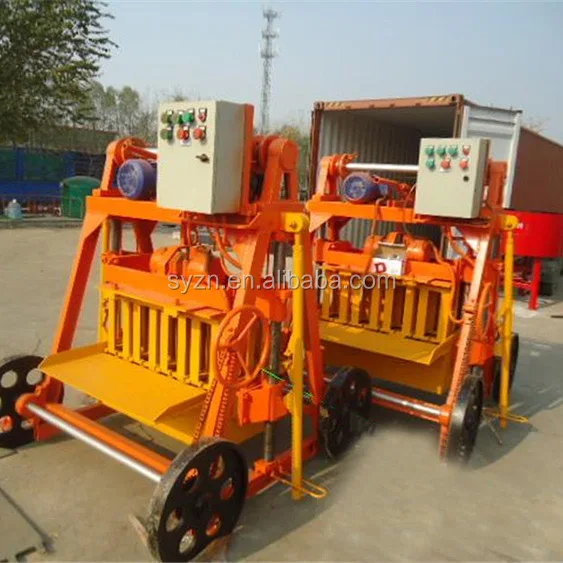
 Mobile block machine