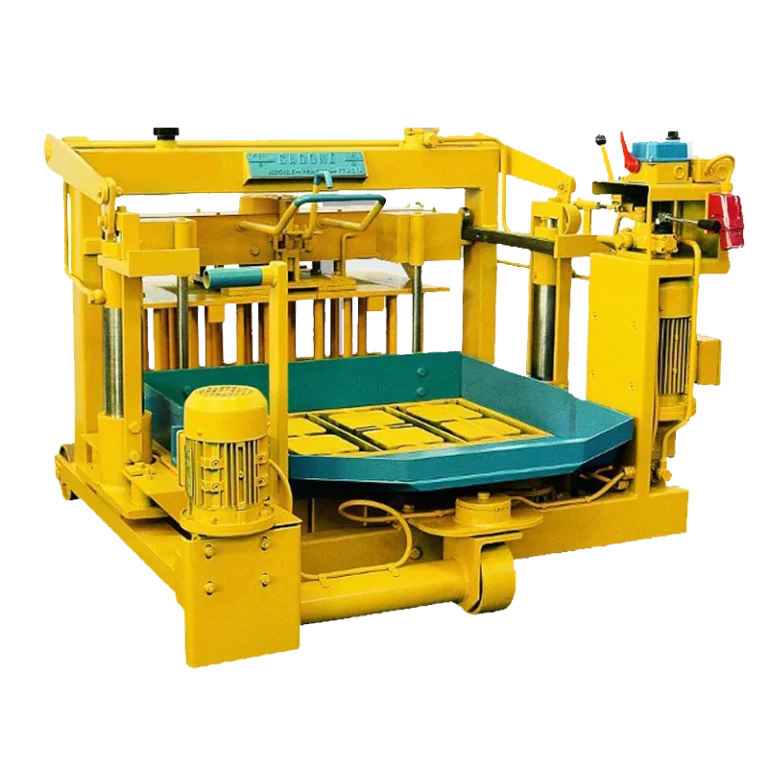
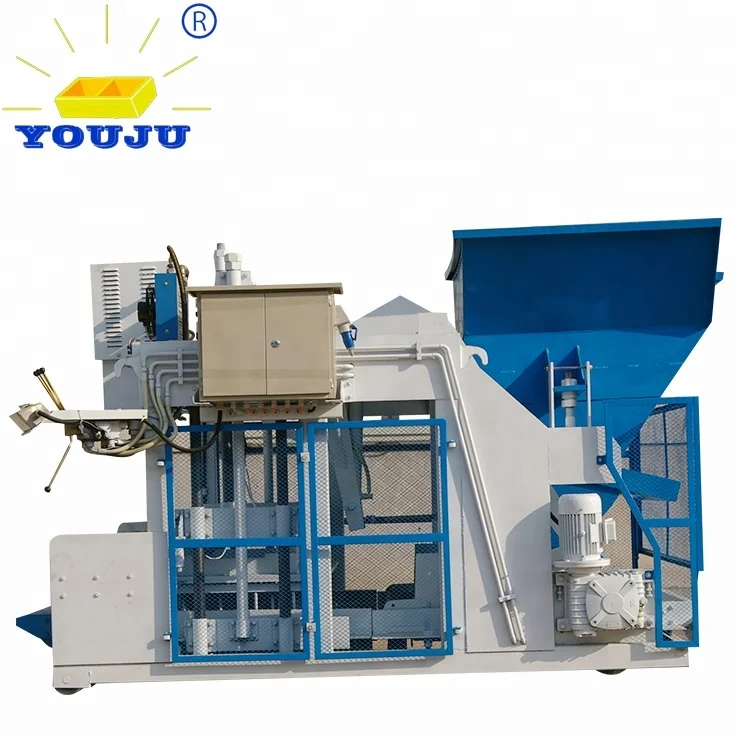
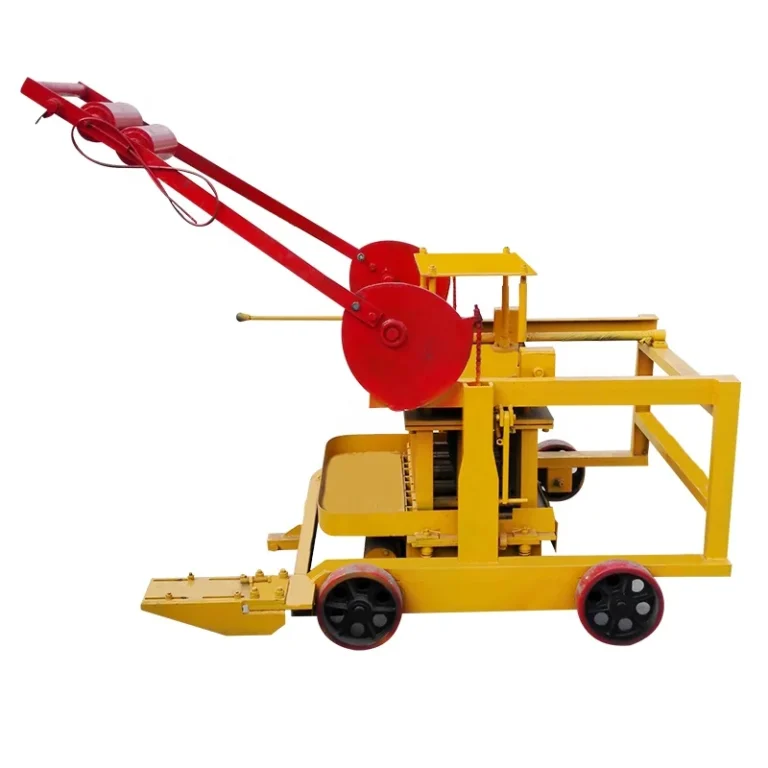
Matched System Design — machine, mould, and handling specified as one unit rather than assembled from separate suppliers, eliminating interface gaps before your QMY4-30 arrives on site.
Technical Specifications
| Parameter |
Value |
| Model |
QMY4-30 |
| Product Type |
Mobile Concrete Block Making Machine |
| Rated Power |
5 kW |
| Overall Dimensions (L×W×H) |
1200 × 1200 × 1100 mm |
| Net Weight |
950 kg |
| Molding Cycle Time |
30 seconds |
| Output Capacity |
480 pcs/h based on 400×200×200 mm hollow block (4 pcs/mould) |
| Output Capacity |
600 pcs/h based on 400×150×200 mm hollow block (5 pcs/mould) |
| Output Capacity |
840 pcs/h based on 400×100×200 mm hollow block (7 pcs/mould) |
| 8-Hour Shift Output |
3,840 pcs based on 400×200×200 mm hollow block |
| 8-Hour Shift Output |
4,800 pcs based on 400×150×200 mm hollow block |
| 8-Hour Shift Output |
6,720 pcs based on 400×100×200 mm hollow block |
| Mould Format |
Hollow block and solid brick (changeable moulds) |
| Automation Level |
Manual / mobile egg-laying type |
| Assembly State |
Mobile, no fixed plant required |
| Pallet Size |
N/A (egg-laying mobile type, no pallet required) |
| Raw Materials |
Cement, sand, crushed stones, slag |
| Voltage & Frequency |
Configurable to buyer’s site supply (basis to be confirmed) |
| Control System |
Electromechanical (basis to be confirmed) |
Application Suitability
| Application |
Material or Output |
| On-site hollow block production for building contractors |
Cement, sand, crushed stone — 400×200×200 mm blocks |
| Solid brick manufacturing at remote housing projects |
Cement, sand, slag — standard solid brick format |
| First block plant for entrepreneurs with low capital |
Mixed aggregates with cement binder — multiple changeable formats |
| Supplementary production beside a stationary line |
Any supported hollow or solid format without pallet logistics |
What "Output per Hour" Actually Means for Your Site
Every capacity figure here is tied to a specific block dimension and mould cavity count — no number floats without its assumption.
Buyers regularly receive quotations stating a single hourly output with no mention of the block format behind that claim. When the machine arrives and produces a different size, real daily throughput falls well below the quoted promise. With the QMY4-30 mobile block machine manufacturer documentation, the 480 pcs/h figure assumes 400×200×200 mm hollow blocks at four cavities per mould, while 840 pcs/h assumes 400×100×200 mm blocks at seven cavities. Knowing which number applies to the product you actually sell prevents costly planning errors [NEED_CITE: block format assumptions in capacity quotations].

Where This Mobile Block Machine Sits in the Full Range
The QMY4-30 occupies the entry tier of our mobile block machine lineup, designed for buyers who need concrete block production without investing in a fixed plant, pallets, or curing racks. It lays blocks directly onto the ground surface and moves forward for the next cycle, which removes an entire layer of material handling infrastructure from the equation. When daily volume requirements grow beyond what a single operator can manage with a mobile unit, stepping up to a semi-automatic stationary line with pallet feeding and stacking becomes the logical next stage.
Mould Flexibility Without a Mould Change Penalty
Because this mobile concrete block making machine for sale uses a changeable mould system, a buyer can run 200 mm hollow blocks in the morning and switch to 100 mm hollow blocks or solid bricks after a short changeover. The 30-second molding cycle remains consistent across formats, so productivity does not drop when you shift to a different product. For contractors serving multiple project specifications from a single yard, this flexibility avoids the need to purchase a separate machine for each block size [NEED_CITE: mould change time impact on daily output].
How Power, Weight, and Cycle Time Interact on Site
At 5 kW rated power, the QMY4-30 draws significantly less electricity than a stationary hydraulic press, making it viable on sites with limited grid capacity or generator supply. The 950 kg net weight keeps the machine stable during vibration without requiring a reinforced concrete foundation — it operates on level compacted ground. The 30-second cycle time is driven by the vibration system consolidating the concrete mix within the mould cavity; vibration force and hydraulic pressure must both match the buyer’s specific aggregate gradation and cement ratio to achieve target block density consistently. A mix designed for a stationary press may not perform identically on a mobile egg-laying unit, which is why confirming your local raw material characteristics matters before finalizing the configuration.
The Cost of Skipping Voltage Confirmation Before Dispatch
I have seen mobile brick machines arrive at a South American job site with the hydraulic motor wired for the wrong rotation direction and the vibration system completely non-functional — the destination voltage and frequency were never confirmed against the buyer’s actual supply. The contractor waited weeks for a variable-frequency drive retrofit while crews and deadlines stalled. With a 5 kW machine running on site power, a mismatch between nameplate voltage and local grid conditions can damage the motor or prevent commissioning entirely. Verifying your site voltage, frequency, and available amperage before the QMY4-30 leaves the factory eliminates this class of failure [NEED_CITE: voltage and frequency standards by export market].
Why Source the QMY4-30 Through This Range
Block machinery is the single focus here, so the QMY4-30 is specified alongside compatible moulds and handling considerations as one matched package rather than assembled from disconnected vendors. Configuration decisions — mould cavity count, vibration setting, and voltage — are made against your actual mix design and site supply rather than a catalogue default. Every output calculation in the quotation states the block format it assumes, removing ambiguity from your production planning. Mould drawings and format lists ship with the machine, and custom mould designs are available when your local market demands a non-standard block size. Commissioning support and operator training are included so the first production run happens with someone who knows the equipment standing beside your crew.
Documentation & Verification
- Line layout and capacity calculation stating each block format assumption for the QMY4-30
- Mould drawing and format list confirming all supplied hollow and solid block sizes
- Voltage and frequency confirmation sheet matched to your site before dispatch
- Factory test record on your specified block format and mix parameters
- Operation and maintenance manual with wear parts list and mould catalogue
Installation, Commissioning & Support
- Level compacted ground surface required — no fixed foundation needed for the 950 kg QMY4-30
- Dedicated power circuit matching confirmed voltage and frequency before motor connection
- Machine shipped assembled; on-site setup covers mould mounting and electrical verification
- First-cycle commissioning with vibration and mix adjustment to your local aggregate
- Operator training covering mould change procedure, cycle timing, and daily inspection points
- Wear parts and replacement mould supply with lead time stated at order confirmation
Preparing Your Inquiry
Share the block dimensions you need to produce and your target daily output so the correct mould configuration and capacity tier can be recommended. Confirm your site voltage, frequency, and available amperage to ensure the motor and control system match your electrical supply before manufacturing begins.
Frequently Asked Questions
Q: How is output capacity verified and what block format does each figure assume?
A: Each output number is calculated from the 30-second molding cycle multiplied by the cavity count for a specific block dimension. The 480 pcs/h figure, for example, assumes 400×200×200 mm hollow blocks with four cavities per mould. Your quotation states which block format underlies every capacity claim so you can match it against your actual product mix.
Q: Where does the QMY4-30 sit in the full machine range — when should a buyer consider stepping up to semi-automatic?
A: The QMY4-30 is the entry mobile tier for buyers producing without a fixed plant or pallets. When daily volume requirements grow beyond what manual egg-laying operation can sustain, or when consistent block density demands controlled pallet feeding and stacking, a semi-automatic stationary line becomes the appropriate next investment.
Q: What voltage and frequency options are available for different destination markets?
A: The motor and control components are configurable to match the buyer’s local electrical supply. Confirming your exact voltage, frequency, and phase before the machine enters production prevents commissioning delays and motor damage on arrival at your site.
Q: Which raw materials and mix designs is this mobile machine configured for?
A: The QMY4-30 processes cement, sand, crushed stones, and slag. Vibration settings and cycle parameters are adjusted to suit your specific aggregate gradation and cement ratio, ensuring block density targets are met with locally sourced materials rather than a generic catalogue mix.

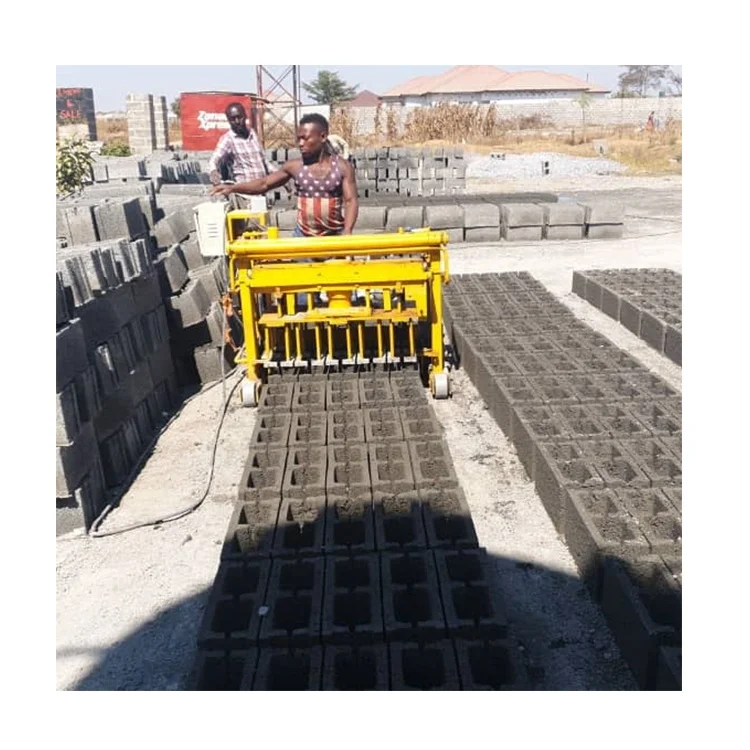
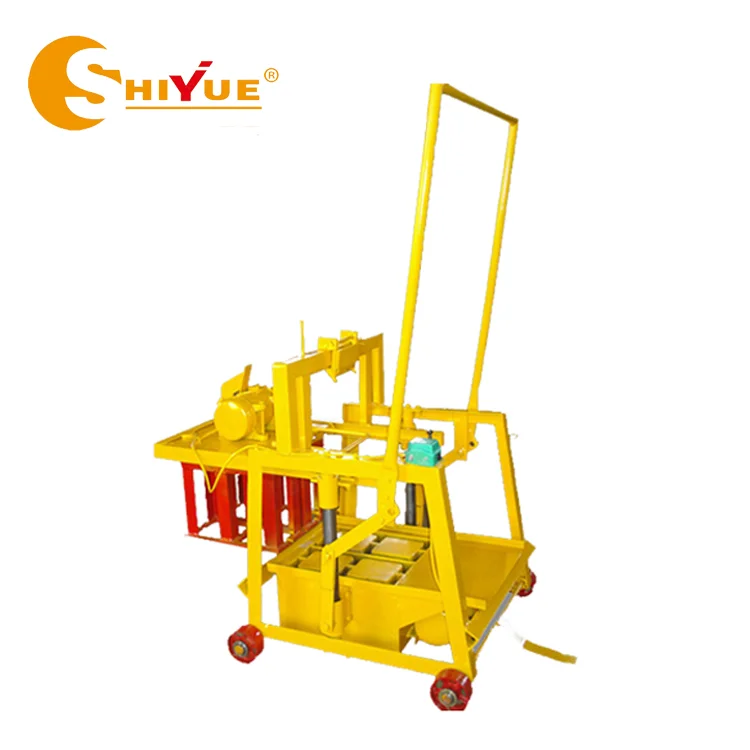 Mobile block machine