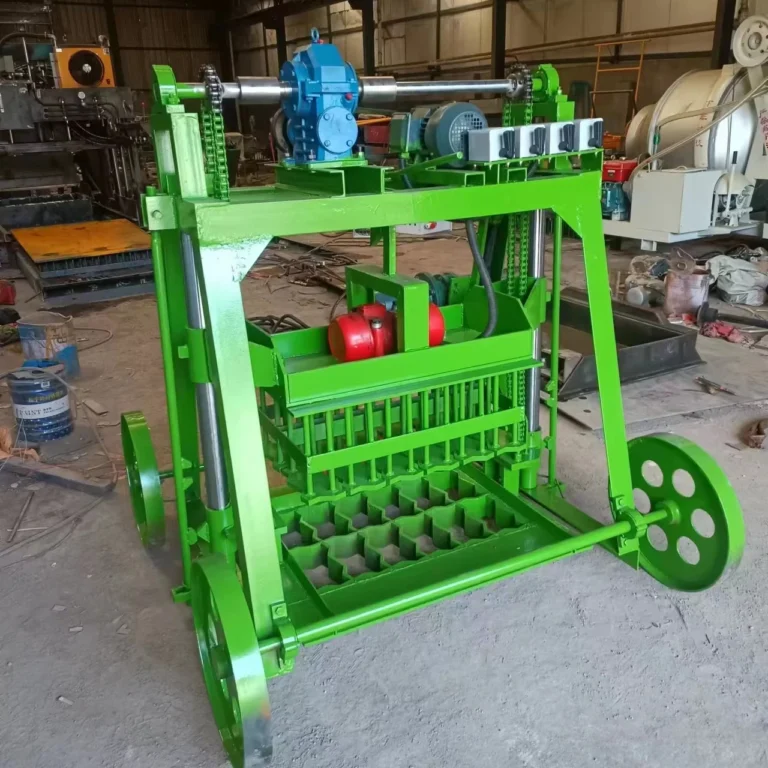
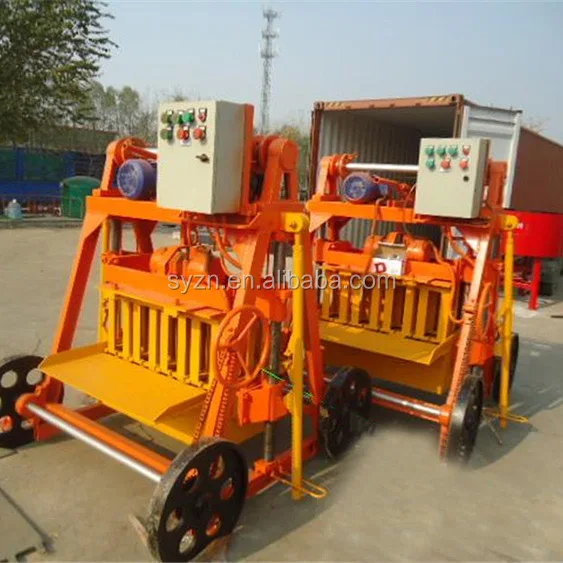
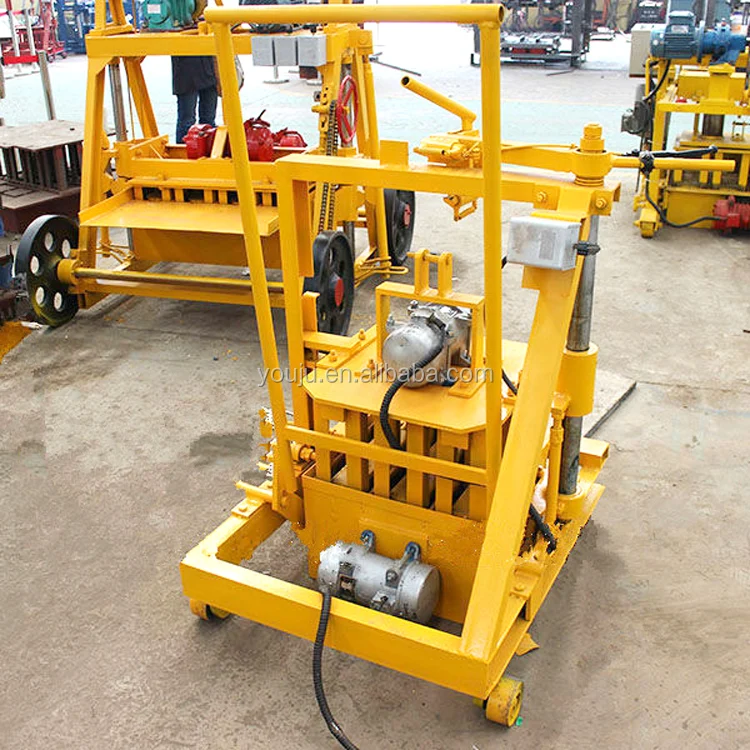
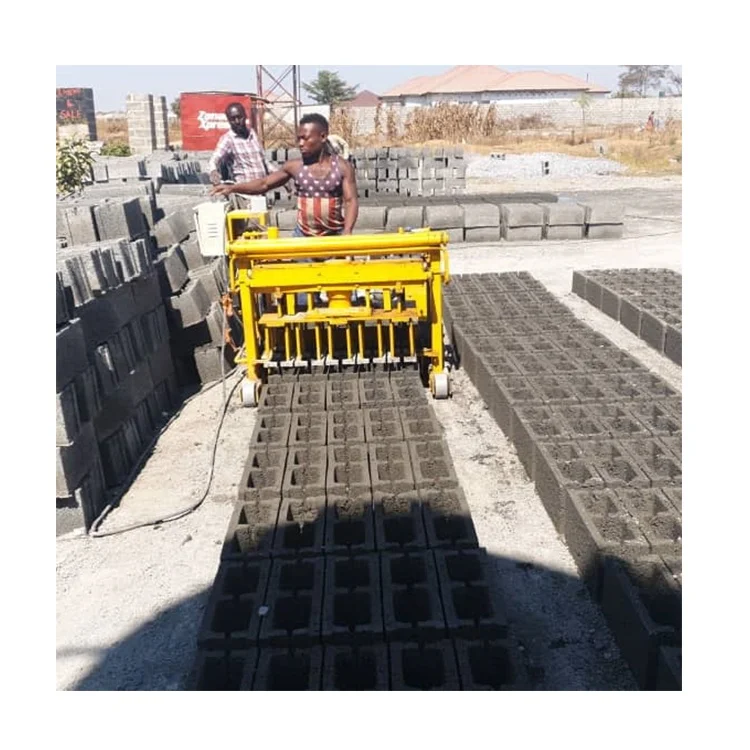
Diesel-Powered Block Forming — the QMJ4-45 mobile egg laying block making machine runs independently of grid power, placing hollow block production directly on your job site without pallets or fixed infrastructure.
Technical Specifications
| Parameter |
Value |
| Product Type |
Mobile Egg Laying Block Making Machine |
| Model |
QMJ4-45 |
| Molding Capacity |
4 pcs/mould (400×200×200mm hollow block) |
| Vibration Frequency |
2400 r/min |
| Vibration Method |
Mold vibration |
| Molding Cycle |
40–45 s |
| Productivity (400×200×200mm) |
3000 pcs/day (8 hours, 4 pcs/mould, 40–45s cycle) |
| Productivity (400×150×200mm) |
3500 pcs/day (8 hours, 5 pcs/mould, 40–45s cycle) |
| Productivity (400×120×200mm) |
4500 pcs/day (8 hours, 6 pcs/mould, 40–45s cycle) |
| Total Power |
6 kW |
| Power Source |
Diesel / Petrol engine |
| Demold Method |
Manual |
| Turning Method |
Manual (egg laying / mobile) |
| Automation Level |
Manual |
| Pallet Requirement |
No pallets required (egg laying on ground) |
Application Suitability
| Application |
Material or Output |
| On-site hollow block production |
Crushed stone, river sand, cement |
| Remote housing project block supply |
Local aggregate mixed with Portland cement |
| First-time block plant setup |
Standard concrete mix without admixtures |
| Contractor self-production on job sites |
Coarse and fine aggregate blends |
Why "Daily Output" Figures Can Mislead Buyers
Every productivity number on this page is tied to a specific block size and cycle time — not a generic claim.
When I first started installing machines across Latin America, I watched contractors order equipment based on a single headline capacity figure, only to find their actual daily yield fell short once production began. The reason was simple: the quoted number assumed a block format the buyer was not actually making. With the QMJ4-45, a 400×200×200mm hollow block yields a different count per shift than a 400×120×200mm wall block, and the cycle holds at 40–45 seconds across formats [NEED_CITE: block format impact on daily machine output]. Knowing which format drives your revenue determines whether this mobile egg laying block making machine for sale meets your target volume or leaves capacity on the table.

Placing the QMJ4-45 in the Shiyue Mobile Range
The QMJ4-45 occupies the entry position in the Shiyue mobile block machine lineup. It is built for buyers who need block production without committing to a fixed plant, cured pallets, or a concrete factory floor. The diesel or petrol engine option means the machine operates where grid electricity is unreliable or absent, which is common on rural development sites and early-stage housing projects.
Where a Pallet-Free Design Changes the Economics
Eliminating pallets removes one of the largest recurring costs in block production. Pallets must be purchased, stored, cycled through a curing area, and eventually replaced as they crack under moisture and vibration. The QMJ4-45 lays blocks directly onto prepared ground, so the only consumable is the raw mix itself. For entrepreneurs funding a first block plant or contractors producing on a temporary job site, this design removes a layer of capital and handling that larger automatic lines require [NEED_CITE: pallet handling costs in small block plants].
Vibration Frequency, Mould Count, and What They Mean for Block Density
The 2400 r/min mold vibration frequency is the core mechanism that compacts concrete around the aggregate particles. Higher frequency alone does not guarantee strength — it must be matched to the mix design and aggregate grading. The QMJ4-45 uses a double-vibration molding core, upgraded from earlier single-vibration configurations, which distributes compaction force more evenly across the mould cavity. When the vibration is properly tuned to local sand and crushed stone, blocks exit the mould with consistent wall density. The 40–45 second molding cycle gives operators a rhythm that balances speed against adequate compaction, and the manual demold keeps mechanical complexity low for sites without trained maintenance staff.
The Hidden Cost of Skipping a Mix Trial
I have seen projects stall because the machine was configured for a standard river sand mix while the buyer’s local source carried high clay content. The blocks looked fine coming out of the mould but crumbled after curing. Running a sample of your local aggregate through a lab test before finalizing the machine order reveals whether the vibration frequency and water-cement ratio will produce adequate compressive strength [NEED_CITE: aggregate testing before block machine commissioning]. Skipping this step is the most common reason mobile block machines earn a reputation for weak output — the fault is rarely the machine itself.
Why Buyers Source This Model from Shiyue
Block machinery is our single focus, so the QMJ4-45 arrives with moulds, engine specification, and handling workflow matched as one system rather than assembled from separate vendors. Each machine is configured against the buyer’s actual mix design and target block format, not a catalogue default. Mould drawings are provided for every hollow block size the buyer intends to produce, including custom formats drawn to buyer specifications. The manual automation level keeps the initial investment contained, and the path to semi-automatic or fully automatic lines remains open when production volume justifies the upgrade. Installation support and operator training are included so the first production run does not become a learning exercise on paid concrete.
Documentation & Verification
- Capacity calculation sheet stating block format assumed for each daily output figure
- Machine specification sheet confirming power source, vibration frequency, and cycle time
- Mould drawing and format list for all available hollow block sizes
- Operation and maintenance manual with diesel or petrol engine service schedule
- Factory test record on your specified block format before dispatch
Installation, Commissioning & Support
- Prepared flat concrete floor recommended for consistent egg laying with the QMJ4-45
- 6 kW total power drawn from the onboard diesel or petrol engine, no grid connection needed
- Machine shipped in a single assembly with mould bolted in place for fast site deployment
- First-day commissioning includes cycle timing verification at 40–45 seconds per mould
- Operator training covers mix consistency judgement and manual demould technique
- Wear parts list supplied covering vibration springs, mould liners, and engine consumables
Before You Request a Quote
To size the QMJ4-45 correctly, share the hollow block dimensions your market sells most, the daily volume you need to sustain, and the type of aggregate available near your site. If you are working off-grid, specify whether diesel or petrol fuel is easier to source locally. Mention any existing mixers or material handling equipment so the workflow around the machine can be planned before it arrives.
Frequently Asked Questions
Q: How is daily output verified — which block format does each figure assume?
A: Every productivity number listed for the QMJ4-45 is calculated for a specific hollow block size, mould cavity count, and a 40–45 second cycle over an eight-hour shift. The 3000-piece figure assumes 400×200×200mm blocks at four per mould. If your primary product is a different dimension, your daily count will differ, and we provide a format-specific calculation with every proposal.
Q: Diesel or petrol engine — which power source fits my site?
A: Diesel engines deliver higher torque at lower RPM and suit continuous heavy-duty operation, making them common on remote construction sites where fuel logistics are already established. Petrol engines are lighter and easier to service in areas with established small-engine repair networks. We confirm the engine type during the quotation stage based on your fuel availability.
Q: What block formats can the QMJ4-45 produce and how long does a mould change take?
A: The machine produces hollow blocks in standard widths including 200mm, 150mm, and 120mm at 400mm length. Mould change is manual and typically completed within one shift by a trained operator. We supply mould drawings for every format you plan to run, and custom moulds can be built to your market-specific dimensions.
Q: Does the machine need a concrete floor or can it lay on compacted earth?
A: A smooth, level concrete floor produces the most consistent block base and reduces breakage during the first hours of curing. Compacted earth can work for temporary sites, but uneven ground causes blocks to tilt or crack before they set. We recommend floor preparation guidance as part of the installation process.
Q: Where does the QMJ4-45 sit on the Shiyue range — can I upgrade later?
A: This model is the entry point of our mobile block machine range, designed for minimal investment and no fixed infrastructure. When your daily volume outgrows manual operation, the path moves through semi-automatic machines with pallet systems and into fully automatic lines with stacking and cubing. The mould formats you start with can carry forward to larger machines.

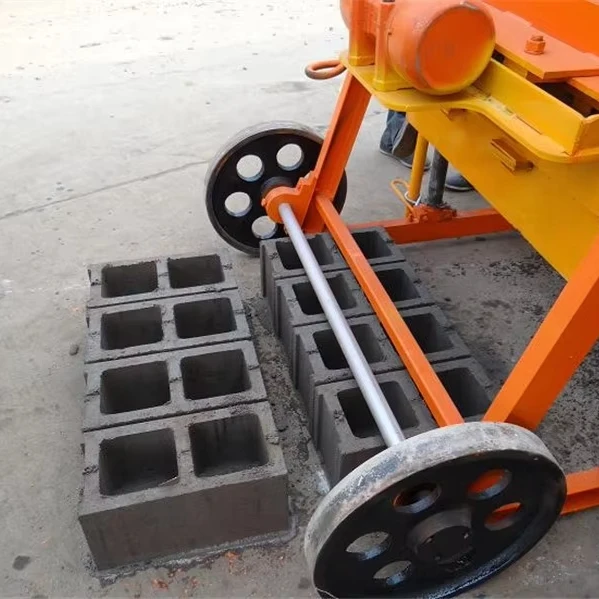
 Mobile block machine