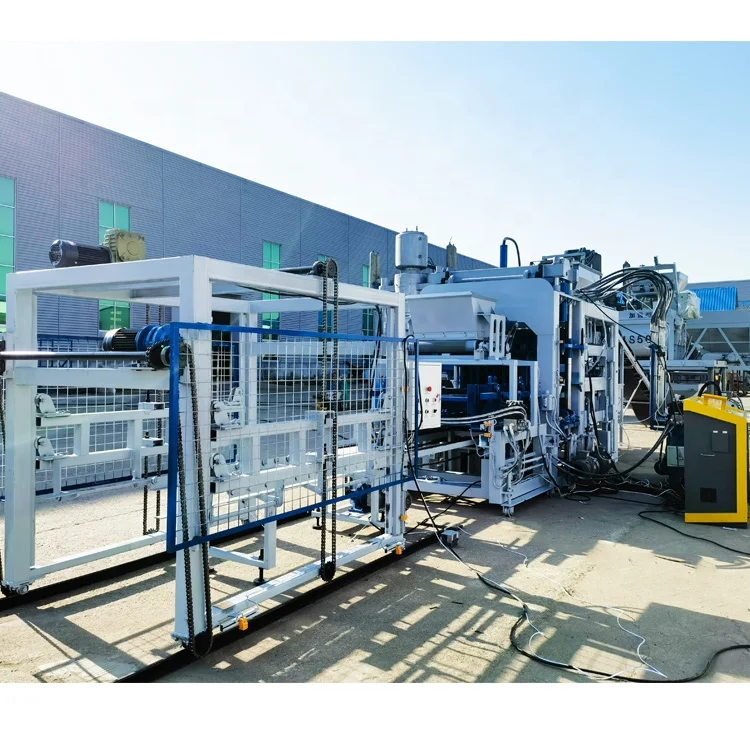
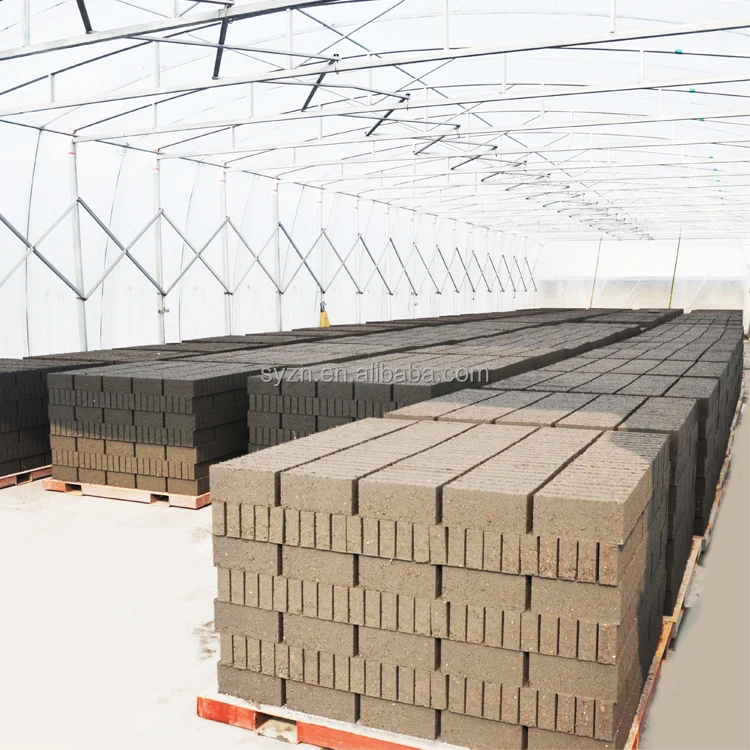
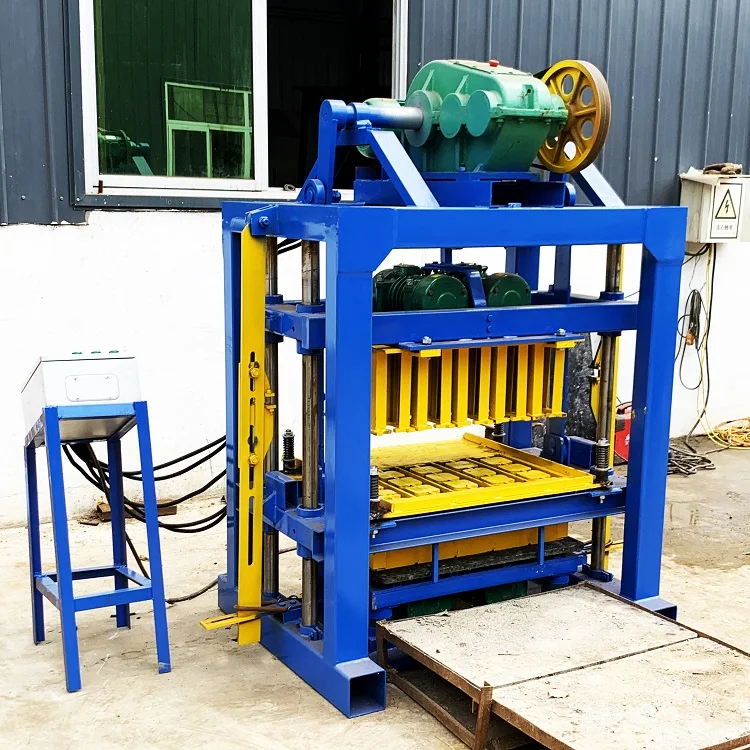
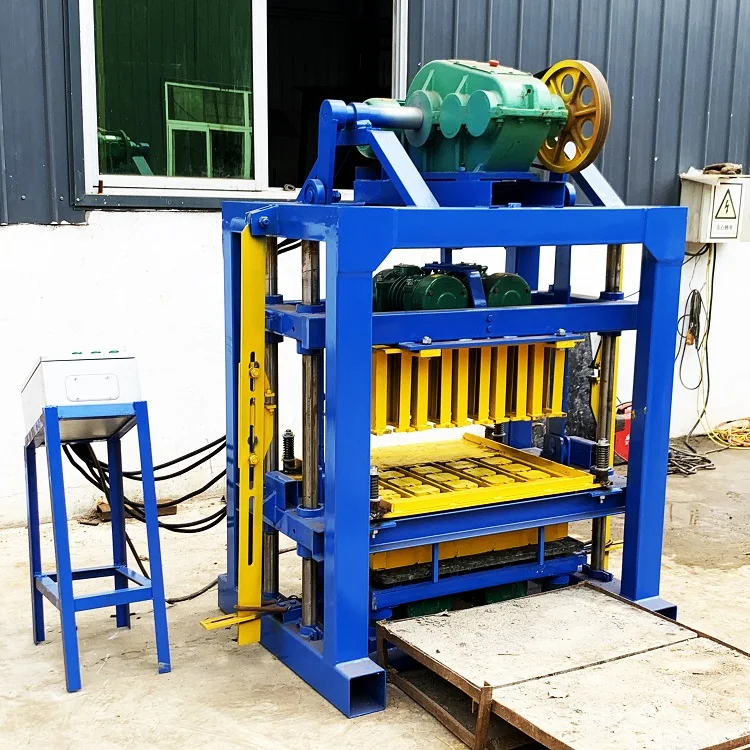
Stationary Press Configuration — Machine, mould and pallet specified as a matched set around the QTJ4-24 platform rather than sold as a standalone unit, so capacity is recalculated per block format before the order is placed.
Technical Specifications
| Parameter |
Value |
| Model |
QTJ4-24 |
| Product Type |
Stationary Block Making Machine |
| Molding Method |
Mechanical |
| Overall Dimensions (L×W×H) |
3600 × 1700 × 2560 mm |
| Pallet Size |
850 × 450 mm |
| Molding Cycle |
24–26 s (basis not stated in source — confirm block format / material / thickness) |
| Overall Power |
11.95 kW |
| Vibration Force |
45 kN (2×3 kW lower vibrators + 2×1.5 kW upper vibrators) |
| Total Mass |
2 T |
| Control System |
PLC (controller brand / language options to be confirmed with supplier) |
| Drive Type |
Engine powered, gear drive |
| Reducer for Mold Lifting |
350-type |
| Material Distribution |
Full-automatic spiral |
| Raw Materials |
Cement, sand, stone |
| Mould Format Options |
Hollow, interlocking, paving, solid (detailed mould drawing / change time to be confirmed) |
| Automation Level |
Semi-automatic with spiral feeding; manual pallet handling implied |
| Warranty |
1 year for the whole machine (excluding spare parts) |
Application Suitability
| Application |
Material or Output |
| Hollow block production for load-bearing walls |
Cement, crushed stone, sand |
| Solid block production for partition walls |
Cement, sand, fine aggregate |
| Interlocking brick production for boundary walls |
Cement, stone dust, sand |
| Paving block production for walkways and yards |
Cement, coarse aggregate, sand |
What "24–26 Seconds per Cycle" Actually Means for Your Daily Output
The cycle number is only meaningful when tied to the exact block format, pallet size and mix you intend to run.
Most quotations list a single cycle time without stating which block format it assumes. On a QTJ4-24 stationary block making machine manufacturer you might talk to will quote 24–26 seconds, but that figure shifts the moment you switch from a small solid block to a large hollow format, or when local sand has a higher clay content that demands longer vibration to achieve target density. I have spent weeks on sites in the Middle East recalibrating machines because the quoted cycle was based on a clean river sand that simply was not available locally [NEED_CITE: aggregate grading standards for concrete block production]. Without a format-by-format capacity table, buyers end up comparing machines on a number that does not reflect their actual product mix.

Placing the QTJ4-24 on the Stationary Range
The QTJ4-24 sits at the entry tier of the stationary block machine range. It is a mechanical press with PLC oversight, aimed at first-plant entrepreneurs or contractors who need a fixed production point but are not yet ready to invest in fully automatic stacking and cubing. The semi-automatic spiral feed keeps material distribution consistent across the 850 × 450 mm pallet area while pallet handling remains manual, allowing buyers to match the downstream labour and curing space they already have.
Where the Stationary Block Making Machine Manufacturer Role Begins
A stationary block making machine manufacturer worth working with will pair the press with the right mould set, pallet material and feeder configuration before quoting. Vibration force on the QTJ4-24 is rated at 45 kN through four integrated vibrator motors, and that force must be matched to the density requirement of the block format the buyer’s market actually purchases. If the pallet material is too flexible, vibration energy is absorbed before it reaches the mould, leaving blocks under-compacted [NEED_CITE: vibration transmission through pallet materials in block molding]. This is why pallet specification is part of the machine discussion, not an afterthought.
Reading the Specs Beyond the Brochure
The 45 kN vibration force is delivered by two 3 kW lower vibrators and two 1.5 kW upper vibrators working simultaneously. Lower vibrators consolidate the base of the block while upper vibrators settle the face — if either set is underpowered for the mix, blocks leave the press with weak edges or hollow cores that crumble during curing. The 350-type reducer dedicated to mold lifting is sized above what lighter mechanical presses use, reducing gear wear when heavy multi-cavity moulds are changed between formats. Full-automatic spiral distribution feeds material evenly into the mould box, which matters most on interlocking and paving formats where uneven fill creates thickness variation across the pallet. Overall power draw of 11.95 kW means the QTJ4-24 can run on a standard workshop supply without a dedicated transformer, but voltage and frequency still need written confirmation before the control panel is wired.
The Cost of Skipping the Configuration Conversation
Buyers who order on cycle time alone often discover that the moulds included in the quotation do not match the block sizes their market demands, forcing a second purchase within the first year. Manual pallet handling also means output piles up beside the press faster than workers can move it, and without a planned curing rack layout the blocks sit on the ground losing moisture unevenly. On desert sites where sand carries high clay content, vibration settings calibrated for clean aggregate produce blocks that fail drop tests, and the machine sits idle while parameters are reworked [NEED_CITE: effect of clay content on concrete block compressive strength]. These are not machine faults — they are configuration gaps that surface after the container arrives.
Why Source This Stationary Press Through a Single-Focus Supplier
Block machinery is the only product line here, which means the QTJ4-24 is never bundled with unrelated equipment from separate factories. Moulds are designed to the buyer’s drawings or local market formats, not pulled from a generic catalogue. Configuration starts with the buyer’s actual mix design and aggregate availability, so vibration and pressure settings are proposed before production rather than adjusted on site. Automation is selectable — a buyer can start with the QTJ4-24’s semi-automatic setup and add automatic stacking and cubing stations later without replacing the press. Factory testing is run on the buyer’s specified block format, and a full documentation package travels with the machine.
Documentation & Verification
- Line layout with capacity table per block format for the QTJ4-24 pallet area
- Mould drawings confirming cavity count and dimensions for each format ordered
- Pallet specification sheet matched to buyer’s curing area and forklift capacity
- Electrical schematic with confirmed voltage, frequency and PLC display language
- Factory test record showing cycle time and block density on agreed format
- Wear parts and mould list with first-replacement availability stated
Installation, Commissioning & Support
- Foundation pad sized to 3600 × 1700 mm footprint with anchor bolt plan supplied
- Dedicated circuit rated for 11.95 kW at confirmed voltage and frequency
- Machine shipped state and on-site reassembly scope confirmed before dispatch
- First-run commissioning with vibration parameter tuning for local aggregate mix
- Operator training covering mould change procedure on the 350-type reducer
- Spare mould and wear parts list with lead times for first reorder
What to Share Before Requesting a Quotation
Send the block formats your market currently buys, including dimensions and target compressive strength. Note the type of sand and aggregate available locally, along with any test reports you have. Confirm your site voltage, frequency, and the language your operators need on the PLC display. If you already have pallets, forklifts or curing racks, share their dimensions so the line can be configured around them.
Frequently Asked Questions
Q: How is the QTJ4-24 daily output recalculated for each block format I plan to run?
A: The 24–26 second cycle is a starting reference. We build a capacity table that states output per format based on cavity count, mould fill time and the pallet size, so you see realistic daily numbers for hollow, solid and paving blocks individually rather than one generic figure.
Q: Where does this machine sit in the stationary range, and can I add automation later?
A: The QTJ4-24 is the entry stationary tier with semi-automatic spiral feeding and manual pallet handling. The platform is compatible with downstream stacking and cubing stations that can be added as your output grows, without replacing the press itself.
Q: Which items are included in the quotation and which are priced separately?
A: The quotation covers the press, the mould formats you confirm, and matching pallets. Supporting stations like mixers, conveyors and curing racks are quoted based on your site layout. Every line item is listed individually so scope is clear before production starts.
Q: How do you confirm voltage, frequency and PLC language before shipment?
A: We collect your site electrical specification during the inquiry stage and confirm it in writing on the order. The PLC display language is set before the control panel is wired, so the machine is ready for operator training on arrival.
Q: What does the one-year warranty cover, and how are wear parts supplied?
A: The warranty covers the complete machine excluding consumable spare parts. A wear parts list with part numbers is included in the documentation package, and first-replacement availability is confirmed before shipment so you are not waiting for components when maintenance is due.

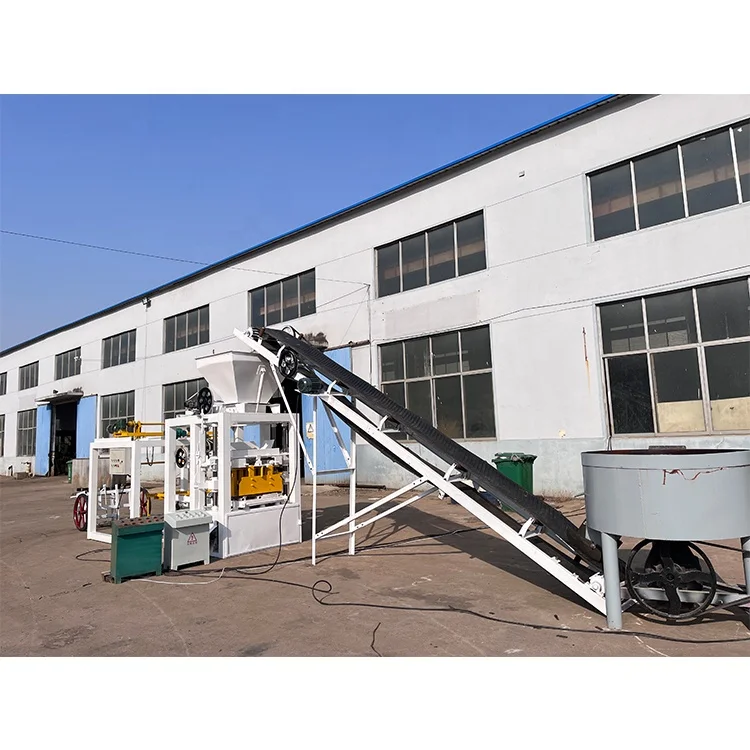
 Stationary block machine