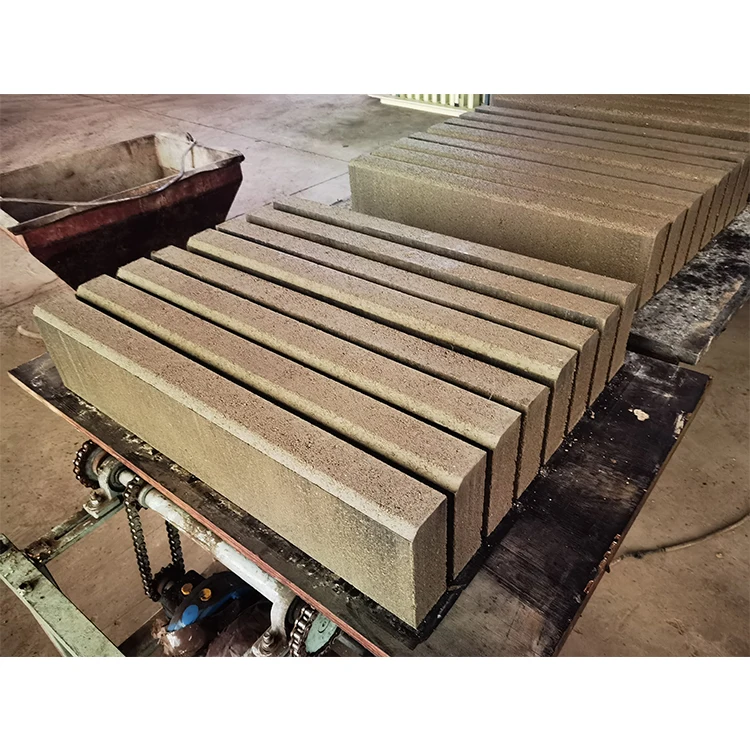
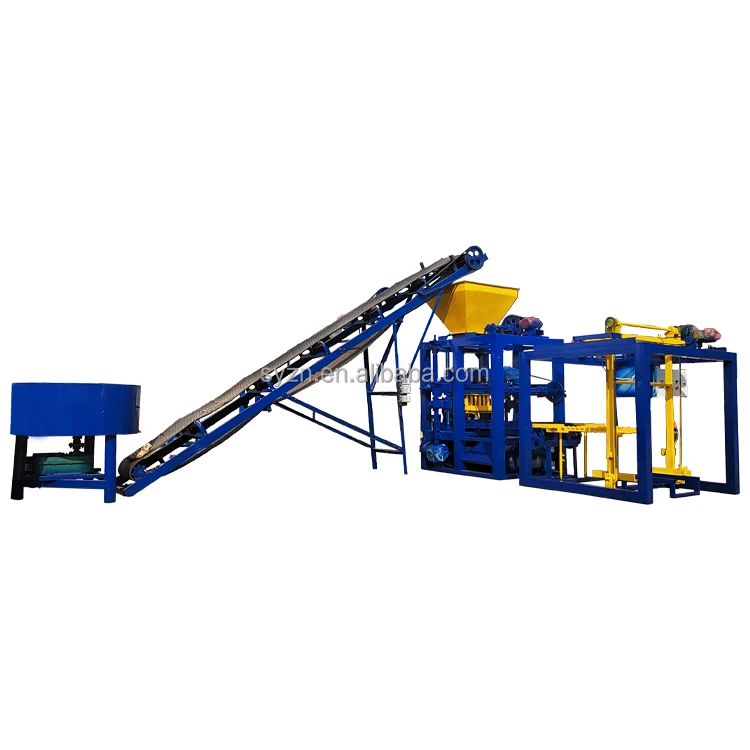
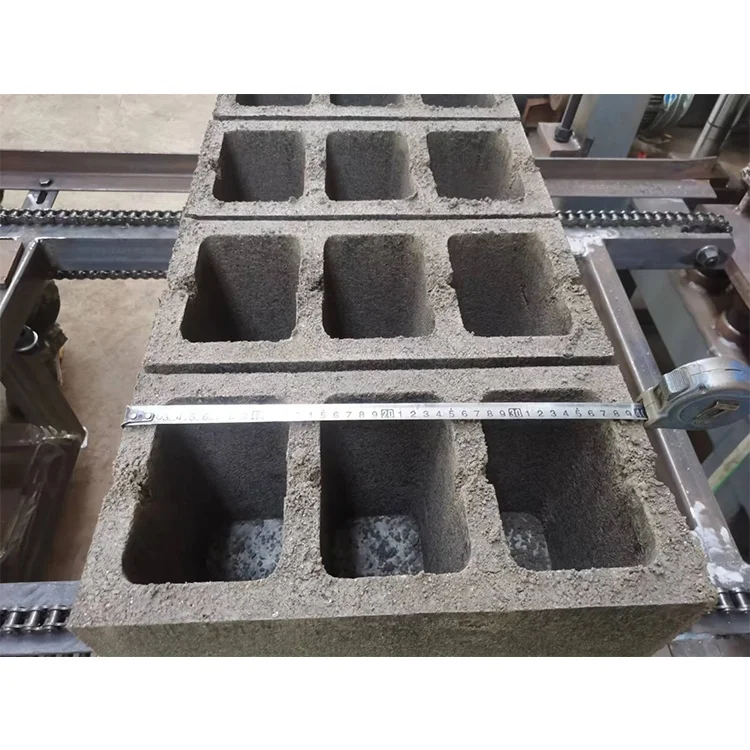
Specified as a Matched System — the QT8-15 is configured around your target block format, local aggregate and curing footprint rather than pulled from a generic catalogue.
Technical Specifications
| Parameter |
Value |
| Model |
QT8-15 |
| Product Type |
Automatic Concrete Block Making Machine |
| Overall Dimensions (L×W×H) |
8300 × 1860 × 3000 mm |
| Rated Pressure |
21 MPa |
| Main Vibration Form |
Platform Vibration |
| Vibration Frequency |
2800 – 4500 r/min |
| Vibration Force |
60 kN |
| Pallet Size |
950 × 900 mm |
| Molding Cycle |
15 – 25 s (varies by block format) |
| Overall Power |
55.5 kW |
| Total Mass |
9 T |
| Demolding Method |
Hydraulic |
| General Water Consumption |
12 T/Day |
| Recommended Factory Area |
600 m² |
| Control System |
PLC with human-machine interface (dialogue system) |
| Automation Level |
Fully automatic (basis to be confirmed) |
| Output Capacity |
Stated 20% higher than similar products (basis not stated in source — confirm block format and material) |
| Voltage & Frequency |
Configurable to buyer’s site supply |
| Raw Materials |
Crushed stone, sand, cement, fly ash, gravel, slag and similar aggregates |
Application Suitability
| Application |
Material or Output |
| Hollow block production for wall construction |
Crushed stone, sand, cement, fly ash blends |
| Solid block manufacturing for load-bearing structures |
Gravel, sand, cement mixes |
| Paving slab and colored paver runs |
Fine aggregate with pigment additives |
| Interlocking paver production |
Crushed stone and cement with controlled moisture |
| Kerbstone forming for road and curb projects |
Coarse aggregate, cement, sand |
| Porous and permeable block output |
Graded aggregate with reduced cement content |
What "High Output" Really Means When No Block Format Is Named
Buyers often receive a capacity figure quoted in cycles per hour, only to discover that the number assumes a small paver while their actual product is a large hollow block. The QT8-15 automatic concrete block making machine manufacturer range requires every output figure to be tied to a specific block format, wall thickness and mix design before it becomes a commitment.
In my years running trial batches for export orders, I have watched a machine rated for a brisk cycle time on paper spend most of its first week being re-tuned because the buyer’s local sand carried a clay content the original setup never accounted for. The vibration force that compacts clean crushed stone properly will over-vibrate a fly-ash-heavy mix and crack the green block. That mismatch is not a warranty issue — it is a configuration gap [NEED_CITE: aggregate testing standards for concrete block production]. When the quotation does not state which block size the cycle time was measured on, daily output can fall noticeably short of the buyer’s business plan.
Where the QT8-15 Sits Across the Automatic Range
The QT8-15 occupies the mid-to-high tier of our stationary block machine lineup. Its 950 × 900 mm pallet defines the maximum mould envelope, meaning buyers stepping up from smaller semi-automatic presses gain a wider choice of block dimensions per cycle. Those moving down from higher-tier machines accept a smaller footprint and lower power draw while keeping full PLC control and hydraulic demolding.
Positioning a project on this tier lets a plant buyer compare the QT8-15 against neighbouring models on pallet count per hour, curing rack requirements and the automation stations that surround the press. It also clarifies whether the investment matches a first-plant scenario or an expansion line adding paver formats to an existing hollow block operation.
Matching Vibration and Pressure to the Mix You Can Actually Source
Platform vibration at 2800–4500 r/min paired with 21 MPa hydraulic pressure gives the QT8-15 a broad compaction window. The upper frequency range suits fine-aggregate pavers that need rapid particle rearrangement, while the lower end handles coarser hollow block mixes where excessive vibration would segregate the cement paste [NEED_CITE: vibration frequency effects on concrete compaction density].
The hydraulic demolding circuit releases the mould box smoothly, reducing edge chipping on thin-wall hollow blocks. Because the vibration frequency is adjustable rather than fixed, operators can dial in the setting that matches their aggregate grading instead of being locked into a single factory preset. This flexibility matters when a plant runs two or three different block formats in the same shift.

Reading the Specs That Decide Daily Throughput
A 15–25 second molding cycle range looks straightforward, but the actual figure depends on block height, wall thickness and the stiffness of the mix. A 200 mm tall hollow block typically requires a longer vibration and pressing phase than a 60 mm paver, so quoting a single cycle time across all formats would mislead. The QT8-15’s PLC dialogue system lets the operator store separate recipes per mould, keeping cycle times consistent within each format.
The 950 × 900 mm pallet size governs how many blocks fit in one press stroke and how the curing yard must be laid out. Forklift aisle widths and rack spacing should be planned around this pallet footprint before the machine ships. Overall power at 55.5 kW determines the transformer capacity and dedicated circuit rating needed on site, a detail that must be confirmed against the buyer’s local voltage and frequency [NEED_CITE: industrial voltage and frequency standards by export market].
What Happens When Configuration Steps Are Skipped
Skipping the mix-design confirmation stage means the machine arrives set for an aggregate blend the buyer cannot purchase locally. The result is a commissioning period spent adjusting water-to-cement ratios and vibration durations while pallets of off-spec blocks accumulate. Pallet handling and stacking stations left out of the quotation force the plant to hire extra labour just to move green blocks to the curing area, negating the labour savings the automatic press was supposed to deliver.
Omitting a voltage and PLC language check delays first power-on. The electrician discovers the motor rotation is reversed or the HMI displays instructions in a language the operators cannot read, pushing back production by weeks while replacement contactors or software loads are arranged.
Why Plant Buyers Source This Tier From Us
Block machinery is our single focus, so the QT8-15 press, its moulds, pallets and handling equipment are specified as one matched set rather than assembled from separate suppliers. Configuration is built around the buyer’s actual mix design, local aggregate and target block format — not a default catalogue line.
Mould design covers the formats the buyer’s market sells, including custom drawings when standard dimensions do not match regional building codes. Automation level is selectable: a buyer can start with semi-automatic pallet handling and add automatic stacking later, spreading capital expenditure across two phases. Installation support includes on-site commissioning and operator training so the first production run meets strength targets from day one.
Documentation & Verification
- Line layout drawing stating the block format assumed for each output calculation
- Machine specification sheet confirming pallet size, vibration force and hydraulic pressure
- Mould drawing and format list matching quoted cycle times to block dimensions
- Voltage, frequency and PLC display language confirmation signed before production
- Factory test record on the buyer’s target block format before dispatch
- Packing photographs and customs documentation support for smooth import clearance
Installation, Commissioning & Support
- 600 m² factory area plan showing QT8-15 footprint, curing rack aisles and pallet return path
- 55.5 kW power requirement confirmed against local supply, with dedicated circuit and motor rotation check
- Hydraulic demolding circuit flushed and pressure set to 21 MPa during on-site commissioning
- PLC dialogue system loaded in the buyer’s chosen language and recipes stored per block format
- Operator training on mould change procedure, vibration frequency adjustment and daily maintenance points
- Wear parts list covering hydraulic seals, vibration springs and pallet guides with recommended reorder intervals
Before You Send the Inquiry
To size the QT8-15 accurately, share the block formats you plan to produce, the dimensions and wall thicknesses that sell in your market, and the daily output you need for each. Tell us about your local aggregate source — sand type, gravel grading, fly ash availability — so we can match vibration and pressure settings before the machine is built. Confirm your site voltage, frequency and the language your operators need on the PLC screen so commissioning starts the day power is connected.
Frequently Asked Questions
Q: How do I verify the real daily output, and which block format is the capacity figure based on?
A: Every capacity figure we quote names the block format, dimensions and mix design it was measured on. Ask for the line layout and capacity calculation sheet before placing the order. That document shows cycle time per format, pallets per hour and the curing space needed so you can cross-check against your production target.
Q: Where does the QT8-15 sit compared to semi-automatic and higher-tier automatic models?
A: It occupies the mid-to-high automatic tier, offering a 950 × 900 mm pallet and full PLC control while keeping overall power and plant footprint moderate. Buyers stepping up from semi-automatic presses gain format flexibility and automated pallet handling; those stepping down from higher tiers accept a smaller mould envelope for lower capital outlay.
Q: What pallet size does the QT8-15 use, and how does that affect my curing area?
A: The 950 × 900 mm pallet sets the spacing for curing racks, forklift aisle widths and stacking height. Plan the curing yard around this footprint before the machine ships so pallets move from press to rack without bottlenecks. We include a line layout drawing that shows recommended rack rows and aisle clearances.
Q: Which voltage and frequency options are available, and is the PLC language configurable?
A: Voltage and frequency are configured to match your site supply before production begins. The PLC dialogue system supports multiple display languages, confirmed in writing during the order stage. This prevents commissioning delays caused by motor rotation errors or unreadable HMI text.
Q: What automation level does the QT8-15 ship with, and can it be upgraded later?
A: The machine ships as a fully automatic press with PLC cycle control and hydraulic demolding. Pallet feeding, stacking and cubing stations can be added at the initial order or retrofitted later, letting you spread automation investment across phases as production volume grows.

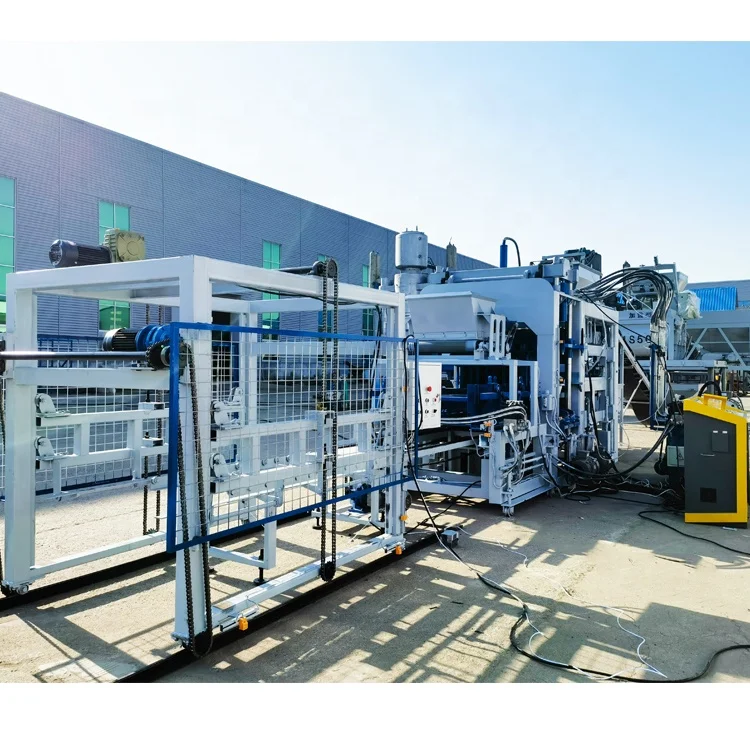
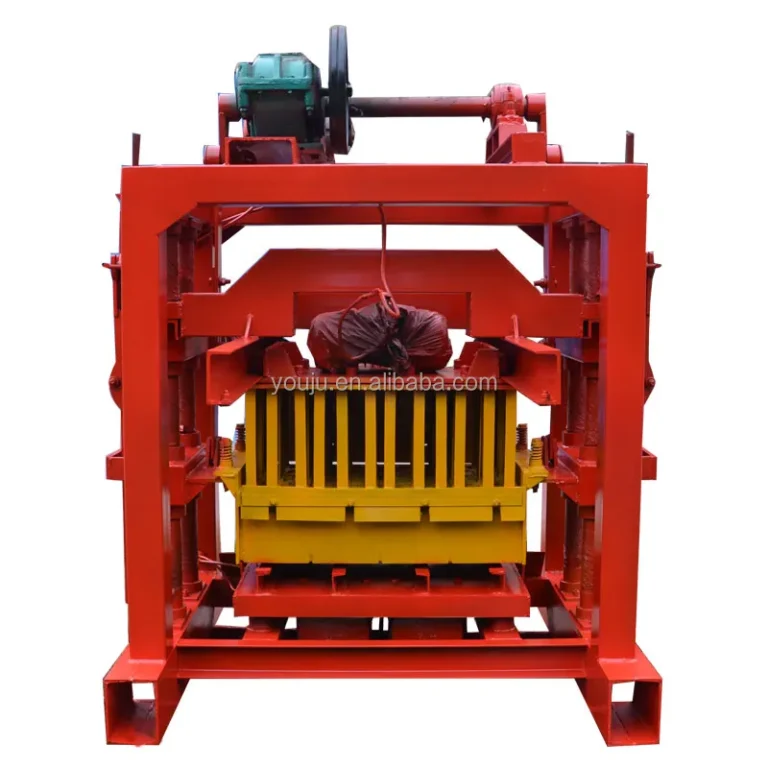 Stationary block machine