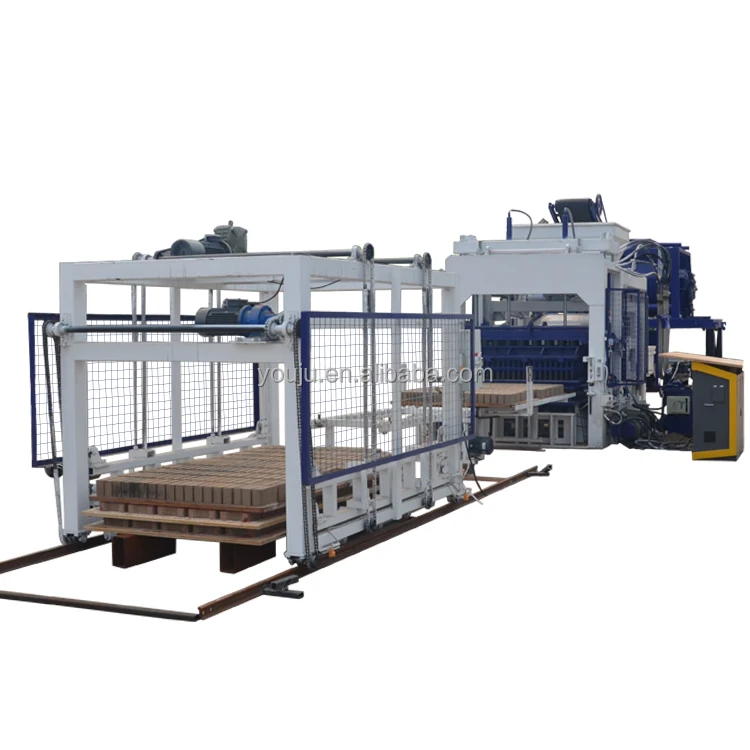
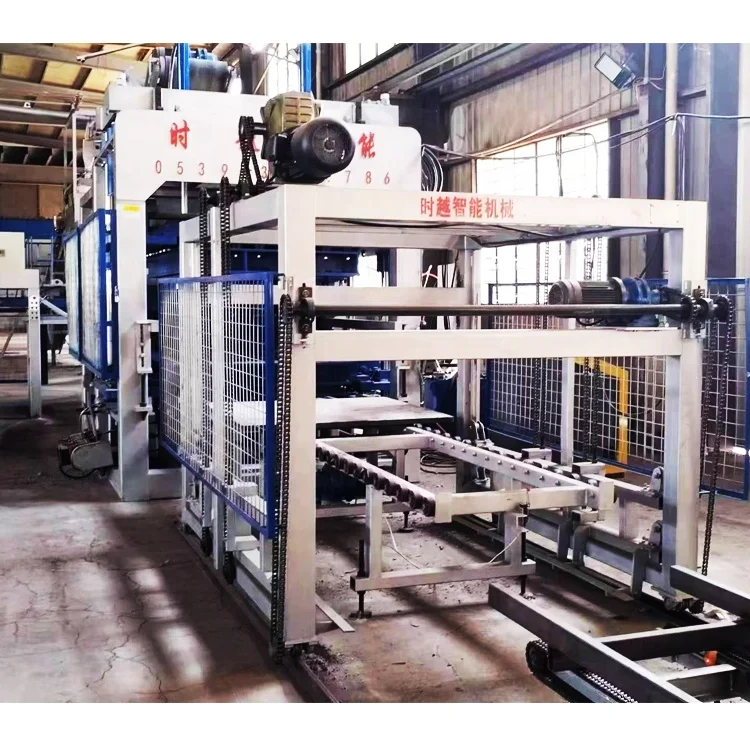
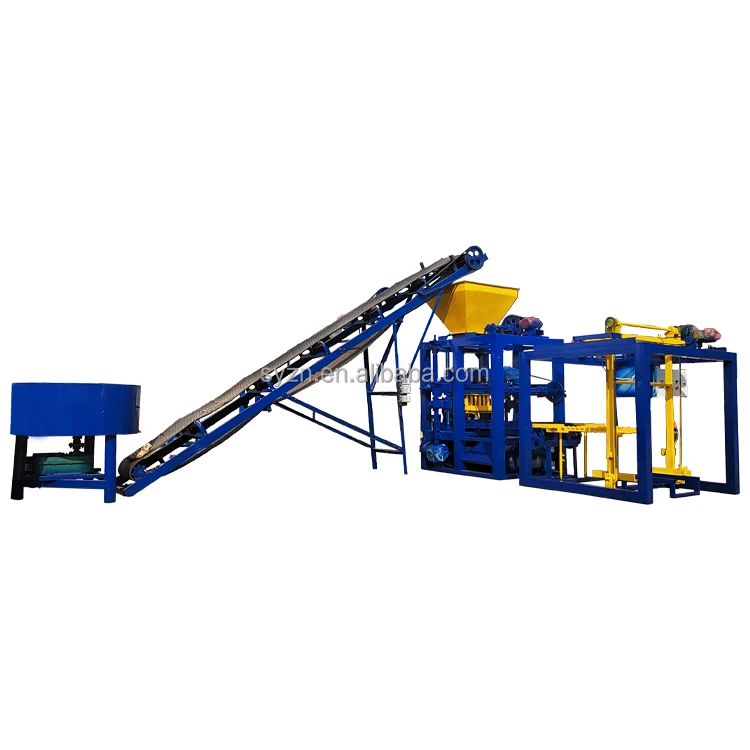
Matched System Design — the QTJ4-40 manual block making machine, its moulds, pallets, and handling gear are specified together against your local aggregate, so capacity on paper matches what you actually produce on site.
Technical Specifications
| Parameter |
Value |
| Model |
QTJ4-40 |
| Product Type |
Manual Block Making Machine |
| Main Vibration Form |
Platform Vibration |
| Vibration Frequency |
2800 r/min |
| Pallet Size |
850 × 450 mm |
| Machine Weight |
1 T |
| Overall Dimensions |
1350 × 1460 × 1800 mm |
| Factory Area Required |
Approx. 200 m² |
| Worker Requirement |
1–3 people |
| Automation Level |
Manual (top die push-pull, automatic scraper) |
| Raw Materials |
Concrete, cement, fly ash, crushed stone, sand, dust, gravel, slag |
| Applied Products |
Hollow blocks, solid blocks, pavers, interlocking blocks, curbstone, colored pavers |
| Block Output |
400×200×200 mm — 4 pcs/mould, 2880 pcs/day (basis not stated in source) |
| Block Output |
400×150×200 mm — 5 pcs/mould, 4000 pcs/day (basis not stated in source) |
| Block Output |
225×112.5×60 mm — 9 pcs/mould, 7200 pcs/day (basis not stated in source) |
| Certification |
CE declaration available |
Application Suitability
| Application |
Material or Output |
| First-time block plant startup |
Hollow and solid blocks from crushed stone, sand, and cement |
| On-site production for housing projects |
Concrete blocks and interlocking pavers using locally sourced aggregate |
| Low-volume paver and curbstone runs |
Colored concrete pavers and kerbstones from cement and fine sand |
| Building material distributor entry range |
Standard hollow blocks from fly ash blends and gravel |
What "2800 Pieces per Day" Actually Means for Your Shift Plan
Every output figure assumes a specific block format, and quoting capacity without that context is how projects fall behind schedule.
I have stood on sites in West Africa where the buyer ordered a machine rated for several thousand blocks daily, only to discover the figure assumed a small paver format while their market demanded large hollow blocks. The real daily tally ended up well below the number on the quotation. With the QTJ4-40 manual block making machine, the spread is significant — from a few thousand large hollow blocks to several times that many small interlocking pavers in the same eight-hour shift. [NEED_CITE: block format and cycle time relationship in manual block production] Planning your labour, curing space, and pallet inventory starts with knowing exactly which format drives the capacity number you were given.

Where the QTJ4-40 Sits in the Stationary Range
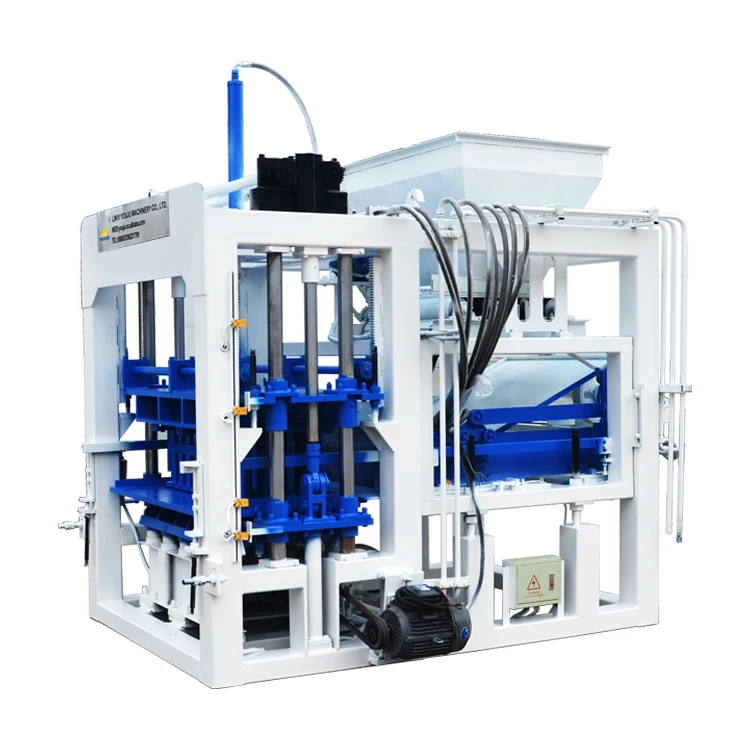
The QTJ4-40 occupies the entry tier of our stationary block machine lineup. It is built for buyers who need a compact footprint and minimal capital outlay before committing to a larger automatic line. The machine runs on platform vibration alone — no hydraulic press — which keeps the initial investment low and the maintenance straightforward. For a first-time plant operator, this tier removes the complexity of hydraulic servicing while still delivering consistent block density through the 2800 r/min vibration platform.
Semi-Automatic as the Logical Next Step
When daily volume grows beyond what one to three operators can sustain on a manual top-die push-pull cycle, stepping to a semi-automatic model becomes the practical conversation. The pallet size on the QTJ4-40 is 850 × 450 mm, which is shared with several semi-automatic models in the range. That means a buyer who invests in pallet stock and curing racks now can carry that infrastructure forward when upgrading later. [NEED_CITE: pallet compatibility across manual and semi-automatic block machine tiers] Understanding this upgrade path before the first purchase avoids buying pallets and handling equipment that become obsolete at the next tier.
Reading the Specs That Matter on Site
Platform vibration at 2800 r/min is the primary forming force on this model, and it must be matched to the stiffness of your mix. A wetter mix with high fines content will consolidate under lower vibration energy, while a dry mix with coarse crushed stone needs the full frequency to achieve adequate density. The 850 × 450 mm pallet size dictates your curing rack dimensions and the forklift fork width you need on site — ordering pallets without checking the curing yard layout is a mistake I see repeated across installations. The 1 T machine weight and 1350 × 1460 × 1800 mm envelope mean the unit can be positioned inside a modest workshop without heavy foundation work, but the approximate 200 m² factory area must still account for raw material staging, mixing, and wet block curing zones around the press itself.
The Cost of Skipping Configuration Checks
A pallet size chosen without measuring the curing yard means blocks are stacked by hand on the ground because the forklift cannot reach the racks. A voltage specification confirmed after the machine arrives delays commissioning by weeks while a transformer is sourced locally. [NEED_CITE: common commissioning delays from unconfirmed voltage and frequency in block machine exports] On a manual model where the operator handles the top die cycle, an unconfirmed mould format means the changeover takes longer than expected and the format flexibility you paid for is lost during the first month of production.
Why Buyers Source This Tier Through Us
Block machinery is our single focus, so the QTJ4-40 manual block making machine arrives with moulds, pallets, and scraper specified as a matched set rather than assembled from separate vendors. We configure the machine against the buyer’s actual mix design and local aggregate — not a catalogue default — which means requesting a material sample and running a test press before the contract is signed. Mould design covers the formats the buyer’s market actually sells, including custom drawings for non-standard interlocking or kerb profiles. Automation level is selectable across the range, so starting on this manual tier does not lock you out of upgrading later. Installation support and operator training are included to make sure the crew on site understands the vibration timing and top die cycle from day one.
Documentation & Verification
- Line layout and capacity calculation stating the block format assumed for each output figure
- Machine specification sheet with vibration frequency, pallet size, and overall dimensions confirmed
- Mould drawing and format list matching the block types your market requires
- Voltage, frequency, and control language confirmation before production begins
- Factory test record showing block output on your specified format before dispatch
- Operation and maintenance manual with wear parts and mould replacement schedule
Installation, Commissioning & Support
- 200 m² floor area must include mixing zone, raw material staging, and curing rack space around the 1350 × 1460 mm machine envelope
- Voltage and frequency confirmed pre-production to match local supply and avoid transformer delays on site
- Machine ships partially assembled; on-site setup covers platform leveling, pallet track alignment, and scraper adjustment
- First-run commissioning includes vibration timing calibration against your specific mix design and aggregate gradation
- Operator training covers top die push-pull cycle, mould change procedure, and daily platform cleaning
- Wear parts list and mould maintenance schedule provided for the first replacement cycle
What to Share Before Requesting a Quote
To size the QTJ4-40 manual block making machine correctly, we need your target block format and dimensions, the daily volume your market demands, and the local raw materials you plan to use — ideally a sample of your sand or crushed stone. Confirm your site voltage, frequency, and the language your operators will need on any control interfaces. Let us know the curing area dimensions and the forklift you already have so the pallet specification fits your existing handling setup.
Frequently Asked Questions
Q: How is the daily output verified and which block format does each capacity figure assume?
A: Every output figure is tied to a specific block format and mould cavity count. For the QTJ4-40 manual block making machine, we provide a capacity calculation sheet that lists each format — hollow block, solid block, paver — with the corresponding pieces per mould and cycle assumption so you can plan your shift against the format your market actually buys.
Q: What voltage and frequency configurations are available for different export markets?
A: Voltage and frequency are confirmed during the quotation stage to match your local grid. We need your site supply specification before production starts so the motor and any control components are wound correctly. This avoids the commissioning delays I have seen when a machine arrives with a motor that does not match the local three-phase supply. [NEED_CITE: voltage and frequency standards by export market]
Q: When should a buyer consider stepping up from manual to semi-automatic?
A: The shift happens when daily volume outgrows what one to three operators can sustain on a manual top-die cycle, or when format change frequency demands faster mould swaps. The 850 × 450 mm pallet size on the QTJ4-40 carries forward to several semi-automatic models, so your pallet and curing investment transfers with the upgrade.
Q: What mould formats are compatible and how long does a mould change take?
A: Compatible formats include standard hollow blocks, solid blocks, interlocking pavers, and curbstones that fit the 850 × 450 mm pallet envelope. Mould change on a manual model involves unbolting the mould box and swapping the top die — typically handled within a shift if the crew is trained, though first-time changeovers take longer until the operator builds familiarity.
Q: What installation support and spare parts supply come with the machine?
A: On-site installation covers machine positioning, platform leveling, pallet track alignment, and first-run commissioning with your mix. Operator training is included. We supply a wear parts list and mould maintenance schedule so you know which components to stock before the first replacement cycle is due.

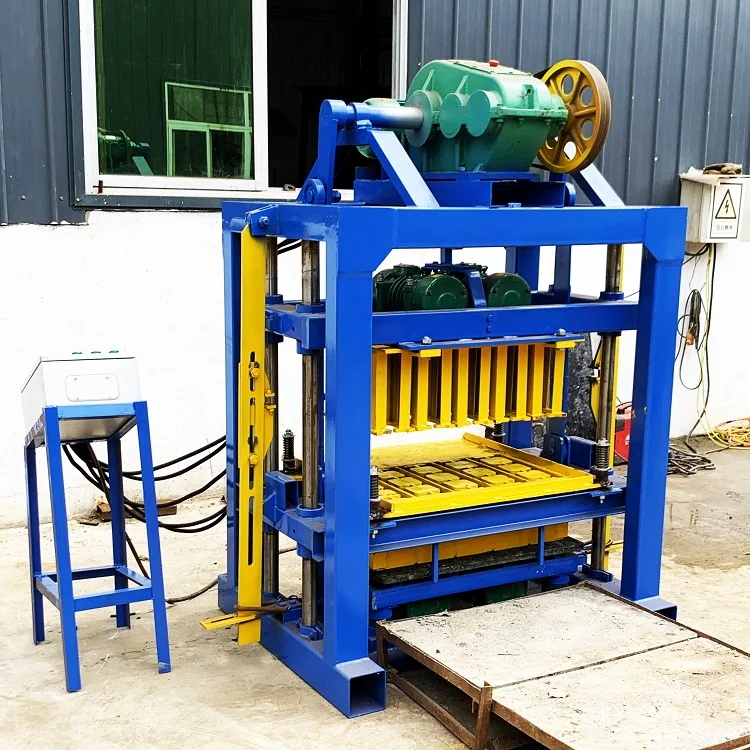
 Stationary block machine