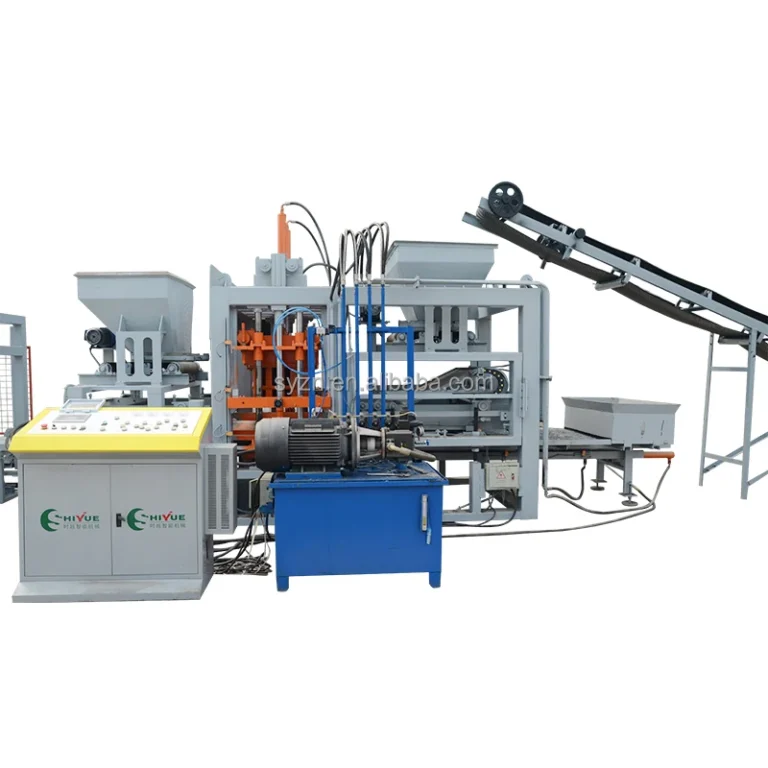
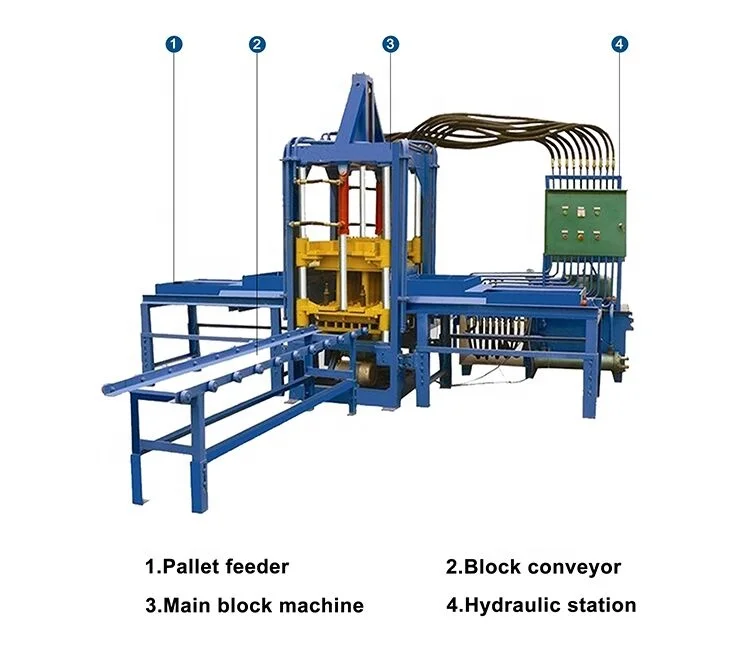
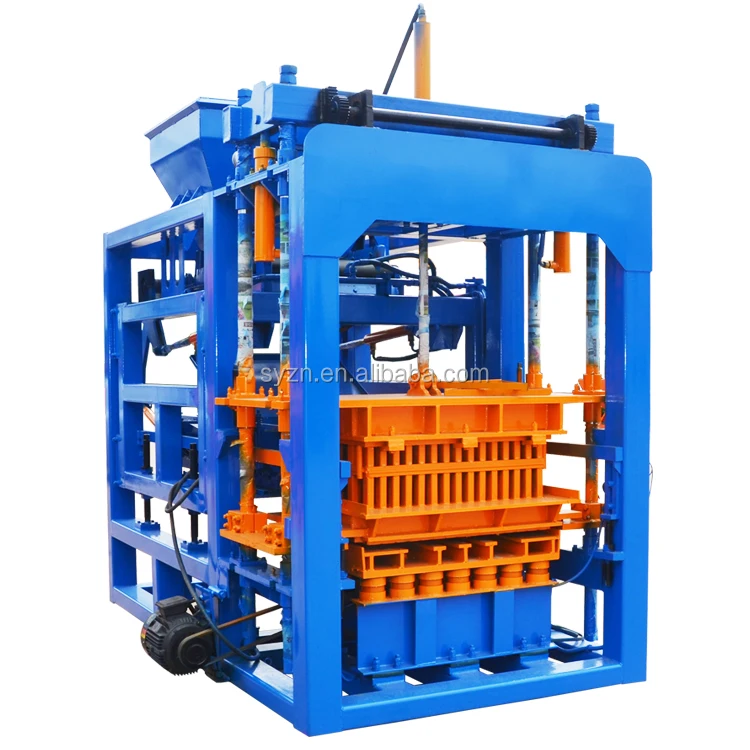
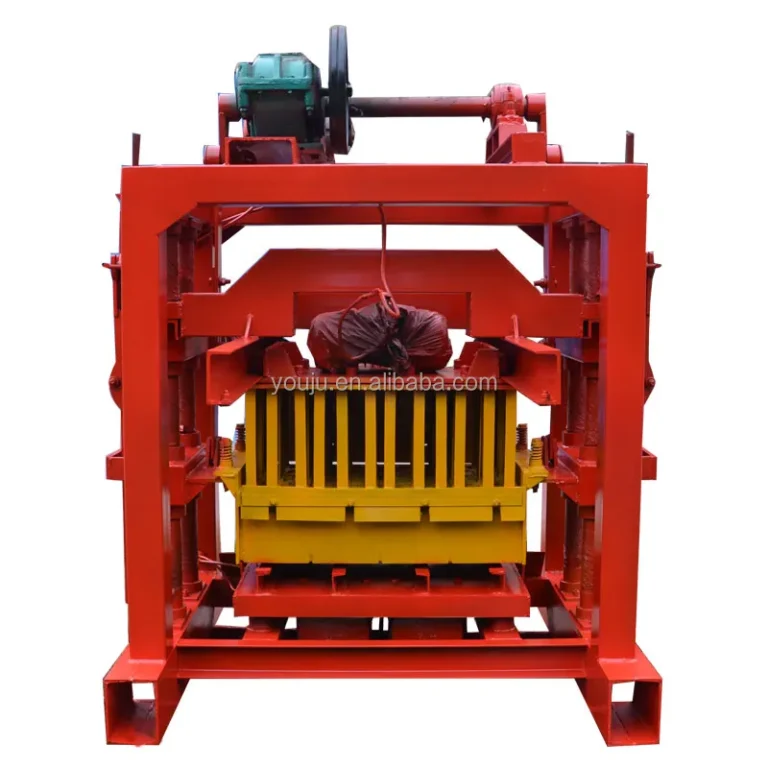
QT12-15 Fully Automatic Stationary Block Making Machine | Full Range
Matched System Specification — The QT12-15 fully automatic stationary block making machine manufacturer configures press, mould, pallet and handling as one verified package rather than sourcing from unrelated suppliers, placing each buyer on a clear capacity tier before the line layout begins.
Technical Specifications
| Parameter |
Value |
| Model |
QT12-15 |
| Product Type |
Fully Automatic Stationary Block Making Machine |
| Rated Power |
44.58 kW |
| Voltage & Frequency |
Configured to buyer’s local supply, exact value confirmed before production |
| Control System |
PLC with fault diagnosis, display language to be confirmed |
| Overall Dimensions (L×W×H) |
9350 × 2520 × 2950 mm |
| Net Weight |
11,000 kg |
| Hydraulic Pressure |
16–21 MPa |
| Vibration Form |
Platform synchronization vibration, frequency adjustable by process stage |
| Pallet Size |
1300 × 900 mm (material to be confirmed) |
| General Mould Cycle Time |
15–20 seconds |
| Hollow Block 400×200×200 mm Output |
12 pcs/mould, 20–25 s cycle, approx. 21,600 pcs/day (basis to be confirmed) |
| Porous Block 240×115×90 mm Output |
30 pcs/mould, 15–20 s cycle, approx. 72,000 pcs/day (basis to be confirmed) |
| Standard Block 240×115×53 mm Output |
60 pcs/mould, 15–17 s cycle, approx. 144,000 pcs/day (basis to be confirmed) |
| Assembly State |
Stationary fixed plant |
| Warranty |
1 year (excluding wearing parts) |
Application Suitability
| Application |
Material or Output |
| High-capacity hollow block plant |
Crushed stone, sand, cement, fly ash blends |
| Multi-format concrete product line |
Hollow, solid, paver, kerbstone, interlocking formats on one press |
| Regional building material distributor |
Volume supply of standardized blocks to local construction markets |
| Large-scale housing project contractor |
On-site production of standard and porous blocks from local aggregates |
| Paving and kerbstone manufacturing |
Interlocking pavers and colored pavers with pigment-compatible mixes |
Why "21,600 Hollow Blocks a Day" Can Mislead Your Plant Layout
The daily output figure only matters when the block format, cycle time, and shift pattern behind it are all visible.
Quoting a single capacity number without attaching it to a specific block format is one of the most common gaps in stationary block machine proposals. A buyer reads a headline figure, designs a curing yard around it, and then finds the actual output drops considerably once the machine runs the format the local market actually buys [NEED_CITE: block format assumptions in capacity quotations]. With the QT12-15 fully automatic stationary block making machine, the theoretical output differs sharply between a 400×200×200 mm hollow block at a longer cycle and a 240×115×53 mm standard block at a shorter cycle. The gap between those two figures changes curing area size, forklift scheduling, and pallet inventory. That is why every capacity statement on this page ties back to a named format and its cycle window.

Where the QT12-15 Sits in the Shiyue Stationary Range
The QT12-15 occupies the upper tier of the stationary block machine lineup, positioned above semi-automatic and smaller fully automatic models. Buyers choosing this tier are typically planning a fixed plant that runs multiple formats across a single press, and they need the footprint and investment scope to be clear before committing to a layout. The 9350 mm machine length and 11,000 kg weight reflect a press built for sustained multi-shift operation, not a workshop-scale unit. For a first-time buyer comparing stationary against mobile or egg-laying alternatives, this model represents the point where fixed-plant volume justifies the capital and site preparation involved.
How the Full Range Helps You Choose Before You Specify
Narrowing a block machine purchase works in reverse of how most catalogues present it. Instead of starting with a model number, the buyer starts with the product the local market sells and the daily volume needed to serve that market. The Shiyue range is organized so that each tier — semi-automatic for smaller plants, mid-range stationary for growing producers, and the QT12-15 for high-capacity lines — carries its own pallet size, automation level, and footprint. Understanding where this model sits prevents the common mistake of ordering a press that outpaces the rest of the line, leaving the curing and stacking stations unable to keep up [NEED_CITE: block line bottleneck between press and downstream stations].
Hydraulic Pressure, Vibration Profile, and What They Mean for Block Density
The QT12-15 operates with a hydraulic pressure range of 16–21 MPa paired with platform synchronization vibration where frequency shifts between stages. During the feeding phase, low-frequency vibration settles the raw mix into the mould cavity evenly. During compaction, high-frequency vibration combined with hydraulic pressure achieves consistent density through the full block cross-section. This two-stage profile matters because different aggregate blends — a river sand with higher fines content versus a crushed stone with angular particles — respond differently to the same vibration setting. The 1300 × 900 mm pallet size then determines how many blocks per cycle and how those blocks travel through the curing area. Matching pallet dimensions to the buyer’s existing forklift and curing rack spacing avoids costly rework after installation. The PLC fault diagnosis system gives operators a starting point when something drifts out of tolerance, rather than waiting for a service visit to identify the cause.
The Hidden Cost of Configuring a Line Around an Unconfirmed Pallet
Choosing pallet material and size after the press order is placed forces compromises in every downstream station. A pallet that is too heavy for the buyer’s existing forklift slows every transfer from press to curing rack. A pallet material that does not suit the local climate — wood warping in humidity, PVC softening in heat — shortens pallet life and introduces dimensional variation into block height [NEED_CITE: pallet material selection for concrete block curing]. When pallet handling, stacking, and curing are not scoped inside the quotation, the buyer ends up stacking output by hand, and the automation level paid for in the press never translates into actual labor savings on the floor.
What Buying from Shiyue Means for This Tier
Block machinery is our single focus, so the QT12-15 arrives as part of a matched system where mould, pallet, and handling are specified together against the buyer’s actual mix design. Configuration is set against local aggregate and target block format rather than a catalogue default, which means vibration and hydraulic parameters start from a baseline that fits the buyer’s material. Mould design covers the formats the buyer’s market sells, with custom drawings available for non-standard shapes. The automation level is selectable, so a buyer can start with a semi-automatic pallet return and upgrade to full stacking later. Installation support includes commissioning with operator training so the crew running the machine on day one understands the PLC interface and mould change procedure.
Documentation & Verification
- Line layout with capacity calculation stating the block format and cycle time assumed for the QT12-15
- Machine specification sheet covering hydraulic pressure range, vibration profile, and pallet dimensions
- Mould drawing and format list confirming every block type included in the purchase
- Voltage, frequency, and PLC display language confirmed in writing before production starts
- Hydraulic and electrical schematic for the buyer’s maintenance team
- Factory test record on the buyer’s specified block format before dispatch
Installation, Commissioning & Support
- Foundation plan reflecting the 9350 × 2520 mm footprint and 11,000 kg static load of the QT12-15
- Dedicated power circuit sized for the 44.58 kW rated load plus starting surge
- Machine shipped in dismantled modules with labeled reassembly points for site erection
- Commissioning includes vibration frequency and hydraulic pressure tuning to the buyer’s mix design
- Operator training covers PLC fault diagnosis interface and mould change procedure
- Wear parts list with hydraulic seals and vibration components identified for first reorder
Before You Request a Quote
To size the QT12-15 fully automatic stationary block making machine to your plant, share the block formats your market sells, the daily volume target per format, and the raw materials available locally including aggregate type and particle size. Confirm your site voltage, frequency, and preferred PLC display language so the electrical package is locked before production. Let us know whether pallet handling, stacking, and curing rack systems should fall inside the line scope or whether you plan to integrate existing equipment.
Frequently Asked Questions
Q: How is the QT12-15 capacity verified per block format, and what shift pattern is assumed?
A: Each output figure is tied to a specific block dimension and its corresponding cycle time window. The hollow block figure assumes a 400×200×200 mm format at 20–25 seconds per cycle, while standard blocks use a shorter cycle. The number of shifts per day and curing assumptions that convert cycle output into a daily figure should be confirmed during the proposal stage so your layout matches reality.
Q: Where does this model sit compared to smaller stationary tiers in footprint and investment?
A: The QT12-15 is at the high-capacity end of the stationary range. Its 9350 mm length and 11,000 kg weight exceed smaller models, requiring a larger foundation and more curing area. Buyers compare this tier against semi-automatic and mid-range options by looking at daily volume needs and the automation level the rest of the line will support.
Q: Which pallet size does the QT12-15 use, and how does it affect my curing setup?
A: The press runs on 1300 × 900 mm pallets. That dimension sets the spacing on curing racks and determines which forklift fork width can handle loaded pallets. Pallet material — wood, PVC, or steel — should be chosen based on local climate and the weight your existing handling equipment can move repeatedly throughout a shift.
Q: What electrical details are confirmed before the machine enters production?
A: Voltage, frequency, and PLC display language are confirmed in writing before the QT12-15 is built. This prevents the common delay where a machine arrives on site but the control panel displays in a language the operators cannot read, or the motor wiring does not match the local grid supply.
Q: Are stacking and curing rack handling included in the line quotation?
A: The scope of pallet handling, automatic stacking, cubing, and curing rack systems is defined during the proposal stage. Some buyers include these as part of the full line, while others integrate their own existing equipment. Clarifying this early ensures the press automation level you pay for actually reaches the end of the production flow.

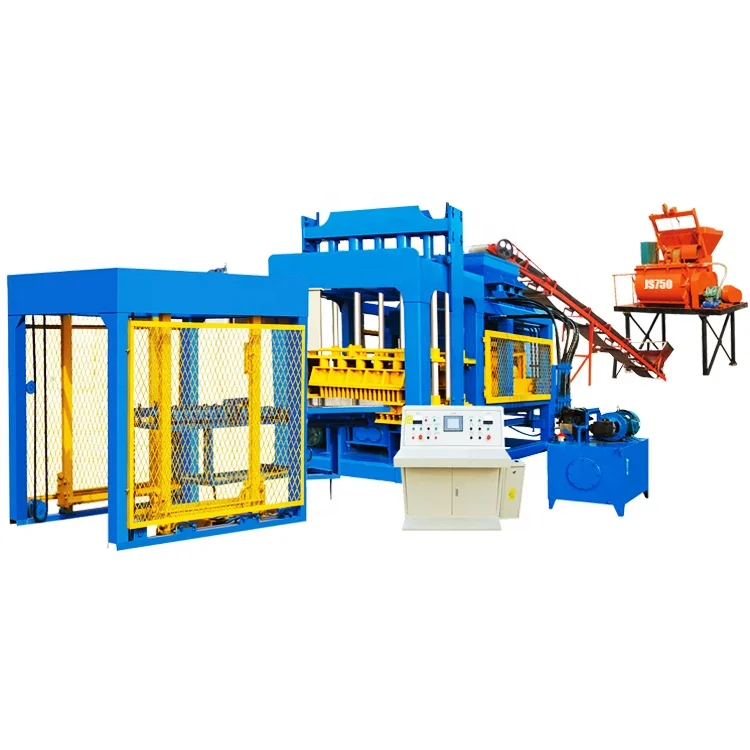
 Stationary block machine