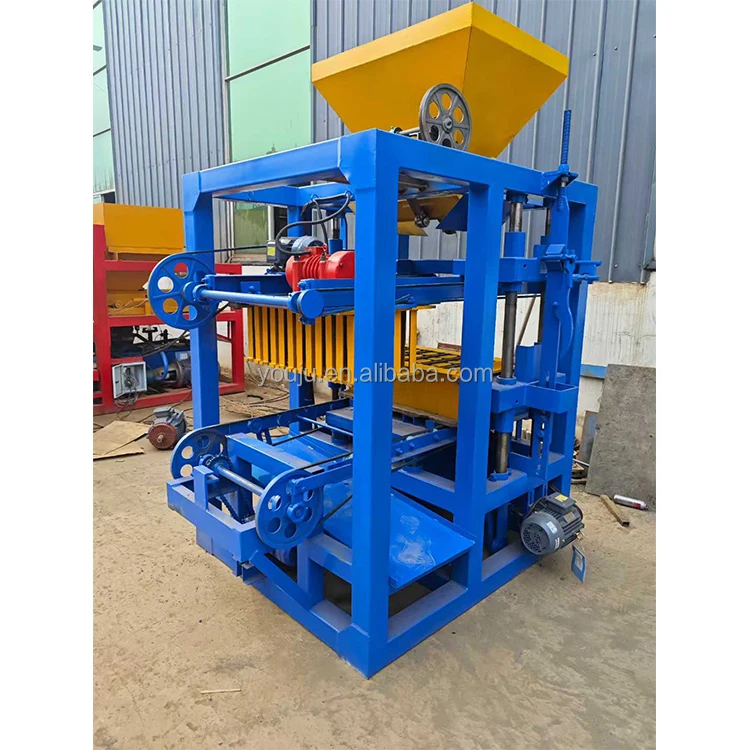
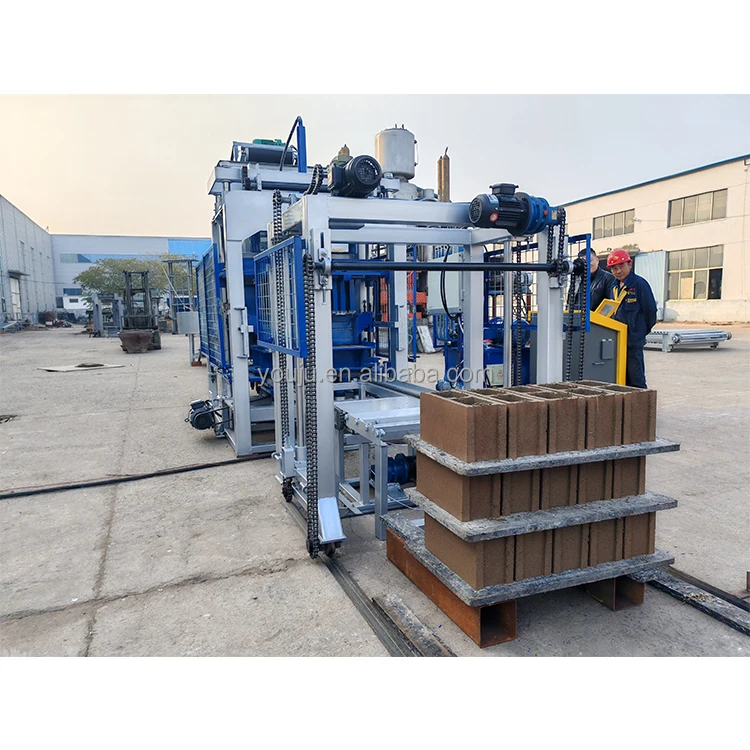
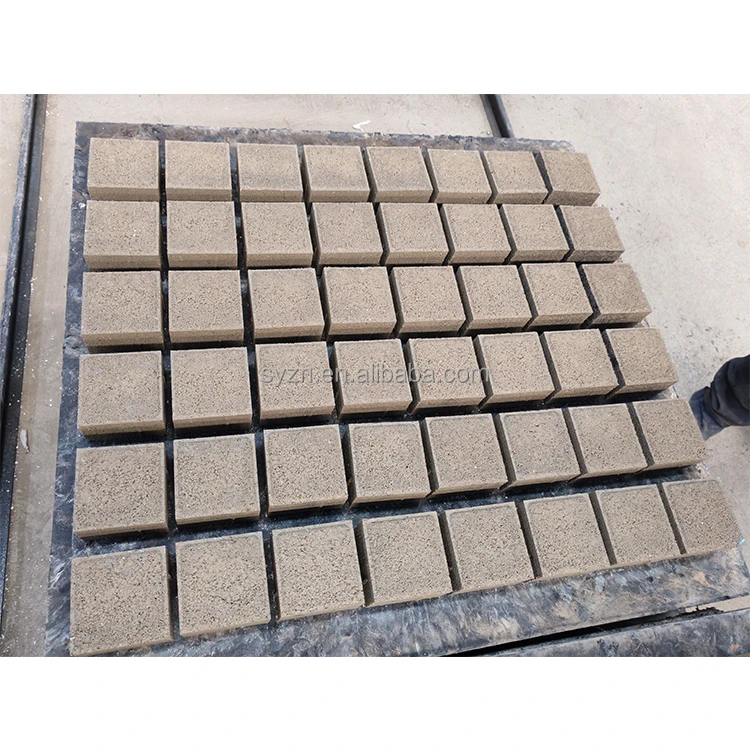
Matched system layout — machine, mould, pallet and handling are sized together so a first-plant buyer does not discover hidden bottlenecks after commissioning.
Technical Specifications
| Parameter |
Value |
| Model |
QTF3-20 |
| Product Type |
Stationary Block Making Machine |
| Overall Dimensions (L×W×H) |
4000×3500×2300 mm |
| Total Mass |
2870 kg |
| Vibration Form |
Platform Vibration |
| Total Power |
17.5 kW |
| Control Style |
Semi-Automatic |
| Output Capacity |
4320 pcs/day (basis not stated in source — confirm block format / material / thickness) |
| Raw Materials |
Cement, Sand, Fly Ash, Coarse Aggregate, Slag |
| Hydraulic System |
Yes (applied to drive) |
| Material Feeding |
Double layer (raw material and color surface material) |
| Monitoring |
No Contact proximity switch |
| Electrical & Hydraulic Components |
Imported from Germany or Chinese famous brand |
| Line Configuration |
Host machine, material feeding machine, color material machine, pallet feeder, block conveyor, hydraulic station, electricity box; pairs with JQ350 mixer and 8 m conveyor belt |
Application Suitability
| Application |
Material or Output |
| Color paving stone production |
Double-layer feeding with cement, sand, fly ash and pigment surface layer |
| Hollow block manufacturing |
Cement and coarse aggregate mix for standard and non-standard cavity blocks |
| Interlock brick and porous brick production |
Fly ash and sand blends with platform vibration consolidation |
| Park grass brick and slope protection brick |
Open-void formats requiring matched mould design and vibration duration |
| Environmental standard brick |
Slag and fly ash utilization with hydraulic drive compaction |
Why the Block Format Behind the Daily Output Figure Matters Most
Every buyer asking about a stationary block machine manufacturer eventually reaches the same question: how many blocks per day? The answer depends entirely on which block format and wall thickness the number assumes, yet quotations routinely omit that detail, leaving buyers comparing machines on incompatible figures. A daily output claim only becomes meaningful when tied to a specific block format, mix design, and curing cycle.
I remember a buyer who sourced a mid-tier machine quoted at a daily volume based on standard solid bricks, only to find that when he switched to the 150 mm hollow blocks his local market actually demanded, real output dropped noticeably because each cycle took longer and the pallet feeder could not keep pace. The machine itself was not at fault — the capacity calculation simply never accounted for his actual product. [NEED_CITE: capacity calculation methodology tied to block format and cycle time]
When you evaluate a stationary block machine manufacturer, request the capacity table broken down by every block format you intend to produce, not just the headline number.

Where the QTF3-20 Sits in the Range
The QTF3-20 occupies the mid-tier of the stationary block machine lineup, positioned between compact egg-laying mobile units and high-capacity fully automatic lines. Its 17.5 kW total power draw and 4000×3500 mm footprint make it suitable for buyers setting up a first production plant where grid capacity and workshop space are still limited. Semi-automatic control keeps initial investment manageable while preserving an upgrade path toward automatic stacking and cubing as demand grows.
Double-Layer Feeding and Format Flexibility
A distinguishing feature at this tier is the double-layer material feeding system, which allows the QTF3-20 to deposit a structural base layer and a pigmented color surface layer in a single pressing cycle. This means the same stationary block machine manufacturer can supply a line that produces standard grey hollow blocks during the morning shift and color pavers in the afternoon, simply by switching moulds and engaging the color material hopper. [NEED_CITE: mould change procedure and format flexibility for mid-tier block machines]
Buyers adding paving stones to an existing block range find this eliminates the need for a dedicated second press, consolidating floor space and pallet inventory.
Reading the Specs That Shape Real Output
Platform vibration paired with a hydraulic drive determines how densely the mix is compacted before curing. On the QTF3-20, the vibration force transmitted through the platform must be matched to the buyer’s aggregate size and cement ratio; a mix with excessive fine sand will over-consolidate and produce brittle edges, while a coarse aggregate blend may leave voids if the vibration amplitude is insufficient. The no-contact proximity switch monitoring ensures cycle timing remains consistent without mechanical wear on the sensor, which matters when the machine runs multiple shifts.
Pallet size is another specification that extends beyond the machine itself. The pallets must fit the buyer’s existing curing racks and forklift dimensions, otherwise the entire downstream handling process requires retooling. The semi-automatic control style means pallets are fed automatically but blocks are still removed and stacked manually at this tier — an important distinction for buyers planning labor allocation. Total mass of 2870 kg influences foundation requirements; a reinforced concrete pad is necessary to absorb vibration without transferring it to adjacent structures or causing long-term floor cracking.
The Hidden Cost of an Unmatched Line
I once worked with a buyer whose quotation covered only the host machine and mixer, with pallet handling left entirely to manual labor. His daily output fell far short of expectation not because the press was slow, but because operators could not move cured pallets fast enough to keep the cycle running. [NEED_CITE: importance of complete line specification including pallet handling and curing logistics]
Another buyer discovered after shipment that the PLC display language was not configured to his operators’ language, delaying commissioning by several days while software was reloaded on-site. These gaps do not appear in any specification sheet, yet they define whether the machine produces from week one or week four. When sourcing from a stationary block machine manufacturer, insist that the quotation lists every station from raw material feeding through to the end of the conveyor.
Why Source This Configuration Here
Block machinery remains the single focus of this production facility, meaning the QTF3-20 is not assembled from unrelated supplier components but specified as a matched system where the host machine, pallet feeder, hydraulic station, and mixer are tested together before dispatch. The configuration is set against the buyer’s actual mix design and local aggregate rather than a catalogue default, reducing the trial-and-error period after installation.
Mould design covers the formats the buyer’s local market actually sells, with custom mould drawings available when standard formats do not match regional brick dimensions. The semi-automatic tier allows buyers to start with manageable complexity and later integrate automatic stacking and cubing modules as production volume justifies additional automation. Factory testing is conducted with the buyer’s confirmed pallet size and voltage, so the machine arrives ready for power connection rather than requiring on-site electrical modification. [NEED_CITE: factory acceptance testing procedures for export block machinery]
Documentation & Verification
- Line layout drawing showing the QTF3-20 footprint with JQ350 mixer placement and 8 m conveyor routing
- Capacity calculation table specifying the exact block format and wall thickness behind each daily output figure
- Mould drawing and format list confirming cavity dimensions and color layer thickness for pavers
- Pallet specification sheet matched to buyer’s curing rack spacing and forklift fork width
- Hydraulic and electrical schematic with component origin and replacement part numbers
- Factory test record on the buyer’s confirmed block format before container loading
Installation, Commissioning & Support
- Reinforced concrete foundation required to absorb 2870 kg platform vibration without floor resonance
- 17.5 kW total power draw demands dedicated circuit with correct voltage and frequency for the destination grid
- Semi-automatic control requires operator training on pallet loading rhythm and proximity switch monitoring
- First commissioning includes vibration amplitude tuning matched to buyer’s local aggregate and cement ratio
- Wear parts list covers hydraulic seals, proximity switches, and vibration springs with reorder intervals
- Mould change training ensures operators can swap between hollow block and paver formats within one shift
What to Include in Your Inquiry
To receive a configuration that matches your actual production needs, provide the block formats your local market demands along with typical wall thickness and any color paver requirements. Specify your available workshop dimensions and ceiling height so the line layout can be drawn around existing structures. Confirm the local voltage, frequency, and preferred PLC display language to avoid on-site delays. If you already operate curing racks and forklifts, share their dimensions so pallet size and conveyor discharge height can be aligned before manufacturing begins.
Frequently Asked Questions
Q: The 4320 pcs/day capacity assumes which block format and wall thickness?
A: That figure requires confirmation of the specific block format, wall thickness, and mix density used during the calculation. We provide a capacity table broken down by each format you intend to produce, so you can compare output for hollow blocks versus standard bricks versus pavers under the same cycle conditions.
Q: What automation level does the QTF3-20 ship with, and can it be upgraded later?
A: The machine ships in semi-automatic configuration with automatic pallet feeding and block conveyance. Manual stacking is standard at this tier. Automatic stacking and cubing modules can be integrated later when production volume and labor cost justify the upgrade investment.
Q: Which pallet size and material does this model require?
A: Pallet size is selected based on the mould dimensions and must align with your existing curing rack spacing and forklift capacity. We confirm pallet material and thickness against your curing environment before manufacturing to ensure compatibility with downstream handling.
Q: What is the plant footprint including mixer, conveyor and pallet handling?
A: The host machine occupies 4000×3500 mm, with additional space required for the JQ350 mixer, 8 m conveyor belt, pallet storage area, and block curing racks. A detailed line layout is provided during the proposal stage based on your workshop dimensions.
Q: How are mould formats selected, and are custom moulds available?
A: Standard mould formats cover hollow blocks, interlock bricks, pavers, and grass bricks common in most markets. Custom moulds can be manufactured to buyer drawings when local building codes or architectural specifications require non-standard dimensions or cavity patterns.

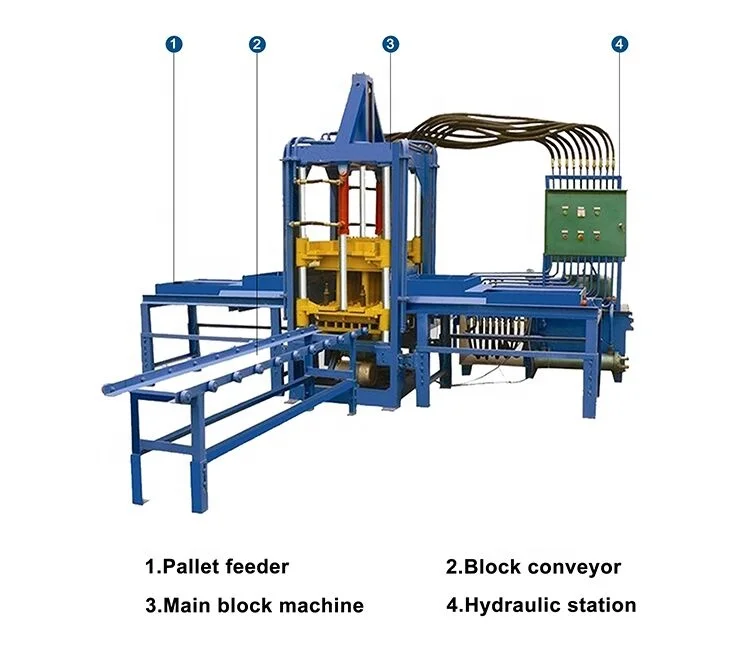
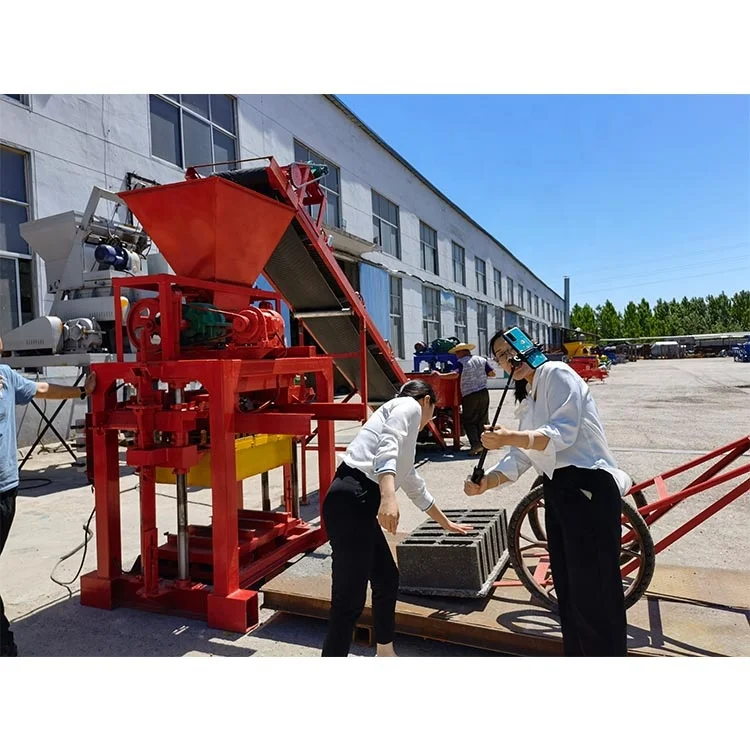 Stationary block machine