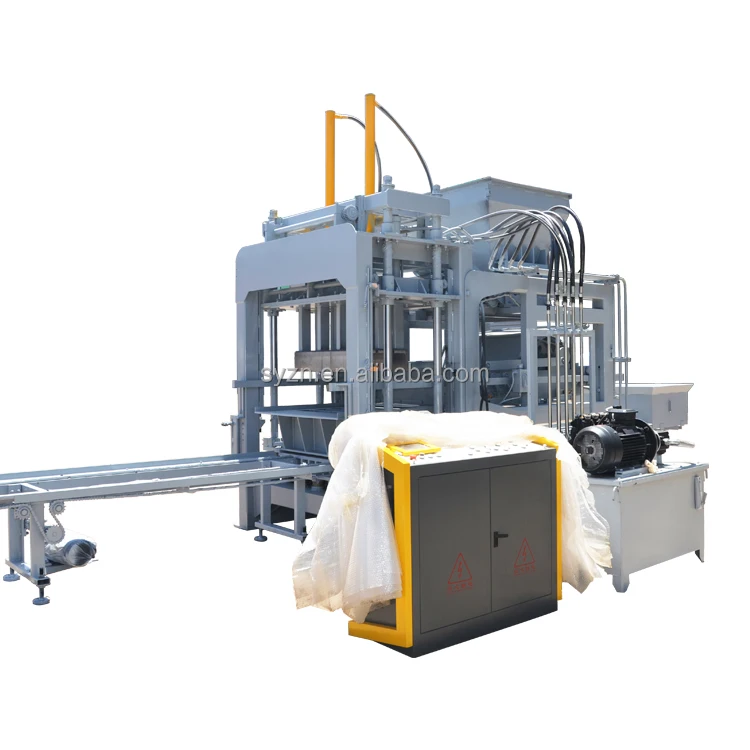
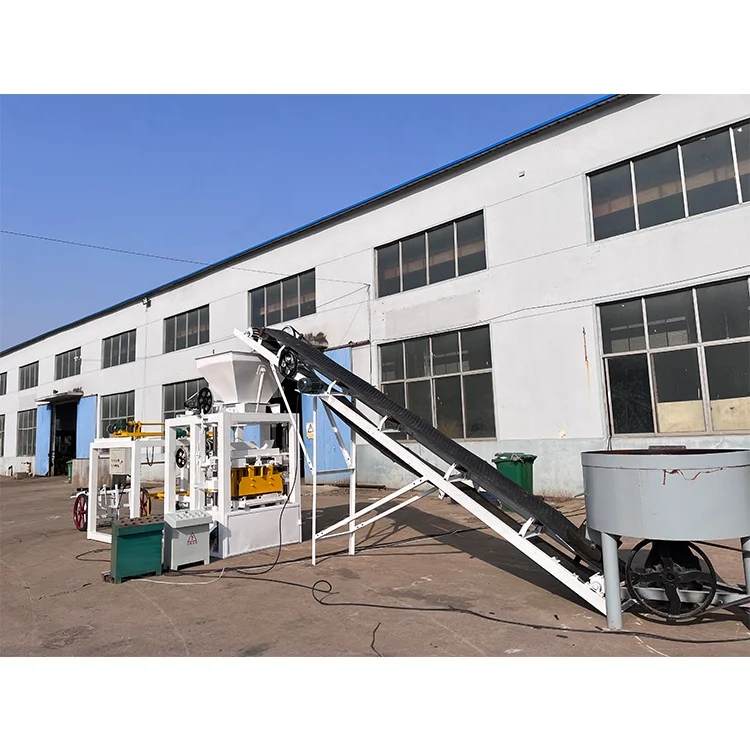
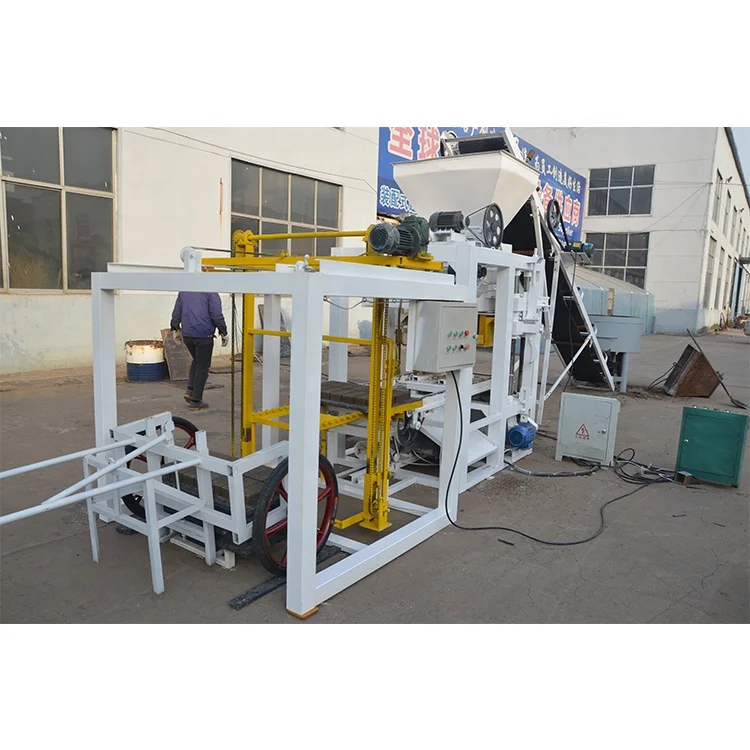
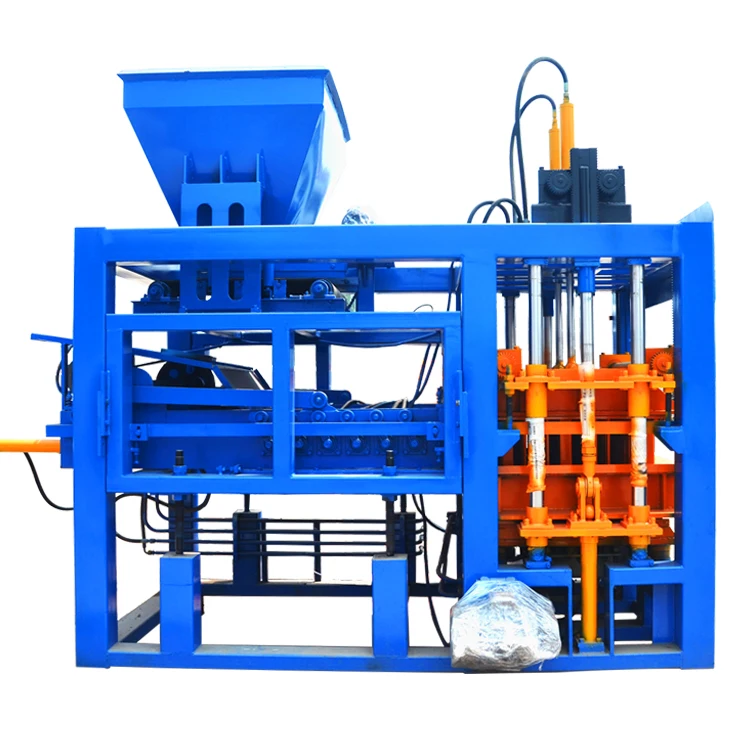
Matched System Supply — the QT6-15 stationary block making machine is configured with matched moulds, pallets, and handling stations rather than assembled from separate suppliers, ensuring each component aligns with your target block format.
Technical Specifications
| Parameter |
Value |
| Model |
QT6-15 |
| Product Type |
Stationary Hydraulic Block Making Machine |
| Overall Dimensions (L×W×H) |
8200×1700×2950 mm |
| Total Mass |
7 T |
| Overall Power |
37 kW |
| Vibration Frequency |
0–60 Hz (adjustable) |
| Vibration Form |
Platform Vibration |
| Vibration Force |
45 kN |
| Moulding Mode |
Load automatically, vibration moulding |
| Demolding Method |
Hydraulic |
| Molding Cycle |
15–20 s (basis not stated in source — confirm block format, material, and thickness) |
| Pallet Size |
880×850 mm |
| Control System |
PLC controlled with touch screen HMI |
| Fault Diagnosis |
Built-in fault diagnosis system |
| Safety Logic |
Interlock safe logic circuit |
| Factory Area Required |
1200 m² |
| Block Compressive Strength |
>15 MPa |
| Output — Hollow Block 400×200×200 mm |
1080–1440 pcs/h (8640–11520 pcs/8 hr shift) |
| Output — Hollow Block 400×150×200 mm |
1440–1920 pcs/h (11520–15360 pcs/8 hr shift) |
| Output — Solid Brick 240×115×53 mm |
5760–7680 pcs/h (46080–61440 pcs/8 hr shift) |
| Output — Rectangular Paver 200×100×60 mm |
2160–2880 pcs/h at 20–25 s cycle (17280–23040 pcs/8 hr shift) |
| Output — Zigzag Paver 225×112.5×60 mm |
2160–2880 pcs/h at 20–25 s cycle (17280–23040 pcs/8 hr shift) |
| Raw Material Adaptability |
Waste ash, slag, and various aggregates; reduced cement dosage possible |
| Hydraulic System |
Independent integrated hydraulic station, isolated from dust and main machine vibration |
| Key Features |
PLC touch screen control, built-in fault diagnosis, interlock safety logic, adjustable vibration frequency |
Application Suitability
| Application |
Material or Output |
| Hollow block production for building walls |
Crushed stone, river sand, cement blends; 400×200×200 mm and 400×150×200 mm formats |
| Solid brick for load-bearing and non-load-bearing structures |
Local aggregate with cement binder; 240×115×53 mm standard brick |
| Rectangular paving block for roads and walkways |
High-strength aggregate mix; 200×100×60 mm interlocking paver |
| Zigzag interlocking paver for heavy-traffic surfaces |
Graded aggregate and cement; 225×112.5×60 mm zigzag format |
| Industrial waste utilization in block production |
Fly ash, slag, and recycled aggregate with reduced cement content |
Why "Pieces per Hour" Means Nothing Without the Block Format
Every output figure on this page is tied to a specific block dimension and cycle time — no single headline number.
I once watched a buyer in West Africa sign off on a stationary block making machine manufacturer quote that promised strong daily output. The quotation listed a cycle time but did not state which block format that cycle assumed. When his plant started running the 400×150×200 mm hollow block his market actually demanded, the cycle stretched well beyond what the catalogue implied, and daily production dropped sharply. He spent the first two weeks blaming his mix before we traced the gap back to the original capacity claim [NEED_CITE: block machine capacity claims and format assumptions in export quotations].
The QT6-15 addresses this directly. Each output row in the specification table above names the exact block format, the cycle time range, and the resulting pieces per hour. When you evaluate this stationary block making machine manufacturer offering, compare the capacity line that matches your actual product, not the highest number on the sheet.
Where the QT6-15 Sits on the Full Machine Range
The stationary block making machine manufacturer lineup spans from small workshop machines to high-capacity automatic lines. The QT6-15 occupies the mid-to-high tier, built for buyers who have outgrown semi-automatic output but do not yet need the footprint and investment of a top-tier plant. Its 1200 m² factory area requirement and 37 kW overall power draw place it within reach of a dedicated block production facility without demanding industrial-scale infrastructure from day one.
Automation Tiers and the Upgrade Path
This model ships with PLC control, a touch screen HMI, and built-in fault diagnosis — placing it firmly in the automatic category. Buyers who are setting up a first plant can pair it with manual pallet handling at the start and add automatic stacking and cubing later. The platform vibration system with adjustable 0–60 Hz frequency means the machine adapts as you introduce new block formats, so the same press serves a growing product range without replacement.
Reading the Numbers That Actually Matter
The 45 kN vibration force and independent hydraulic station work together to determine block density and compressive strength. Platform vibration distributes force across the full 880×850 mm pallet, which is critical when you run paver formats that demand consistent surface finish. The hydraulic demolding system isolates the hydraulic station from dust and main machine vibration, extending seal life in environments where fine aggregate dust is constant. A built-in fault diagnosis system on the PLC reduces unplanned stops by pinpointing the failing sensor or valve before the operator starts guessing [NEED_CITE: hydraulic system isolation and component longevity in block presses].

What a Mis-Sized Pallet Costs You
Pallet size is one of the most overlooked specifications in a block line purchase. The QT6-15 runs an 880×850 mm pallet. If your curing area and forklift were set up for a different pallet dimension from a previous machine, every loaded pallet becomes a manual handling problem from the moment it leaves the press. Buyers who skip this check end up re-racking blocks by hand, which erases the throughput gain they paid for. Always confirm pallet dimensions against your existing curing racks and transport equipment before the machine enters production [NEED_CITE: pallet size compatibility with curing and handling infrastructure].
Why Buyers Choose This Stationary Block Making Machine Manufacturer
The QT6-15 is specified as a matched system: machine, mould, pallet, and handling are sized together so cycle times align at every station. Configuration is set against your actual mix design and local aggregate rather than a catalogue default, which matters when river sand carries high silt content or when fly ash replaces part of the cement. Mould design covers the formats your market sells, with custom drawings available when standard moulds do not match. Voltage, frequency, and PLC display language are confirmed before production starts, so commissioning is not delayed by a control panel nobody on your floor can read. Factory test records document cycle time and block quality per format before the machine leaves the workshop.
Documentation & Verification
- Line layout with capacity calculation stated per block format for the QT6-15
- Machine specification sheet confirming vibration force, hydraulic pressure, and pallet size
- Mould drawing and format list covering all block types in your production plan
- Voltage, frequency, and PLC display language confirmation signed before production
- Factory test record showing cycle time and compressive strength per format before dispatch
Installation, Commissioning & Support
- Foundation must support the QT6-15 total mass of 7 T across its 8200×1700 mm footprint
- Dedicated 37 kW power circuit with confirmed voltage and frequency before energizing
- PLC touch screen configured in your operator language prior to first production run
- Commissioning includes cycle time verification on each block format in your product list
- Operator training covers mould change procedure and fault diagnosis system operation
- Wear parts and mould replacement list supplied with initial spare parts recommendation
What to Include in Your Inquiry
When reaching out to a stationary block making machine manufacturer, specify the block formats you intend to produce, your target daily output per format, and the local raw materials available including aggregate type and cement grade. Confirm your site voltage, frequency, and preferred PLC display language. If you have existing curing racks, forklifts, or upstream mixing equipment, share those dimensions so the line layout accounts for them from the start.
Frequently Asked Questions
Q: Where does the QT6-15 sit compared to smaller and larger models in the range?
A: The QT6-15 occupies the mid-to-high tier of the stationary block making machine manufacturer lineup. It delivers automatic PLC-controlled production with a 1200 m² factory area requirement, positioned above semi-automatic workshop machines and below the largest high-capacity lines. It suits buyers scaling from smaller output to a dedicated block plant.
Q: What plant footprint does the QT6-15 require?
A: The QT6-15 requires approximately 1200 m² of factory area, which includes space for the press, pallet circulation, curing racks, and raw material storage. This footprint is larger than semi-automatic tiers but smaller than top-capacity automatic lines, making it suitable for a medium-scale dedicated block production facility.
Q: How does output change across different block formats?
A: Output varies significantly by format. The QT6-15 produces 1080–1440 hollow blocks (400×200×200 mm) per hour but 5760–7680 solid bricks (240×115×53 mm) per hour. Paver formats run at a longer 20–25 second cycle. Always compare the capacity line that matches your actual product.
Q: Can I start with semi-automatic handling and upgrade later?
A: Yes. The QT6-15 PLC platform supports adding automatic pallet feeding, stacking, and cubing after initial installation. Many buyers begin with manual pallet handling to control early investment and add automation stations as production volume grows and labor costs shift the calculation.
Q: What information do I need to confirm before ordering?
A: Confirm your target block formats, local aggregate and cement type, site voltage and frequency, PLC display language preference, and existing pallet or curing rack dimensions. This ensures the stationary block making machine manufacturer configures the QT6-15 to your actual conditions rather than a default setup.

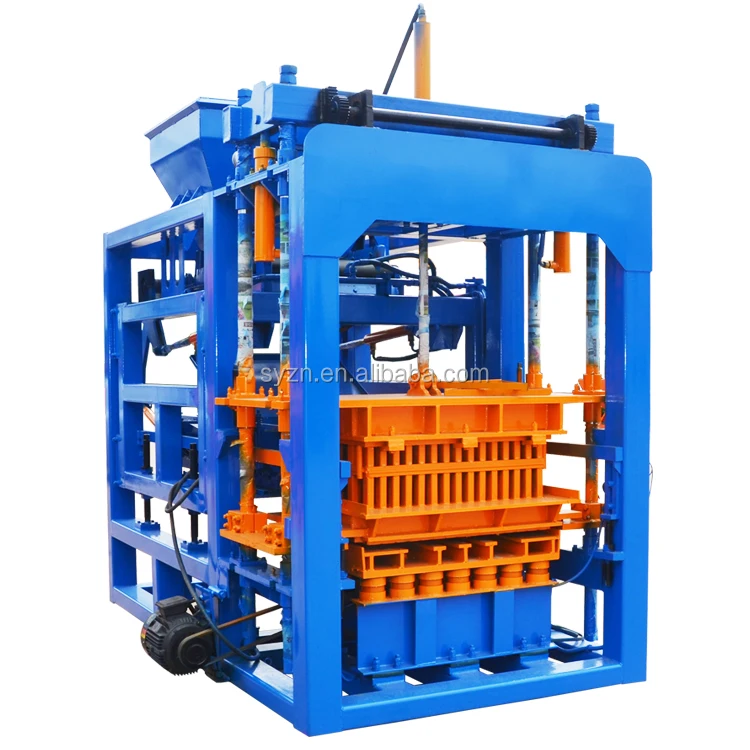
 Stationary block machine