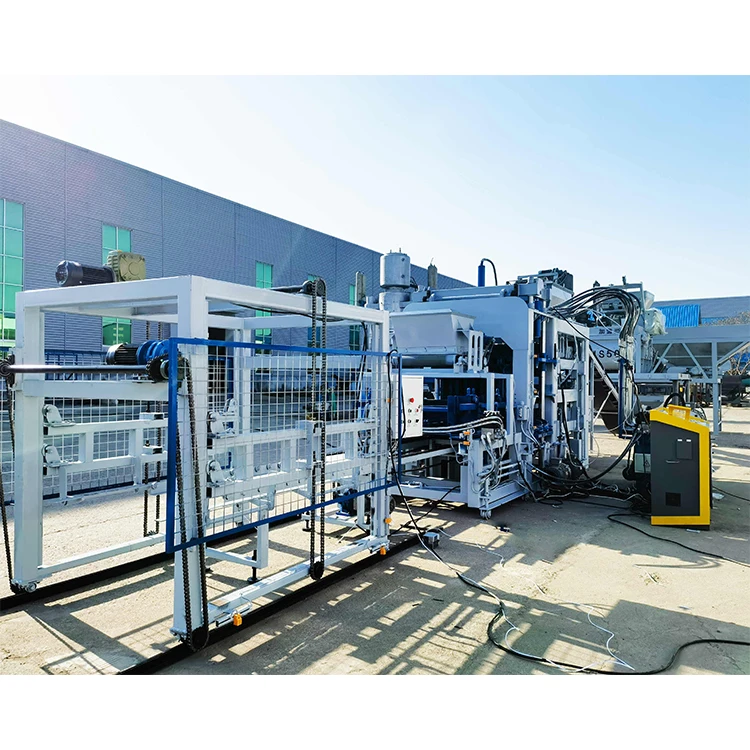
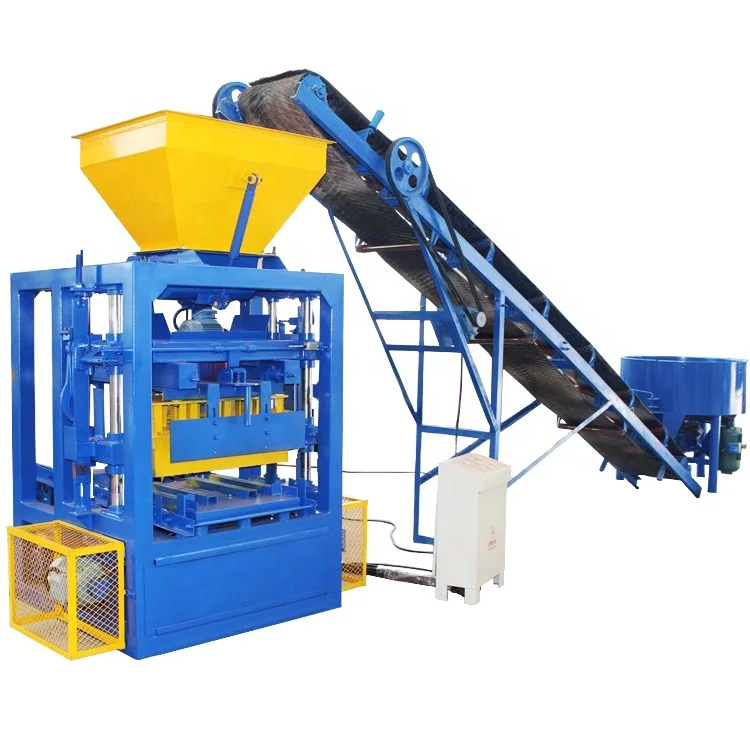
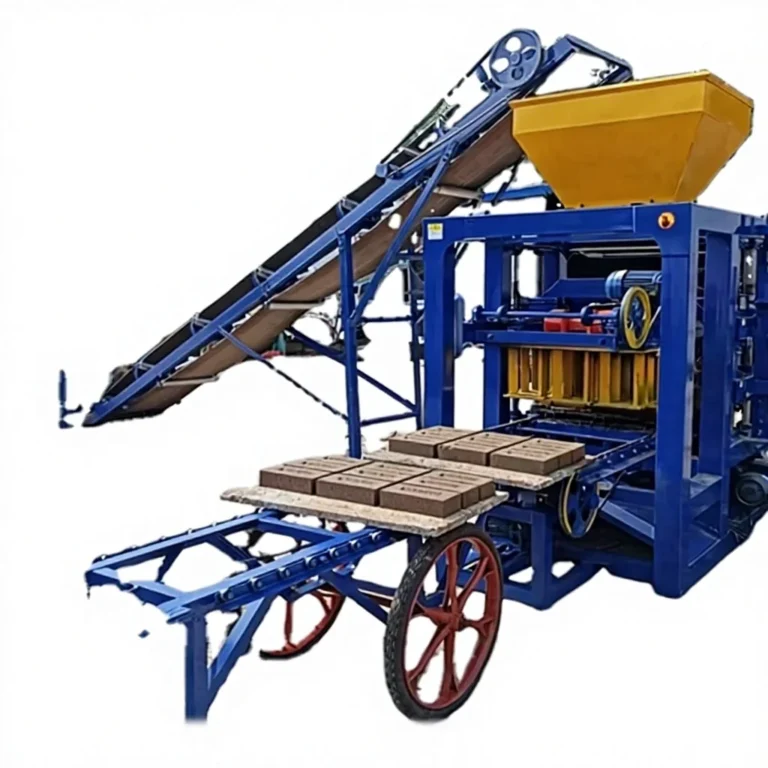
Single-focus block machinery expertise — machine, mould, pallet and handling are specified as one matched system around the QTJ4-25 rather than assembled from separate suppliers.
Technical Specifications
| Parameter |
Value |
| Model |
QTJ4-25 |
| Product Type |
Stationary Concrete Block Making Machine |
| Machine Type |
Semi-automatic (motor-driven with hydraulic station) |
| Rated Power |
17.9 kW |
| Exciting Force |
60 kN |
| Vibration Frequency |
2800 r/min |
| Molding Cycle |
25 s |
| Output Capacity |
960 pcs/h, 7680 pcs/day (based on 400×200×200 mm hollow block, 4 pcs/mould) |
| Pallet Size |
850×550×20 mm |
| Overall Dimensions (L×W×H) |
6400×1500×2700 mm |
| Total Mass |
2500 kg |
| Mould Format Options |
Hollow, solid, paver, curbstone (change mould to switch format) |
| Automation Level |
Semi-automatic (manual pallet handling and stacking) |
| Stacking Method |
Manual — place on pallet, move with trolley to drying area |
| Pallet Material |
Fiberglass suggested; wooden pallets also acceptable |
| Standard Configuration |
Host machine ×1, block mould ×1, JQ350 mixer ×1 |
| Voltage & Frequency |
Configurable to target market (basis to be confirmed) |
| Control System |
Options available (basis to be confirmed) |
| CE Declaration |
Available where applicable |
Application Suitability
| Application |
Material or Output |
| Small-to-medium concrete block plants |
Hollow and solid blocks from crushed stone, sand and cement |
| On-site block production for contractors |
Hollow blocks for housing and development projects |
| First-time block plant entrepreneurs |
Entry-level stationary output across multiple block formats |
| Building material distributors |
Paver and curbstone production added to an existing product range |
What "960 Pieces per Hour" Actually Means for Your Daily Plan
Every capacity figure here is tied to the 400×200×200 mm hollow block — no generic cycles-per-hour claim without a format attached.
I have watched buyers sign off on block machines quoting impressive hourly cycles, only to discover on commissioning day that the number assumed a solid paver while their market runs hollow blocks. The QTJ4-25 block making machine for sale lists 960 pieces per hour against a specific mould: four 400×200×200 mm hollow blocks per cycle at a 25-second molding interval. Switch to a smaller solid block and the piece count rises; move to an interlocking paver and it drops. Knowing the real daily output for the format you actually sell is the only way to size curing space, order enough pallets, and plan shift patterns. [NEED_CITE: capacity calculation standards for concrete block machinery]

Where the QTJ4-25 Sits in the Stationary Range
The QTJ4-25 block making machine for sale occupies the entry tier of Shiyue’s stationary lineup, positioned below fully automatic hydraulic lines and above mobile egg-laying units. It is aimed at buyers who need repeatable block density from a fixed installation but are not yet ready to invest in automatic pallet feeding, stacking and cubing. The semi-automatic configuration keeps the initial outlay accessible while leaving room to add automation stations later if daily volume grows.
Semi-Automatic Means You Control the Pace
With manual pallet handling and trolley transfer to the curing area, the operator sets the rhythm of production rather than chasing a conveyor. This matters in markets where labour is available and affordable, and where a first-time plant owner prefers to understand every step before scaling up. The hydraulic station delivers consistent pressing force across each cycle, which is the factor that most directly affects block strength uniformity when the mix design stays constant. [NEED_CITE: hydraulic pressure influence on concrete block compressive strength]
Reading the Vibration and Pressure Numbers Together
The 60 kN exciting force at 2800 r/min works in combination with the hydraulic station to compact the concrete mix inside the mould cavity. Vibration alone settles the aggregate; hydraulic pressure from the upper mould compresses it further, and the two must be matched to the buyer’s specific aggregate gradation and cement ratio. A mix with rounded river sand responds differently than one with crushed volcanic stone, and a machine set to a catalogue default will produce inconsistent density across the pallet. This is why vibration frequency and hydraulic pressure must be reviewed against the actual raw material before the machine leaves the factory.
When the Wrong Pallet Spec Disrupts the Whole Line
A pallet size of 850×550×20 mm may seem like a minor detail until the curing racks and forklift arrive on site. If the racking was built for a different pallet footprint, every wet block has to be double-handled. If the forklift tines are wider than the pallet allows, pallets crack within the first week and block edges chip during transport from the press to the drying area. Fiberglass pallets resist moisture and last longer in humid curing environments, while wooden pallets cost less upfront but absorb water and warp. Getting this decision wrong at the quotation stage creates ongoing replacement costs that no machine specification sheet warns about. [NEED_CITE: pallet material selection for concrete block curing]
Why Buyers Come Back to This Supplier
Machine, mould, pallet and handling equipment are specified as one system, so the QTJ4-25 arrives with pallets matched to its press area and a mixer sized for its cycle rate. Configuration starts from the buyer’s local aggregate sample and target block format rather than a catalogue default — I once saw an entire batch of blocks scrapped in Eastern Europe because the machine was tuned for standard sand while the site used volcanic aggregate. Moulds are designed and supplied for the formats the buyer’s market actually sells, including custom drawings when standard formats do not match. Automation level is selectable, so a buyer can start semi-automatic with the QTJ4-25 and add automatic pallet feeding or stacking later without replacing the host machine. Installation, commissioning and operator training are included so the first production run is supervised rather than left to guesswork.
Documentation & Verification
- Line layout and capacity calculation stating the 400×200×200 mm hollow block as the basis
- Machine specification sheet with hydraulic pressure and vibration force ratings
- Mould drawing and format list confirming which blocks the included mould produces
- Pallet specification matched to your curing rack dimensions and forklift type
- Voltage, frequency and control language confirmation before production begins
- Factory test record on your chosen block format before dispatch
Installation, Commissioning & Support
- Foundation pad sized to the 6400×1500 mm footprint with level tolerance for the hydraulic station
- Dedicated power circuit rated for the 17.9 kW total load at the confirmed local voltage
- Machine shipped as a single host unit with mixer; on-site assembly and alignment of vibration bed
- First production run supervised with hydraulic pressure and cycle time set to your mix design
- Operator training covering mould change procedure and manual pallet handling workflow
- Wear parts list and mould maintenance schedule provided at commissioning
Before You Request a Quotation
Share the exact block formats your market demands, including dimensions and target compressive strength, so the correct mould is included from day one. Confirm your local voltage, frequency and preferred control display language to avoid commissioning delays. Provide a sample of your aggregate or a description of its type so that vibration and hydraulic settings can be matched before the QTJ4-25 block making machine for sale enters production.
Frequently Asked Questions
Q: How is the QTJ4-25 daily output calculated, and what block format does it assume?
A: The 7680 pieces per day figure is based on the 400×200×200 mm hollow block at 4 pieces per mould, with a 25-second molding cycle. If your target format is a smaller solid block or a larger interlocking paver, the piece count per cycle changes accordingly, and a revised capacity calculation is provided with the quotation.
Q: Where does the QTJ4-25 sit compared to fully automatic and mobile machines?
A: It is the entry stationary model — above mobile egg-laying machines in output consistency and below fully automatic lines in labour requirement. The semi-automatic setup suits buyers who want a fixed installation with moderate output and plan to add automation stations later as production volume grows.
Q: What automation level does the QTJ4-25 offer, and can it be upgraded later?
A: Pallet handling and stacking are manual, with the operator using a trolley to move loaded pallets to the curing area. The host machine can later be integrated with automatic pallet feeding and stacking systems without replacing the press itself.
Q: What voltage and control language options are available for my market?
A: Voltage and frequency are configured to the buyer’s local supply before production starts. The control display language is confirmed at the same stage to ensure operators can read all settings and alarms during commissioning and daily operation.
Q: How many pallets are recommended, and what material should be chosen?
A: Pallet quantity depends on your curing cycle length and daily output target. Fiberglass pallets are recommended for humid curing environments due to moisture resistance, while wooden pallets suit drier climates and lower initial budgets. The correct choice is confirmed against your existing curing rack and forklift specifications.

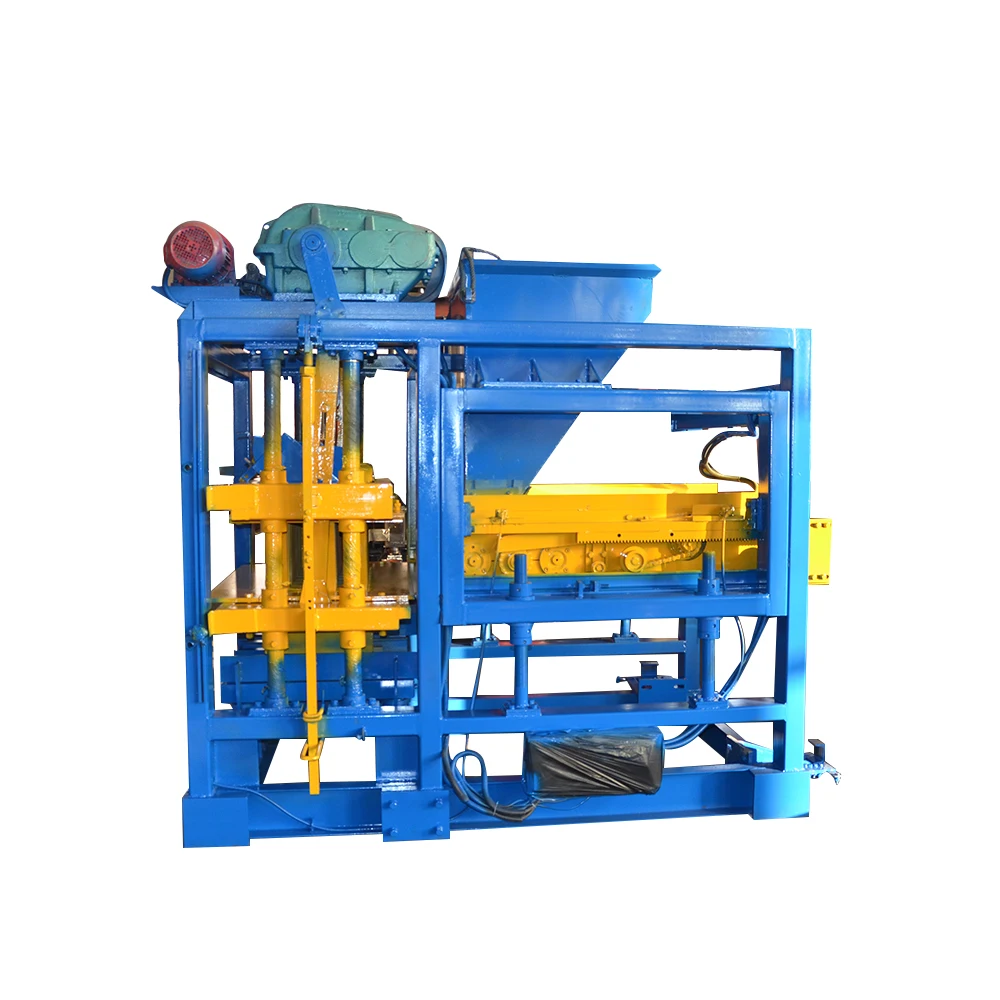
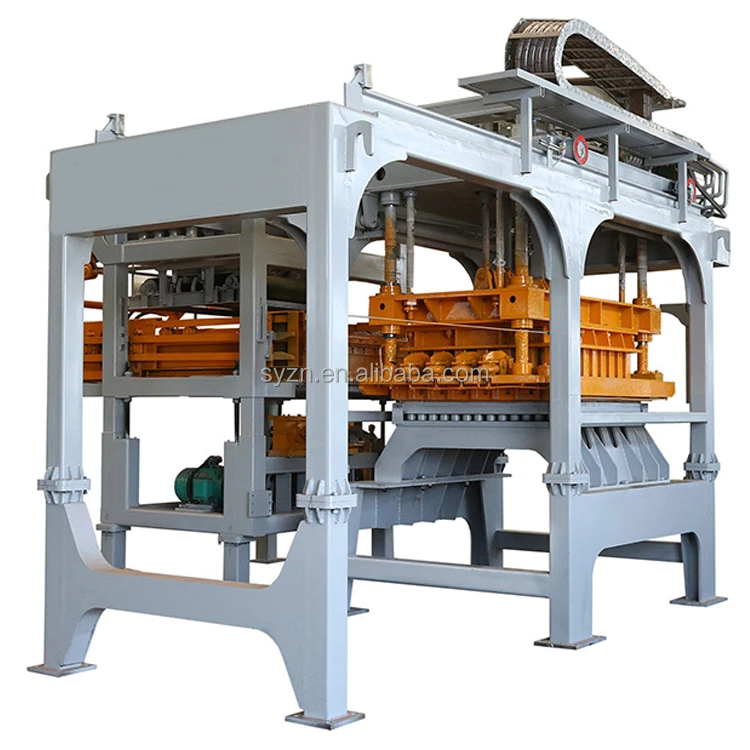 Stationary block machine