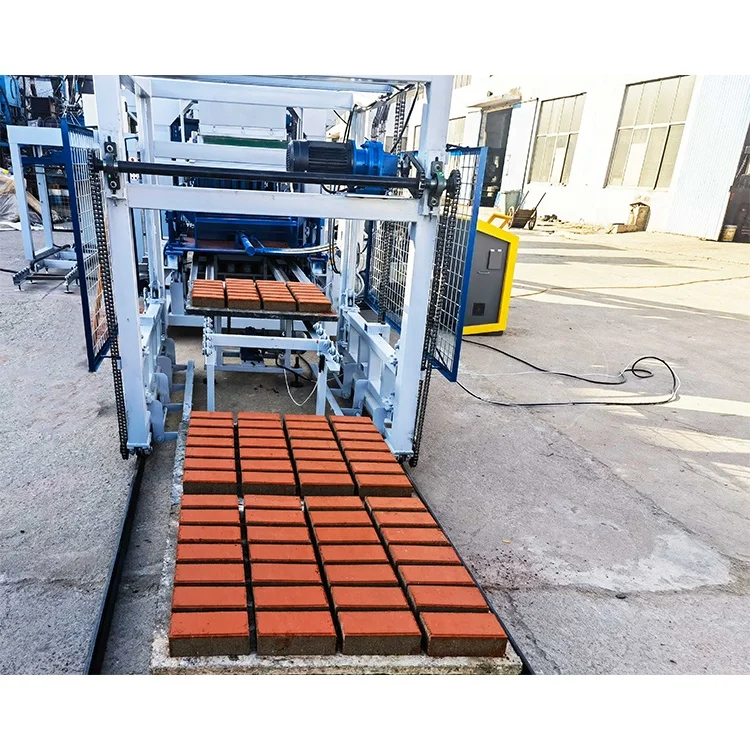
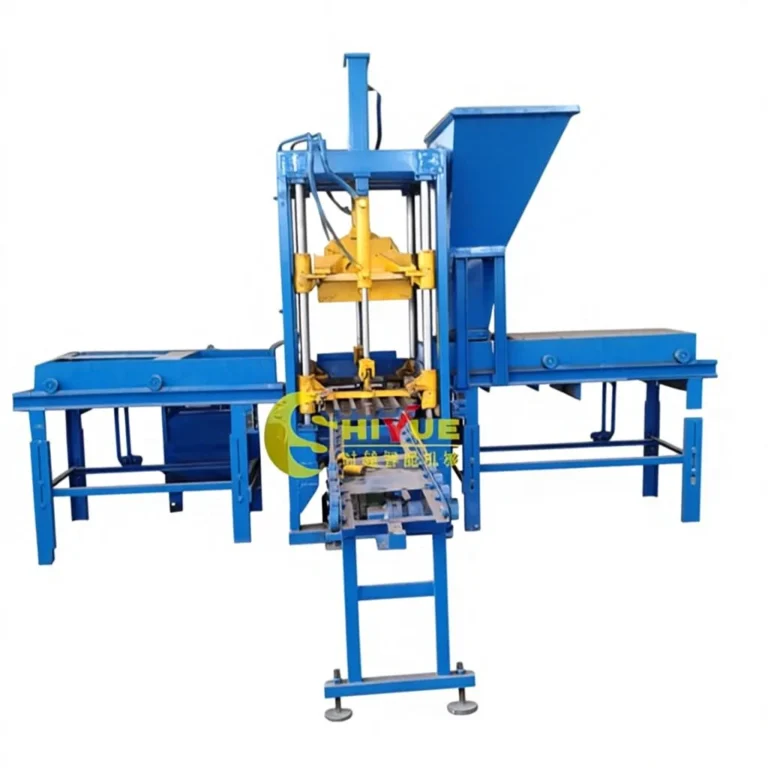
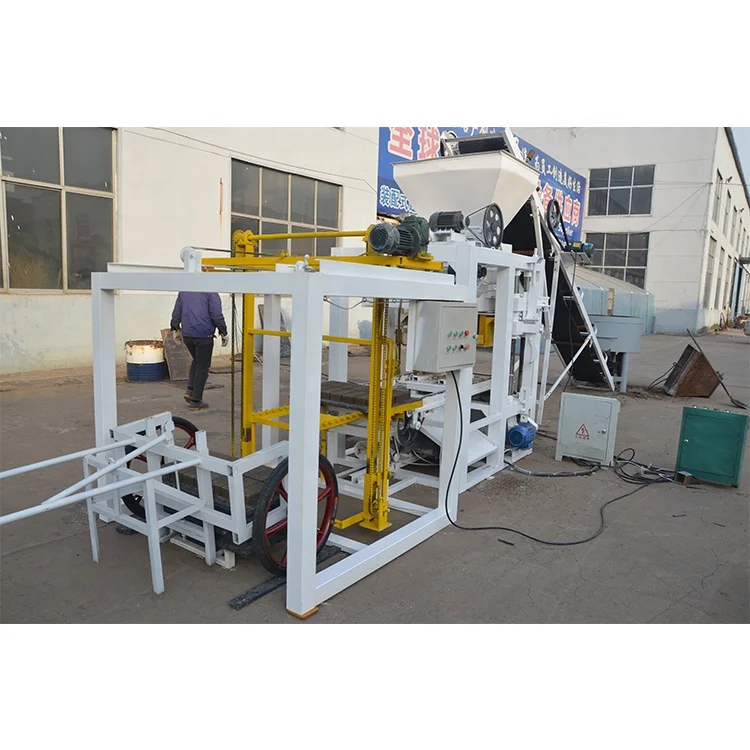
Matched System Design — the QT8-15 block machine, moulds, pallets and handling equipment are specified together against your local aggregate and target format, not pulled from a catalogue default.
Technical Specifications
| Parameter |
Value |
| Model |
QT8-15 |
| Product Type |
Automatic Hydraulic Concrete Block Making Machine |
| Overall Dimensions (L×W×H) |
8300×1860×3000 mm |
| Total Mass |
9 T |
| Rated Pressure |
21 MPa |
| Vibration Force |
60 kN |
| Vibration Frequency |
2800~4500 r/min |
| Main Vibration Form |
Platform Vibration |
| Pallet Size |
950×900 mm |
| Molding Cycle |
15-25 s (basis not stated in source — confirm block format and material) |
| Overall Power |
55.5 kW |
| Demolding Method |
Hydraulic |
| Control System |
PLC with human-machine interface |
| Automation Level |
Fully automatic (raw material feeding, block stacking) |
| Feeding System |
Semi-closed screen reticular rotational forced feeding |
| Applied Products |
Hollow blocks, solid blocks, pavers, interlocking blocks, curbstone, colored pavers |
| Raw Materials |
Crushed stone, sand, cement, fly ash, gravel, slag, dust |
| General Water Consumption |
12 T/Day |
| Factory Area |
600 m² |
| Voltage & Frequency |
Configurable to buyer’s site (confirm before ordering) |
| Standards |
CE (where applicable) |
Application Suitability
| Application |
Material or Output |
| Block and paver production plants |
Hollow blocks, solid blocks, paving slabs from crushed stone and cement |
| Construction contractors producing blocks on-site |
Housing and development project blocks from locally sourced sand and gravel |
| Concrete product manufacturers expanding format range |
Interlocking blocks, colored pavers and curbstones from fly ash and slag blends |
| Building material distributors and machinery importers |
Automatic block line supplying multiple formats to regional markets |
What "15-25 Seconds Cycle Time" Leaves Out About the QT8-15
A cycle time range only becomes meaningful when tied to the exact block format, wall thickness, and mix design you will run.
I remember sending an automatic concrete block making machine manufacturer quotation to a buyer in West Africa that listed a moulding cycle of 15-25 seconds. He called back excited, already calculating daily output at the fastest end. I had to walk him through the reality: that 15-second figure assumed a thin solid paver, while the hollow block his market actually demanded — with thicker walls and a denser mix — pushed the cycle toward 25 seconds or beyond. Without stating which block format the cycle time assumes, the number on the spec sheet becomes a marketing placeholder rather than a planning tool [NEED_CITE: capacity calculation standards for concrete block production lines].

Where the QT8-15 Sits in Our Stationary Range
Buyers surveying options for a first or replacement machine need to understand the tiers before narrowing down. The QT8-15 occupies the mid-to-high segment of our stationary automatic concrete block making machine manufacturer lineup, bridging the gap between smaller semi-automatic presses that require manual pallet handling and the highest-capacity lines designed for continuous three-shift operation. Its 950×900 mm pallet size places it above entry-level workshop machines but below the large-format presses used for industrial-scale paver production.
Matching Output Tiers to Your Investment and Site Footprint
Choosing the right tier means balancing daily output targets against the factory area you can allocate and the automation level your workforce can support. The QT8-15 requires roughly 600 m² of factory space including raw material storage, press area, and curing zones — a footprint that suits medium-scale plants and growing contractors [NEED_CITE: typical floor space requirements for stationary block production facilities]. For buyers starting with limited capital, our range includes smaller semi-automatic models with reduced footprint. For those targeting higher volumes, larger-format machines in the lineup offer wider pallets and faster cycle times for specific paver formats.
Decoding the Numbers That Actually Shape Block Quality
The 21 MPa rated hydraulic pressure and 60 kN vibration force work together to compact your mix into dense, structurally sound blocks. Pressure alone flattens the material; vibration rearranges the aggregate particles so cement paste fills the voids. When these two forces are not matched to your specific mix design and local aggregate gradation, blocks emerge either too porous or cracked at the edges. The platform vibration system with its 2800-4500 r/min frequency range allows operators to tune compaction for different formats — a hollow block needs lower amplitude to avoid collapsing thin walls, while a solid paver benefits from higher frequency for surface finish. The semi-closed screen reticular rotational forced feeding ensures that each mould cavity receives a uniform charge of material before the press closes, reducing density variation from block to block across the pallet. The 9 T machine mass provides the inertial stability needed to absorb vibration energy without transmitting it into the factory floor, which matters when neighbouring equipment or curing racks sit close by.
The Hidden Cost of Unconfirmed Electrical and Control Specifications
Years ago, a QT-class machine I helped ship to a Middle East project sat idle for weeks because the local voltage did not match the control cabinet wiring — a transformer had to be sourced locally at considerable expense. When voltage, frequency, and PLC display language are not confirmed before the machine leaves the factory, commissioning delays cascade through the entire project timeline. The QT8-15’s 55.5 kW power draw means it needs a dedicated supply circuit, and the PLC human-machine interface must display in a language your operators can read. These are not minor details; they determine whether the machine runs on day one or waits in a crate [NEED_CITE: electrical commissioning delays in exported industrial machinery].
Why Buyers Source the QT8-15 Through Our Range
Block machinery is our single focus, which means the QT8-15 press, its moulds, pallets, and handling equipment are designed and supplied as one matched system rather than assembled from unrelated vendors. Configuration starts with your actual mix design, local aggregate availability, and the block formats your market sells — not a catalogue default that may not suit your conditions. Mould design covers the formats you need, including custom drawings when standard options do not match regional demand. Automation level is selectable, so you can begin with the QT8-15 in semi-automatic mode and add automatic stacking or cubing as production grows. Installation includes on-site commissioning and operator training so your team understands mould change procedures and PLC dialogue-based operation from the first shift.
Documentation & Verification
- Line layout and capacity calculation showing the specific block format assumed for cycle time
- Machine specification sheet confirming pallet size, vibration force, hydraulic pressure, and overall power
- Mould drawing and format list covering every block type your market requires
- Voltage, frequency, and PLC display language confirmation matched to your site before production
- Factory test record on your target block format before dispatch
- Hydraulic and electrical schematic for local maintenance teams
Installation, Commissioning & Support
- Foundation plan sized to the QT8-15’s 8300×1860 mm footprint and 9 T operating mass
- Dedicated electrical circuit matched to confirmed voltage and 55.5 kW total power requirement
- Machine dismantled for container loading and reassembled with alignment verification on-site
- PLC interface configured to operator language before first production run
- Mould change training covering format swap procedures for your specific block range
- Wear parts and hydraulic seal list provided with reorder intervals for local stocking
Preparing Your QT8-15 Inquiry
To size the QT8-15 correctly within our stationary range, share the block formats your market sells most, the daily output you need for each format, and your local raw material sources. Confirm the voltage and frequency at your site along with your preferred PLC display language, so the control cabinet is wired and programmed before the machine ships. If you already have pallets, forklifts, or curing racks, provide their dimensions so the line layout integrates with your existing equipment.
Frequently Asked Questions
Q: How do I verify daily output of the QT8-15 for my block format?
A: We provide a capacity calculation that states the exact block format, dimensions, and mix design behind each cycle time figure. You review this against your local aggregate and target market demand before confirming the order, so there are no surprises when production starts.
Q: Where does the QT8-15 fit compared to semi-automatic or higher-tier models?
A: It sits in the mid-to-high tier of our stationary range, offering full PLC control and automatic feeding on a 950×900 mm pallet. Smaller semi-automatic models suit lower-investment startups, while larger machines serve high-volume plants with wider pallet formats.
Q: What voltage and PLC language options are available?
A: Voltage and frequency are configured to match your local grid before production. The PLC human-machine interface can be set to your preferred display language, confirmed during the quotation stage to avoid commissioning delays.
Q: Can I upgrade the QT8-15 automation or add formats later?
A: The automation level is selectable, so you can start with manual pallet handling and add automatic stacking or cubing as demand grows. Additional moulds can be ordered for new formats as your market expands.
Q: What plant footprint does the QT8-15 line require?
A: Approximately 600 m² is needed for the press area, raw material storage, and curing zones. We provide a detailed line layout showing station placement so you can plan the site before equipment arrives.

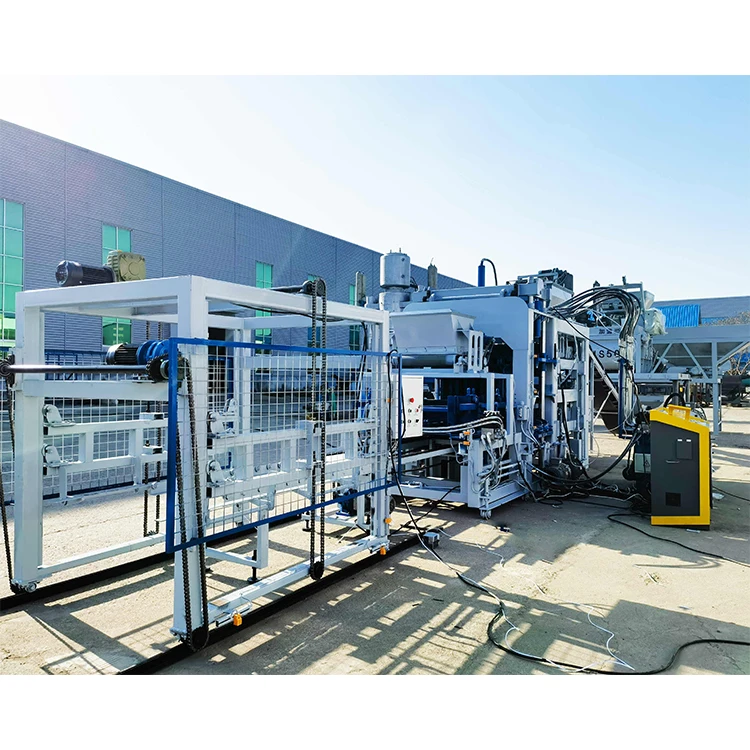
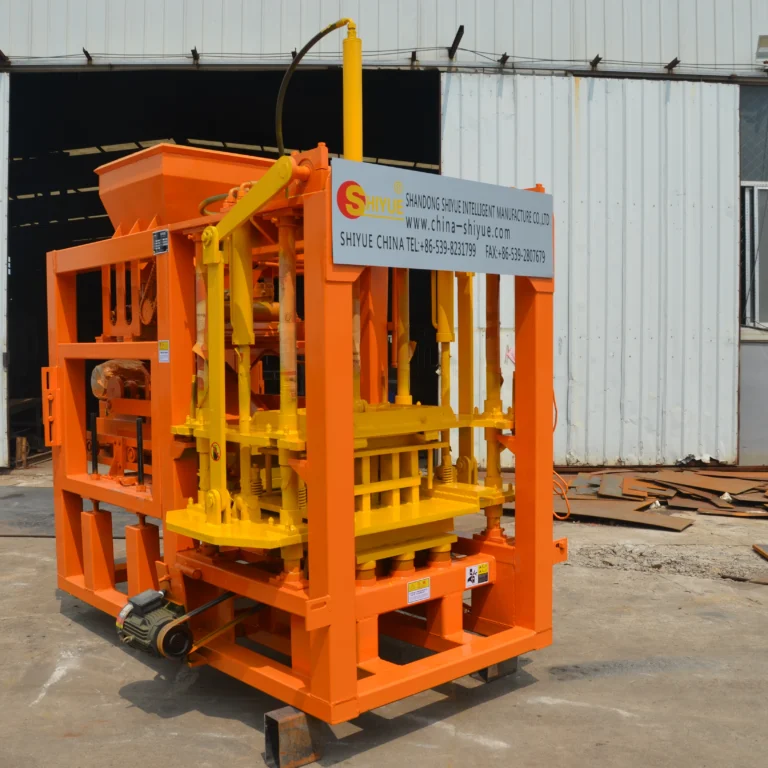 Stationary block machine