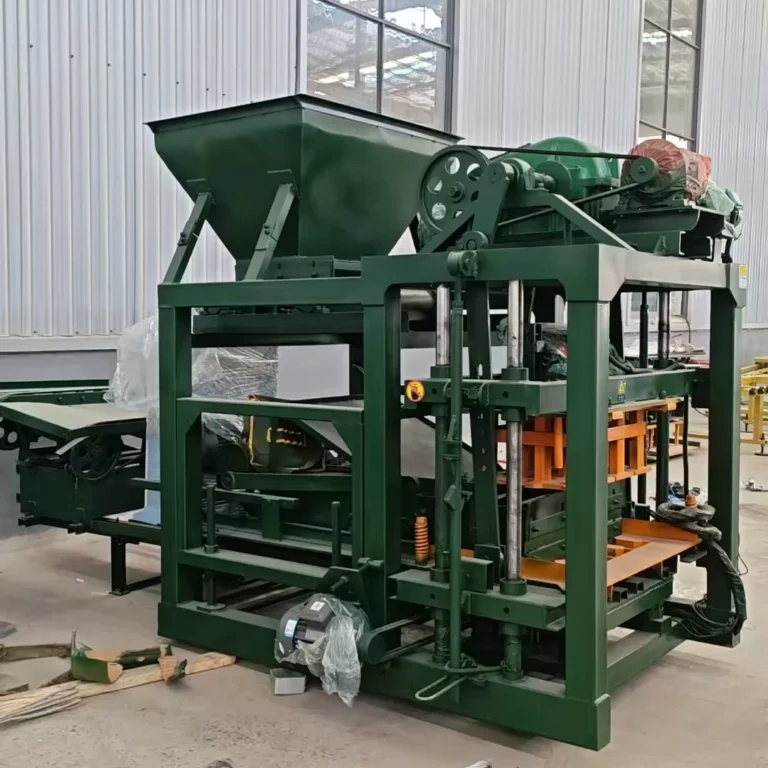
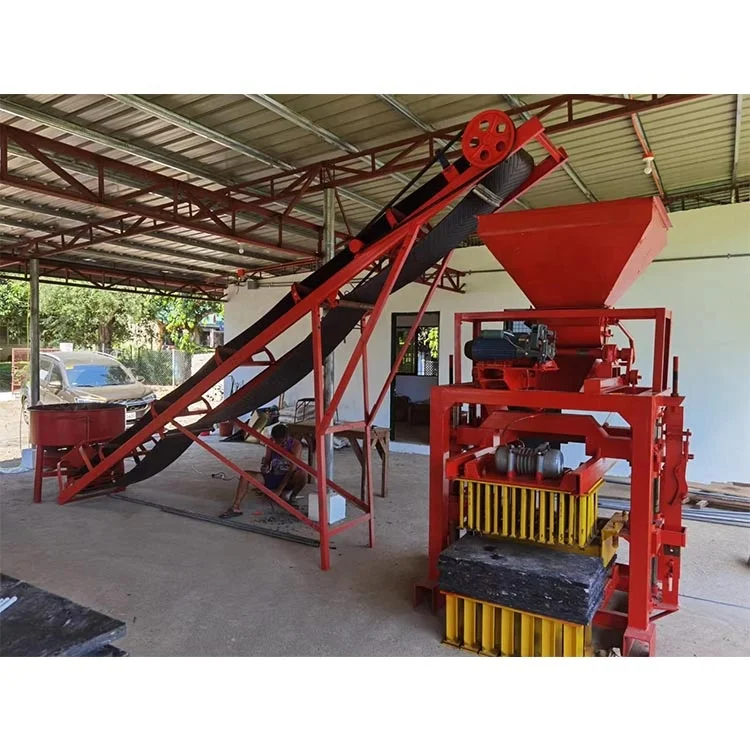
Matched system configuration — every QTJ4-24 semi automatic block machine ships with mixer, conveyor and pallet handling specified as one coordinated line, not a press-only quote that leaves you sourcing the rest yourself.
Technical Specifications
| Parameter |
Value |
| Model |
QTJ4-24 |
| Product Type |
Semi Automatic Concrete Block Making Machine |
| Molding Type |
Platform Vibration |
| Overall Dimensions (L×W×H) |
3600mm × 1700mm × 2560mm (working state) |
| Total Mass |
1750kgs |
| Pallet Size |
850mm × 450mm |
| Overall Power |
14.25KW |
| Mould Format (Hollow) |
390mm × 190mm × 190mm (4 pcs/mold) |
| Mould Format (Solid Brick) |
240mm × 115mm × 53mm (21 pcs/mold) |
| Vibration System |
Lower platform (two 3kW motors) + Upper 1.5kW vibration device |
| Machine Frame |
Dragon gate style, super steel, four wear-resisting vertical shafts |
| Elevating System |
Cone-shape motor, JZQ250 speed reducer, V-belt drive |
| Delivery Device |
Cycloidal pin wheel reducer, chains, V-belt, self-conveying frame |
| Material Storing |
Top-mounted releasing hopper + lower storing hopper |
| Standard Supporting Equipment |
JQ350 pan mixer, 6m belt conveyor, trolley |
| Optional Equipment |
Auto stacker, block clamper, diesel generator, wheel loader, forklift |
| Automation Level |
Semi-automatic |
| Output Capacity |
(basis to be confirmed per block format and material) |
Application Suitability
| Application |
Material or Output |
| Small-scale hollow block production |
Crushed stone, cement, sand — 390×190×190mm hollow blocks |
| Solid brick manufacturing |
Fly ash, cement, stone dust — 240×115×53mm solid bricks |
| On-site contractor block production |
Local aggregate mixes at construction project locations |
| Entry-level block plant startups |
Lower investment tier producing standard wall blocks |
Why "Pieces per Hour" Tells You Nothing Without the Block Format
Capacity means nothing until you know which block size, which mix, and which pallet cycle it was measured on. I have seen buyers compare two machines side by side using a single hourly number, only to discover after arrival that one figure assumed a thin paver and the other assumed a 190mm hollow block. The vibration frequency and compaction time required for each format are completely different, and so is the actual daily output [NEED_CITE: block format assumptions in capacity calculations]. A semi automatic block machine manufacturer that quotes you cycles per hour without naming the format is quoting you a number you cannot verify on your own production floor.

Where the QTJ4-24 Sits in the Full Machine Range
Before you commit capital, you need to know which tier of the range you are buying into. The QTJ4-24 occupies the entry-to-mid tier of the Shiyue semi automatic lineup, positioned between smaller mobile egg-laying machines that need no fixed plant and the fully automatic lines with PLC-controlled stacking and cubing. This is the semi automatic block machine manufacturer range that serves buyers who want stationary production with consistent output but are not ready for the investment and floor space a fully automatic line demands.
Understanding the Investment Step Between Tiers
Moving from semi-automatic to full automation is not just about the press itself — it is about whether your curing area, forklift capacity and daily labour budget can absorb the speed increase. At the QTJ4-24 tier, pallets are fed and products are moved by trolley and manual handling, keeping the supporting equipment investment modest. Buyers evaluating their first plant often start here, learn their local market demand, and then scale up [NEED_CITE: typical upgrade paths in block production]. This tier gives you room to grow without over-building on day one.
What the Frame and Vibration Setup Mean for Block Density
The dragon gate frame with four wear-resisting vertical shafts keeps the mould aligned through thousands of cycles, which directly affects block dimensional consistency. Below the platform, two 3kW high-speed motors drive the vibration box, while a 1.5kW upper vibration device compacts from above. This dual vibration approach is what determines whether your hollow blocks come out with uniform wall density or with weak spots that fail under load. The 1750kgs total mass of the machine also matters — a heavier frame absorbs vibration rather than transferring it to the floor, which is especially relevant if your plant sits on a standard concrete slab rather than a dedicated foundation.
The Cost of Skipping Pallet and Handling Alignment
One of the most common failures I see at this tier has nothing to do with the press. Buyers specify the machine, then source pallets locally that do not match the 850mm × 450mm pallet size, or they have no trolley workflow planned for moving loaded pallets to the curing area. The result is a bottleneck: the press finishes a cycle, but the operator has nowhere to put the loaded pallet. Production stalls, and the quoted output becomes theoretical [NEED_CITE: pallet handling bottlenecks in semi-automatic block plants]. Always confirm your curing rack spacing and forklift dimensions before the machine ships.
Why Buyers Source This Tier From Shiyue
Block machinery is the only thing this workshop builds, so the QTJ4-24 is not a catalogue item adapted from a broader product line — the press, mould, mixer and conveyor are specified together as one system. Configuration is set against the buyer’s actual mix design and local aggregate rather than a default recipe, which means vibration parameters are matched to what you will actually feed the machine. Moulds are available for the formats your market sells, including custom drawings. The semi-automatic tier is designed so you can start here and upgrade automation later without replacing the entire line.
Documentation & Verification
- Line layout showing QTJ4-24 footprint with pallet flow and curing area marked
- Machine specification sheet confirming 14.25KW total power and voltage before production
- Mould drawing listing 390×190×190mm and 240×115×53mm formats with pallet match
- Factory test record photographing actual block output from your specified mix
- Packing photographs confirming machine, JQ350 mixer and 6m conveyor loaded for shipment
Installation, Commissioning & Support
- 3600mm × 1700mm working footprint requires a level concrete pad with drainage allowance
- 14.25KW total load needs a dedicated circuit matching your local voltage and frequency
- Machine ships in working-state configuration with dragon gate frame assembled
- First-run vibration tuning against your local aggregate and cement ratio on site
- Operator training covers mould change procedure and dual-vibration system adjustment
- Wear parts list includes vibration box components and vertical shaft bushings
What to Prepare Before You Enquire
To get a configuration that matches your actual site rather than a catalogue default, have the following ready: the block format you intend to sell and your target daily volume, a sample or description of your local aggregate and cement type, your available floor space and ceiling height, and your local voltage and frequency. If you already have forklifts or curing racks, share their dimensions so the 850mm × 450mm pallet specification can be confirmed against your existing equipment.
Frequently Asked Questions
Q: How does the QTJ4-24 compare to the automatic and mobile machines in the range?
A: The QTJ4-24 is a stationary semi-automatic tier that requires a fixed plant but keeps supporting equipment simple — trolley handling rather than automatic stacking. Mobile machines below it need no fixed plant but produce lower daily volume. Automatic lines above it add PLC control, auto-stacking and cubing for higher throughput. This tier sits between those two for buyers wanting stationary output without the full automation investment.
Q: What plant footprint does this semi-automatic tier require?
A: The machine itself measures 3600mm × 1700mm × 2560mm in working state, but you must add space for the JQ350 pan mixer, the 6m belt conveyor, trolley movement paths, and your curing area. A realistic layout requires significantly more ground than the press alone. Share your site dimensions so a complete line layout can be drawn before you order.
Q: How is output capacity stated rather than using generic cycles per hour?
A: Output is calculated per block format, because a mould producing four 390×190×190mm hollow blocks per cycle has a completely different daily volume than one producing twenty-one 240×115×53mm solid bricks. Capacity documentation names the exact format, mix assumption, and cycle timing so you can verify it against your own production targets before the machine is built.
Q: Can I start with the QTJ4-24 and add automation later?
A: The semi-automatic configuration is structured so that optional equipment like the auto stacker or block clamper can be added as your volume grows. The core press and frame remain the same. This means you do not replace the entire line when your market demand justifies reducing manual pallet handling and increasing throughput.

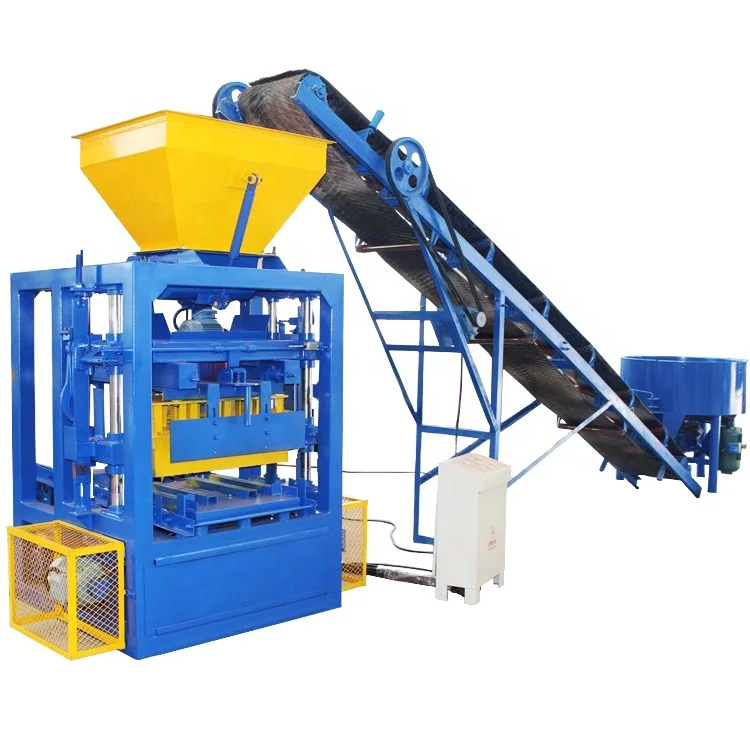
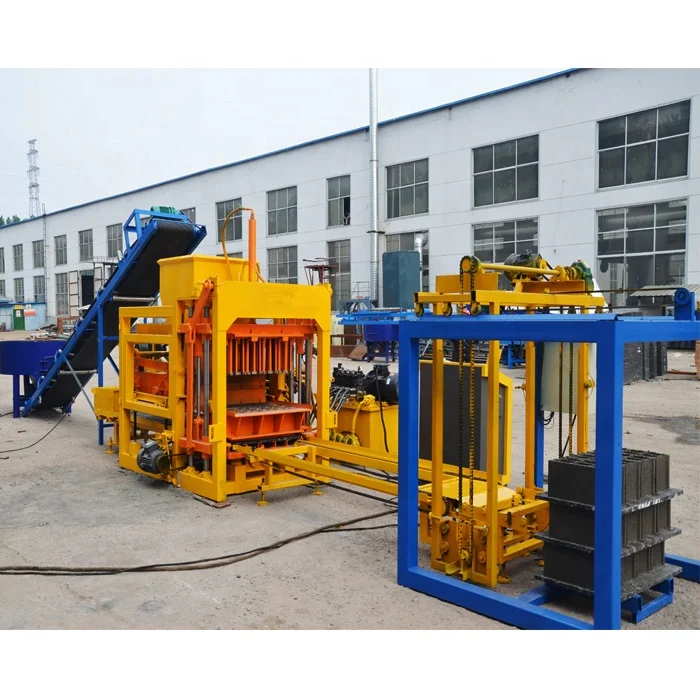 Stationary block machine