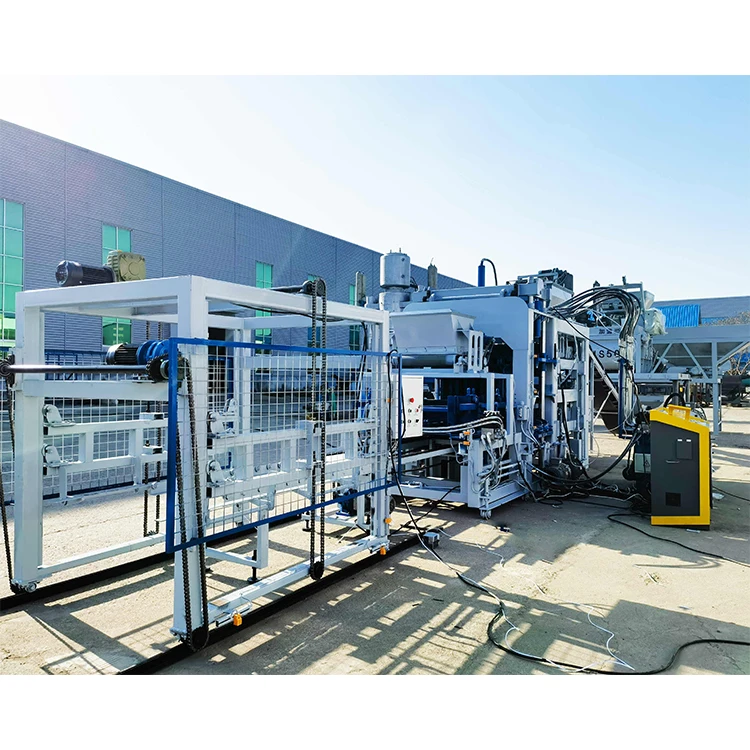
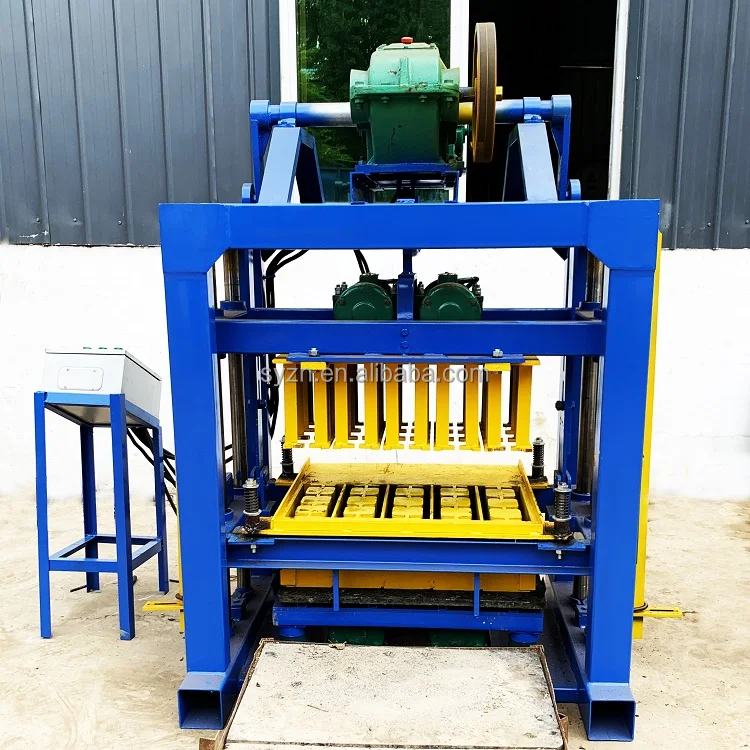
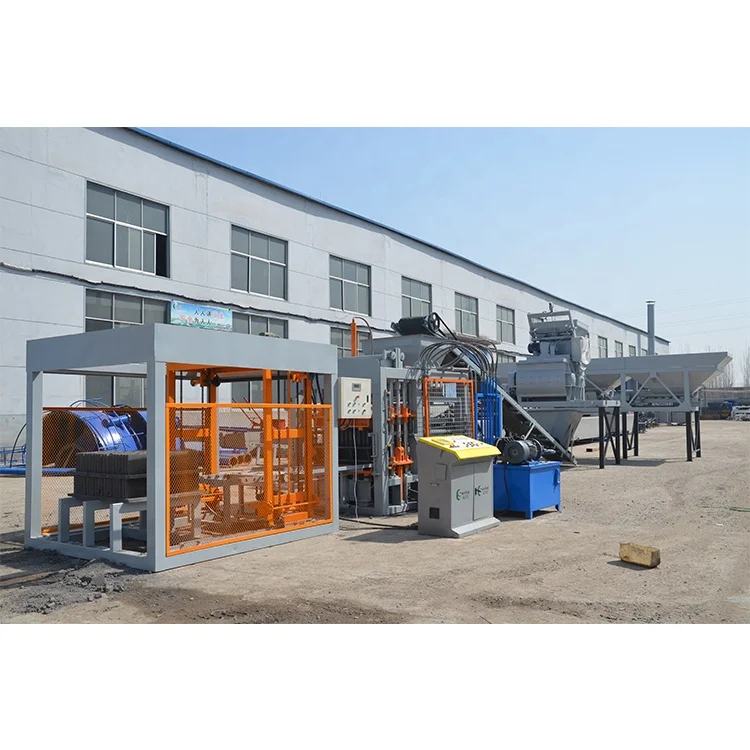
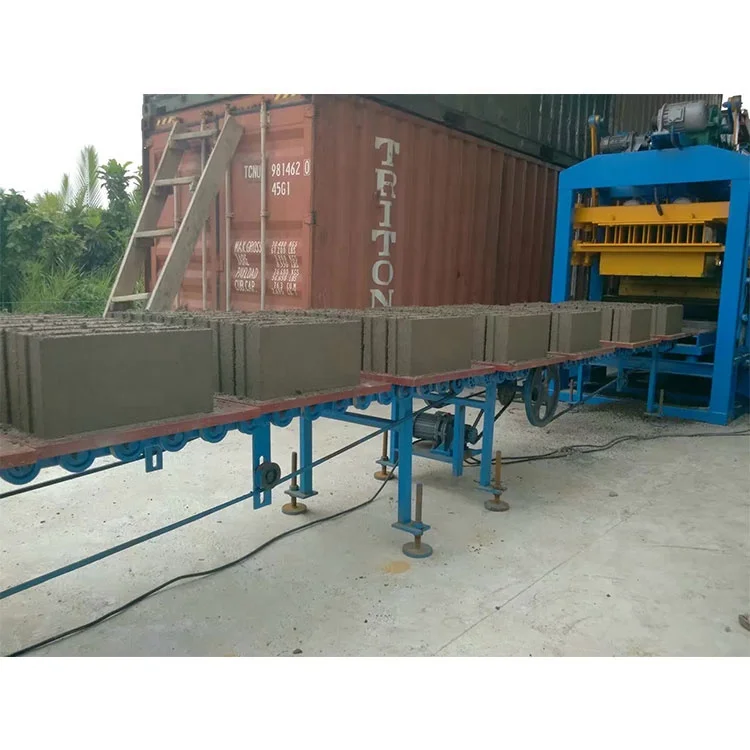
Integrated System Matching — Machine, mould, and 850×450mm pallet specified together so the QTJ4-24 block line runs as one coordinated unit rather than a collection of mismatched parts.
Technical Specifications
| Parameter |
Value |
| Model |
QTJ4-24 |
| Product Type |
Semi-Automatic Concrete Block Making Machine |
| Machine Configuration |
Stationary, Platform Vibration |
| Overall Dimensions (Working State) |
3600mm × 1700mm × 2560mm |
| Total Mass |
1750 kg |
| Installed Power |
14.25 kW |
| Vibration System |
Dual 3 kW lower platform motors (vertical excitation) + 1.5 kW upper attached vibrator |
| Pallet Size |
850mm × 450mm |
| Standard Mould Examples |
390×190×190mm (4 pcs/mould); 240×115×53mm (21 pcs/mould) |
| Frame Construction |
Dragon gate style, super steel, four wear-resisting vertical guide shafts |
| Elevating System |
Cone-shape motor, JZQ250 speed reducer, V-belt drive |
| Delivery Device |
Cycloidal pin wheel speed reducer, chain and V-belt drive |
| Automation Level |
Semi-automatic (mechanical and electronic control) |
| Support Equipment Included |
JQ350 pan mixer, 6m belt conveyor, hand trolley |
| Output Capacity |
(basis to be confirmed) |
| Cycle Time |
(basis to be confirmed) |
| Hydraulic Pressure |
Not applicable (mechanical vibration and elevating system) |
Application Suitability
| Application Scenario |
Material and Output Context |
| First-time block plant setup |
Crushed stone, sand, and cement for hollow and solid blocks |
| Contractor on-site production |
Local aggregate mixed on the project site for standard bricks |
| Distributor adding brick formats |
Cement and fly ash blends for interlocking and paving formats |
| Small workshop manufacturing |
River sand and gravel for kerbstones and solid masonry units |
What "Pieces per Hour" Actually Means for a Semi-Automatic Block Machine
Any output figure that omits the block format it assumes is useless for planning your curing yard and labour shifts.
Many quotations list a peak cycle number without stating whether that rate applies to a 390×190×190mm hollow block or a much smaller solid brick. A semi-automatic block machine manufacturer quoting one number for all formats leaves the buyer to discover the gap between the promise and the pallet count at the end of the day. I once saw a workshop in West Africa plan an entire curing area around a capacity number that turned out to be based on a brick format the buyer never intended to produce [NEED_CITE: capacity calculation standards for concrete block machinery].

Where the QTJ4-24 Sits in the Full Machine Range
The QTJ4-24 occupies the entry tier of stationary block machines, aimed at buyers who need a fixed plant without the capital outlay of a fully automatic line. It pairs a mechanical elevating system with electronic control, keeping the operator in the loop for pallet handling while the press cycle itself runs on a timed sequence. This positions it between mobile egg-laying machines, which produce directly on the floor, and high-output automatic plants that include stacking and cubing.
Planning the Line Around a Defined Pallet Footprint
Every pallet that leaves the QTJ4-24 measures 850mm × 450mm, and that single dimension dictates the curing rack spacing, forklift tine width, and yard layout for the entire operation. Buyers who choose a machine without confirming the pallet size against their existing handling equipment often find themselves replacing forklifts or re-racking the curing area after arrival. Matching the pallet to the yard before the machine ships prevents a bottleneck that no amount of operator effort can fix [NEED_CITE: pallet handling logistics in block plant design].
How Vibration and Guide Shaft Design Shape Block Density
The dual 3 kW lower vibrators deliver vertical excitation through the platform, while the 1.5 kW upper vibrator settles the top surface of the mould. This two-zone vibration pattern compacts the mix from both directions, which is important when switching bet*d a thin solid brick that risks over-vibration. The four wear-resisting vertical guide shafts on the dragon gate frame keep the mould aligned through thousands of cycles, preventing the uneven wall thickness that leads to rejected batches. The JZQ250 speed reducer on the elevating system provides controlled head descent, reducing shock loads that would otherwise shorten mould life.
The Hidden Cost of Skipping the Voltage Confirmation
Sending a 380V motor into a 415V three-phase supply zone guarantees a commissioning standstill the day the container is opened. I learned this on a QTJ-series shipment to West Africa where the local grid ran at 415V/50Hz and the motors could not start under load. The workshop sat idle while a variable-frequency cabinet was air-freighted in, turning a small paperwork oversight into a multi-week delay [NEED_CITE: industrial voltage and frequency standards by region]. Confirming the exact supply voltage, frequency, and control panel language before the machine enters production avoids this cost entirely.
Why Buyers Source This Machine Tier Here
Block machinery is the single focus of the production line, so the QTJ4-24 arrives with its mould, pallet, and basic support equipment specified as one matched set. Configuration is adjusted to the buyer’s local aggregate and target block format rather than shipped as a catalogue default. Mould design covers the formats the buyer’s market actually sells, including custom drawings when standard options do not fit. The semi-automatic setup allows a buyer to start with manual pallet handling and add an auto stacker later, spreading investment over two phases. Documentation includes the capacity calculation with the assumed block format stated, so there is no ambiguity at the planning stage.
Documentation & Verification
- Line layout showing 850×450mm pallet flow from press to curing rack
- Capacity calculation stating the exact block format behind each output figure
- Mould drawing and format list matching local market requirements
- Voltage and PLC display language confirmation signed before production
- Factory test record on the buyer’s target block format before dispatch
Installation, Commissioning & Support
- Foundation pad sized for 3600×1700mm footprint and 1750 kg static load
- Dedicated circuit rated for 14.25 kW total draw at the confirmed site voltage
- Machine ships as a single stationary unit with bolt-on material hoppers
- Elevating system and vibration motors calibrated on-site for the buyer’s mix
- Operator training covers mould change procedure on the four-shaft guide frame
- Wear parts list provided for the first replacement cycle on vibration motors and guide bushes
Before You Request a Quote
To size the QTJ4-24 correctly, share the block formats your market sells and the daily pallet count you need to hit. Confirm your site supply voltage and frequency, the curing yard area available for 850×450mm pallets, and whether you plan to run the basic mixer-conveyor-press line or add stacking later.
Frequently Asked Questions
Q: How is output capacity calculated and which block format does it assume?
A: Every capacity figure must state the block format, mix type, and cycle time behind it. A 390×190×190mm hollow block produces four pieces per mould cycle, while a standard brick yields twenty-one. Without the format stated, the number is meaningless for yard and labour planning.
Q: What voltage and frequency options are available for my market?
A: The QTJ4-24 motors and control panel are configured to the buyer’s confirmed supply before production. Common ranges include 220V to 440V across 50Hz and 60Hz systems. A signed voltage confirmation sheet prevents commissioning delays on arrival.
Q: Where does the QTJ4-24 sit compared to automatic and mobile machines?
A: It is a stationary semi-automatic press, positioned above mobile egg-laying machines in output consistency and below fully automatic lines in labour requirement. Buyers choose this tier for lower initial investment with an upgrade path to automatic stacking.
Q: Can I start semi-automatic and add auto stacking later?
A: Yes. The QTJ4-24 supports an optional auto stacker that handles three to six layers depending on block height. The machine frame and pallet size remain unchanged, so the upgrade integrates into the existing line without replacing the press.
Q: What curing area do I need for the 850×450mm pallet?
A: The curing yard must accommodate the daily pallet count at the spacing your racking system allows. Forklift tine width and rack dimensions should be confirmed against the 850×450mm pallet before the machine ships to avoid handling mismatches.

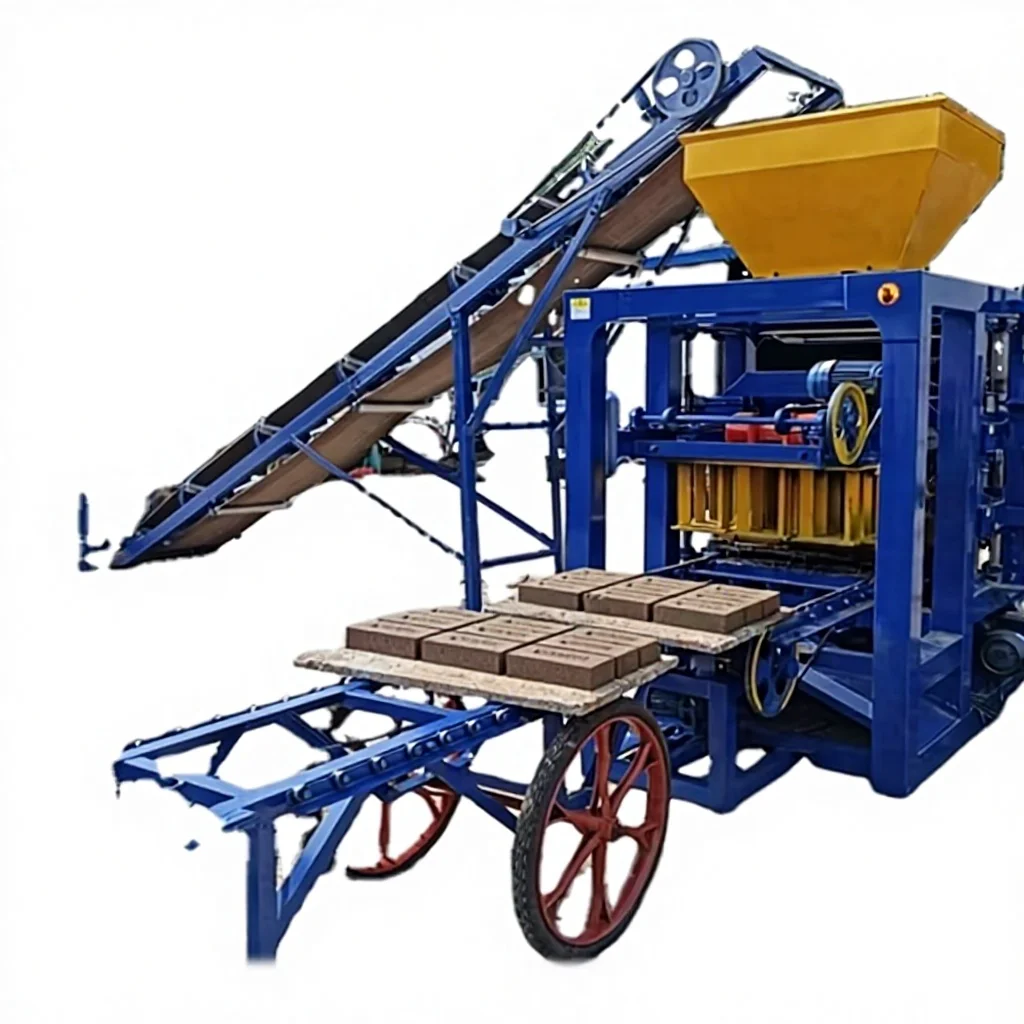
 Stationary block machine