

AAC Block Line Container Loading & MOQ Reference
Most buyers assume all AAC equipment fits in standard containers; the truth is that autoclaves often exceed width and height limits, requiring special handling.
Standard 40HQ containers can accommodate block machines, mixers, and batching plants, but large-diameter autoclaves typically require flat rack or open-top containers due to ISO dimensional constraints. The minimum order quantity for a full line is generally one complete set, while individual high-value components like cutters may have lower MOQs but incur higher LCL shipping costs per unit.
I still remember the panic on the dock in Qingdao. A client from East Africa had booked a full AAC line, expecting everything to slide neatly into two 40-foot high-cube containers. The block machine and mixer fit perfectly. But the autoclave, with a diameter just over three meters, hit the container walls. It wasn’t a matter of forcing it in; the steel structure simply did not align with the internal width of a standard box. We had to switch to a flat rack at the last minute, doubling the freight cost and delaying the shipment by weeks. That incident taught me that physical dimensions dictate logistics more than budget does. [NEED_CITE: ISO 668 series container external dimensions and internal clearance standards]
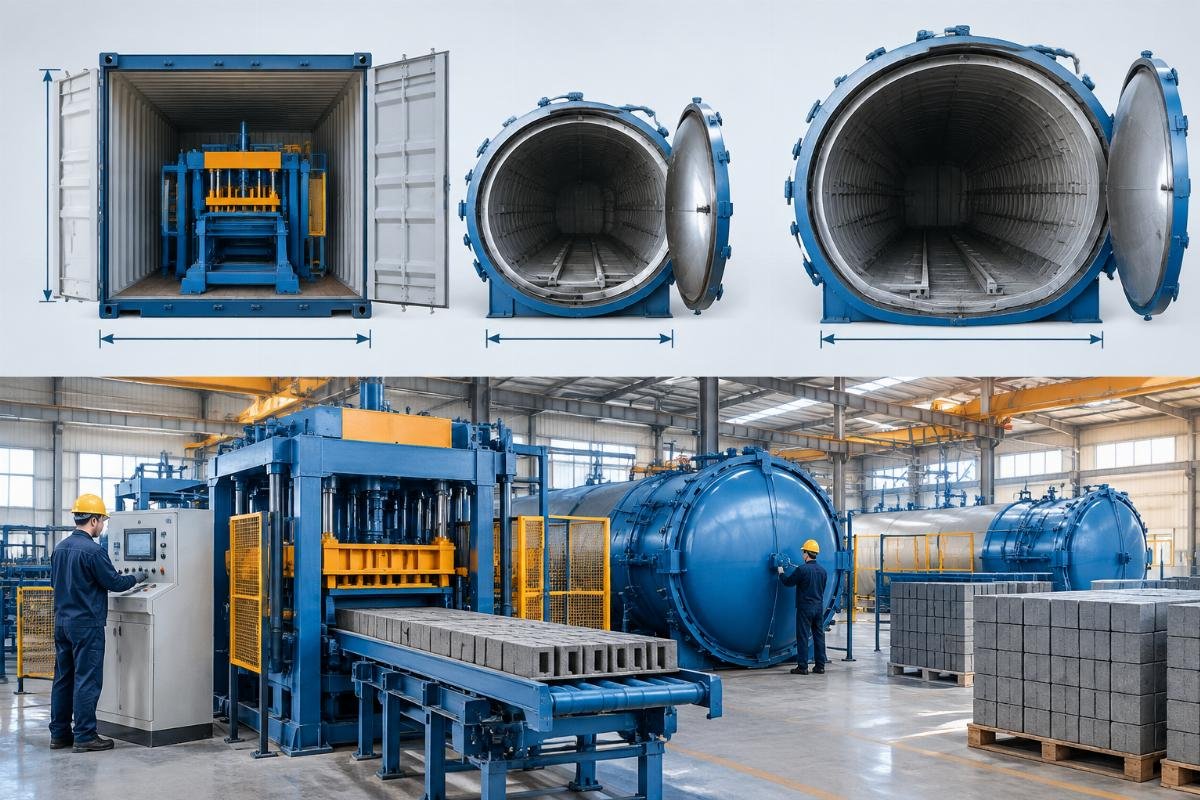
Understanding these limits before you sign the proforma invoice saves you from unexpected port fees and logistical nightmares. Let’s break down exactly what fits, what doesn’t, and how to structure your order for maximum efficiency.
Which AAC Components Fit in a Standard 40HQ Container?
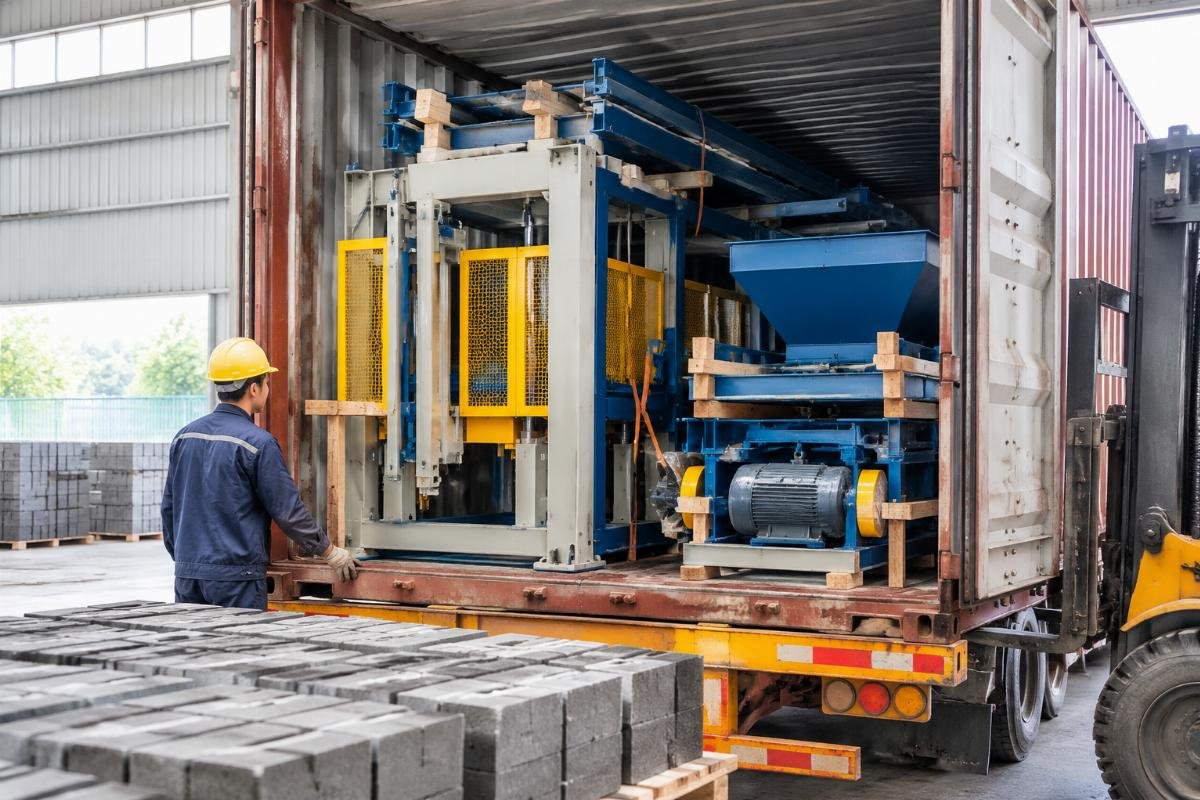
Block machines, mixers, and small auxiliary units are designed to fit within the internal dimensions of a standard 40HQ container, allowing for efficient FCL shipping.
The internal height of a 40HQ container is approximately 2.69 meters, with a width of 2.35 meters. Most AAC production components, such as the block cutting machine, green cake transfer system, and raw material batching plant, are engineered with these constraints in mind. Manufacturers often disassemble larger frames or remove protective covers to maximize space utilization.
For instance, a typical automatic block cutting machine can be split into its base frame, vertical cutting wires, and horizontal cutting beams. These parts stack efficiently. The batching plant, including silos and screw conveyors, can also be nested. The key is volume utilization. If you can achieve a utilization rate above eighty-five percent, you are getting the best value for your freight spend. [NEED_CITE: Industry best practices for break-bulk cargo volume optimization in sea freight]
However, not all "small" items are simple. The mold boxes and side plates for the casting cars are heavy and dense. They consume weight capacity rather than volume. A 40HQ has a payload limit, usually around twenty-six to twenty-eight tons, depending on the shipping line. Overloading with dense steel parts like molds can exceed this limit even if there is empty space left.
| Component | Typical Packaging | Container Fit | Loading Strategy |
|---|---|---|---|
| Block Cutting Machine | Disassembled Frame | Yes (40HQ) | Stack base and beams separately |
| Raw Material Batching Plant | Modular Sections | Yes (40HQ) | Nest silos and conveyors |
| Green Cake Transfer Car | Partially Disassembled | Yes (40HQ) | Remove wheels if necessary |
| Mold Boxes & Side Plates | Stacked Steel | Yes (40HQ) | Monitor weight limit closely |
| Small Diameter Autoclave (<2.5m) | With Rack Removal | Conditional | Requires precise measurement |
A buyer from Southeast Asia once tried to squeeze an extra set of molds into a container that was already weight-heavy. The crane operator at the port refused to lift it, citing safety regulations. We had to offload the molds and ship them via LCL, which ended up costing more than if we had planned the weight distribution correctly from the start.
When Do You Need Flat Rack or Open Top Containers?
Autoclaves with diameters exceeding standard container widths require flat rack or open-top containers, as they cannot fit within the enclosed walls of a standard box.
The autoclave is the heart of the AAC process, but it is also the logistical bottleneck. Standard ISO containers have a rigid internal width. If your autoclave diameter is greater than roughly 2.5 to 3.0 meters, it will not fit inside a standard 40HQ. This is a hard physical limit. [NEED_CITE: Maximum internal width specifications for ISO 1AA and 1AAA containers]
In these cases, you must use a flat rack container. Flat racks have no side walls or roof, allowing for oversized cargo. However, this comes with trade-offs. Freight rates for flat racks are significantly higher than for standard dry containers. Additionally, the cargo must be securely lashed and covered with tarpaulins to protect against sea spray and weather.
Another option is the open-top container, which has a removable roof. This is useful if the autoclave is slightly too tall but still narrow enough to fit between the side walls. However, most large autoclaves are both wide and tall, making flat racks the only viable option.
I recall a project for a client in the Middle East. They opted for a larger diameter autoclave to increase batch capacity. They assumed it would fit in a standard container because the length was manageable. It didn’t. The width was the issue. We had to rebook onto a flat rack. The cost difference was substantial, but it was necessary. Without proper planning, you might face demurrage charges at the port while waiting for the right equipment to become available.
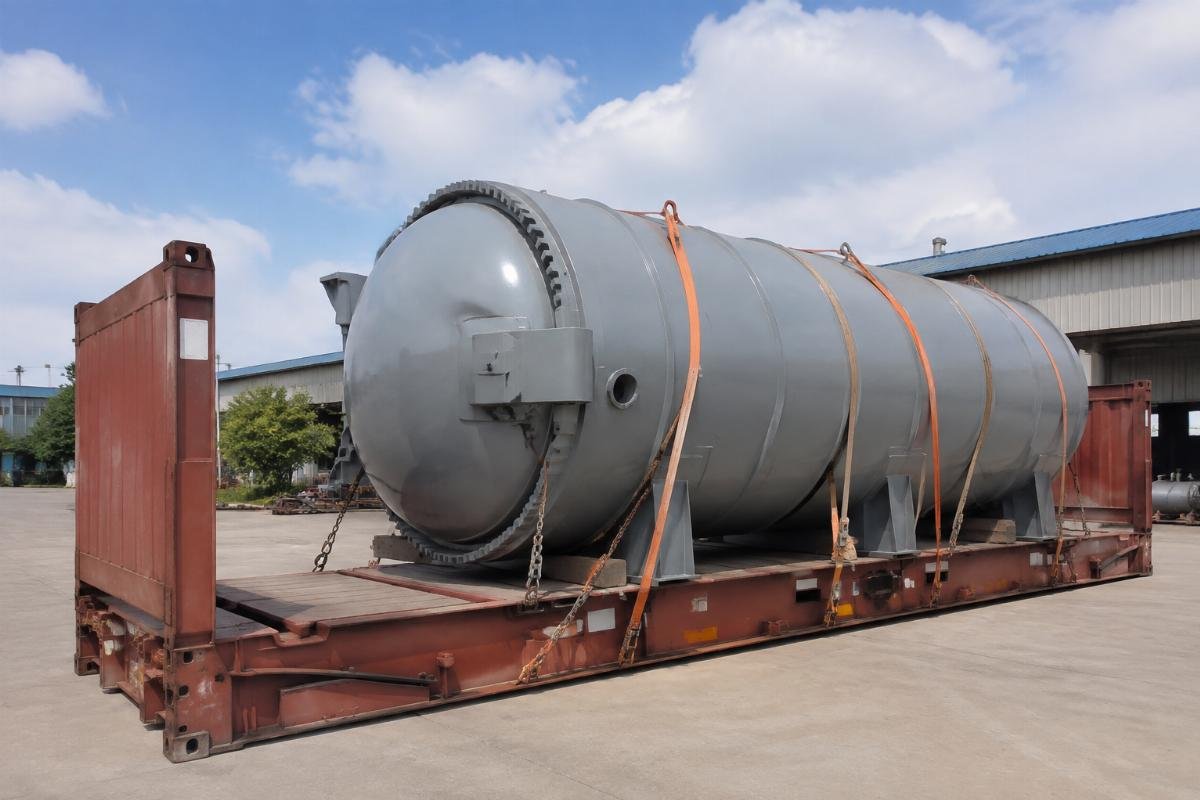
It is crucial to confirm the exact outer dimensions of the autoclave, including any protruding nozzles or flanges, before booking. Even a few centimeters can prevent loading.
What Is the Real MOQ for an AAC Production Line?
The minimum order quantity for a full AAC line is typically one complete set, but individual high-value machines may have lower MOQs, though shipping them separately is often less cost-effective.
Many new investors ask if they can buy just one part of the line, such as the cutter or the mixer, to start small. Technically, yes. Manufacturers often allow single-machine orders. However, the concept of MOQ in heavy machinery is tied to logistics and pricing structures.
When you buy a full line, the manufacturer bundles the price. You get a better rate per unit because the production run is consolidated. If you buy just a cutter, you pay a premium. More importantly, shipping a single machine via LCL (Less than Container Load) is expensive. You pay for the volume you use, plus handling fees at both ends. For heavy steel equipment, LCL rates per cubic meter are often higher than the equivalent share of an FCL (Full Container Load).
[NEED_CITE: Comparative cost analysis of LCL vs FCL shipping for heavy industrial machinery]
A buyer from Latin America wanted to start with just the block machine and add the autoclave later. We advised against it. The shipping cost for the single machine was nearly half the cost of shipping a partial line. By waiting and ordering the core components together, he saved significantly on freight.
At Shiyue, we offer flexible MOQ policies. You can start with the core machines and expand later. But we always provide a turnkey logistics plan to show the true cost of splitting shipments. This transparency helps investors make informed decisions.
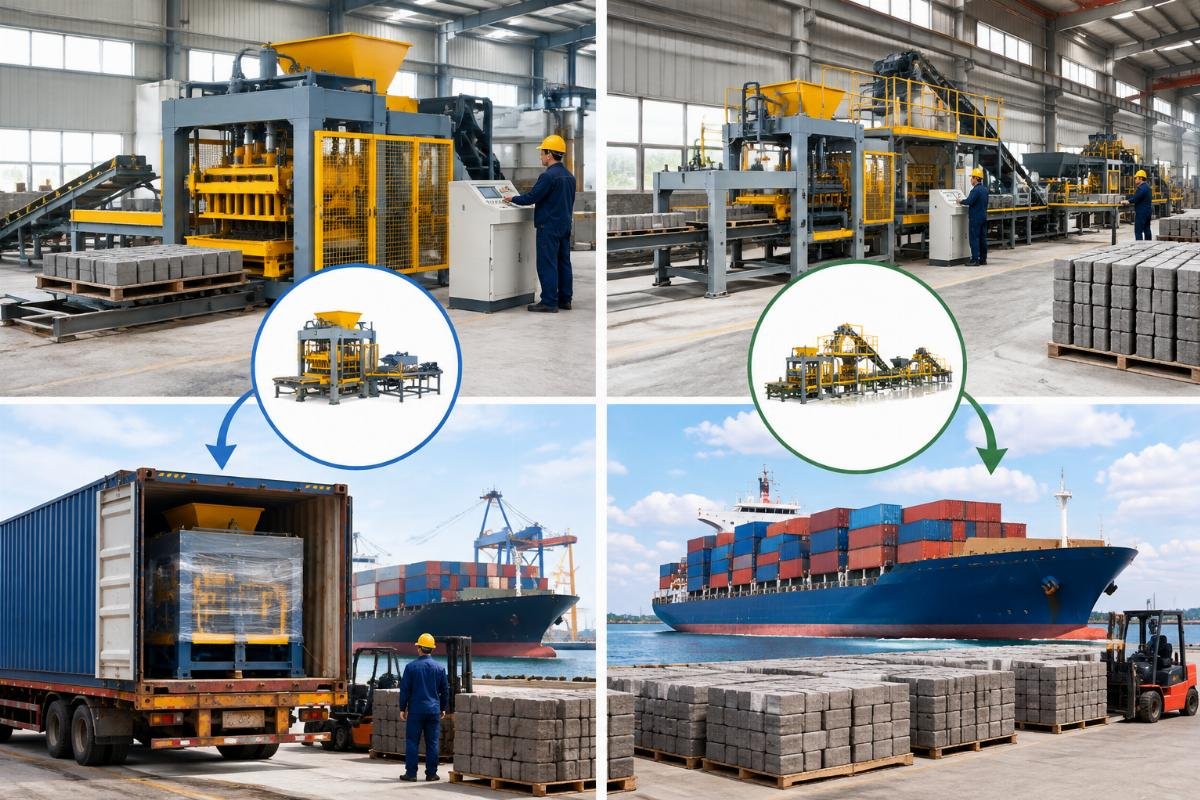
The real MOQ is not just about the number of units; it is about the economic viability of the shipment. A full line ensures that every cubic meter of the container is paid for by productive equipment, not just air or inefficient packing.
How to Optimize Loading to Reduce Freight Costs?
Mixing different types of equipment in one container and maximizing space utilization can significantly reduce the per-unit freight cost of your AAC line.
Optimization is an art. It involves combining bulky, low-density items with dense, heavy items. For example, you can place the heavy mold boxes at the bottom of the container to stabilize the load. Then, fill the voids with lighter components like electrical cabinets, control panels, and spare parts.
One effective strategy is to remove non-essential packaging. Wooden crates add weight and volume. Using steel frames or simple wrapping for robust components can save space. However, ensure that the protection is sufficient to prevent damage during transit. [NEED_CITE: International shipping standards for cargo securing and protection]
Another tip is to utilize the height of the 40HQ container fully. Stack items vertically where possible. For instance, stack the side plates of the molds vertically against the container wall. This frees up floor space for larger items like the transfer car.
I once worked with a client who insisted on keeping all original wooden crates. The container was only seventy percent full. We repacked the items, removing the crates and using custom steel braces. We fit twenty percent more equipment into the same container. The savings on freight covered the cost of the repacking labor several times over.
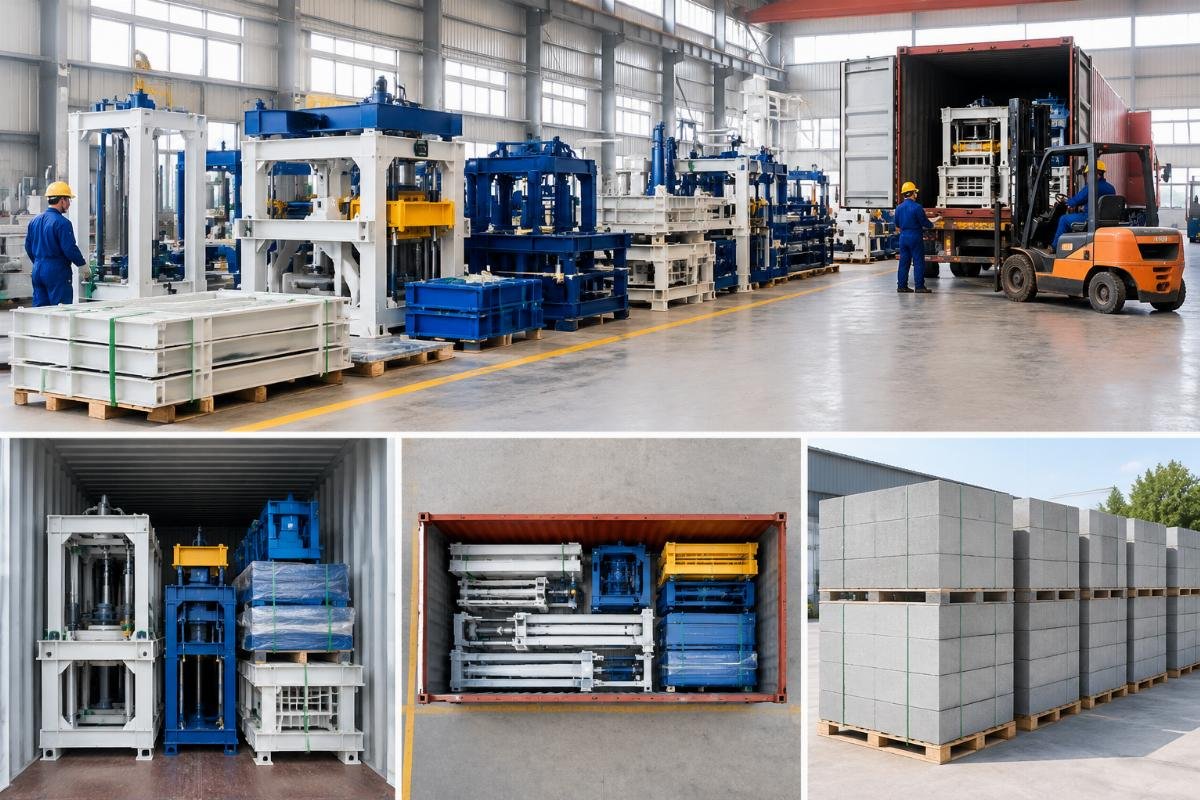
Weight distribution is also critical. Ensure the weight is evenly distributed across the container floor to avoid structural stress during lifting. Heavy items should be placed near the center and bottom. Lighter items go on top and towards the doors.
Conclusion
Proper planning of container loading and MOQ selection is essential for cost-effective AAC line importation.
Understanding the physical limits of standard containers prevents costly last-minute changes. Large autoclaves require special handling, while other components fit well in 40HQ units. Buying a full line often offers better logistics efficiency than purchasing single machines. By optimizing the load and mixing equipment types, you can maximize value and minimize freight costs.

Industry expert sharing insights about concrete machinery, block making technology and turnkey production solutions.
View all posts →
Leave a Reply