

Mobile Block Machine QMY6-25 OEM Customization Options for Sale
Most buyers assume OEM customization means simply changing the mold shape; in reality, it requires precise alignment of vibration energy with local aggregate density.
Successful Mobile Block Machine OEM Customization is not about altering external dimensions alone. It demands a holistic adjustment of vibration frequency, compaction time, and hydraulic pressure to match the specific moisture content and gradation of local raw materials. Without this synchronization, even perfectly machined molds will produce blocks with high crack rates during demolding. The core failure point in most imported mobile machines is the mismatch between standard factory settings and the unique physical properties of regional aggregates, such as red soil or crushed stone dust.
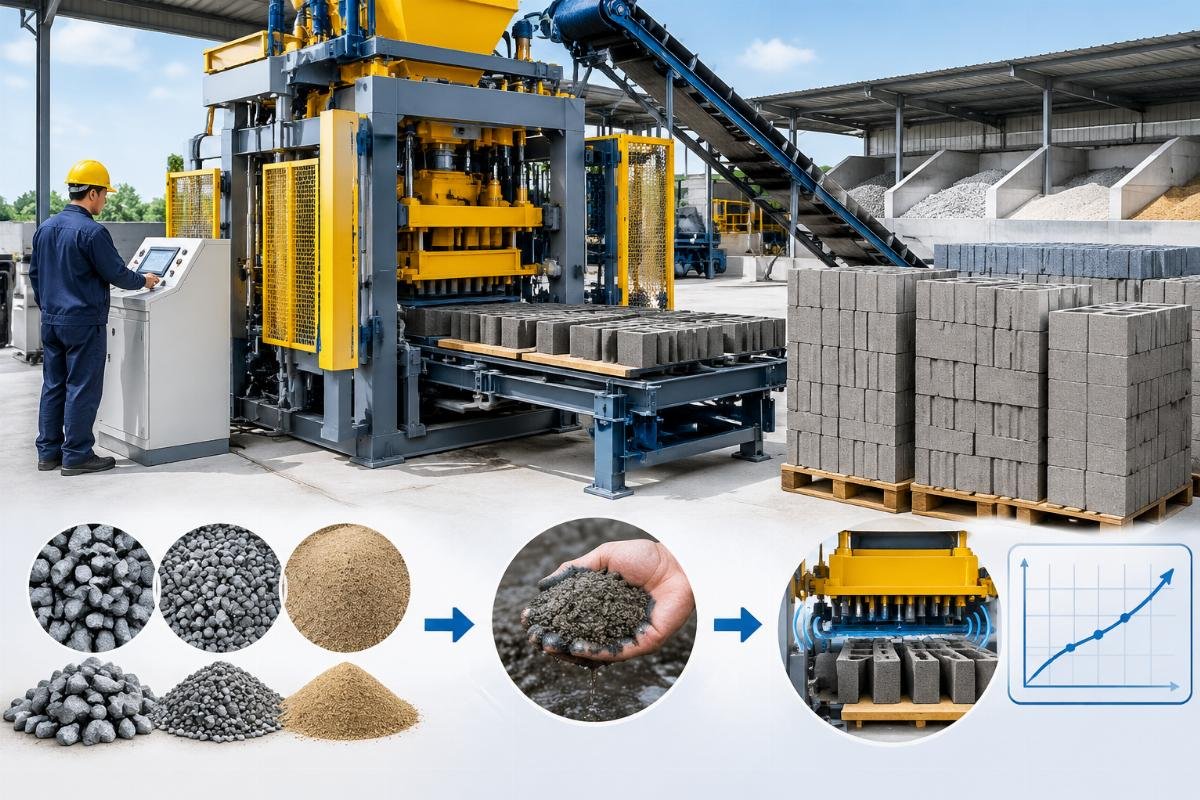
This technical misalignment causes the majority of early operational failures in new plants. When I first started handling orders from West Africa, I learned this lesson through a costly mistake that nearly damaged a long-term partnership. A client ordered a QMY6-25 unit with custom interlocking brick molds, providing exact drawings but no data on their local red soil. We manufactured the molds to tolerance, shipped the machine, and expected smooth operation. Instead, the client reported severe cracking issues immediately upon startup. The problem was not the steel quality or the mold design, but the vibration parameters. The standard frequency was too aggressive for the high-moisture red clay, causing structural shear during ejection. It took three days of onsite tuning to reduce the amplitude and extend the compaction cycle, finally achieving stable production. This experience shifted my entire approach to Mobile Block Machine OEM Customization. Now, the first question I ask is never about the block shape, but about the material composition.
Why Standard Mobile Machines Fail in Local Conditions?
The assumption that a "standard" machine works universally is the most common pitfall for importers. Concrete block production is a dynamic process where machine kinetics must interact predictably with raw material behavior. Standard factory settings are typically calibrated for idealized sand-cement mixes with controlled moisture levels. However, local conditions in emerging markets often involve variable aggregate sources, such as river sand with high silt content or crushed quarry dust with irregular particle shapes.
When the vibration system does not match the aggregate density, two primary failures occur. First, insufficient vibration leads to poor compaction, resulting in blocks that crumble under their own weight after demolding. Second, excessive vibration causes segregation, where heavier aggregates sink and cement paste rises, creating weak layers prone to cracking. [NEED_CITE: correlation between vibration amplitude and aggregate gradation in concrete compaction]
In a project for Southeast Asian paver production, a client integrated a custom color feeder for decorative tiles. The initial setup resulted in uneven color distribution because the hopper design did not account for the flow characteristics of the dry pigment mix. The standard vibration setting caused the pigment to bridge in the hopper rather than flow evenly into the mold box. By redesigning the hopper angle and adjusting the vibration intensity specifically for the lighter pigment material, mix uniformity improved noticeably. This case illustrates that Mobile Block Machine OEM Customization must extend beyond the main mold to include auxiliary systems like feeders and discharge mechanisms.
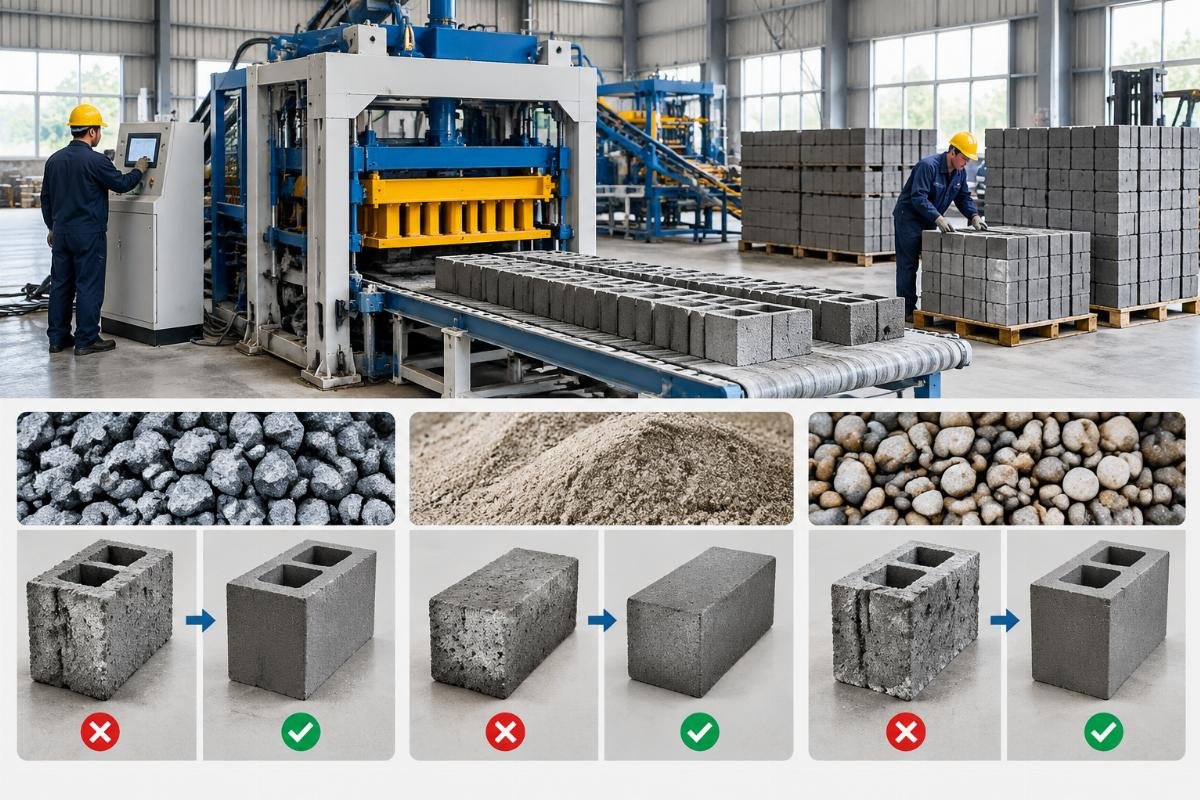
Another critical factor is power stability. Many buyers assume standard hydraulic pressure settings work everywhere. In regions with unstable grid power, voltage fluctuations can cause inconsistent hydraulic pump performance. If the valve settings are not customized to accommodate these variations, the pressing force becomes erratic, leading to dimensional inconsistencies in the final product. Customizing the hydraulic valve response time and adding accumulation tanks can mitigate these issues, ensuring consistent pressure regardless of minor power dips.
Critical OEM Parameter 1: Mold Design & Tolerances
Mold design is the most visible aspect of customization, but it is also the most misunderstood. Buyers often focus solely on the external geometry of the block, neglecting the internal tolerances required for specific production methods. For standard hollow blocks, loose tolerances may be acceptable. However, for interlocking bricks and pavers, tight tolerances are non-negotiable to ensure structural integrity and aesthetic alignment.
Interlocking molds require precise guidance systems to prevent lateral movement during vibration. If the clearance between the mold box and the core pins is too large, the vibration energy will cause the cores to shift, resulting in uneven wall thickness. This weakness becomes a failure point when the block is subjected to load-bearing stress. [NEED_CITE: ISO standards for dimensional tolerances in interlocking concrete blocks]
| Feature | Standard Hollow Block Mold | Interlocking/Paver Mold |
|---|---|---|
| Tolerance Requirement | Basic | Certified High-Precision |
| Core Guidance | Simple Pin | Guided Sleeve System |
| Steel Hardness | Standard | Robust (High Abrasion Resistance) |
| Demolding Angle | Standard | Optimized for Complex Shapes |
In Latin America, a client requested modified discharge height for manual palletizing to reduce operator fatigue. The initial modification lowered the discharge tray, which seemed ergonomic. However, it slowed the cycle time significantly because the machine had to wait for the operator to clear the pallet. The output dropped noticeably. By redesigning the station with an extended conveyor assist and adjusting the mold release timing, the workflow became smoother without sacrificing speed. This highlights that mold and discharge customization must consider the entire human-machine interface, not just the mechanical fit.
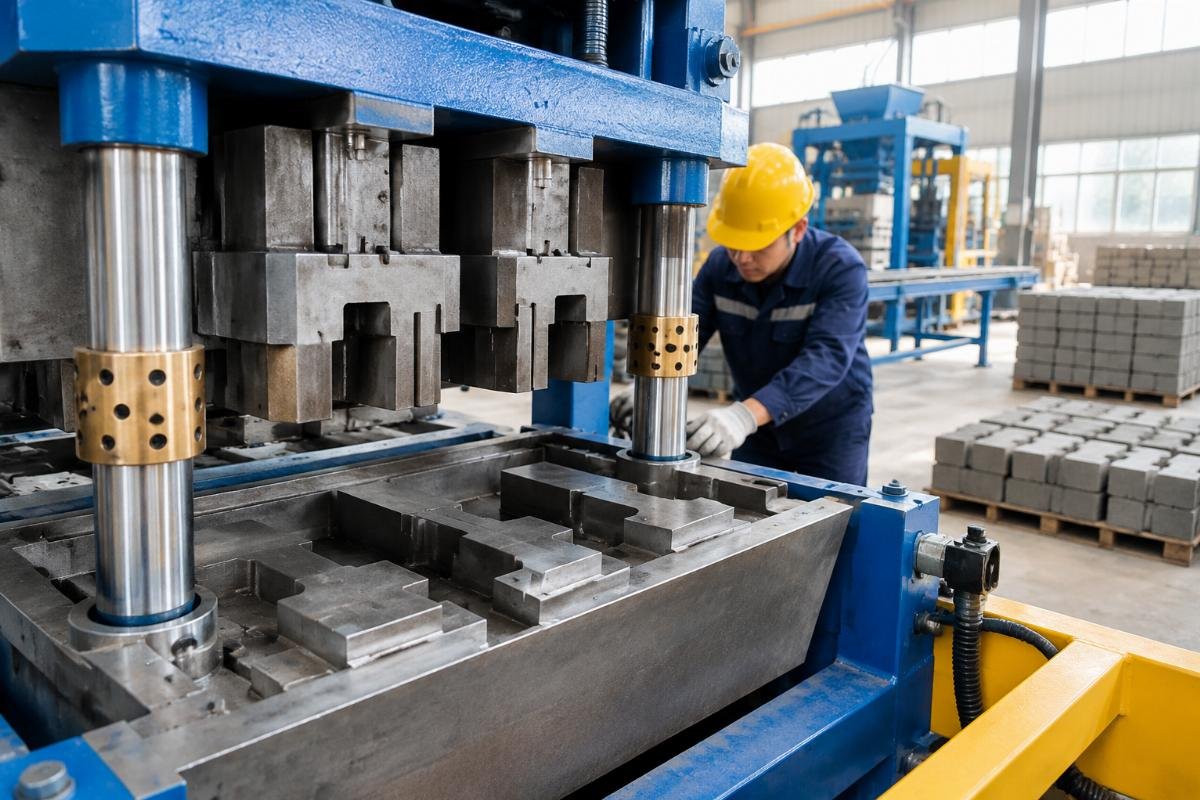
When specifying mold steel, it is crucial to consider the abrasiveness of local sands. Some regions use sharp, quartz-rich sand that wears down standard mold steel rapidly. In such cases, upgrading to higher-hardness steel or applying specialized coatings can extend the mold life meaningfully. This is a key component of Mobile Block Machine OEM Customization that prevents frequent downtime for mold repairs.
Critical OEM Parameter 2: Vibration System Calibration
Vibration is the heart of the mobile block machine. It consolidates the mix, removes air voids, and ensures surface finish. However, there is no single "best" vibration setting. The optimal frequency and amplitude depend entirely on the maximum aggregate size and moisture content.
Large aggregates require lower frequency and higher amplitude to move particles into place. Fine sands and dust require higher frequency and lower amplitude to achieve dense packing without segregation. [NEED_CITE: principles of granular convection in vibrated concrete mixes]
A common error is using the same vibration settings for both solid blocks and hollow blocks. Solid blocks require more energy to compact the entire volume, while hollow blocks need careful control to prevent damaging the thin webs. Customizing the vibration motor configuration allows operators to switch between these modes efficiently. For the QMY series, this often involves selecting specific eccentric weights and motor powers that match the intended product range.
In a recent consultation, a buyer provided soil lab reports showing high clay content. Based on this data, we recommended a vibration setup with adjustable frequency controls and a longer compaction timer. This allowed the machine to apply sustained, gentle vibration that consolidated the clay without causing shear cracks. Without this customization, the standard high-intensity burst would have destroyed the green block structure.
Hydraulic pressure also plays a role in vibration effectiveness. The hold-down clamps must secure the mold firmly against the pallet during vibration. If the clamping force is insufficient, the mold will lift slightly, causing "blowouts" at the bottom of the block. Customizing the hydraulic circuit to ensure rapid and strong clamping action is essential for high-quality output. This is often overlooked in standard packages but is vital for Mobile Block Machine OEM Customization in challenging material conditions.
How to Specify Your OEM Requirements Correctly?
To avoid costly mistakes, buyers must provide detailed technical data before placing an order. Relying solely on drawings is insufficient. A comprehensive specification package should include material analysis, target output metrics, and site conditions.
First, conduct a raw material analysis. Sieve analysis determines the particle size distribution, while moisture tests identify the water content range. These data points allow engineers to calculate the required vibration energy and compaction time. [NEED_CITE: standard protocols for concrete aggregate testing]
Second, define the target output and product mix. Will the machine produce mostly hollow blocks, or a significant portion of interlocking pavers? This determines the mold changeover frequency and the need for quick-release systems. If decorative pavers are involved, specify the color feeding requirements and hopper capacity.
Third, describe the site conditions. Is the power supply stable? What is the ambient temperature range? Will the machine operate indoors or outdoors? These factors influence the choice of electrical components, hydraulic oil viscosity, and protective coatings.
| Specification Item | Required Data | Purpose |
|---|---|---|
| Raw Material | Sieve Analysis, Moisture Content | Calibrate Vibration & Mix Design |
| Product Mix | Block Types, Daily Volume | Determine Mold Configuration |
| Site Conditions | Power Stability, Climate | Select Electrical & Hydraulic Specs |
| Labor Skill | Operator Experience Level | Design Control Interface Complexity |
By providing this information, buyers enable manufacturers to tailor the machine precisely to their needs. This proactive approach reduces the risk of onsite failures and accelerates the commissioning process. It transforms Mobile Block Machine OEM Customization from a guessing game into a precise engineering exercise.

Engaging in pre-sales technical consultation is highly beneficial. Engineers can review local material samples and recommend specific configurations. For instance, reviewing a sample of local aggregate might reveal high abrasiveness, prompting an upgrade in mold steel hardness. Or, analyzing the moisture content might suggest the need for a water dosing system integration. These small adjustments, driven by data, make a substantial difference in long-term operational success.
Conclusion
Effective customization aligns machine dynamics with local material properties.
Standard mobile block machines often fail because they are not tuned to the specific aggregates and conditions of the local market. Successful Mobile Block Machine OEM Customization requires a deep understanding of vibration physics, mold tolerances, and hydraulic systems. By providing detailed material data and site specifications, buyers can ensure their equipment is optimized for immediate and sustained productivity. This technical precision prevents early failures and maximizes the return on investment for new plant operators.

Industry expert sharing insights about concrete machinery, block making technology and turnkey production solutions.
View all posts →
Leave a Reply