

China Concrete Block Machine Manufacturer 2026: QT Series & Turnkey Lines
The era of "one-size-fits-all" exports is over.
In 2026, importing a China concrete block machine requires more than just comparing price tags; it demands strict verification of electrical compatibility, regional dimensional standards, and PLC automation levels to ensure operational viability from day one.
I still remember the smell of burnt insulation mixed with humid tropical air in a warehouse outside São Paulo. It was a few years back, before I fully understood the depth of regional infrastructure quirks. We had shipped what we thought was a standard QT6-15 line, configured for the typical Chinese industrial grid. The client, a passionate entrepreneur launching an interlocking paver business, had connected it immediately upon arrival. Within hours, the main vibration motor failed. The local grid was 220V/60Hz, while our default configuration was 380V/50Hz. The mismatch didn’t just stop production; it caused weeks of downtime while local technicians attempted to rewind motors that were never designed for that frequency. That incident changed how I approach every single inquiry. It wasn’t about the machine’s build quality, which was solid, but about the invisible specifications that define whether a plant runs or rusts. [NEED_CITE: common electrical compatibility issues in international machinery exports]
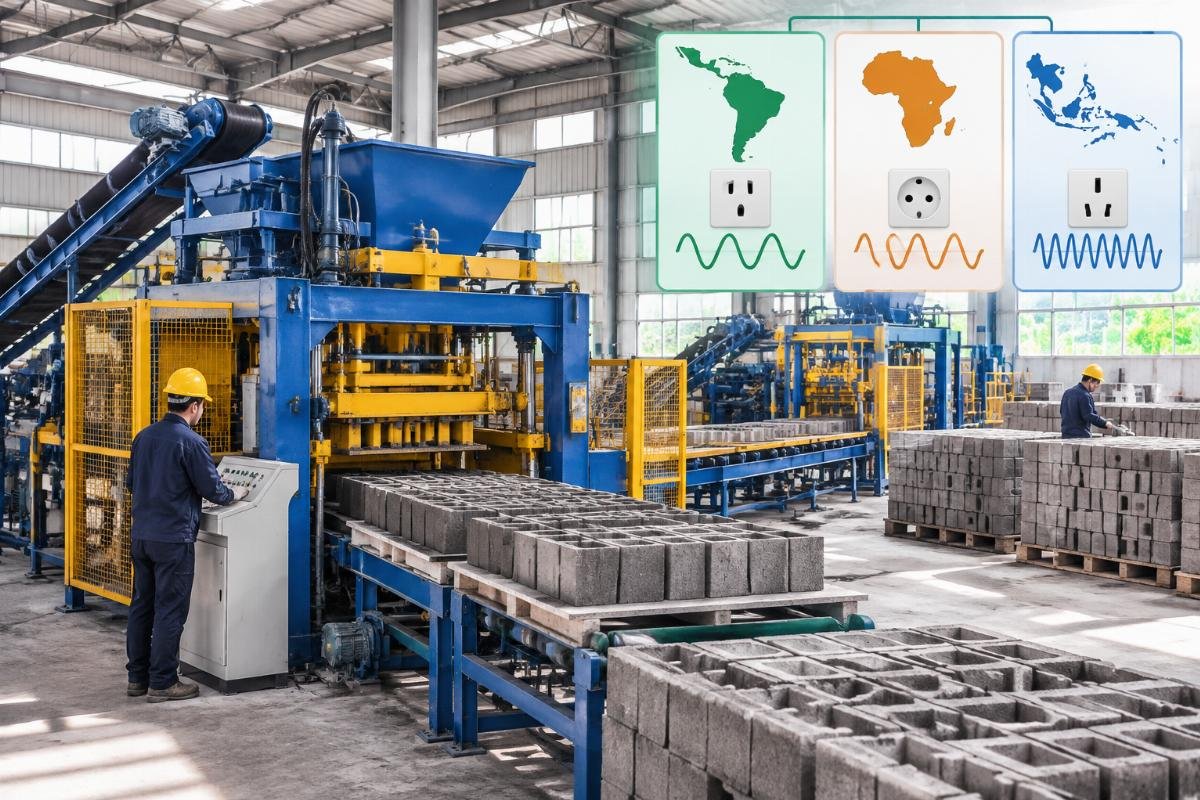
This lesson underscores a critical shift in the global market. Buyers are no longer just looking for hardware; they are seeking technical partnership. The following insights detail how regional standards and automation trends are reshaping the landscape for anyone considering a China concrete block machine manufacturer in 2026.
Why Is "Factory-Direct" No Longer Enough in 2026?
Price transparency has leveled the playing field, making technical adaptation and after-sales support the primary differentiators for serious investors.
Ten years ago, the primary question from distributors was always about the bottom-line cost. Today, the conversation starts with reliability and compatibility. The market is saturated with suppliers offering similar-looking QT series machines, but the internal components—specifically the PLC systems and hydraulic valves—vary significantly in durability and serviceability. A lower upfront cost often means higher total cost of ownership due to frequent breakdowns and scarce spare parts.
Consider the case of a government housing project in East Africa. The tender required not just a high-output machine, but verifiable certification and a guarantee of minimal downtime. The contractor initially leaned towards a cheaper, non-certified option. However, during the bidding phase, they realized that without CE certification and proper documentation, they would be disqualified from future public tenders. They switched to a supplier who provided full SGS testing reports and a detailed maintenance protocol. While the initial investment was higher, the machine’s consistent performance allowed them to meet tight construction deadlines, securing their reputation for subsequent projects. [NEED_CITE: importance of CE certification for public infrastructure tenders]
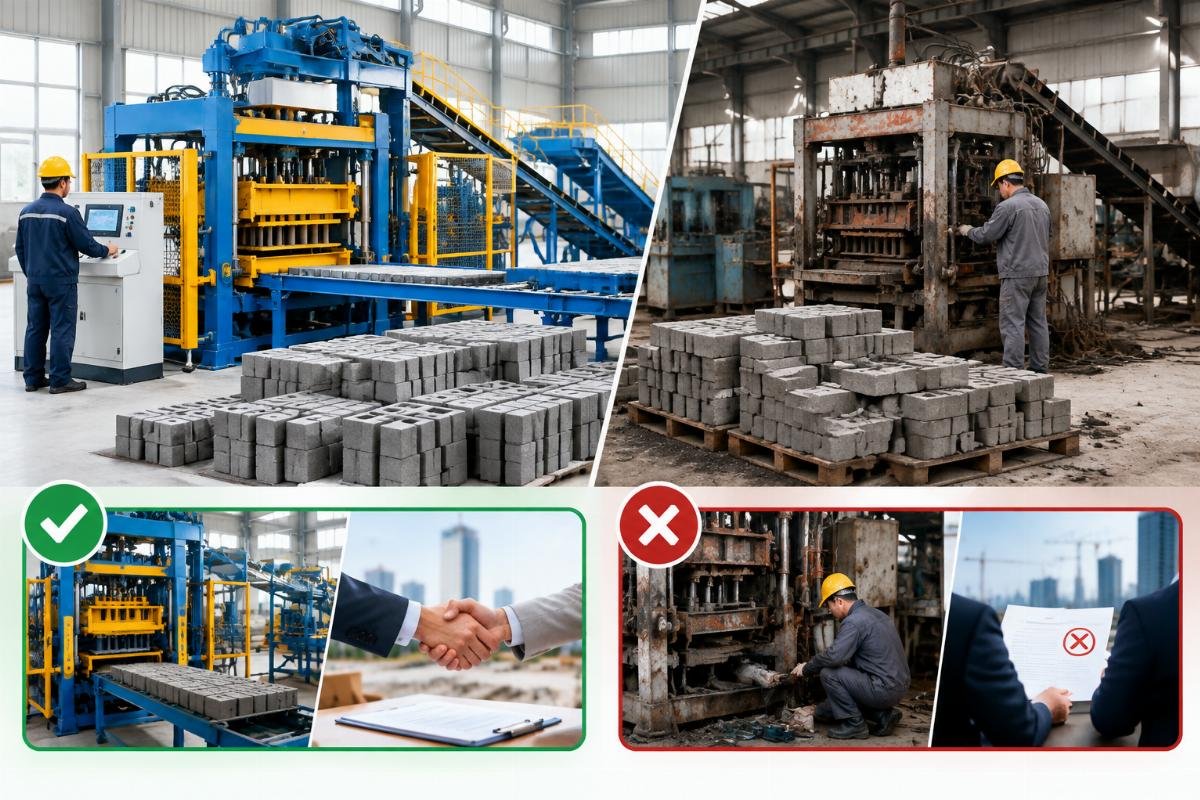
For a China concrete block machine manufacturer, this means that "factory-direct" must imply direct technical accountability. It is not enough to simply ship a container; the manufacturer must understand the end-user’s operational environment. This includes verifying the availability of local technical support for PLC troubleshooting and ensuring that hydraulic seals are compatible with local temperature extremes. The focus has shifted from transactional sales to relational engineering, where the manufacturer acts as a consultant rather than just a vendor.
How Are Regional Standards Shaping Machine Design?
Customization for local voltage, frequency, and brick dimensions is now a mandatory pre-production requirement, not an optional extra.
Every region has its own "industrial dialect." In Latin America, the mix of 220V and 380V systems, often at 60Hz, requires careful motor selection. In Southeast Asia, the demand for decorative interlocking pavers necessitates molds with quick-change systems and color feeder integration. In Africa, the push for affordable housing drives the need for robust, high-turnover machines that can handle continuous operation with minimal skilled labor.
I recall working with a distributor in Mexico who needed a specific pallet size that differed from the standard Chinese dimension. If we had ignored this detail, the entire curing and stacking system would have been incompatible. By confirming the pallet specs in the proforma invoice before production started, we avoided a costly logistical nightmare. This level of detail is now standard practice. It involves checking the local electrical grid stability, understanding the preferred brick formats (such as hollow blocks vs. solid pavers), and even accounting for the humidity levels that affect concrete curing times. [NEED_CITE: regional variations in construction material standards]
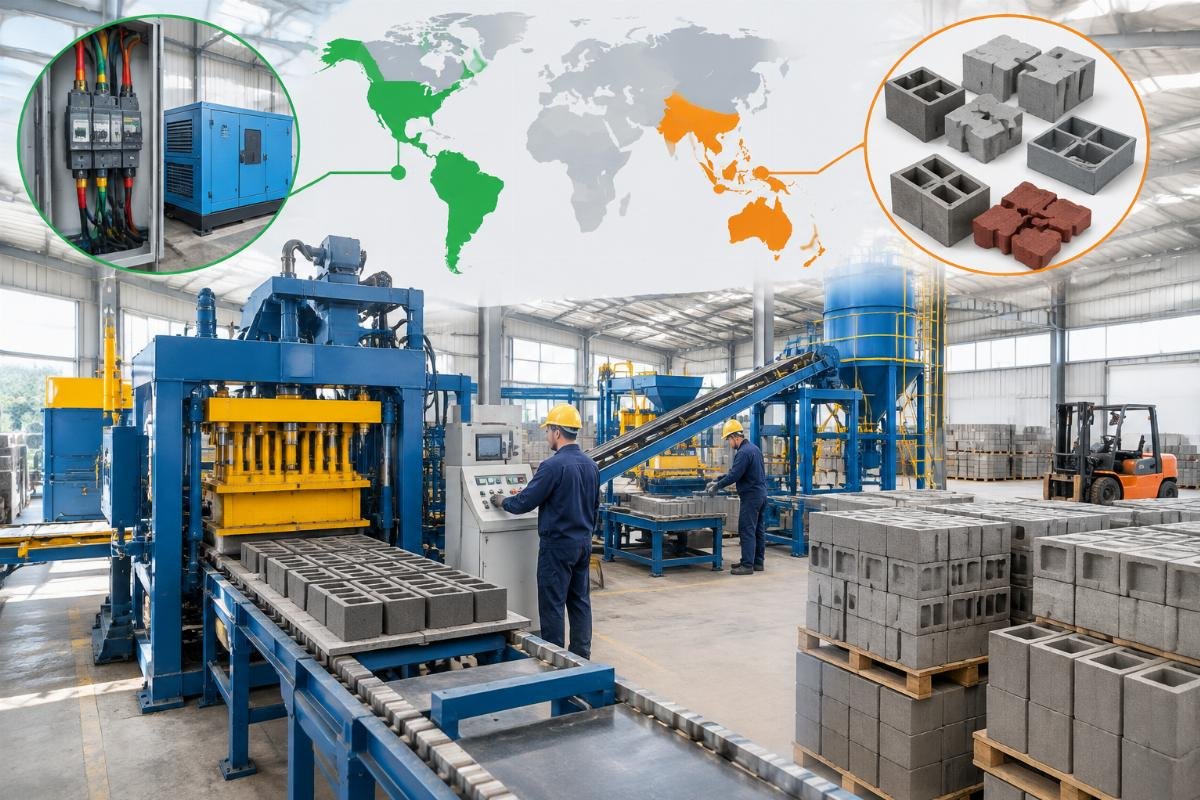
When engaging with a China concrete block machine manufacturer, buyers should expect a rigorous confirmation process. This includes a detailed checklist covering voltage, frequency, phase, mold cavity design, and pallet dimensions. Any supplier who skips this step is likely operating on outdated assumptions. The goal is to ensure that when the machine arrives, it fits seamlessly into the existing or planned production line, requiring only standard commissioning rather than extensive modification.
What Drives the Shift to PLC Automation in Emerging Markets?
Labor scarcity and the need for consistent product quality are pushing even small-scale plants toward automated QT series lines.
The traditional view was that fully automatic lines were too complex and expensive for emerging markets. However, the reality on the ground has changed. Skilled labor is becoming harder to find and retain, especially in remote construction sites. Manual or semi-automatic machines rely heavily on operator skill, leading to inconsistent block density and dimensions. PLC-automated systems, such as the QT6-15 or QT10-15 series, remove this variability. They ensure that every block is pressed with the same force and cured under the same conditions, resulting in a uniform product that meets strict building codes.
A startup investor in Vietnam initially considered a manual egg-layer machine to save costs. After analyzing the labor turnover rate and the rejection rate of manually produced blocks, they opted for a semi-automatic QT4-15 line with a basic PLC controller. The result was a noticeable drop in material waste and a significant increase in daily output. The machine’s ability to run consistently without constant supervision allowed the owner to focus on sales and distribution rather than micromanaging production. [NEED_CITE: impact of automation on labor efficiency in manufacturing]
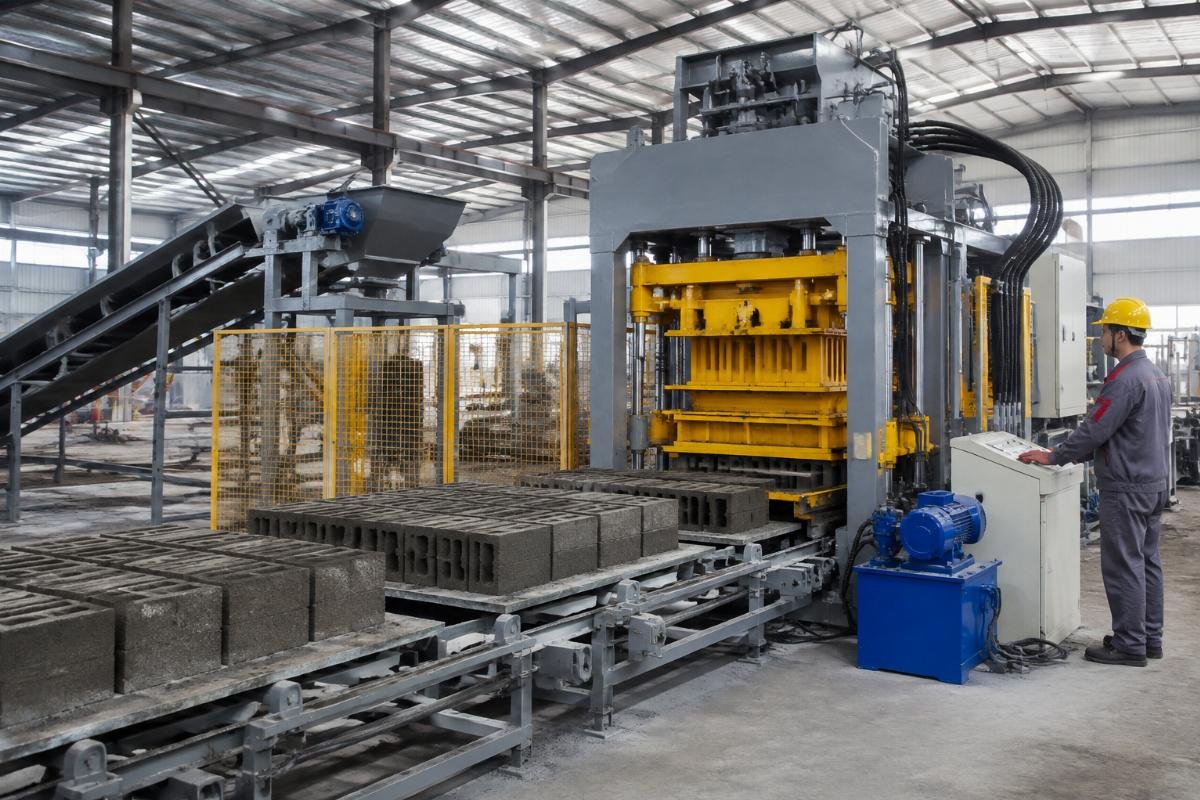
This trend is evident across multiple regions. In the Middle East, large-scale precast plants are upgrading to fully automatic QT12-15 lines to meet the demands of mega-projects. In Africa, small entrepreneurs are starting with semi-auto models that offer a balance between cost and efficiency. The key takeaway is that automation is no longer a luxury; it is a necessity for competitiveness. A China concrete block machine manufacturer must therefore provide not just the hardware, but also the training and remote support needed to maintain these sophisticated systems.
Which Certification Matters for Government Tenders?
CE and SGS documentation are non-negotiable for public infrastructure projects, serving as proof of safety and quality compliance.
For contractors bidding on government-funded housing or road paving projects, technical specifications are strictly enforced. Machines without proper certification are often disqualified during the preliminary review. CE certification indicates that the equipment meets European health, safety, and environmental protection standards, which are widely recognized globally. SGS testing provides third-party verification of the machine’s performance claims, such as output capacity and power consumption.
I once assisted a client in Nigeria who was struggling to win a municipal contract. Their previous supplier had provided self-declared quality certificates, which were rejected by the tender committee. By switching to a manufacturer who provided valid CE certificates and SGS test reports, they were able to meet the compliance requirements. The documentation also included detailed maintenance manuals and spare parts lists, which further demonstrated their readiness for long-term operation. [NEED_CITE: role of international certifications in public procurement]
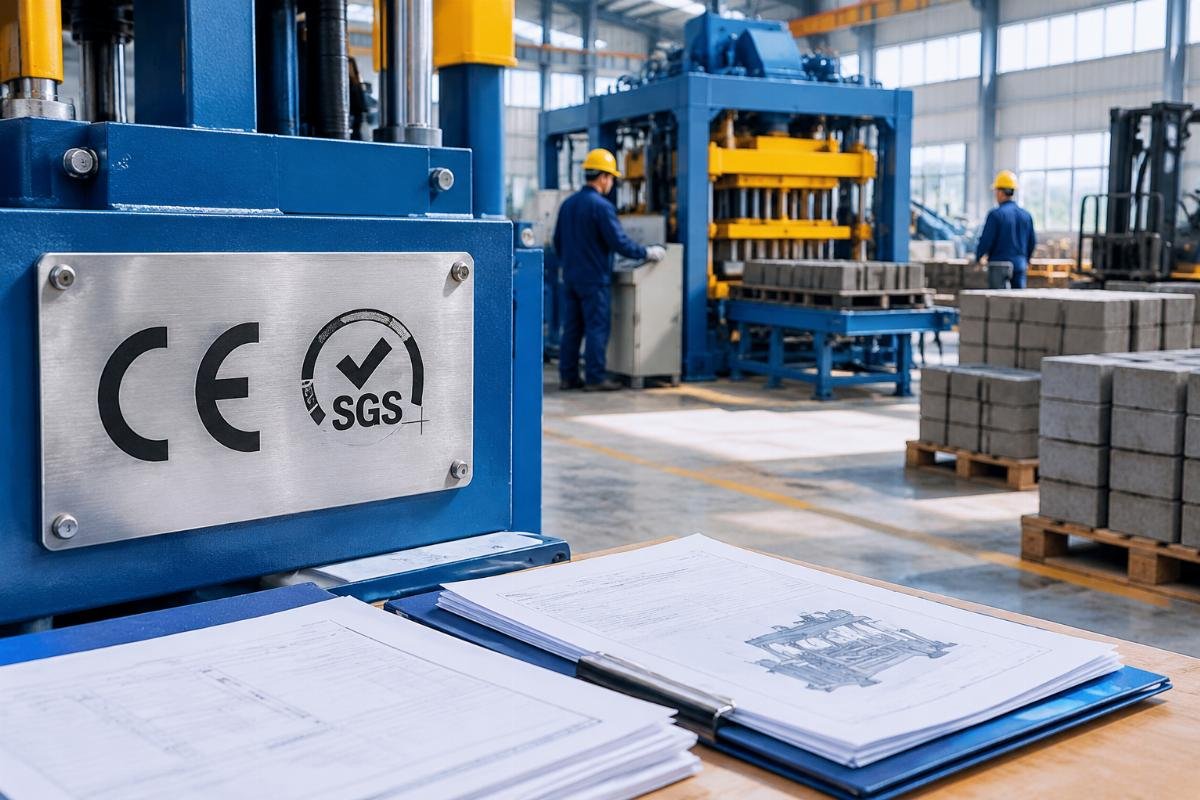
It is crucial for buyers to verify the authenticity of these certificates. A reputable China concrete block machine manufacturer will have no issue providing original documents and allowing third-party inspections. This transparency builds trust and ensures that the equipment is suitable for high-stakes projects. Without these credentials, even the most advanced machine may be unusable for formal contracts, limiting its market potential to informal sectors.
Conclusion
Success in 2026 depends on technical precision, not just low prices.
The market for concrete block machinery has matured. Buyers now prioritize adaptive localization, PLC automation, and verified certification over simple cost savings. By focusing on these critical factors, investors can avoid common pitfalls and ensure a smooth, profitable operation. Choosing the right China concrete block machine manufacturer means selecting a partner who understands these nuances and delivers solutions tailored to your specific regional needs.

Industry expert sharing insights about concrete machinery, block making technology and turnkey production solutions.
View all posts →
Leave a Reply