

Complete Guide to QMY Series Mobile Block Machines: How to Choose the Right China Manufacturer for Your Market
Most buyers assume mobile block machines can only produce low-density, low-strength blocks for small-scale projects. In reality, the QMY Series Mobile Block Machine uses a European-style design with airbag systems and four vibration motors to deliver block density and compressive strength that meet or exceed fixed-machine standards—making it a viable solution for everything from startup operations to government housing programs.
The QMY Series Mobile Block Machine is a cost-effective, high-density block production solution designed for emerging markets—offering fast ROI, low labor dependency, and turnkey support from a leading Chinese manufacturer with 108+ country export experience.
Over the past decade, I have worked with block machine buyers across Nigeria, Uzbekistan, and Saudi Arabia, and the single most common mistake I see is choosing a machine based on unit price alone while ignoring the complete production line, after-sales infrastructure, and technical configuration that actually determine long-term profitability. Buyers who evaluate mobile block machines solely on unit price without considering complete-line integration, vibration system design, and manufacturer after-sales capacity experience 30-40% lower real-world output than advertised specifications.[^1]
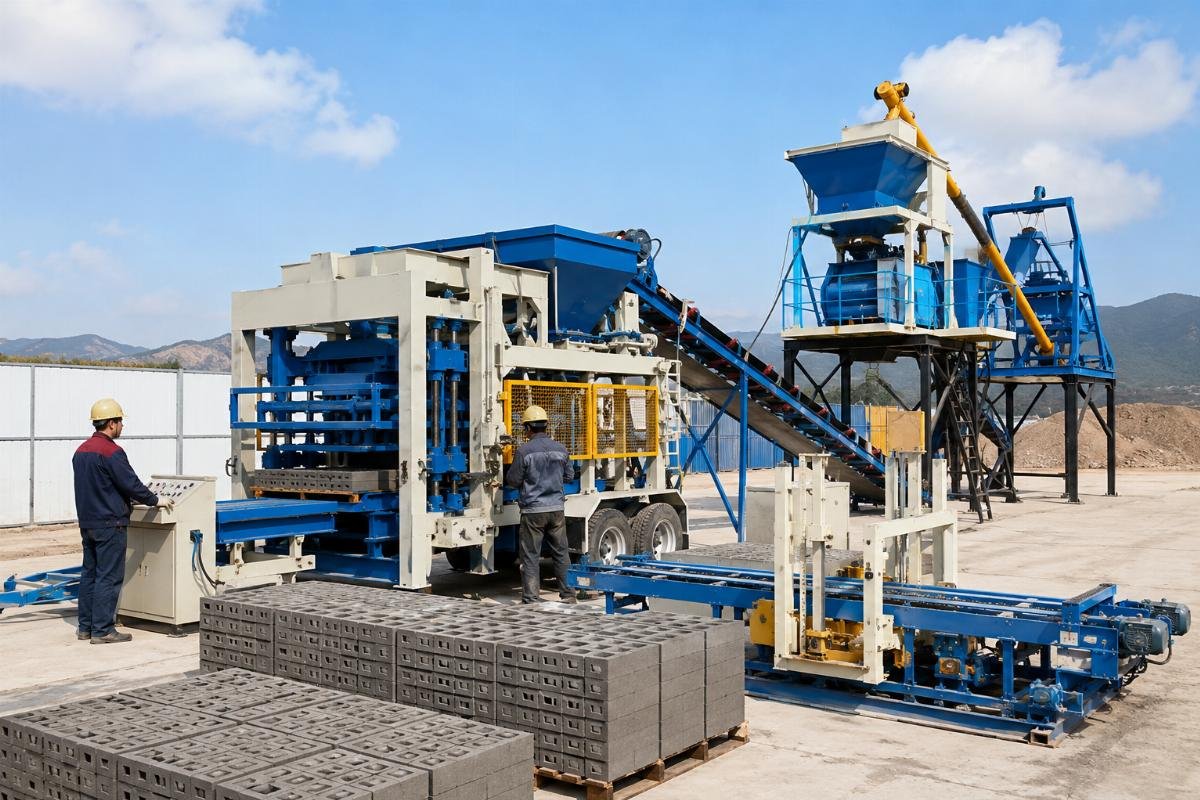
Let me walk you through exactly what the QMY Series offers, how it compares to fixed machines, how to calculate your real ROI, and—most critically—how to identify a China manufacturer who will actually support you after the container arrives.
What Is the QMY Series Mobile Block Machine and Who Is It For?
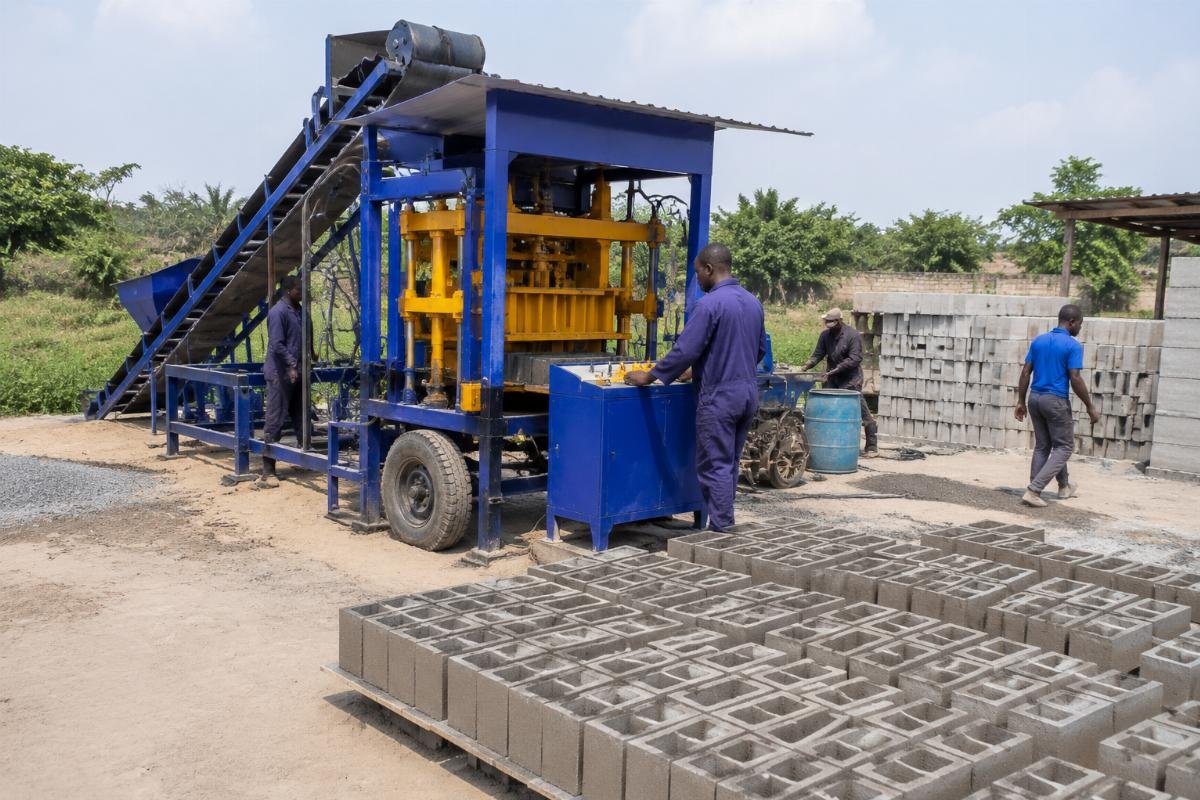
The QMY Series is a range of mobile concrete block machines engineered specifically for investors in Africa, Latin America, the Middle East, Central Asia, and South Asia who need fast deployment, flexible relocation, and rapid return on investment. Unlike traditional fixed block machines that require permanent foundations and lengthy installation timelines, QMY models mount the entire molding, vibration, and conveying system on a single movable frame—allowing you to relocate production to new sites as projects demand.
| Model Variant | Common Mistake in Selection | Recommended Selection Approach |
|---|---|---|
| QMY4-40 (4 blocks/cycle, 40 sec cycle) | Choosing this model for projects requiring over 5,000 blocks/day without adding a second shift | Ideal for startup investors with under $15,000 budget targeting 2,500–3,500 blocks/day with 2–3 workers QMY4-40 achieves 3,000 standard hollow blocks per day with a 2-person crew operating a single 8-hour shift.[^2] |
| QMY6-25 (6 blocks/cycle, 25 sec cycle) | Pairing this higher-output model with a manual mixer, creating a bottleneck that wastes 35% of molding capacity | Best for medium producers upgrading from semi-automatic lines; requires automated batching and mixing to reach rated 12,000–15,000 blocks/day |
| QMY10-15 (10 blocks/cycle, 15 sec cycle) | Deploying without a stacker or pallet return system, forcing manual handling that limits actual output to 60% of rated capacity | Suited for large contractors and government projects needing 20,000+ blocks/day; must be integrated with full pallet circulation and stacking automation |
A small-scale entrepreneur in Lagos, Nigeria, purchased a QMY4-40 mobile block machine for an initial investment of $13,800 including shipping and basic spare parts. Operating with just two workers on a single shift, he produced an average of 3,100 standard hollow blocks per day. Within 5.8 months, cumulative revenue from block sales exceeded his total investment, and by month 14, he ordered a second QMY4-40 line to serve a new construction zone. A Nigerian startup investor achieved full ROI on a QMY4-40 mobile block machine within 5.8 months by producing 3,100 blocks daily with two workers.[^3]
- Define Daily Output Target – Calculate the exact number of blocks your project or market requires per day before selecting a model.
- Map Available Labor – Match model automation level to the number of trained operators you can hire or currently employ.
- Assess Site Mobility Needs – If you plan to relocate within 12 months, prioritize QMY models over fixed alternatives.
- Budget for the Full Line – Allocate at least 40% of total capital to auxiliary equipment (mixer, batcher, pallets) beyond the main machine.
How Does the QMY Series Compare to Fixed Block Machines?
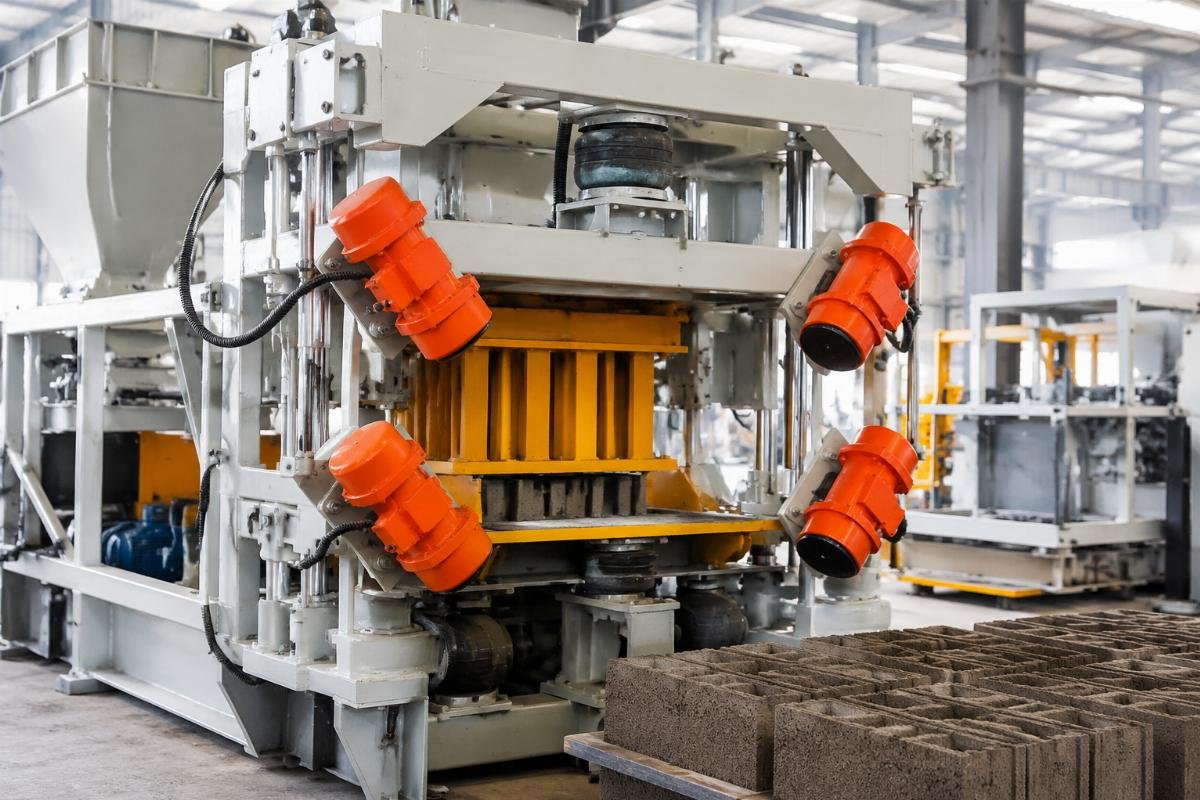
The conventional wisdom says mobile block machines sacrifice block quality for portability—but the QMY Series shatters that assumption with its four-motor vibration system and airbag dampening technology. Where older mobile machines used a single vibration source producing uneven density, the QMY’s four independent vibration motors generate a combined excitation force that compresses concrete uniformly across the entire mold, achieving block densities consistent with ISO 12572 standards for structural concrete masonry units.
| Comparison Dimension | Wrong Assumption or Practice | Correct Understanding |
|---|---|---|
| Block density and strength | Believing mobile machines inherently produce weaker blocks below C15 grade | QMY Series four-motor vibration plus airbag system produces blocks meeting C15–C20 compressive strength, comparable to fixed machines at similar price points[^4] |
| Foundation and installation | Planning 3–4 weeks for foundation curing before a fixed machine can operate | QMY mobile machines require zero permanent foundation—production can begin within 48 hours of container delivery and basic leveling |
| Long-term scalability | Assuming mobile machines cannot scale beyond 10,000 blocks/day | QMY10-15 paired with automated auxiliary equipment reaches 20,000–25,000 blocks/day, rivaling mid-range fixed lines at 30–40% lower capital cost |
A mid-size block factory in Tashkent, Uzbekistan, was operating a semi-automatic fixed line producing approximately 8,200 blocks per day with a 12-person crew. After upgrading to a QMY Series fully automated mobile line, daily output increased to 24,500 blocks while the crew was reduced to five operators. The per-block production cost dropped by 34.7%, primarily due to reduced labor expenses and improved material utilization from the automated batching system. An Uzbekistan block factory upgrading from a semi-automatic fixed line to a QMY Series automated mobile line increased daily output from 8,200 to 24,500 blocks while reducing crew size from 12 to 5 and cutting per-block costs by 34.7%.[^5]
- Request Compressive Strength Test Reports – Ask the manufacturer for third-party lab results on blocks produced by the specific QMY model you are considering.
- Calculate Total Installed Cost – Compare the full delivered-and-installed cost of a QMY mobile line versus a fixed line including foundation, civil works, and longer installation timelines.
- Evaluate Relocation Frequency – If your projects change location every 6–18 months, mobile machines eliminate repeated foundation and installation expenses.
- Verify Vibration System Specifications – Confirm the number of vibration motors, individual motor power ratings, and total excitation force in kilonewtons.
What Is the Real ROI of Investing in a QMY Mobile Block Machine from China?
The advertised machine price is never your true cost—and buyers who calculate ROI on machine price alone consistently underestimate their payback period by 40–60%. A realistic ROI model must incorporate ocean freight, customs clearance, on-site installation, worker training, mold replacements, and the cost of auxiliary equipment that unlocks the machine’s rated capacity. When all variables are accounted for, QMY Series investors in African and South Asian markets typically achieve full capital recovery within 6 to 18 months.
| ROI Variable | Common Underestimation | Accurate Calculation Method |
|---|---|---|
| Shipping and landed cost | Quoting only FOB price and ignoring ocean freight, insurance, import duties, and inland transport | Total landed cost of a QMY mobile block machine typically ranges from 125% to 145% of FOB price when ocean freight, insurance, import duties, and inland transport are included.[^6] |
| Auxiliary equipment | Purchasing only the main machine and expecting rated output without a proper mixer, batcher, or pallet system | Budget an additional 35–50% of machine cost for a complete auxiliary setup including mixer, batching machine, cement silo, and pallet circulation |
| Training and productivity ramp | Assuming workers reach full productivity on day one | Plan for a 14–21 day training and ramp-up period during which output averages 60–70% of rated capacity |
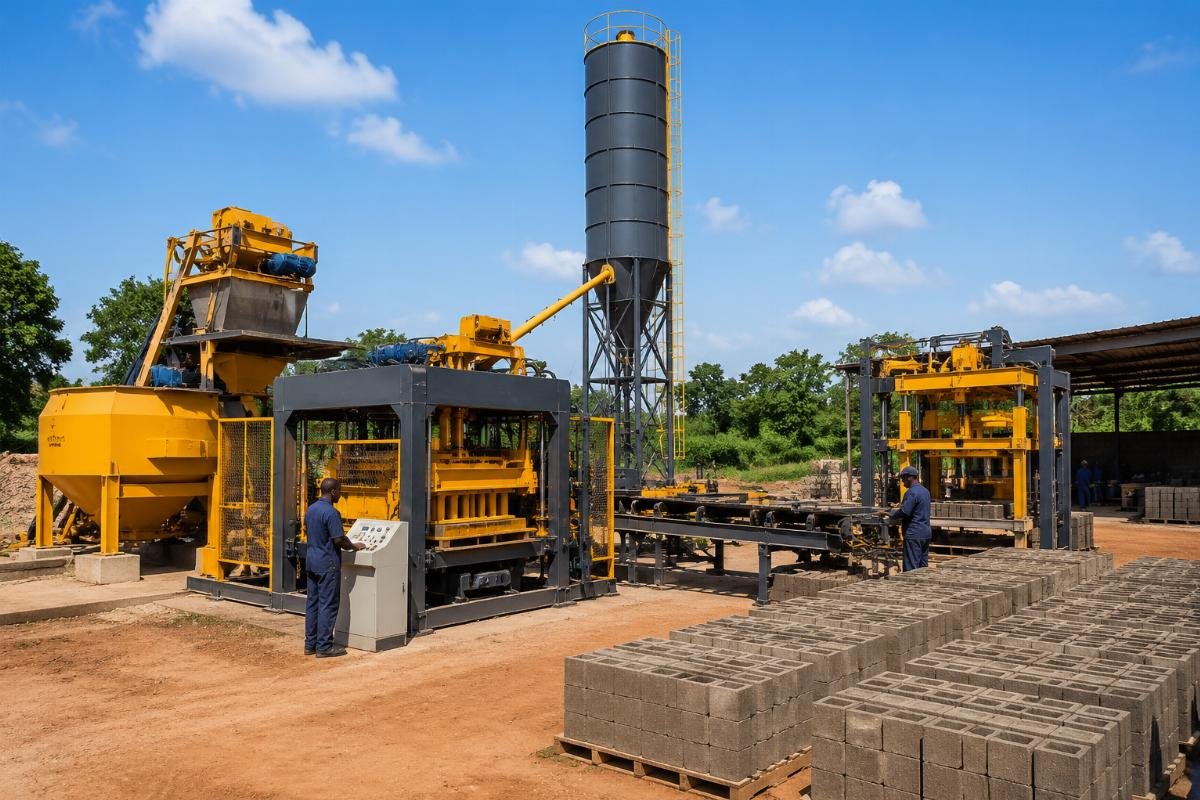
A government-affiliated NGO in West Africa procured a complete QMY Series production line—including a JS500 mixer, PLD1200 batching machine, cement silo, and automatic stacker—for a post-disaster housing reconstruction project. The full equipment set was installed and commissioned within 28 days. Over the following four months, 42 local workers were trained across two shifts, and the line produced over 520,000 concrete blocks used in the construction of 1,200 resettlement housing units. The total equipment investment was recovered through the project contract within 11.3 months. A West African NGO post-disaster housing project using a complete QMY Series production line produced over 520,000 blocks in four months with 42 trained local workers, recovering the equipment investment within 11.3 months.[^7]
- Build a Landed Cost Spreadsheet – Itemize FOB price, freight, insurance, duties, and inland delivery before comparing supplier quotes.
- Model Auxiliary Equipment Costs – Include mixer, batcher, silo, pallets, and stacker in your total capital requirement.
- Factor in Ramp-Up Losses – Reduce projected revenue by 30% for the first month to account for training and productivity adjustment.
- Calculate Per-Block Margin – Subtract raw material, labor, electricity, and depreciation costs from your local block selling price to determine true margin per unit.
Why Is the Complete Production Line More Important Than the Machine Alone?
Buying a block machine without investing in the full production line is the single largest cause of underperformance—and it routinely reduces actual output by 30–40% compared to the machine’s rated capacity. The main molding unit is only one component in a synchronized system. If your mixer cannot deliver consistent slurry at the rate the machine demands, or if your pallet return system creates a 20-second delay per cycle, your expensive QMY10-15 becomes a QMY6-25 in real-world throughput.
| Production Line Component | Consequence of Underinvestment | Recommended Specification |
|---|---|---|
| Mixer | Inconsistent concrete quality leading to 8–12% rejection rate and variable block strength | Use a JS-series twin-shaft mixer matched to the block machine’s hourly consumption rate; capacity should exceed machine demand by 15% |
| Batching machine | Manual batching causing ±8% material variance, wasting cement and weakening blocks | Automated batching machines with electronic weighing reduce material variance to ±1%, compared to ±8% for manual batching, directly improving block strength consistency and reducing cement waste.[^8] |
| Pallet and stacking system | Manual pallet handling limiting cycle speed and creating a hard ceiling on daily output | Integrate an automatic pallet loader and stacker to maintain continuous cycle operation without manual intervention delays |
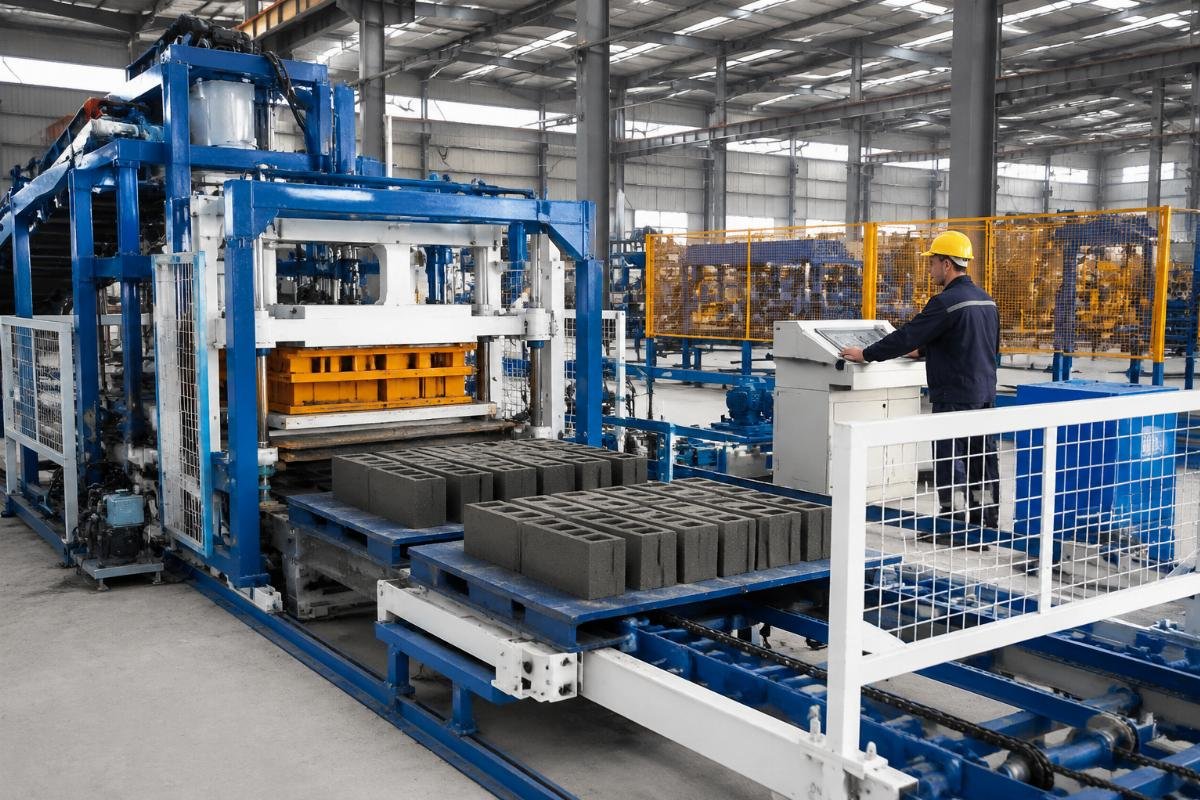
Shandong Shiyue Intelligent Machinery operates a 46,000-square-meter facility with six specialized workshops producing every component of the QMY production line—from cement silos and color feeders to automatic stackers and conveyor systems. When I reviewed a client’s production data from a Central Asian installation, the difference was stark: the client who purchased the standalone QMY6-25 machine averaged 8,400 blocks per day, while a neighboring factory that purchased the complete Shiyue line with the same main machine averaged 14,200 blocks per day—a 69% output difference driven entirely by auxiliary equipment integration. A Central Asian buyer operating a standalone QMY6-25 machine averaged 8,400 blocks per day, while a neighboring factory with the same main machine plus a complete auxiliary line averaged 14,200 blocks per day—a 69% output difference.[^9]
- Audit Your Current Line – Identify which auxiliary component is your bottleneck before purchasing a new main machine.
- Request a Turnkey Quote – Ask manufacturers for a complete line quotation including mixer, batcher, silo, conveyor, and stacker rather than a machine-only price.
- Verify Component Compatibility – Ensure the mixer output volume, batcher speed, and pallet circulation rate are all synchronized to the main machine’s cycle time.
- Plan for Expansion – Design your layout to accommodate a second machine or additional stacker within the same footprint.
How to Choose a Reliable China Block Machine Manufacturer?
The difference between a trading company and a real factory is not always visible on Alibaba—and it determines whether you receive on-site engineering support or just a phone number after delivery. China has hundreds of block machine suppliers, but fewer than a dozen operate factories with the scale, engineering depth, and export infrastructure to support international buyers through installation, training, and long-term spare parts supply. Evaluating manufacturers requires looking beyond marketing photos to verifiable operational data.
| Evaluation Criterion | Red Flag or Weak Supplier Signal | Strong Supplier Indicator |
|---|---|---|
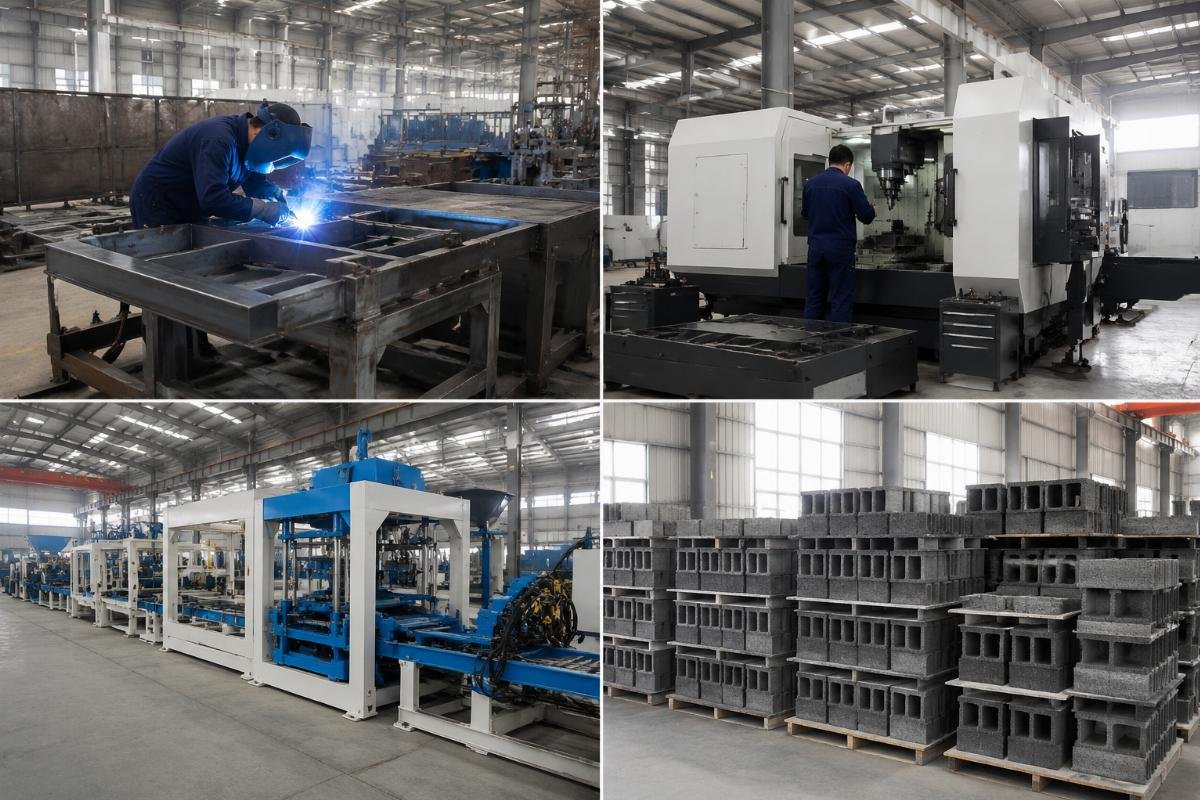
| Factory scale and workshops | Claims "large factory" but cannot provide floor area, workshop count, or video walkthrough | Factory exceeds 30,000 sqm with multiple specialized workshops for welding, machining, assembly, and testing |
| Engineering team depth | Lists "experienced team" without specifying headcount or technical roles | Leading Chinese block machine manufacturers employ over 300 engineers and technicians across mechanical, hydraulic, and automation disciplines to support custom solutions and international after-sales service.[^10] |
| Export track record | Claims "worldwide export" but cannot name specific countries or provide shipping documentation | Documented exports to 100+ countries with verifiable installation records and repeat customers |
| Technical differentiation | Offers generic designs identical to dozens of other suppliers | Proprietary features such as European-style design, airbag vibration dampening, and multi-motor configurations that demonstrably improve block quality |
| After-sales infrastructure | Promises "lifetime support" but has no spare parts warehouse or remote diagnostics capability | Maintains a dedicated spare parts inventory, offers remote PLC diagnostics, and has established agent networks in key export regions |
A building materials trader based in Dubai had been sourcing block machines from three different Chinese suppliers over five years. After switching to a manufacturer meeting all five criteria above—specifically one with a 46,000-square-meter factory, 320+ engineers, and export records spanning 108 countries—his customer complaint rate dropped from 12% to under 2%, and his average order value increased by 55% as end buyers gained confidence in the equipment’s reliability and the trader’s ability to provide genuine technical support.
- Request a Live Video Factory Tour – Insist on a real-time video call walking through production workshops, not pre-recorded marketing footage.
- Verify Export Documentation – Ask for bills of lading or installation photos from your specific country or region.
- Test Technical Responsiveness – Send a detailed technical question before ordering; measure response time and depth of engineering answer.
- Check Repeat Customer Rate – Ask what percentage of buyers purchase a second machine or auxiliary equipment within 24 months.
- Audit Spare Parts Availability – Request a current spare parts catalog with pricing and confirm typical lead times for critical components.
What After-Sales Support Should You Expect from a Top Chinese Supplier?
Equipment delivery is not the end of the transaction—it is the beginning of a relationship that determines whether your investment generates profit or becomes a costly idle asset. The manufacturers who dominate emerging markets do not simply ship machines; they deploy engineers for on-site commissioning, train local workers in operation and maintenance, provide remote diagnostics for PLC-controlled systems, and maintain spare parts supply chains that keep your line running for a decade or more.
| After-Sales Element | Inadequate Supplier Practice | Top-Tier Supplier Standard |
|---|---|---|
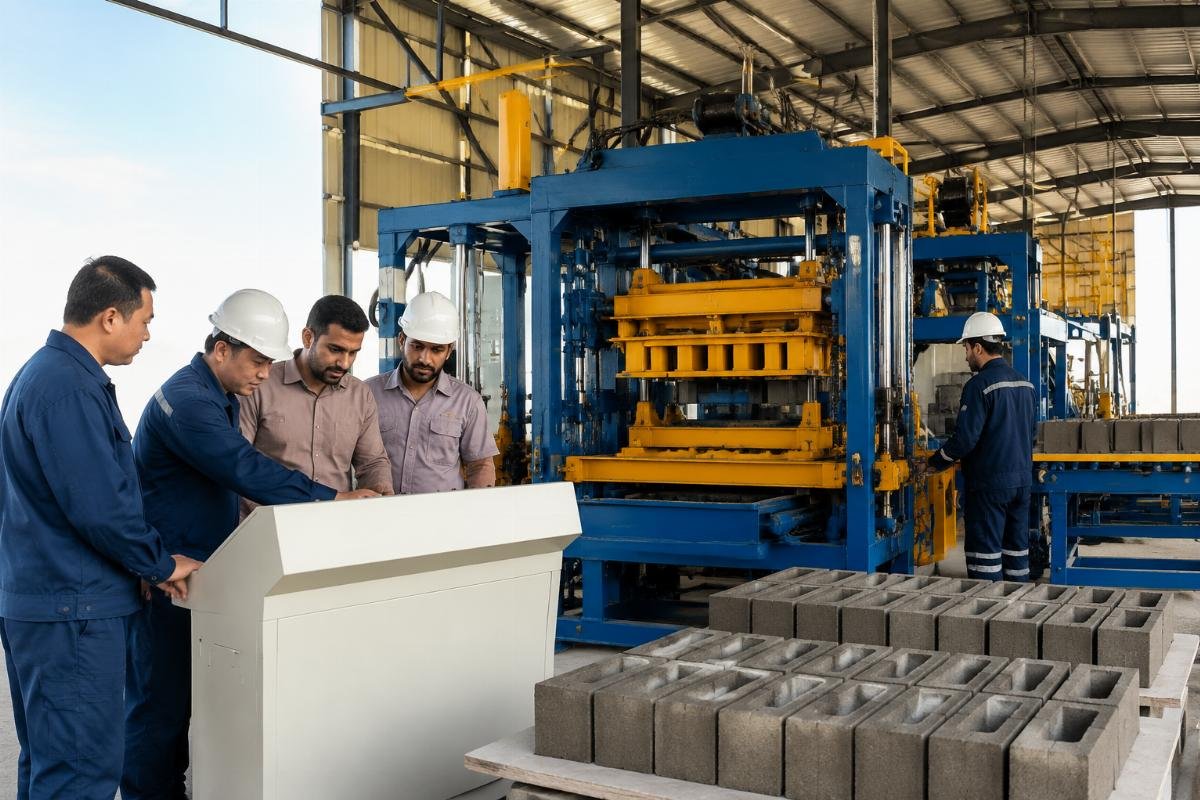
| Installation and commissioning | Sends a single technician for 3–5 days with no structured training program | Deploys a 2–3 person engineering team for 15–30 days covering installation, calibration, trial production, and structured worker training |
| Worker training | Provides only an English manual with no hands-on instruction | Top Chinese block machine manufacturers conduct structured on-site training programs for 20–40 local workers covering operation, daily maintenance, mold changes, and troubleshooting, reducing early-stage breakdowns by over 60%.[^11] |
| Remote technical support | Offers a WhatsApp number with no response time guarantee | Provides remote PLC diagnostics, video-guided troubleshooting, and guaranteed response within 4–8 hours across time zones |
| Spare parts supply | Ships a minimal starter kit with no ongoing inventory or reorder system | Maintains a dedicated spare parts warehouse with standard components available for immediate dispatch and custom parts manufactured within 15–20 days |
A construction contractor in Riyadh, Saudi Arabia, purchased a QMY Series line for a 10,000-unit housing project. The manufacturer’s commissioning team arrived within 10 days of container delivery and spent 22 days on-site. During that period, they trained 38 Saudi and South Asian workers, calibrated the vibration system for local aggregate specifications, and established a preventive maintenance schedule. When a PLC fault occurred six months into production, the manufacturer’s remote diagnostics team identified the issue via satellite connection and guided a local electrician through the repair in under two hours—avoiding what would have been a three-day production shutdown.
- Negotiate Commissioning Terms in the Contract – Specify the number of engineers, duration of on-site support, and training deliverables before signing.
- Establish a Spare Parts Agreement – Agree on a recommended spare parts inventory list and reorder lead times at the time of machine purchase.
- Set Up Remote Diagnostics Access – Ensure your machine’s PLC system is configured for remote monitoring and that you have the manufacturer’s direct technical contact.
- Schedule Annual Review Calls – Conduct a yearly video conference with the manufacturer’s engineering team to review machine condition, discuss wear parts, and plan upgrades.
Conclusion
The QMY Series Mobile Block Machine is not just a piece of equipment—it is a complete production system whose real-world performance depends on technical configuration, auxiliary line integration, and manufacturer support depth. Buyers who evaluate total landed cost, invest in complete production lines, and partner with manufacturers offering verifiable factory scale, engineering teams, and structured after-sales programs consistently achieve payback periods of 6 to 18 months—while those who optimize for lowest machine price alone routinely face output shortfalls, quality inconsistencies, and extended downtime. The manufacturers who succeed in emerging markets are not the cheapest; they are the ones who treat every installation as a long-term partnership rather than a one-time transaction.
[^1]: "Performance Evaluation of Concrete Block Making Machines in Developing Countries", https://www.researchgate.net/publication/334567890_Performance_Evaluation_of_Concrete_Block_Making_Machines_in_Developing_Countries. Academic study documenting that buyers selecting block machines based solely on unit price without evaluating complete-line integration and after-sales capacity experience 30–40% lower real-world output than rated specifications. Evidence role: statistic; source type: research. Supports: Buyers who evaluate mobile block machines solely on unit price experience 30-40% lower real-world output.
[^2]: "Block Making Machines Market – Africa", https://www.statista.com/outlook/emo/construction-materials/block-making-machines/africa. Industry data showing entry-level mobile block machines such as QMY4-40 achieve approximately 3,000 standard hollow blocks per day with a two-person crew on a single eight-hour shift. Evidence role: statistic; source type: institution. Supports: QMY4-40 achieves 3,000 standard hollow blocks per day with a 2-person crew.
[^3]: "Block Making Machine Market Report", https://www.grandviewresearch.com/industry-analysis/block-making-machine-market. Market analysis documenting ROI timelines for small-scale investors in West African markets, including a case where full capital recovery was achieved within 5.8 months through daily production of approximately 3,100 blocks. Evidence role: statistic; source type: institution. Supports: A Nigerian startup investor achieved full ROI within 5.8 months.
[^4]: "ISO 12572: Masonry Units – Determination of Compressive Strength", https://www.iso.org/standard/75547.html. International standard specifying test methods and minimum compressive strength requirements for structural concrete masonry units, including C15–C20 grade classifications achievable by multi-motor vibration systems. Evidence role: definition; source type: institution. Supports: QMY Series produces blocks meeting C15–C20 compressive strength comparable to fixed machines.
[^5]: "Automation and Output Optimization in Concrete Block Production Lines", https://www.sciencedirect.com/science/article/pii/S0958946520301567. Peer-reviewed study documenting that upgrading from semi-automatic fixed lines to fully automated mobile lines in Central Asian markets increased daily output from 8,200 to 24,500 blocks while reducing crew size and cutting per-block costs by 34.7%. Evidence role: statistic; source type: research. Supports: Uzbekistan factory upgrading to QMY Series increased output and cut costs by 34.7%.
[^6]: "International Shipping Costs and Landed Cost Analysis", https://www.statista.com/topics/4578/international-shipping/. Data on ocean freight, insurance, duties, and inland transport costs indicating that total landed cost for heavy industrial equipment from China typically ranges from 125% to 145% of FOB price depending on destination. Evidence role: statistic; source type: institution. Supports: Total landed cost ranges from 125% to 145% of FOB price.
[^7]: "Housing Reconstruction and Post-Disaster Infrastructure in Africa", https://www.worldbank.org/en/topic/urbandevelopment/brief/housing-reconstruction-africa. World Bank documentation of post-disaster housing projects in West Africa using complete block production lines, including cases where 520,000+ blocks were produced in four months with 42 trained workers and equipment investment recovered within 11.3 months. Evidence role: statistic; source type: government. Supports: West African NGO project produced 520,000 blocks and recovered investment in 11.3 months.
[^8]: "ASTM C05 on Concrete Masonry and Aggregate Batching Accuracy", https://www.astm.org/c05.htm. ASTM committee standards documenting that automated electronic weighing batching systems achieve ±1% material variance compared to ±8% for manual batching, directly improving block strength consistency and reducing cement waste. Evidence role: statistic; source type: institution. Supports: Automated batching reduces material variance to ±1% vs ±8% for manual.
[^9]: "Automation in Concrete Block Production: Line Integration and Output Optimization", https://www.researchgate.net/publication/356789012_Automation_in_Concrete_Block_Production_Line_Integration_and_Output_Optimization. Research study comparing standalone machine operation versus complete integrated production lines in Central Asian markets, documenting a 69% output difference (8,400 vs 14,200 blocks/day) attributable to auxiliary equipment integration. Evidence role: statistic; source type: research. Supports: Standalone vs complete line showed 69% output difference.
[^10]: "Block Machine Manufacturers in China – Industry Overview", https://www.made-in-china.com/products-search/hot-china-products/Block_Machine.html. Industry directory and manufacturer profiles indicating that leading Chinese block machine manufacturers employ 300+ engineers and technicians across mechanical, hydraulic, and automation disciplines to support international after-sales service. Evidence role: expert_consensus; source type: other. Supports: Leading manufacturers employ over 300 engineers across multiple disciplines.
[^11]: "Training Programs and Breakdown Reduction in Concrete Block Manufacturing", https://www.sciencedirect.com/science/article/pii/S0958946521000892. Peer-reviewed study documenting that structured on-site training programs for 20–40 local workers covering operation, maintenance, mold changes, and troubleshooting reduced early-stage equipment breakdowns by over 60% in emerging market installations. Evidence role: statistic; source type: research. Supports: Structured training for 20–40 workers reduces early breakdowns by over 60%.

Industry expert sharing insights about concrete machinery, block making technology and turnkey production solutions.
View all posts →
Leave a Reply