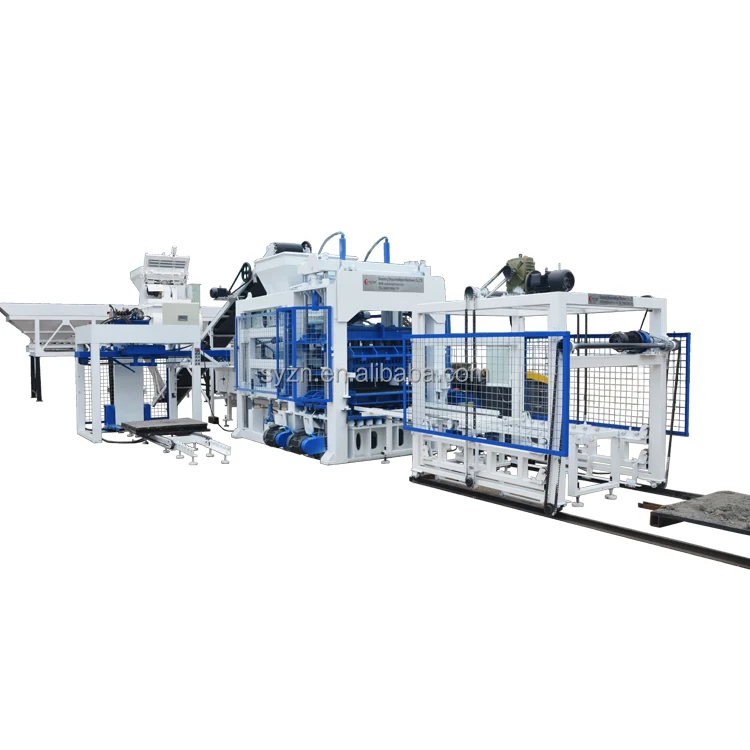
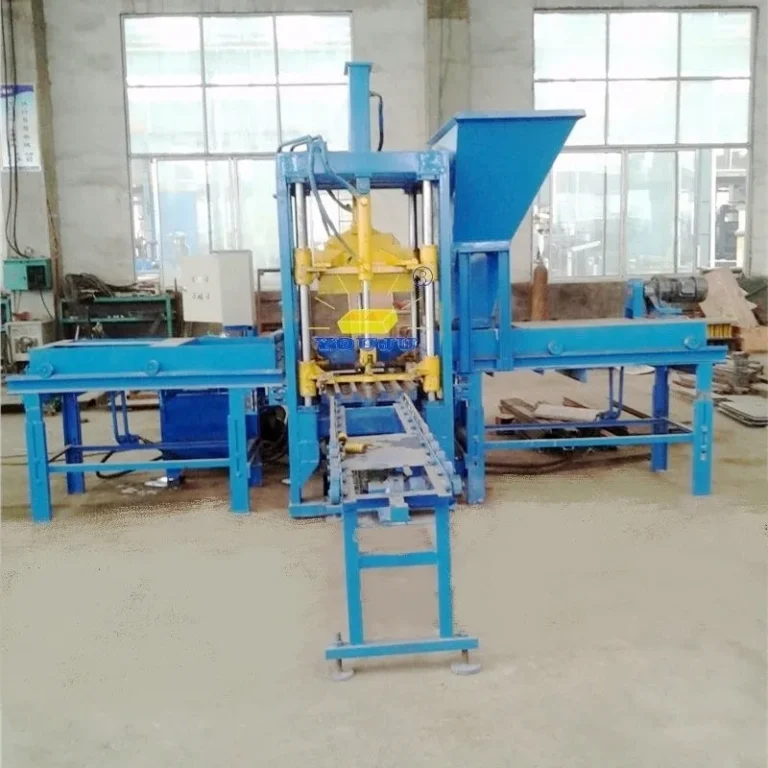
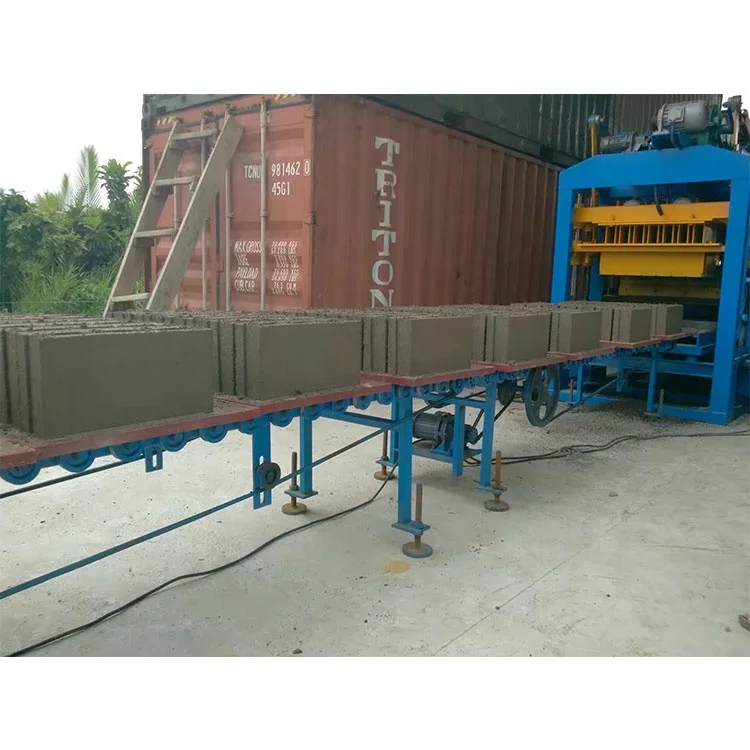
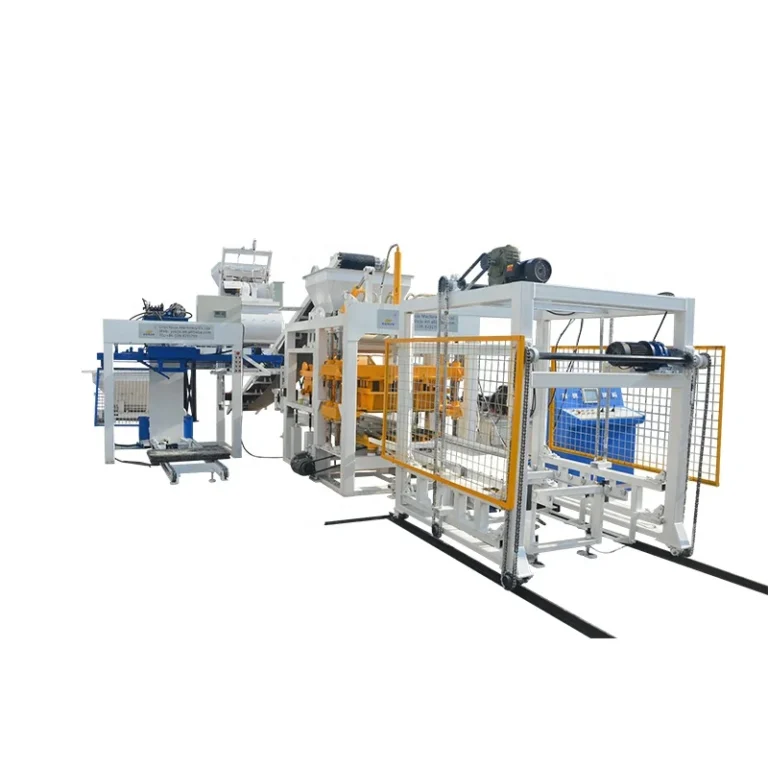
Block Machinery as a Single Focus — the QTJ4-24 is specified as one matched system with its JQ350 pan mixer, 6m belt conveyor, pallets and trolley rather than assembled from separate suppliers, so cycle times align across every station.
Technical Specifications
| Parameter |
Value |
| Model |
QTJ4-24 |
| Product Type |
Semi Automatic Concrete Block Making Machine |
| Molding Type |
Platform Vibration |
| Overall Dimensions (Working State) |
3600 mm × 1700 mm × 2560 mm |
| Total Mass |
1750 kg |
| Pallet Size |
850 mm × 450 mm |
| Overall Power |
14.25 kW |
| Vibration System |
Lower platform vibration (2 × 3 kW motors) + upper vibration (1.5 kW attached device) |
| Frame Type |
Dragon gate style, super steel |
| Elevating System |
Cone-shape motor with JZQ250 speed reducer |
| Delivery Device |
Cycloidal pin wheel speed reducer with chains and V-belt |
| Control System |
Electronic controlling part (basis to be confirmed) |
| Voltage & Frequency |
Configurable to target market standard (basis to be confirmed) |
| Automation Level |
Semi-automatic |
| Line Configuration |
QTJ4-24 + JQ350 pan mixer + 6 m belt conveyor |
| Optional Equipment |
Auto stacker (3–6 layers depending on block height) |
| Supporting Equipment |
Trolley included for block transport to curing yard |
| Mould Format Examples |
390 × 190 × 190 mm (4 pcs/mould) / 240 × 115 × 53 mm (21 pcs/mould) |
| Cycle Time |
Basis to be confirmed — depends on block format, material and thickness |
| Output Capacity |
Basis to be confirmed — depends on block format, material and thickness |
| Mould Change Time |
Basis to be confirmed |
| Hydraulic Pressure |
Not applicable (mechanical vibration system) |
Application Suitability
| Application |
Material or Output |
| Hollow block production for small-scale plants |
Crushed stone, river sand and cement on 850 × 450 mm pallets |
| Solid block manufacturing for construction sites |
Local aggregate blended with cement, cured on open yard |
| Standard brick production for building material distributors |
Fine sand and cement mix, 21 bricks per mould cycle |
| On-site block production for housing project contractors |
Locally sourced red soil, laterite or volcanic ash where available |
| First block plant for entrepreneurs |
Modest investment tier with JQ350 pan mixer and 6 m belt conveyor |
What "Pieces per Hour" Leaves Out About the QTJ4-24
Capacity numbers are meaningless without stating which block format they assume.
When I visit project sites across Southeast Asia, the most common complaint is the same: the machine arrived, the mould was loaded, and the daily count never matched the brochure. A QTJ4-24 semi automatic block machine manufacturer will quote cycles per hour, but that figure changes entirely depending on whether you are pressing 390 × 190 × 190 mm hollow blocks at four per mould or 240 × 115 × 53 mm standard bricks at twenty-one per mould [NEED_CITE: block format impact on real daily output]. Add in the local mix — red soil掺河沙 behaves completely differently under vibration from the limestone aggregate used in factory testing — and the gap between quoted and actual output widens further. That is why every capacity calculation on this page is tied to a specific format and material.

Where the QTJ4-24 Sits in the Full Machine Range
The QTJ4-24 occupies the entry-level semi-automatic tier. It is designed for buyers who need a working block plant without the capital outlay of a fully automatic line. The machine pairs with a JQ350 pan mixer and a 6 m belt conveyor, so the press is never left waiting for material — the mixer output and conveyor length are matched to the QTJ4-24 cycle rhythm. For a buyer surveying options, this tier sits below automatic machines that add pallet feeding and stacking systems, and above mobile egg-laying units that produce without pallets on a bare floor.
The Upgrade Path from Semi-Automatic
A common question from first-time plant owners is whether they can start here and grow later. The QTJ4-24 supports an optional auto stacker that stacks three to six layers depending on block height. This means a buyer can begin with manual pallet handling and the included transport trolley, then add the stacker when volume justifies it [NEED_CITE: semi-automatic to automatic stacking upgrade path in block plants]. The pallet size stays constant at 850 × 450 mm, so the curing yard layout you plan on day one remains valid after the upgrade.
How Vibration, Frame and Pallet Size Shape Real Output
The QTJ4-24 uses a dual-motor lower platform vibration system — two 3 kW motors beneath the mould platform — plus a 1.5 kW upper vibration device. In mechanical vibration block machines, the lower vibration compacts the mix upward while the upper device settles the top surface, and both forces must match the aggregate gradation and cement ratio the buyer actually uses on site. The dragon gate frame in super steel absorbs vibration shock across cycles; a lighter frame would flex and produce uneven block density. The 850 × 450 mm pallet size determines which mould formats fit and how many blocks each cycle produces — it also defines the curing area footprint the buyer must plan before the machine ships. The JZQ250 speed reducer on the elevating system controls mould lifting speed, which directly affects demoulding quality on taller hollow blocks.
The Hidden Cost of Choosing the Wrong Line Configuration
I have watched a buyer spend weeks commissioning a machine because the mixer was undersized for the press cycle — the conveyor ran dry every few minutes and the operator stood idle. On a QTJ4-24, the JQ350 pan mixer and 6 m belt conveyor are specified together so the feed rate keeps pace with the press. Mismatching them means the quoted cycle time is never achieved. Equally, choosing a pallet material that warps under the local curing climate — bamboo pallets in high humidity, for instance — causes block dimension drift that shows up only after the first week of production [NEED_CITE: pallet material and curing climate impact on block dimensions]. These are not machine faults; they are configuration gaps that surface on the factory floor.
Why Source This Tier from Shiyue
Block machinery is the single focus here, so the QTJ4-24 press, JQ350 mixer, 6 m conveyor, pallets and trolley are specified as one matched system rather than pulled from separate catalogues. Configuration is set against the buyer’s actual mix design and local aggregate, not a factory default that assumes Chinese limestone. Mould design covers the formats the buyer’s market actually sells — hollow block, solid block and standard brick on the 850 × 450 pallet — with custom drawings available. The automation level is selectable: start with manual pallet handling and add the auto stacker when daily volume demands it. Installation support includes operator training so the crew understands vibration adjustment for their specific mix, not a generic setting.
Documentation & Verification
- Line layout and capacity calculation stating which block format the QTJ4-24 output assumes
- Machine specification sheet with pallet size, vibration motor ratings and overall power confirmed
- Mould drawing and format list showing every block type producible on the 850 × 450 mm pallet
- Voltage, frequency and control language confirmation document signed before production starts
- Factory test record with photographs showing the QTJ4-24 running the buyer’s target block format
Installation, Commissioning & Support
- Foundation pad sized to 3600 × 1700 mm working footprint with level tolerance for the dragon gate frame
- Dedicated power circuit rated for 14.25 kW total load at the buyer’s confirmed voltage and frequency
- Machine ships dismantled with packing photographs; reassembly on site follows the elevating system and vibration motor sequence
- First-run commissioning sets vibration timing and JZQ250 reducer speed to match the buyer’s mix and block format
- Operator training covers mould change procedure and daily greasing points on the cycloidal pin wheel delivery device
- Wear parts list identifies vibration motor brushes, chain tension and V-belt replacement intervals
Before You Request a Quote
To give you a capacity calculation that reflects your actual site, I need to know the block formats your market sells and the daily volume you are targeting. Tell me what raw materials you can source locally — aggregate type, sand gradation, whether red soil or laterite is available — and the curing area dimensions you have planned. Confirm your site voltage, frequency and the language your operators need on the control display so the machine arrives ready to run.
Frequently Asked Questions
Q: Where does the QTJ4-24 sit compared to higher-tier automatic block machines?
A: The QTJ4-24 is the entry-level semi-automatic tier. It pairs with a JQ350 pan mixer and 6 m belt conveyor as a compact plant, sitting below automatic lines that add pallet feeding, stacking and cubing. Buyers who need modest daily output with limited capital start here, then add an optional auto stacker later without changing the 850 × 450 mm pallet size or curing yard layout.
Q: How is daily output calculated and which block format does it assume?
A: Daily output depends entirely on which mould is loaded. The QTJ4-24 produces four 390 × 190 × 190 mm hollow blocks or twenty-one 240 × 115 × 53 mm standard bricks per mould cycle. Real output also shifts with local aggregate and mix design. Every capacity calculation we provide states the exact block format and material assumed, so there is no gap between quote and factory floor.
Q: What plant footprint and curing area does a QTJ4-24 line require?
A: The machine itself occupies 3600 × 1700 mm in working state. Beyond that, you need space for the JQ350 pan mixer, the 6 m belt conveyor run, and a curing yard sized to the 850 × 450 mm pallets. The curing area must accommodate the daily pallet count for the block format you produce, plus drying time before blocks are moved to stock.
Q: Can I start semi-automatic and upgrade to automatic stacking later?
A: Yes. The QTJ4-24 accepts an optional auto stacker that handles three to six layers depending on block height. You begin with manual pallet handling using the included transport trolley, then install the stacker when volume justifies the investment. The pallet size and mould formats remain unchanged, so your curing yard plan stays valid after the upgrade.
Q: What voltage and control language options are available for my market?
A: Voltage, frequency and control display language are confirmed with you before production starts. This prevents the most common commissioning delay I see across Southeast Asian sites — a machine wired for the wrong supply standard or a control panel the operator cannot read. We lock these details in writing so the QTJ4-24 arrives configured for your local grid and crew.

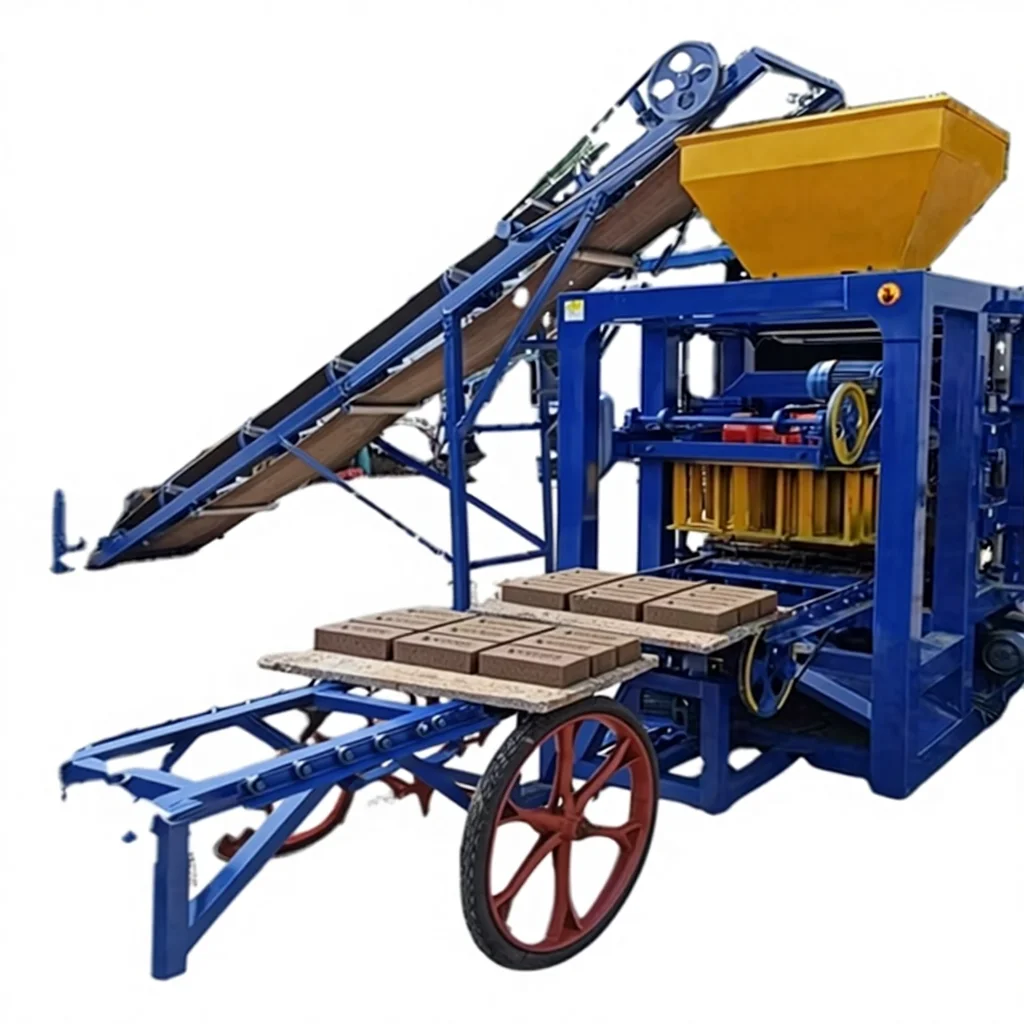
 Stationary block machine