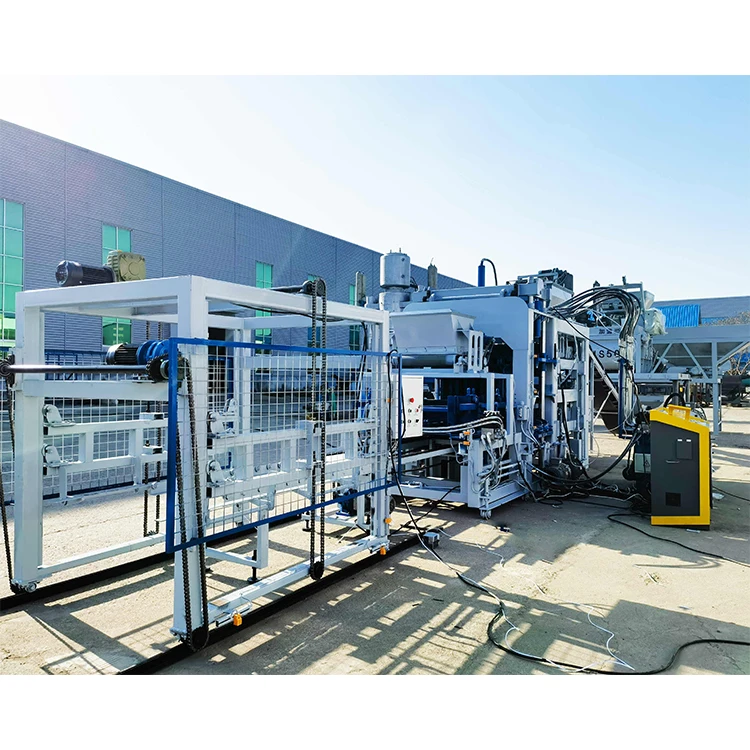
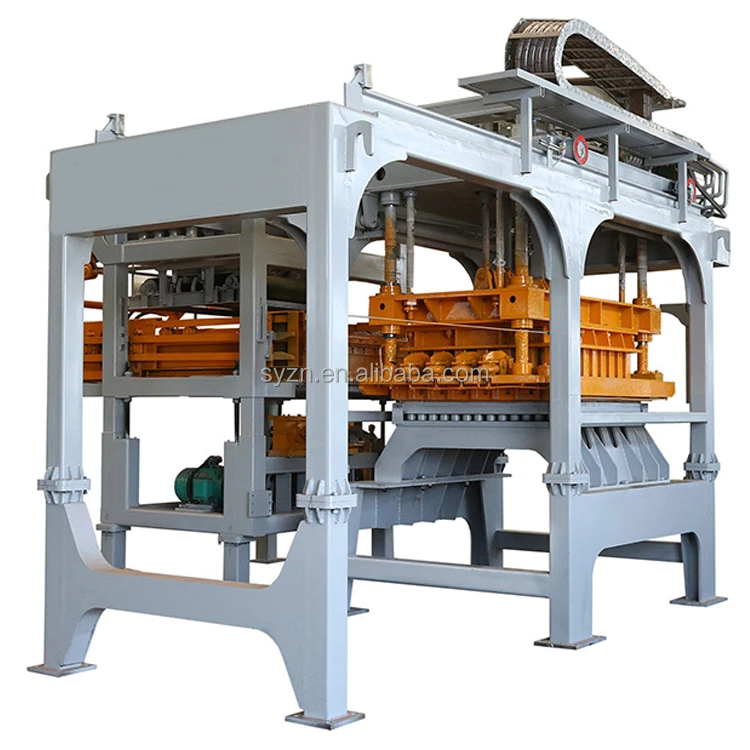
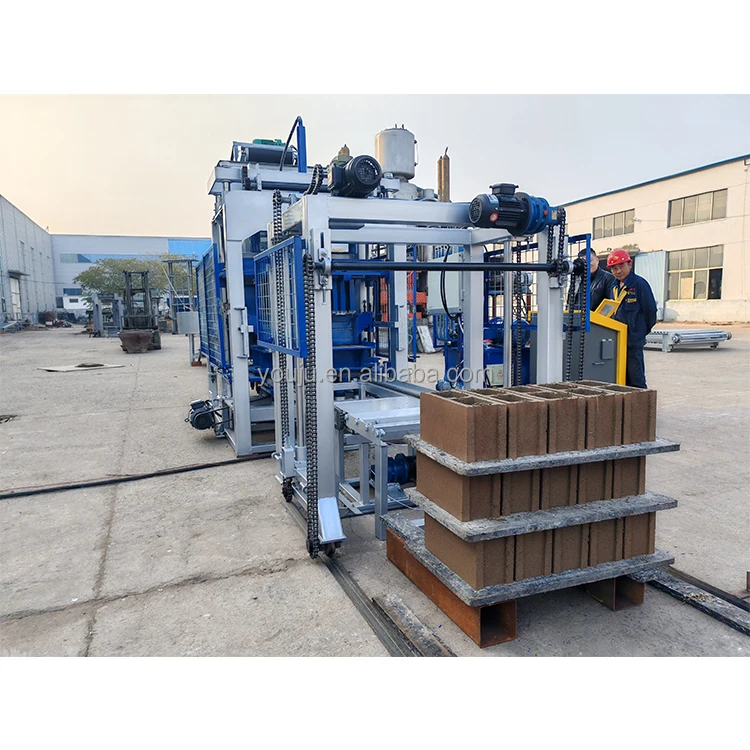
Matched System Specified — Every QTJ4-25 block making machine we quote pairs the press with pallet, mould and handling gear sized for your actual mix and curing footprint, avoiding mismatched components.
Technical Specifications
| Parameter |
Value |
| Model |
QTJ4-25 |
| Product Type |
Stationary Concrete Block Making Machine |
| Overall Dimensions (L×W×H) |
3060×1730×2580 mm |
| Rated Hydraulic Pressure |
16–21 MPa |
| Main Vibration Form |
Platform Vibration |
| Vibration Frequency |
4200 r/min |
| Vibration Force |
45.5 kN |
| Pallet Size |
850×550 mm |
| Molding Cycle |
25–30 s (basis to be confirmed) |
| Overall Power |
14.9 kW |
| Total Mass |
4 T |
| Demolding Method |
Vibration |
| Applied Products |
Hollow/solid blocks, pavers, interlocking blocks, curbstone |
| Automation Level |
Semi-automatic |
Application Suitability
| Application |
Material or Output |
| Small-scale block plants |
Crushed stone, sand, cement, fly ash, gravel, slag |
| On-site contractor production |
Housing project sites with limited footprint (approx. 200 m²) |
| First-time entrepreneurs |
Entry-level stationary concrete block making machine setup |
| Secondary format lines |
Adding pavers, interlocking bricks or kerbstones to existing range |
The Voltage Question Before the Price
Many buyers ask for a quote before confirming local power infrastructure, then find the QTJ4-25 block making machine manufacturer configuration sitting at the port because the site runs on a different three-phase standard.
Voltage, frequency and control language must be locked before production starts.
I once watched a semi-automatic line wait three weeks on a dock in Ghana while the importer sourced a step-down transformer. The factory had built for 380V/50Hz, but the site was 400V/60Hz — a detail that would have taken five minutes to confirm. Power mismatches are among the most common delays in stationary block machine commissioning [NEED_CITE: voltage and frequency standards by export market]. Asking these questions first prevents expensive idle time.

Where the QTJ4-25 Sits on the Output Spectrum
The QTJ4-25 block making machine manufacturer designation places this press in the semi-automatic tier of the full range. It handles the middle ground between mobile egg-laying machines that produce on open ground and fully automatic lines with integrated stacking and cubing. Buyers typically choose this tier when daily volume requirements exceed what a mobile unit handles but the investment profile of a complete automatic plant has not yet been justified.
Choosing Between Tiers
Stepping up from the QTJ4-25 block making machine manufacturer option to a fully automatic line means adding pallet feeding, stacking and curing rack handling — stations that remove manual labour from the output side. Stepping down to a mobile machine removes the pallet and curing rack requirement entirely but limits format flexibility. The decision turns on whether the buyer’s volume and labour cost justify the automation investment at each station [NEED_CITE: labour cost versus automation investment in concrete block production].
Reading the Specification Sheet
The 45.5 kN vibration force and 4200 r/min frequency work with the 16–21 MPa hydraulic pressure to compact the mix into the mould cavity. Platform vibration means the shaking force transfers through the pallet rather than through the mould frame, which affects how dense the final block becomes — particularly important when running a lean mix with fly ash or slag as partial cement replacement. The 850×550 mm pallet size dictates how many blocks press per cycle and how the curing racks must be dimensioned. A pallet that does not match your existing rack spacing or forklift tine width creates manual handling bottlenecks that negate any cycle time advantage. The 25–30 s molding cycle figure assumes a specific block format and thickness; running a taller hollow block will extend that cycle, while a thin paver may compress it.
When Configuration Goes Wrong
A machine configured for a mix the buyer cannot source locally forces a material substitution that changes block strength and appearance. Pallet size chosen without checking the curing area means racks must be rebuilt or the pallet inventory scrapped. Moulds quoted without confirming which formats the buyer’s market actually sells leaves the operator changing tooling for products nobody orders, while the high-demand format runs on a competitor’s machine. These mismatches surface only after installation, when changes cost far more than getting the specification right at inquiry stage [NEED_CITE: concrete block plant configuration errors].
Why Buyers Specify Here
Block machinery is the single focus, so the press, mould, pallet and handling equipment arrive as one matched system rather than components assembled from separate suppliers. Configuration starts from the buyer’s actual mix design and local aggregate — not a catalogue default that assumes ideal sand and cement ratios unavailable in the target market. Mould design covers the formats the buyer’s market sells, including custom drawings when standard cavities do not match local block dimensions. The automation level remains selectable, so a buyer can start with the semi-automatic tier and add pallet feeding or stacking later without replacing the press. Installation support includes operator training so the crew understands cycle adjustment and mould change before the first production run.
Documentation & Verification
- Line layout stating the block format assumed for the QTJ4-25 capacity calculation
- Machine specification sheet confirming voltage, frequency and control language before build
- Mould drawing and format list showing included versus optional cavities
- Pallet specification matched to curing rack dimensions and forklift capacity
- Factory test record on buyer’s target block format before container loading
- Operation and maintenance manual with wear parts and mould replacement list
Installation, Commissioning & Support
- 200 m² factory area requirement with level concrete foundation for the 3060×1730 mm footprint
- Dedicated three-phase circuit matching confirmed voltage and frequency for the 14.9 kW load
- Machine dismantles for 40HQ container loading and reassembles on-site with hydraulic and electrical connections
- First-run parameter setting for vibration force and hydraulic pressure against buyer’s mix sample
- Operator training covering mould change procedure and manual pallet handling sequence
- Wear parts list specifying vibration table bearings and hydraulic seals with reorder intervals
Moving Forward With Your Inquiry
Send the target block format, expected daily output, and the raw materials available at your site along with local voltage and frequency. Include your existing forklift capacity and curing rack dimensions so the pallet and handling specification match from day one. If you already run other block machines, note their pallet size to avoid maintaining two separate inventories.
Frequently Asked Questions
Q: What block format does the 25–30 s cycle time assume?
A: The cycle figure depends on block height and cavity count. A standard 400×200×200 mm hollow block typically runs at the longer end of the range, while thinner pavers or solid blocks may cycle faster. The proposal includes a capacity calculation stated per format so you know realistic daily output before committing, rather than discovering the number assumes a format you do not produce.
Q: Where does the QTJ4-25 sit compared to automatic and mobile tiers?
A: It occupies the semi-automatic tier between mobile egg-laying units and full automatic lines with stacking. Choose this when volume exceeds mobile capacity but the investment in automatic pallet handling and cubing is not yet justified. The upgrade path allows adding automation stations later without replacing the press itself.
Q: What voltage and control language options are available?
A: Voltage and frequency configure to your site’s three-phase supply — 380V, 400V, 415V and other standards are available. Control language on the panel confirms before production. These details lock at inquiry stage to avoid the machine arriving with incompatible electrical or unreadable interface.
Q: Which pallet size does this machine require?
A: The 850×550 mm pallet must match your curing rack spacing and forklift tine width. Confirming these dimensions before ordering prevents a situation where new pallets do not fit existing racks or the forklift cannot lift a loaded pallet safely.
Q: What loads in the basic 40HQ container?
A: The basic equipment — press, standard mould set and pallets — fits one 40HQ. Supporting equipment such as the mixer, stacking system or additional curing racks ships separately or in additional containers depending on line configuration.

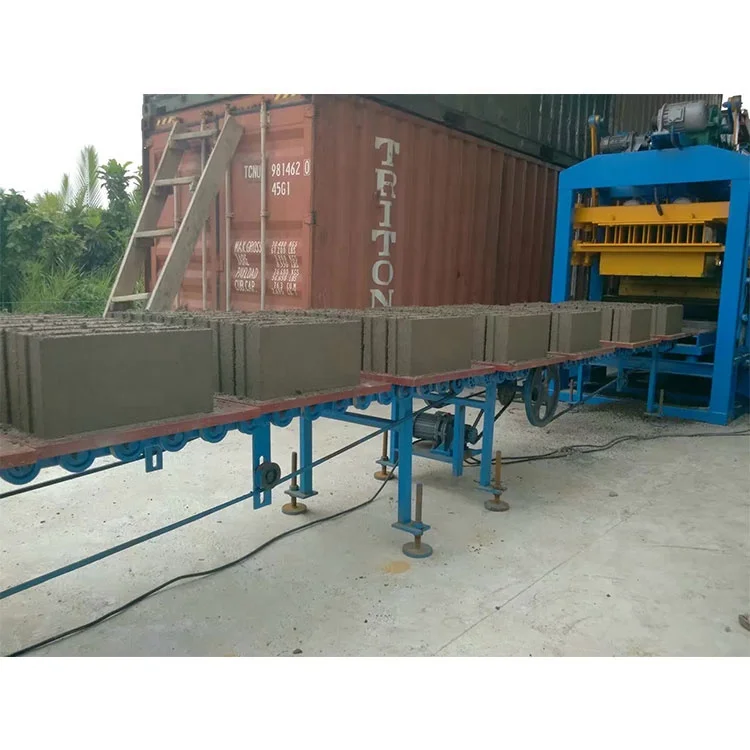
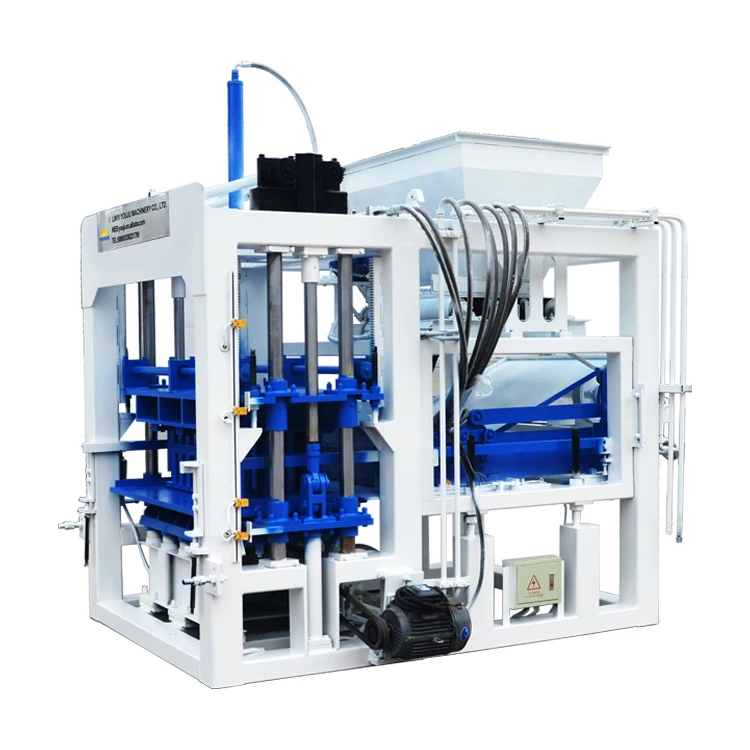 Stationary block machine