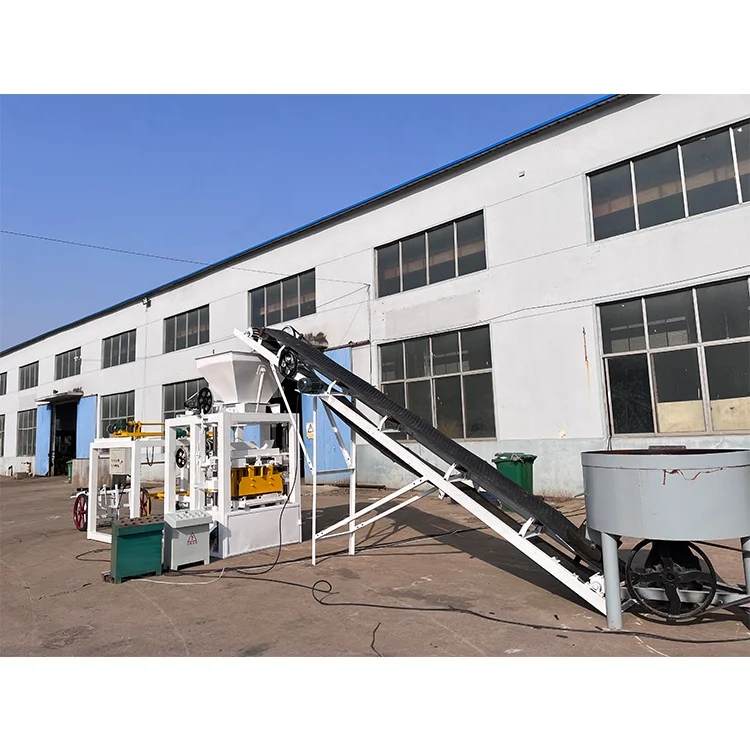
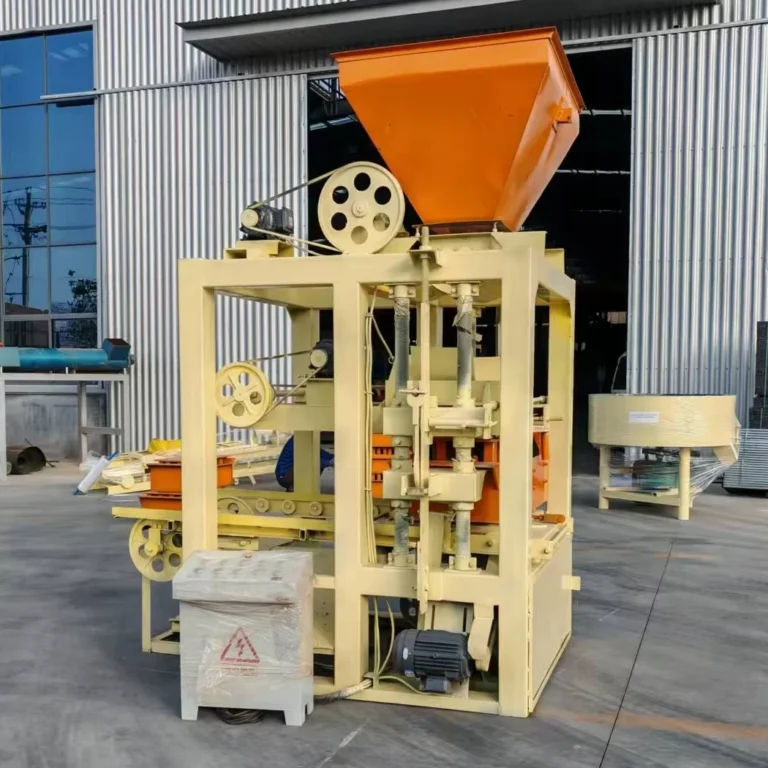
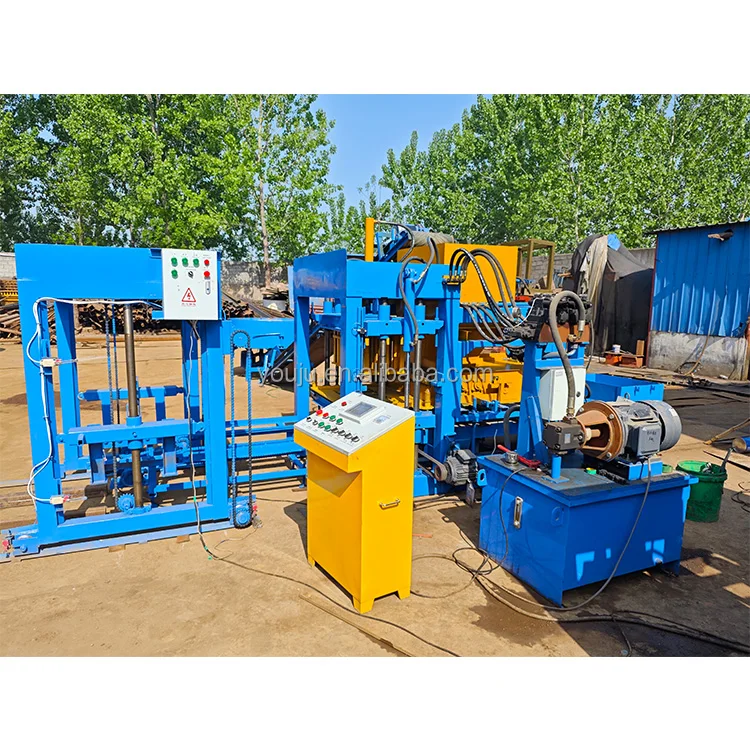
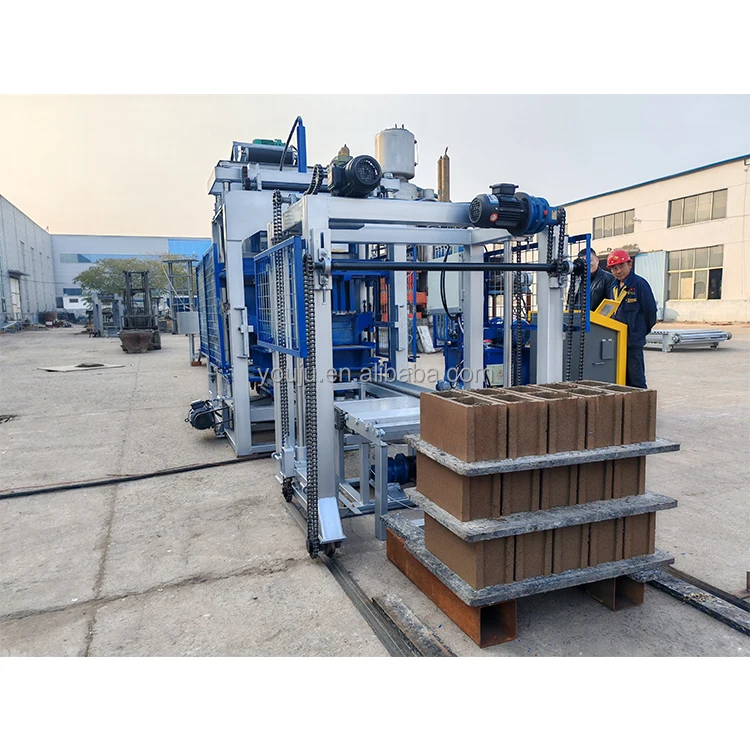
Single-Focus Line Integration — Every component from the QT4-15 host machine to its JS500 mixer and swing-type hopper is specified as one matched system, preventing the bottleneck mismatches common when sourcing stations from separate suppliers.
Technical Specifications
| Parameter |
Value |
| Model |
QT4-15 |
| Product Type |
Hydraulic Concrete Block Making Machine |
| Host Machine Power |
27.5 kW |
| Vibration Force |
40 kN |
| Vibration Mode |
Table and mould synchronous vibration; low-frequency feeding, high-frequency vibrating |
| Moulding Cycle |
15 s (basis not stated in source — confirm block format and material) |
| Pallet Size |
1020 × 570 mm |
| Overall Dimensions (L×W×H) |
7100 × 1600 × 2610 mm |
| Net Weight |
5 T |
| Mixer Model |
JS500 |
| Motor |
Siemens Motor |
| Control System |
PLC with photoelectric hopper control |
| Voltage |
380 V (frequency to be confirmed: 50 Hz or 60 Hz) |
| General Water Consumption |
4 T per day |
| Workers Required |
3–4 |
| Workshop Area |
150 m² |
Application Suitability
| Application |
Material or Output |
| Hollow block production for wall construction |
Cement, crushed stone, sand, fly ash |
| Solid load-bearing block manufacturing |
Dense aggregate blends with cement binder |
| Paving block and kerbstone for roads and walkways |
High-strength mix with fine aggregate surface layer |
| Ecological and porous brick for landscaping |
Permeable aggregate gradings with controlled water-cement ratio |
| On-site block production for housing projects |
Locally sourced sand and gravel matching regional standards |
What the "15-Second Cycle" Headline Leaves Out About the QT4-15 Concrete Block Making Machine for Sale
Cycle time means nothing without the block format and mix design attached to it.
Buyers often see a moulding cycle figure and multiply it across an eight-hour shift, only to find their actual daily output falls far short once format changes, pallet handling, and material charging delays are factored in. The QT4-15 block machine manufacturer specification lists a 15-second cycle, but that number shifts depending on whether you are pressing a standard hollow block or a denser paving block that demands longer vibration and higher hydraulic dwell [NEED_CITE: block format impact on cycle time in hydraulic presses]. Without a capacity table that names the format behind every output figure, you are planning a plant around an assumption.

Placing the QT4-15 Within the Full Stationary Range
The QT4-15 occupies a mid-tier position in the stationary block machine lineup. Buyers moving up from manual egg-laying machines or small workshop presses find it introduces PLC-controlled directional vibration and a swing-type hopper without jumping to the footprint and capital outlay of a QT6-15 or larger automatic line. It suits entrepreneurs establishing a first block plant where the product mix is still being proven in the local market.
How the Range Logic Guides Your Next Decision
Choosing a tier is not only about maximum output. A building material distributor evaluating the QT4-15 concrete block making machine for sale against higher-tier models must weigh pallet size against existing forklift capacity, workshop ceiling height against curing rack plans, and the automation level against available operator skill [NEED_CITE: automation tier selection criteria for block plants]. Starting at this tier leaves room to add automatic stacking and cubing later if volume justifies the investment.
Reading the Vibration and Pressure Numbers That Matter
The 40 kN vibration force works in tandem with the Siemens motor to deliver table-and-mould synchronous vibration, meaning the mould box and the table shake together rather than relying on table vibration alone. This dual action compacts the mix from multiple directions, reducing voids in hollow block walls. The low-frequency feeding phase settles the material into the mould before the high-frequency phase drives final densification. Combined with a swing-type cutting device in the hopper, material enters the mould box evenly, preventing the weak corners that occur when one side receives a heavier charge. The 27.5 kW host machine power rating reflects this vibration-plus-hydraulic demand rather than motor rating alone.
The Hidden Cost of a Mismatched Pallet and Mixer
Specifying the press without confirming the pallet size against your curing area creates a downstream problem. The 1020 × 570 mm pallet must match the forklift tines and rack spacing already on site; otherwise, blocks are moved twice before curing even begins. Similarly, the JS500 mixer must be timed so the QT4-15 never waits for a fresh batch. When the mixer capacity is too small for the press cycle, the line stalls and the real output drops below any quoted figure [NEED_CITE: mixer-to-press sizing in block production lines].
Why Sourcing the Full Line From One Supplier Changes the Commissioning Week
When the press, mixer, hopper, and pallet system arrive from different vendors, commissioning becomes a negotiation about whose equipment is causing the bottleneck. With the QT4-15 sourced as a matched line, the factory test record covers the entire material flow from JS500 discharge through mould fill to block ejection. The PLC display language is confirmed before the control panel is wired, avoiding the common delay of reprogramming on site. Mould drawings are matched to the buyer’s target format list, so the first production run is the format the market actually orders rather than a catalogue default.
Documentation & Verification
- Capacity calculation sheet naming the block format behind every daily output figure
- Voltage, frequency, and PLC language confirmation document signed before production
- Mould drawing package matching your target market block dimensions
- Factory test record showing press, mixer, and hopper running together
- Packing photographs of the QT4-15 and JS500 before container loading
Installation, Commissioning & Support
- Foundation plan sized to the 7100 × 1600 mm footprint and 5 T operating weight
- Dedicated 27.5 kW circuit with confirmed 380 V and 50/60 Hz supply at the panel
- Pallet handling layout drawn around your existing curing racks and forklift reach
- First-run parameter setting for vibration force and hydraulic dwell per your local aggregate
- Operator training covering PLC fault codes and photoelectric hopper sensor adjustment
- Wear parts list for hydraulic seals and mould liners included with shipment
What to Prepare Before You Send an Inquiry
To size the QT4-15 block machine manufacturer proposal accurately, share your target block formats with dimensions, the local aggregate type and gradation you can source, and your available workshop area and ceiling height. Confirm your site voltage and frequency, and note whether existing pallets or forklifts must be accommodated. If you plan to start semi-automatic and add stacking automation later, mention that timeline so the base configuration leaves upgrade points open.
Frequently Asked Questions
Q: How is the QT4-15 output capacity calculated, and which block format is assumed?
A: The 15-second moulding cycle is a base figure that changes with block format, wall thickness, and mix density. A reliable quotation includes a capacity table listing daily output per format — for example, hollow block versus paving block — rather than a single headline number. Ask for this table before confirming your order.
Q: Where does the QT4-15 sit compared to larger models in the stationary range?
A: The QT4-15 is a mid-tier press suited to first plants or producers adding a new format line. Larger models like a QT6-15 offer higher vibration force and bigger pallets but need more workshop space and capital. The right tier depends on your proven market volume, not maximum possible output.
Q: What workshop area does the QT4-15 require including the mixer and pallet system?
A: The 150 m² workshop area covers the press, JS500 mixer, and material feed zone. Curing racks and pallet return conveyors need additional floor space. Share your building dimensions early so the line layout fits without blocking forklift access or raw material storage.
Q: Can I start semi-automatic and upgrade automation later?
A: Yes. The QT4-15 base configuration supports manual pallet handling, and the PLC architecture allows adding automatic pallet feeding, stacking, and cubing when volume justifies the investment. Confirm this upgrade path during the proposal stage so the control panel reserves the necessary I/O points.

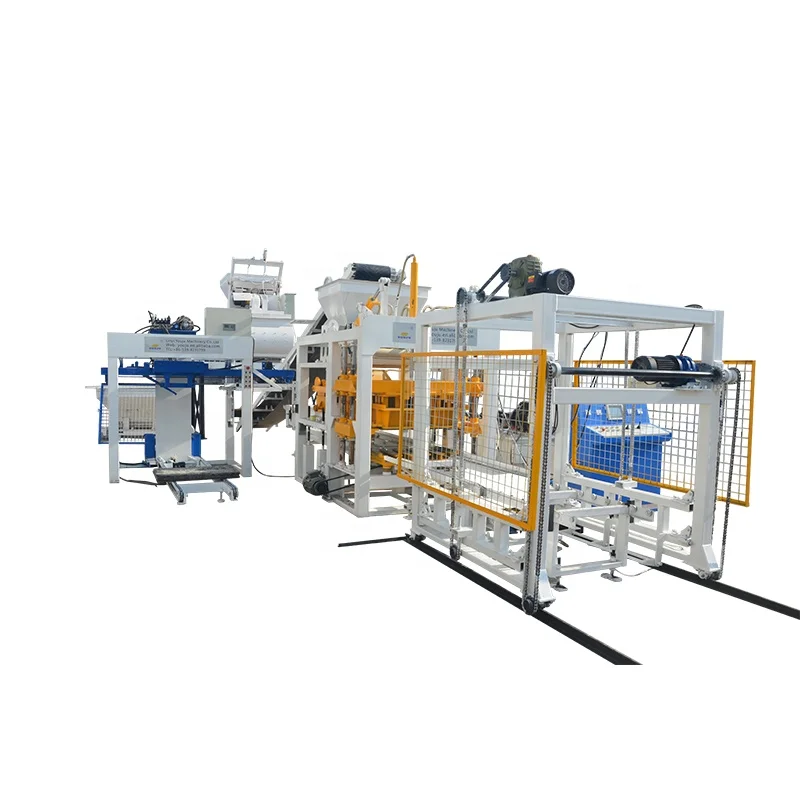
 Stationary block machine