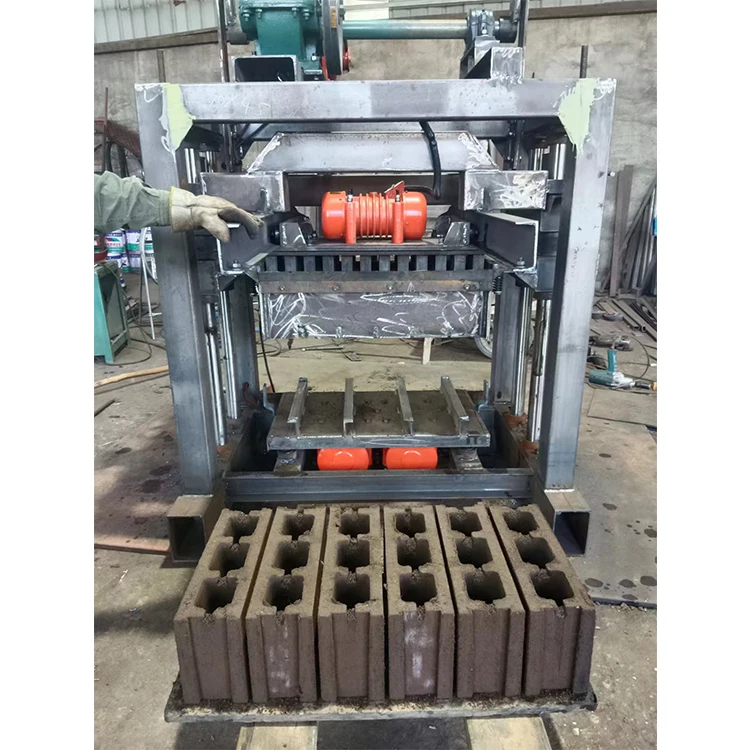
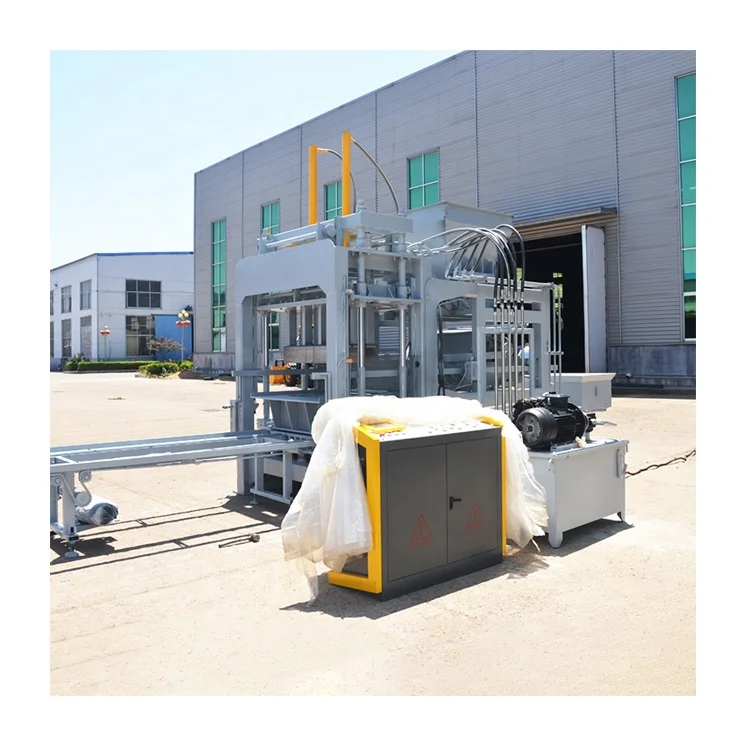
Matched System Design — Machine, mould, pallet and handling specified together for the QT8-15 so capacity calculations reflect your actual block format and local aggregate.
Technical Specifications
| Parameter |
Value |
| Model |
QT8-15 |
| Product Type |
Hydraulic Concrete Block Making Machine |
| Overall Dimensions (L×W×H) |
8300×1860×3000 mm |
| Total Mass |
8 T |
| Rated Hydraulic Pressure |
21 MPa |
| Vibration Force |
45 kN |
| Vibration Frequency |
2800-4500 r/min |
| Main Vibration Form |
Platform Vibration |
| Pallet Size |
950×900 mm |
| Molding Cycle |
15-20 s |
| Overall Power |
55.5 kW |
| Demolding Method |
Hydraulic |
| Factory Area Required |
300 m² |
| Raw Materials |
Crushed stone, sand, cement, fly ash, gravel, slag, dust |
| Applied Products |
Concrete blocks, hollow/solid blocks, pavers, interlocking blocks, curbstone, colored pavers |
| Output Capacity |
(basis to be confirmed — depends on block format, material, and thickness) |
| Voltage & Frequency |
(source value — verify against manufacturer catalog) |
| Control System |
(source value — verify against manufacturer catalog) |
| Automation Level |
(source value — verify against manufacturer catalog) |
| Standards |
CE declaration where applicable, 1-year warranty |
Application Suitability
| Application |
Material or Output |
| Hollow block production for building walls |
Crushed stone, sand, cement, fly ash |
| Solid block manufacturing for load-bearing structures |
Gravel, sand, cement mix |
| Paving block and colored paver production |
Fine aggregates, cement, pigment |
| Interlocking brick and kerbstone forming |
Slag, dust, cement blend |
| On-site block production for housing projects |
Locally sourced aggregate and cement |
What "Pieces per Hour" Leaves Out About the QT8-15 Block Machine Manufacturer Quote
Capacity means nothing unless the block format, mix design, and pallet size are stated alongside it.
A distributor in Central America once told me they ordered a mid-tier hydraulic block press expecting a certain daily output, only to find the quoted figure assumed a small solid block while their market demanded 200 mm hollow blocks. The real throughput was barely half. When evaluating a QT8-15 block machine manufacturer proposal, the cycle time of 15-20 seconds applies to a specific format on a 950×900 mm pallet — switch to a larger kerbstone or a thinner paver and that number shifts. [NEED_CITE: block format assumptions in capacity quoting] The vibration frequency range of 2800-4500 r/min and 21 MPa hydraulic pressure must also match your local aggregate; volcanic scoria behaves nothing like river gravel under pressure.

Where the QT8-15 Sits in the Full Machine Range
The QT8-15 occupies the mid-to-high tier among our block machine lineup. It bridges the gap between smaller semi-automatic models suited for workshop volumes and the high-capacity fully automatic lines that demand larger factory footprints. Buyers stepping up from mobile egg-laying machines or entry-level presses find this model offers a meaningful jump in daily output while keeping the plant area within 300 m².
Choosing Between Semi-Automatic and Automatic Configurations
A buyer setting up a first block plant often starts with semi-automatic pallet handling to keep initial investment manageable, then adds automatic stacking and cubing as demand grows. The QT8-15 supports this upgrade path because the press, mould, and pallet system are designed as one matched set rather than assembled from separate suppliers. This means the automation upgrade does not require replacing the core press or re-engineering the pallet size. [NEED_CITE: block line automation upgrade paths]
Reading the Specs That Actually Shape Your Output
The 21 MPa rated pressure and 45 kN vibration force work together — pressure alone compresses the mix, but vibration settles fine particles into voids, and both must be matched to your aggregate gradation. A mix heavy in fly ash needs different vibration tuning than one relying on coarse crushed stone. The 950×900 mm pallet size determines how many blocks fit per cycle; a standard 400×200×200 mm hollow block yields a different count per pallet than a 200×100×60 mm paver. The 55.5 kW overall power draw tells you what electrical infrastructure to prepare, and the 8-tonne machine mass signals the foundation load your factory floor must bear. Mould change time directly affects how many formats you can realistically produce in a single shift.
The Cost of Skipping Configuration Checks
Ordering without confirming voltage, frequency, and PLC display language delays commissioning by weeks once the machine arrives on site. Choosing a pallet material without considering your existing curing racks and forklift capacity leads to handling bottlenecks that cancel out the press cycle advantage. A mould specified for a mix your local suppliers cannot provide forces either a costly material import or a complete mould redesign after installation. [NEED_CITE: common block machine commissioning delays]
Why Source the QT8-15 Here
Block machinery is our single focus, so the QT8-15 press, its moulds, pallets, and handling equipment are specified as one integrated system. We configure the machine against your actual mix design and target block format, not a catalogue default. Mould design covers the formats your market sells, including custom drawings when standard options do not fit. Automation level is selectable, letting you start semi-automatic and add stacking or cubing later. Installation support includes operator training so your team runs the QT8-15 confidently from the first shift.
Documentation & Verification
- Line layout showing QT8-15 placement and capacity per block format
- Machine spec sheet with voltage, frequency, and PLC language confirmed
- Mould drawing and format list with cycle times for each block type
- Factory test record on your specified mix before dispatch
- Packing photographs and customs documentation support
Installation, Commissioning & Support
- Foundation plan sized for 8-tonne QT8-15 mass and vibration load
- Electrical supply matched to 55.5 kW draw with confirmed voltage and frequency
- Machine dismantled for container loading and reassembled on your 300 m² site
- First-run commissioning with hydraulic pressure and vibration frequency tuned to your mix
- Operator training covering mould change, pallet feeding, and daily maintenance routines
- Wear parts and mould availability list provided at handover
Before You Request a Quote
Tell us which block formats your market actually sells, the daily volume you need per format, and the raw materials available within hauling distance of your plant. Share your site dimensions, existing curing area setup, and local voltage standard so the QT8-15 hydraulic concrete block making machine for sale arrives configured for your conditions, not a generic default.
Frequently Asked Questions
Q: How is QT8-15 daily output calculated, and which block format does it assume?
A: Daily output depends entirely on the block format, mix design, and pallet loading pattern. The 15-20 second molding cycle applies to a specific format on the 950×900 mm pallet. We provide a capacity calculation sheet stating the exact block type, dimensions, and material assumed, so the figure you plan against matches what the machine actually produces on your product.
Q: Where does the QT8-15 sit compared to other models in the full machine range?
A: It sits in the mid-to-high tier, above small workshop machines and below high-capacity automatic lines. The 300 m² factory area requirement and 55.5 kW power draw make it suitable for buyers scaling up from semi-automatic setups without committing to a large-scale plant footprint or the infrastructure that top-tier models demand.
Q: What automation level options are available — can I start semi-automatic and upgrade later?
A: Yes. The QT8-15 can be configured from semi-automatic pallet handling through to fully automatic stacking and cubing. Because the press, mould, and pallet system are designed as a matched set, adding automation stages later does not require replacing the core machine or changing pallet dimensions.
Q: What plant footprint and utility requirements should I plan for?
A: Plan for approximately 300 m² of factory area, an electrical supply supporting 55.5 kW at your local voltage and frequency, and a reinforced foundation to handle the 8-tonne machine mass under vibration. We confirm voltage, frequency, and control language before production begins.
Q: Which mould formats are compatible, and how long does a mould change take?
A: Compatible formats include hollow blocks, solid blocks, pavers, interlocking bricks, and kerbstones. Mould change time depends on the specific mould design and whether quick-change fixtures are included. We state the changeover time per format in the proposal so you can plan shift schedules around your product mix.

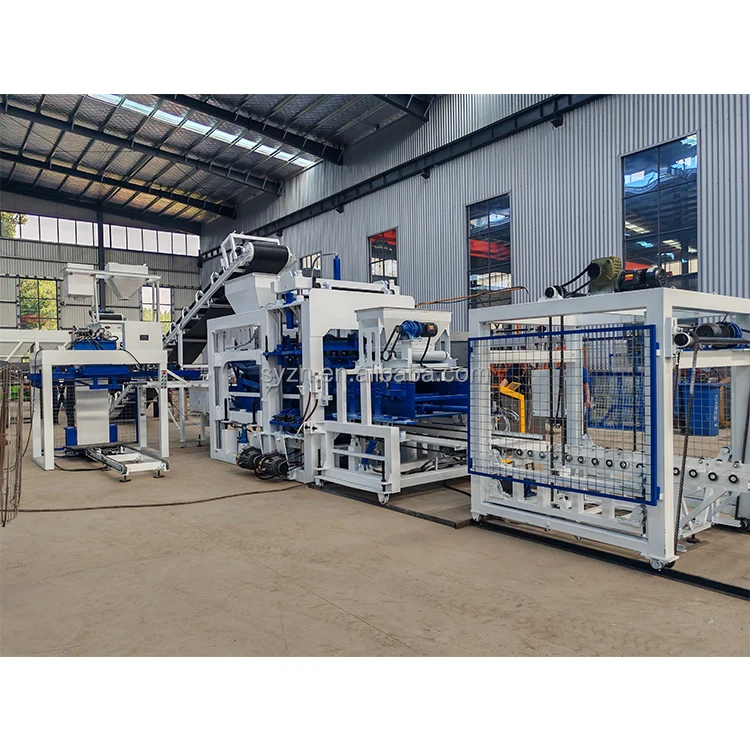
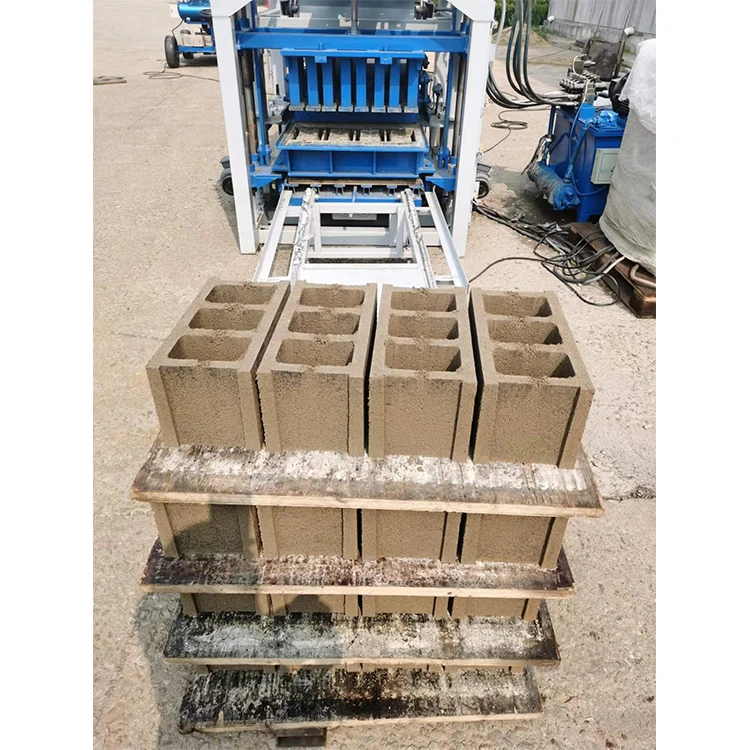 High quality block machine