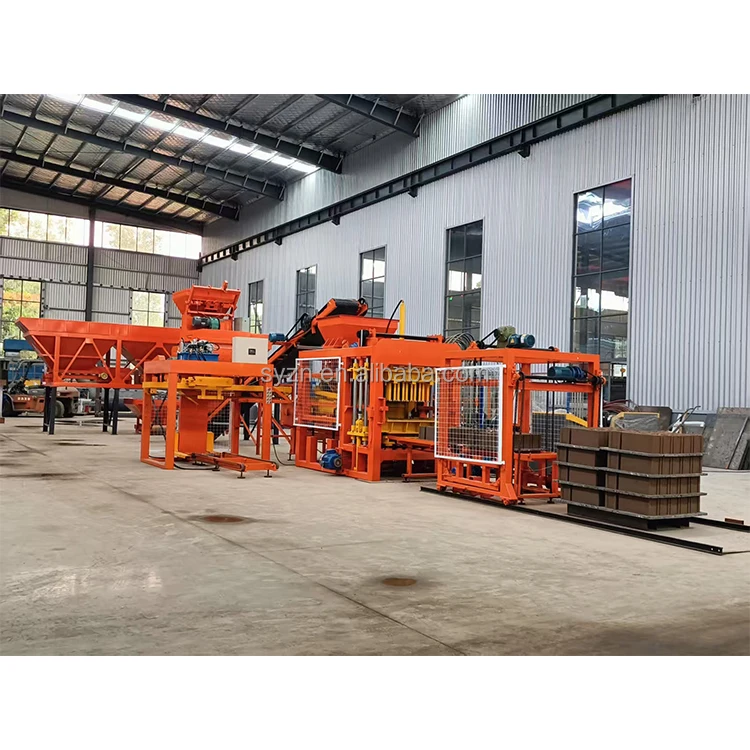
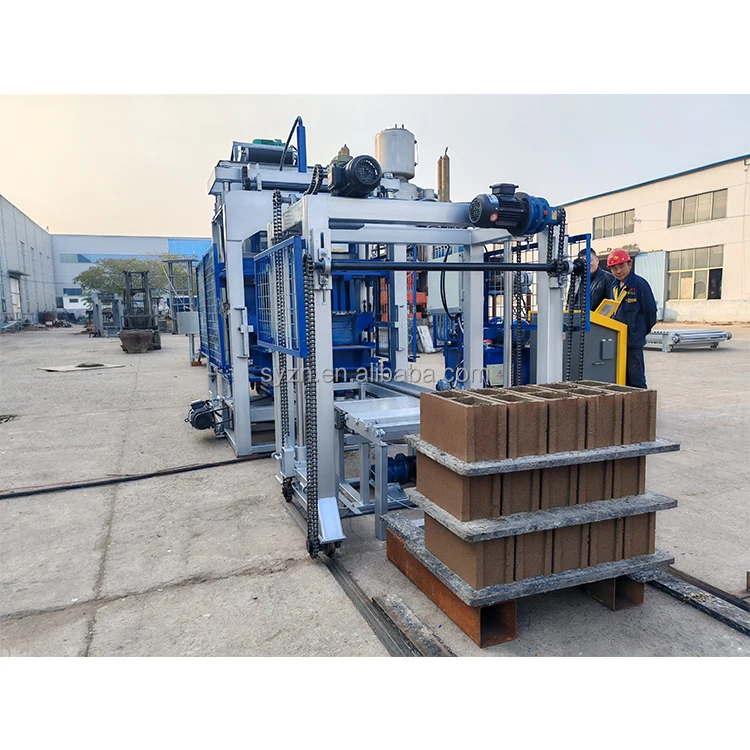
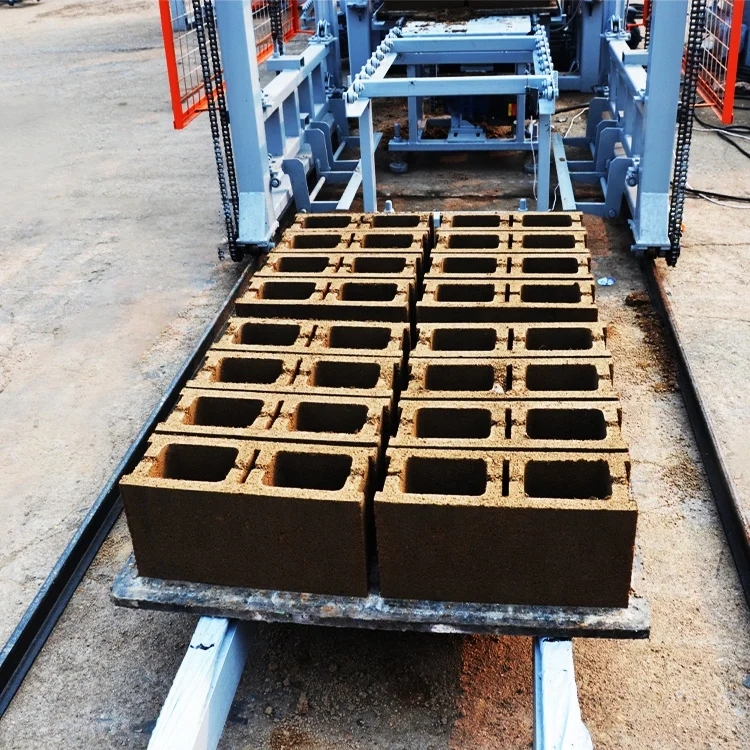
Matched system approach — Shiyue specifies the QTJ4-35 block machine, pallet and mould as one coordinated set rather than sourcing components from separate suppliers, so the vibration force, pallet size and block format all align before the machine leaves the factory.
Technical Specifications
| Parameter |
Value |
| Model |
QTJ4-35 |
| Product Type |
Small Concrete Block Making Machine |
| Overall Dimensions (L×W×H) |
1350×1460×1800 mm |
| Molding Cycle |
35 s |
| Vibration Frequency |
2800 r/min |
| Vibration Force (Exciting Power) |
30 kN |
| Total Power |
11.15 kW |
| Mixer Model |
JQ350 |
| Pallet Size |
850×450×20 mm |
| Net Weight |
1500 kg |
| Applied Products |
Concrete hollow blocks (8 inch, 6 inch), solid bricks |
| Raw Materials |
Crushed stones, sand, cement, dust, fly ash |
| Output Capacity (400×200×200 mm hollow block) |
4 pcs/mould, 408 pcs/h, 3264 pcs/8 hr |
| Output Capacity (400×150×200 mm hollow block) |
5 pcs/mould, 510 pcs/h, 4080 pcs/8 hr |
| Output Capacity (240×115×53 mm solid brick) |
18 pcs/mould, 2100 pcs/h, 17000 pcs/8 hr |
| Automation Level |
Semi-automatic / manual pallet handling |
| Voltage & Frequency |
Configurable to buyer’s site supply (basis to be confirmed) |
| Standards |
CE (where applicable) |
Application Suitability
| Application |
Material or Output |
| Small-scale block workshop |
8 inch and 6 inch hollow blocks from crushed stone, sand and cement |
| On-site construction block production |
Solid bricks and hollow blocks using locally available aggregate |
| First-time block plant startup |
Hollow block and solid brick formats on a single compact line |
| Fly ash brick production |
Solid bricks incorporating fly ash, dust and cement binder |
| Contractor self-supply block yard |
Daily workshop volume of hollow blocks for housing or wall projects |
What "3264 Blocks per Day" Actually Means on the QTJ4-35
Every capacity figure for the QTJ4-35 block machine manufacturer assumes a specific block format, and swapping that format changes the daily total significantly.
Quoted output numbers cause more disappointment at commissioning than almost any other specification. A buyer sees a headline capacity and plans labour, curing space and sales commitments around it — only to discover the figure was calculated on a small solid brick while the real production target is an 8 inch hollow block. On the ground, I have watched contractors in Latin America arrive at their site expecting one daily pallet count and find they need to run an extra shift just to meet the week’s order. The gap between quoted and real output is almost always a format mismatch, not a machine defect [NEED_CITE: block format assumptions in capacity quotations].

Where the QTJ4-35 Sits in the Full Range
The QTJ4-35 occupies the entry tier of the Shiyue block machine line. It targets buyers who need workshop-scale output without the footprint or capital outlay of a fully automatic plant. The semi-automatic configuration keeps the initial investment contained while leaving a clear step-up path to higher tiers with automatic pallet feeding and stacking. For a first-time plant owner comparing options, this model establishes the baseline from which larger machines are measured.
Matching the Machine to Your Block Format
Choosing a tier is only half the decision. The QTJ4-35 block machine manufacturer supplies the press with moulds matched to the formats the buyer’s market actually sells — whether that is the 8 inch hollow block common in residential wall construction or the solid brick used for paving and partition work. Each format has a different mould cavity count, which is why the output per hour shifts from 408 pieces on a 400×200×200 mm block to 2100 pieces on a 240×115×53 mm solid brick. A buyer surveying the range should anchor the comparison on the specific block they intend to sell, not on the highest number in the brochure [NEED_CITE: mould cavity count versus block format].
Reading the Specifications That Matter
The vibration force of 30 kN at 2800 r/min is the core forming action on this mechanical press. Unlike hydraulic machines where pressure and vibration are independently adjustable, the QTJ4-35 relies on upper and lower mould compression combined with the vibration motor to consolidate the mix. That means the vibration setting and the mould gap must be matched to the buyer’s specific aggregate gradation and cement content — a parameter set that changes when the local sand source shifts from river sand to crushed stone dust. The 850×450×20 mm pallet size is sized for a small curing yard and can be handled by a standard warehouse forklift or even moved by hand on roller conveyors. Total installed power of 11.15 kW including the JQ350 mixer means the machine can run on a typical workshop supply without a dedicated transformer, provided the voltage and frequency are confirmed before production begins.
The Cost of Skipping the Pallet and Voltage Conversation
Two oversights recur across small block plant installations. First, pallets arrive in the wrong size for the buyer’s existing curing racks, forcing a re-order before the first production week ends. Second, the machine is wired for a voltage that does not match the local grid, and the control panel labels are in a language the operators cannot read. Both issues are entirely preventable but routinely delay commissioning by weeks and add unplanned freight costs. The QTJ4-35’s compact size means the machine is often bought quickly, and the supporting details get rushed [NEED_CITE: common commissioning delays in exported block machinery].
Why Buyers Source This Tier Through Shiyue
Block machinery is the sole product focus, so the QTJ4-35, its moulds, pallets and the JQ350 mixer are specified as a matched set rather than assembled from unrelated suppliers. The capacity calculation in every quotation states which block format each output figure assumes, removing the ambiguity that causes site-level disappointment. Mould design covers the formats the buyer’s market actually demands, with custom drawings available when a non-standard brick profile is required. Voltage, frequency and control language are confirmed before the machine enters production, so the electrical panel arrives ready for the target grid. The semi-automatic configuration leaves room to add automatic pallet handling or a higher-output press later without replacing the existing mould inventory.
Documentation & Verification
- Line layout showing the QTJ4-35 footprint with curing area scaled to the 850×450 mm pallet
- Capacity calculation sheet listing output per block format actually ordered
- Mould drawing and format list for every cavity included in the shipment
- Machine specification sheet confirming vibration force, pallet size and total power
- Voltage, frequency and control language confirmation record before production
- Factory test record on the buyer’s specified block format prior to dispatch
Installation, Commissioning & Support
- Compact 1350×1460 mm footprint fits a standard workshop bay without special foundation work
- 11.15 kW total load requires a dedicated circuit with confirmed voltage and frequency
- Machine ships partially assembled; mould and vibration motor mounted on-site
- First-run parameter tuning to match local aggregate gradation and cement ratio
- Operator training covering mould change, pallet handling and daily maintenance checks
- Wear parts list with lead times for vibration motor components and mould liners
Preparing a Productive Inquiry
To move from a range survey to a firm configuration, the next step is sharing a few site-level details. Provide the block formats you intend to produce and the daily volume you need to hit on each one. Confirm the local grid voltage and frequency, and note whether your curing area already has pallets or racks in a specific size. If you are working with a particular aggregate — volcanic ash, crushed limestone, river sand — mention it so the vibration parameters can be set accordingly before the machine ships.
Frequently Asked Questions
Q: How is the QTJ4-35’s capacity verified, and which block format does each figure assume?
A: Every output figure is tied to a specific block dimension. The 3264 pieces per 8-hour shift applies to 400×200×200 mm hollow blocks at four pieces per mould. Switching to a smaller solid brick raises the count to 17000 pieces per shift because the mould holds 18 cavities. The quotation you receive lists each format you plan to run with its corresponding cycle count and daily output.
Q: Where does the QTJ4-35 sit in the full Shiyue range, and when should a buyer step up?
A: This model is the entry tier, aimed at first-time plant owners and contractors producing at workshop volume. If your daily target exceeds what a single semi-automatic press can deliver on your primary block format, or if you need automatic stacking to reduce manual labour, the next tier in the range adds those capabilities while using the same mould format standards.
Q: What voltage, frequency and control options are available for my target market?
A: The electrical system is configured to match your site supply before production begins. You confirm voltage, frequency and the language for any panel markings during the order process, so the machine arrives ready to connect without field rewiring or translation delays.
Q: What plant footprint and auxiliary equipment does the QTJ4-35 require?
A: The press itself occupies roughly 1350×1460 mm, but the full working area must include space for the JQ350 mixer, raw material storage, pallet staging and a curing yard scaled to the 850×450 mm pallet. A simple roller conveyor or hand-cart system is sufficient at this tier for moving pallets between the press and the curing area.
Q: How does the upgrade path work if I later need automatic stacking or higher output?
A: The semi-automatic configuration is designed to allow future addition of automatic pallet feeding and stacking equipment. Mould formats ordered with the QTJ4-35 remain compatible with higher-tier presses in the range, so your existing mould inventory carries forward if you expand capacity later.


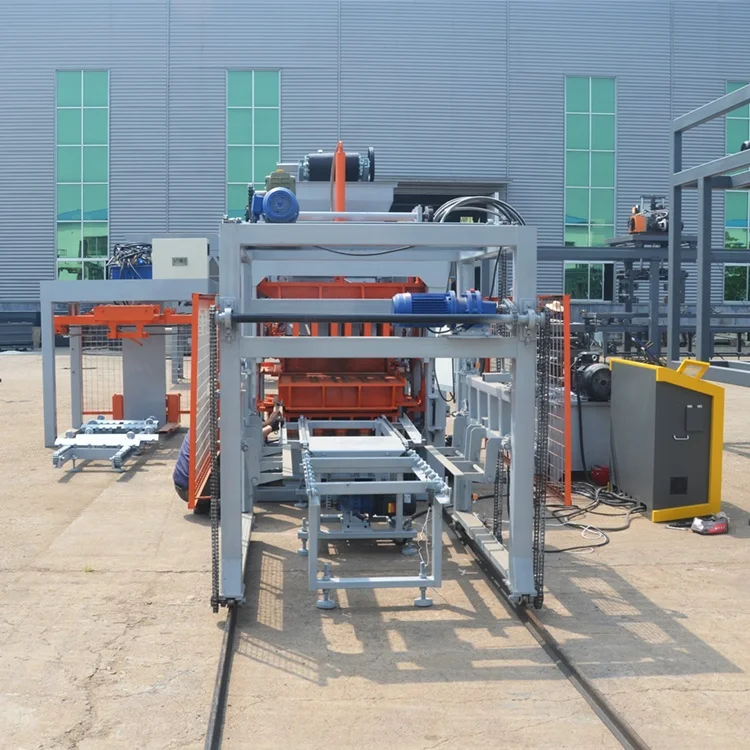 High quality block machine