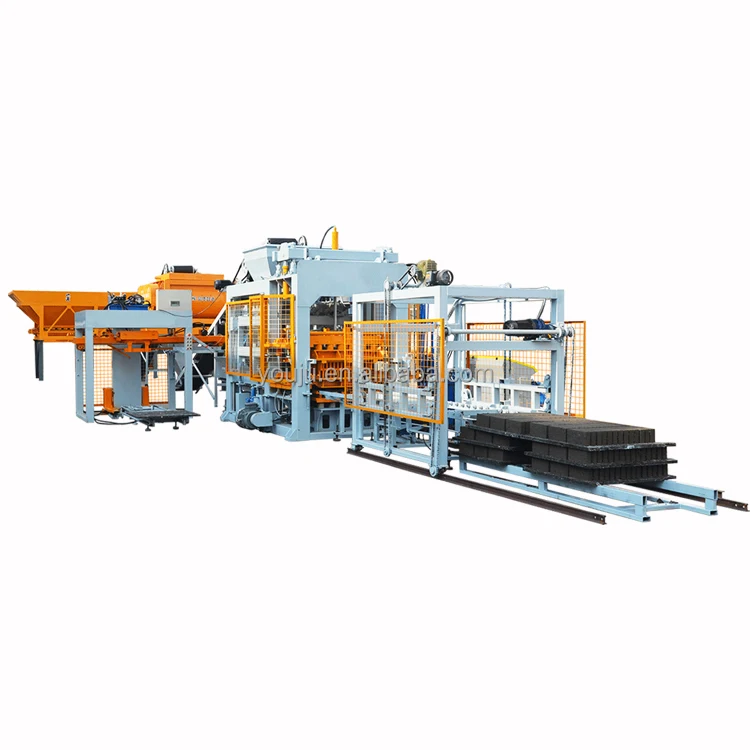
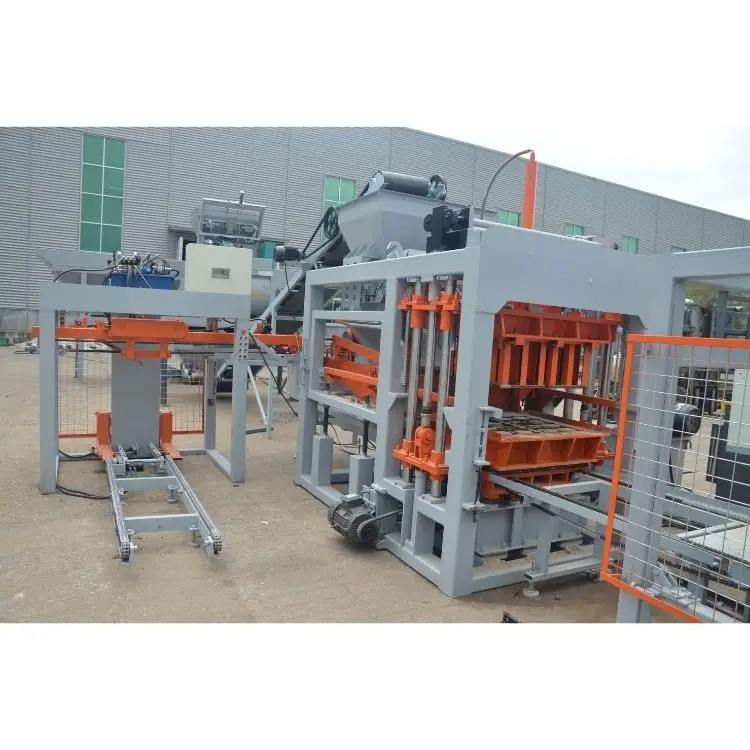
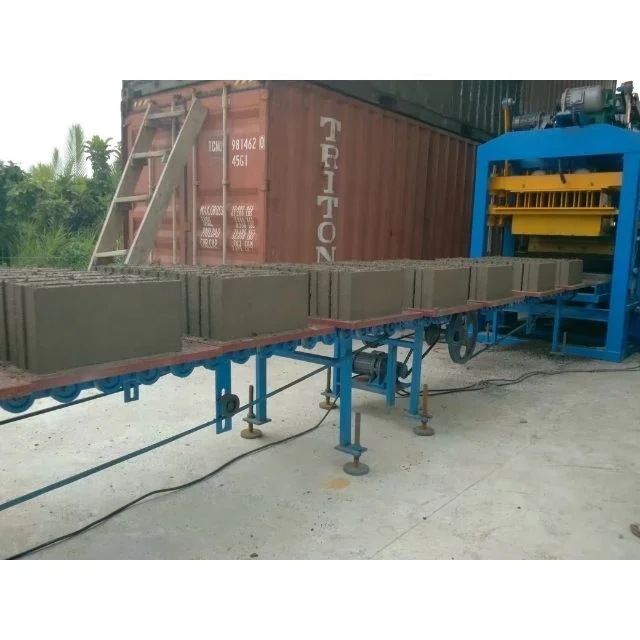
Specified as One Matched System — the QT12-15 press, moulds, 1350 × 850 mm pallets, and handling stations are configured together so capacity figures reflect your actual block format and site conditions rather than a generic catalogue line.
Technical Specifications
| Parameter |
Value |
| Model |
QT12-15 |
| Product Type |
Automatic Concrete Block Making Machine |
| Overall Dimensions (L×W×H) |
9350 × 2520 × 2950 mm |
| Frame Structure |
Gantry frame, super steel |
| Rated Hydraulic Pressure |
21 MPa |
| Main Vibration Form |
Platform vibration |
| Vibration Frequency |
2800–4500 r/min |
| Vibration Acceleration |
15–20 g |
| Exciting Force |
120 kN |
| Fixed Brick Height Range |
50–200 mm |
| Pallet Size |
1350 × 850 mm |
| Molding Cycle |
15–25 s |
| Storage Hopper Volume |
0.4 m³ |
| Feeding Device Volume |
0.31 m³ |
| Total Power |
50.7 kW |
| Total Weight |
12000 kg |
| Control System |
PLC controlled (mechanical hydraulic synthesis) |
| Mould Type |
Cartridge-type welding mould, manganese steel (carburizing and quenching) |
| Output — Hollow Block 390×190×190 mm (12 pcs/mould) |
1720–2160 pcs/h, 13700–17200 pcs/day (8 h) |
| Output — Porous Block 240×115×90 mm (35 pcs/mould) |
5040–6300 pcs/h, 40300–50400 pcs/day (8 h) |
| Output — Standard Block 240×115×53 mm (62 pcs/mould) |
13100–14800 pcs/h, 105000–119000 pcs/day (8 h) |
| Voltage & Frequency |
Basis not stated in source — confirm with block format and site |
| Automation Level |
Automatic (mechanical hydraulic PLC controlled) |
| Recommended Batching Line |
PL1200 batching machine, JS500 or JS750 mixer, 8 m conveyor belt, stacker |
Application Suitability
| Application |
Material or Output |
| Hollow block production for load-bearing walls |
Crushed stone, cement, sand with aggregate grading matched to local supply |
| Porous block manufacturing for insulation fills |
Lightweight aggregate, fly ash blends, cementitious binder |
| Standard solid brick runs for masonry |
Dense aggregate, cement, fine sand at controlled moisture |
| Interlocking paver and kerbstone production |
High-strength mix designs with colour oxide additives |
| On-site production for housing and development projects |
Locally sourced aggregate with mix adjustment for compressive strength targets |
Why "Pieces per Hour" Means Nothing Without the Block Format
Capacity only matters when the block size, mould cavity count, and cycle time are all stated together.
An automatic block machine manufacturer quoting a single throughput number without naming the format leaves buyers planning around output they will never see. A press running 12-cavity hollow blocks at a 20-second cycle produces a fundamentally different daily volume than the same press running 62-cavity standard bricks. I have watched project timelines slip because the production estimate assumed a format the plant never intended to sell. The figures above are each tied to a specific block dimension, cavity count, and cycle range so your planning starts from a number you can actually achieve [NEED_CITE: block production capacity calculation methods by format].

Positioning the QT12-15 Within the Output Tier Range
The QT12-15 sits at the high-capacity end of the automatic block machine range. Its 1350 × 850 mm pallet and 120 kN exciting force place it above workshop-scale models that handle smaller pallets and lighter vibration loads. Buyers moving from semi-automatic operation find this tier covers the volume needed for commercial block supply contracts while keeping the footprint within a standard industrial bay. Choosing between this tier and a mid-range automatic model comes down to whether your daily target requires the larger pallet and higher cavity counts this press supports.
Matching the Full Line Around the Press
A press this size only reaches its stated cycle rate when raw material feeding, mixing, pallet circulation, and output stacking keep pace. The recommended PL1200 batching machine and JS500 or JS750 mixer are specified to deliver mix volume that prevents the hopper from running dry between charges. Pallet return conveyors and stacker capacity must also align with the moulding cycle — if cured blocks are not cleared from the pallets fast enough, the press waits and the real output drops below the automatic block machine manufacturer rating [NEED_CITE: block plant line synchronization requirements].
What the Spec Sheet Numbers Actually Control on the Shop Floor
The 21 MPa rated hydraulic pressure working together with 120 kN exciting force determines how densely the mix is compacted inside each mould cavity. Insufficient pressure on a stiff, low-slump mix produces blocks that crumble at the edges before curing. The platform vibration frequency range of 2800–4500 r/min lets the operator tune the shake to the aggregate size — coarser crushed stone needs lower frequency and longer duration, while fine sand blends respond to higher frequency. The 50–200 mm brick height range means one press handles everything from thin pavers to tall hollow blocks without a frame modification. Mould changes use the cartridge-type welding design in carburized manganese steel, so the cavity insert slides out as a single unit rather than requiring individual cavity plate removal.
The Cost of Skipping the Configuration Step
Ordering a high-capacity press without confirming the local aggregate grading, mix moisture tolerance, and curing environment leads to problems that only surface after commissioning. Blocks may crack during demoulding if the vibration force exceeds what the green mix can hold. Pallets specified without checking the buyer’s forklift fork width and curing rack spacing create handling bottlenecks that no amount of press speed can overcome [NEED_CITE: pallet and curing area coordination in block plants]. Voltage and frequency mismatches delay first production by days while replacement motors or transformers are sourced locally.
Why This Automatic Block Machine Manufacturer Approaches Configuration Differently
Block machinery is our single focus, so the QT12-15 is specified as one matched system rather than assembled from separate suppliers. Machine, mould, pallet, and handling equipment are confirmed together before production begins. Configuration is set against the buyer’s actual mix design and local aggregate, not a catalogue default. Moulds are designed and supplied for the formats the buyer’s market actually sells, including custom drawings when standard cavity layouts do not fit. Automation level is selectable, allowing a buyer to start with semi-automatic pallet handling and add automatic stacking later. Installation support includes operator training on the PLC interface and cycle parameter adjustment so the team on site can tune the press to their material from day one.
Documentation & Verification
- Line layout and capacity calculation stating the block format assumed for each output tier
- Machine specification sheet with hydraulic pressure and vibration force matched to your mix
- Mould drawing and format list confirming cavity count and change procedure per block size
- Pallet specification with dimensions, material grade, and forklift compatibility notes
- Voltage, frequency, and PLC display language confirmation document signed before production
- Factory test record on your specified block format captured before dispatch
Installation, Commissioning & Support
- Foundation plan sized for the 12000 kg machine weight and 120 kN dynamic vibration load
- Electrical supply confirmed for the 50.7 kW total power draw on your site voltage and frequency
- Machine shipped in dismantled sections for container loading, with reassembly sequence documented
- First-run commissioning includes cycle tuning on your local aggregate and mix design
- Operator training covers PLC parameter adjustment, mould change procedure, and daily maintenance checkpoints
- Wear parts list with mould cavity inserts, hydraulic seals, and vibration motor bearings identified for stocking
What We Need Before Quoting
To size the QT12-15 correctly for your plant, we need the block formats your market sells along with daily volume targets for each. Share your local aggregate type, typical moisture content, and any compressive strength standards your blocks must meet. Let us know your site voltage, frequency, and preferred PLC display language so electrical and control configuration is locked before production begins.
Frequently Asked Questions
Q: How is QT12-15 capacity calculated and which block format does each figure assume?
A: Each output figure is tied to a specific block dimension, cavity count per mould, and the 15–25 second molding cycle range. Hollow block figures assume 390×190×190 mm at 12 cavities, porous block assumes 240×115×90 mm at 35 cavities, and standard block assumes 240×115×53 mm at 62 cavities. Daily totals are based on an eight-hour production shift.
Q: Where does the QT12-15 sit on the range compared to smaller automatic or semi-automatic models?
A: This model occupies the high-capacity tier with a 1350 × 850 mm pallet and 120 kN exciting force. Smaller automatic models use smaller pallets and lower vibration loads suited to workshop volumes. Semi-automatic models reduce initial investment but require manual pallet handling. The choice depends on your daily volume target and labour availability.
Q: What pallet size and material are specified for this press?
A: The QT12-15 uses 1350 × 850 mm pallets. Pallet material — steel, bamboo, or PVC — is selected based on your curing environment, expected pallet lifespan, and the forklift equipment already on site. We confirm pallet specification alongside the press order so handling compatibility is resolved before shipment.
Q: Which block formats can one QT12-15 produce and how does mould change work?
A: One press covers hollow blocks, porous blocks, standard solid blocks, interlocking pavers, and kerbstones within the 50–200 mm height range. The cartridge-type welding mould design allows the cavity insert to be removed and replaced as a single unit. Mould change time depends on the format and operator familiarity.
Q: What supporting equipment completes the production line around the press?
A: The recommended line includes a PL1200 batching machine, a JS500 or JS750 mixer, an 8 m conveyor belt, and a stacker. Raw material feeding, pallet circulation, and output stacking must all keep pace with the press cycle to prevent idle time. Line layout is provided showing how each station connects.

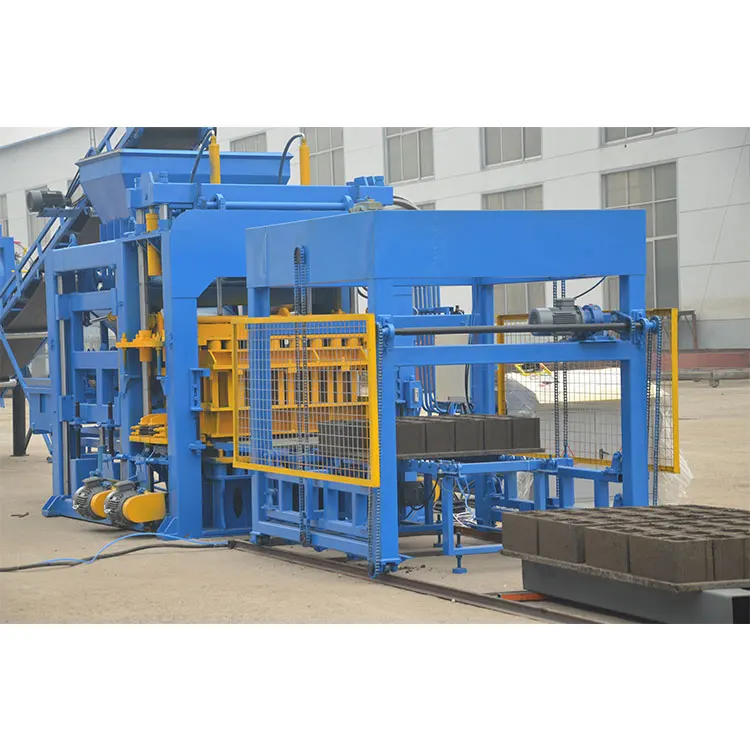 Automatic block machine