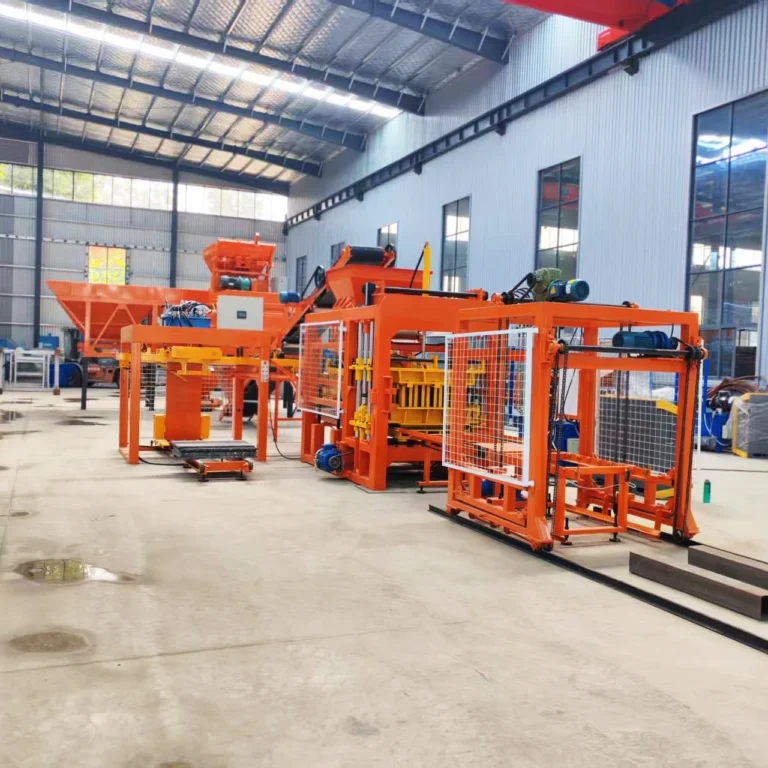
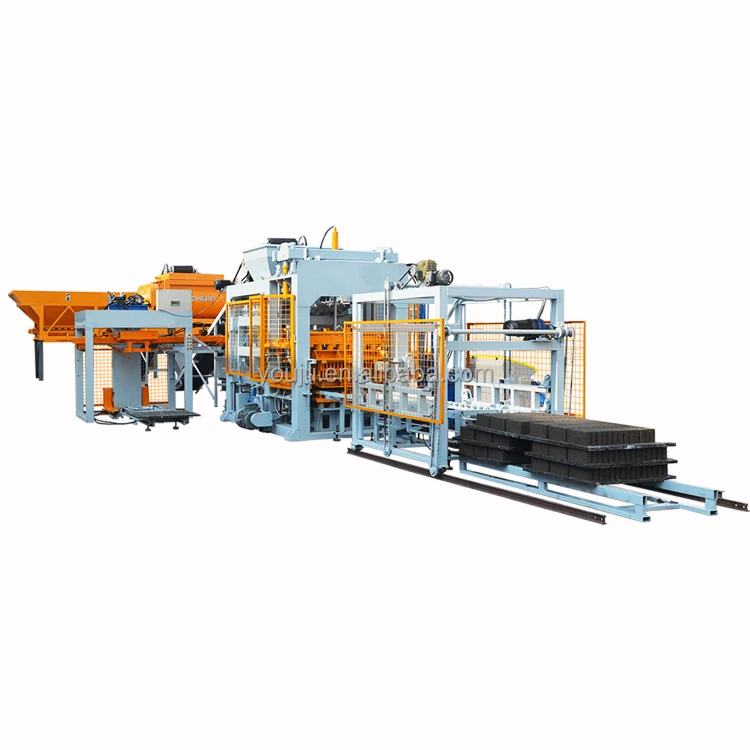
Matched System Sizing — every output figure for the QT12-15 is calculated against a named block format and confirmed cycle, so daily tonnage matches what your curing yard actually receives.
Technical Specifications
| Parameter |
Value |
| Model |
QT12-15 |
| Product Type |
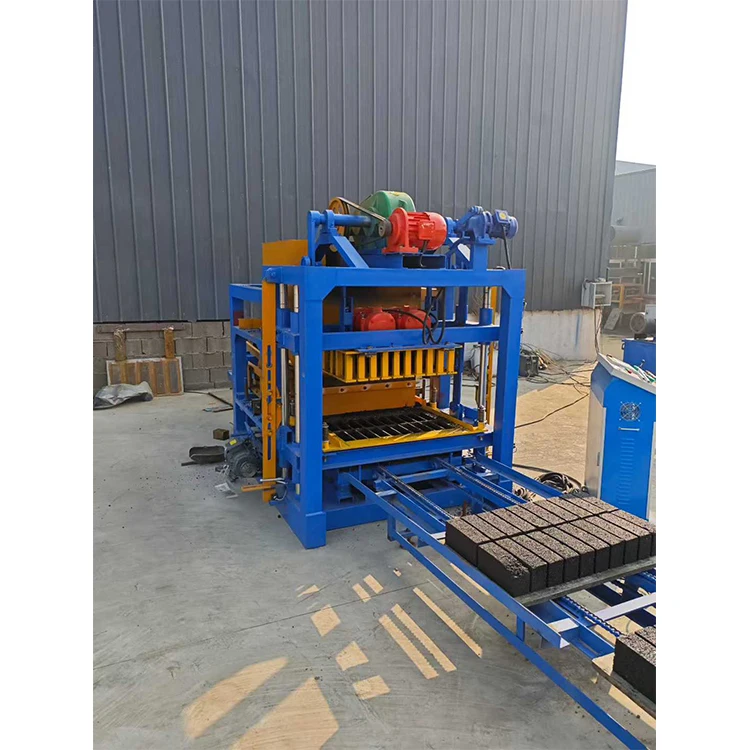
Automatic Concrete Block Making Machine |
| Overall Dimensions (L×W×H) |
9350 x 2520 x 2950 mm |
| Total Weight |
12000 kg |
| Structure |
Gantry frame type, super steel |
| Rated Pressure |
21 MPa |
| Main Vibration Form |
Platform Vibration |
| Vibration Frequency |
2800–4500 r/min |
| Vibration Acceleration |
15–20 g |
| Exciting Force |
120 kN |
| Fixed Brick Height |
50–200 mm |
| Molding Cycle |
15–25 s |
| Pallet Size |
1350 x 850 mm |
| Feeding Device Volume (Storage Hopper) |
0.4 m³ |
| Feeding Device Volume (Feeder) |
0.31 m³ |
| Total Power |
50.7 kW |
| Control System |
PLC controlled (mechanical hydraulic synthesis) |
| Compressive Strength of Blocks |
more than 15 MPa |
| Mould Material |
Manganese steel, carburizing and quenching, cartridge type welding |
| Output Capacity (Hollow Block 390×190×190mm) |
1720–2160 pcs/h, 13700–17200 pcs/day (8h) |
| Output Capacity (Porous Block 240×115×90mm) |
5040–6300 pcs/h, 40300–50400 pcs/day (8h) |
| Output Capacity (Standard Block 240×115×53mm) |
13100–14800 pcs/h, 105000–119000 pcs/day (8h) |
| Recommended Line Configuration |
PL1200 batching machine, JS500 or JS750 mixer, 8m conveyor belt and stacker |
| Voltage & Frequency |
(basis not stated in source — confirm before order) |
| Automation Level |
Automatic |
Application Suitability
| Application |
Material or Output |
| Hollow Block Production |
Crushed stone, sand, cement and fly ash blends for 390×190×190mm load-bearing units |
| Porous Block Production |
Lightweight aggregate and cement mixes for 240×115×90mm thermal insulation units |
| Standard Solid Block Production |
Dense aggregate and cement for 240×115×53mm masonry bricks |
| Interlocking Brick Production |
Stabilized soil or cement-aggregate blends for dry-stack wall systems |
| Cement Paving Block Production |
High-strength concrete mixes for driveway and walkway surfaces |
| On-Site Project Production |
Local aggregate and cement for housing or infrastructure development blocks |
What "13,700 Blocks a Day" Actually Assumes
Every capacity figure on this page is tied to a specific block size and a confirmed molding cycle — not a single best-case number applied across formats.
Buyers often receive quotations stating a daily output that applies only to the smallest solid block the machine can press. When the same plant switches to 390×190×190mm hollow blocks, the cycle lengthens, pallet coverage drops, and the real daily volume can be less than half the quoted number. The QT12-15 is an automatic block machine manufacturer proposal where hollow block output is stated at 13,700–17,200 pieces per eight-hour shift, while standard bricks reach 105,000–119,000 in the same period. Confusion between these tiers is one of the most common reasons new plants under-deliver in their first season [NEED_CITE: block plant capacity verification standards].

Where the QT12-15 Sits in the Complete Range
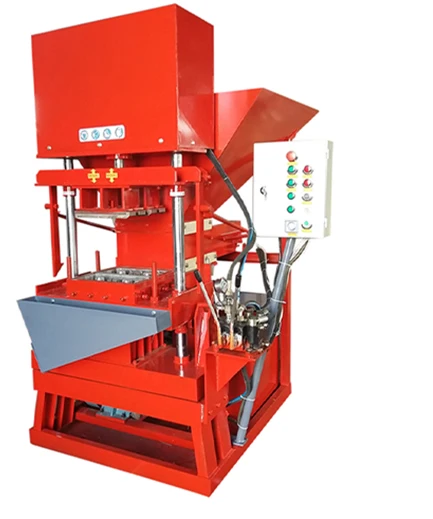
The Shiyue range covers mobile egg-layers at one end and high-capacity automatic lines at the other. The QT12-15 sits at the top of this ladder, designed for a dedicated block and paver production plant that runs eight-hour shifts or longer. Smaller semi-automatic tiers share the same mould interface but accept manual pallet handling, while mobile machines eliminate pallets entirely. Choosing the right tier depends on your daily volume target and whether you already own curing racks and forklifts.
Matching the Line Around the Press
A 50.7 kW press does not work alone. The recommended PL1200 batching machine and JS500 or JS750 mixer must deliver concrete to the 0.4 m³ storage hopper faster than the 15–25 s molding cycle consumes it. If the mixer batch time exceeds the press cycle, the QT12-15 sits idle waiting for material. An automatic block machine manufacturer must specify every station so that conveyor speed, pallet feeding rate, and stacker indexing keep pace with the press without bottleneck or pile-up [NEED_CITE: concrete batching line synchronization].
Vibration Force, Hydraulic Pressure and Block Density
The 120 kN exciting force and 15–20 g vibration acceleration compact the concrete mix into the mould cavity, while the 21 MPa hydraulic rated pressure holds the head plate down during compaction. Together they determine the compressive strength of the finished block — stated here at more than 15 MPa for standard mixes. Platform vibration transmits energy through the pallet, which is why pallet flatness and stiffness directly affect density uniformity. A 1350 × 850 mm pallet was chosen to balance mould area with the load capacity of standard curing-rack forklifts.
The Cost of Skipping Format-by-Format Capacity Checks
When a quotation lists only one daily output number, buyers discover after installation that their primary product — usually hollow blocks — yields far less than expected. Curing yard space planned around an inflated number then overflows, wet blocks stack on the ground, and strength targets are missed. Pallets ordered to the wrong size cannot be handled by existing forklifts, forcing an unbudgeted replacement. Voltage mismatches discovered after arrival add weeks of rewiring before the line can run [NEED_CITE: electrical compatibility for imported block machinery].
Why Source This Tier Here
Block machinery is our single focus, so the QT12-15 is not sold as a standalone press. Machine, mould, pallet, and handling equipment are specified as one matched system. Moulds are designed for the block formats that sell in your market, including custom drawings when local standards differ. Configuration is set against your actual mix design and local aggregate, not a catalogue default. Automation level is selectable — a buyer can begin with a semi-automatic pallet return and add the automatic stacker later without replacing the press. Factory testing is recorded on your chosen block format before the line is dismantled for shipment.
Documentation & Verification
- Line layout drawing with capacity stated per block format and cycle time
- Mould drawing and format list matching your market’s best-selling sizes
- Hydraulic and electrical schematic including confirmed voltage and frequency
- Factory test record on your specified block format before dispatch
- Packing photographs and container loading plan provided before shipment
Installation, Commissioning & Support
- Foundation plan sized to the 9350 x 2520 mm footprint and 12000 kg dynamic load
- Power feed rated for 50.7 kW total draw with dedicated circuit breaker and earth loop
- Machine dismantled for container loading; re-assembly and alignment completed on site
- PLC display language and voltage confirmed before production to avoid commissioning delays
- Operator training covers mould change procedure across all formats in your list
- Wear parts and mould replenishment schedule provided at handover
Preparing a Useful Inquiry
Tell us the block formats your market moves in highest volume, along with the daily output target for each. Share a sample or lab report of your local aggregate so we can match vibration and pressure settings to your actual mix. Confirm your site voltage, frequency, and preferred PLC display language so the control cabinet is wired correctly before it leaves the factory.
Frequently Asked Questions
Q: How is output capacity calculated for the QT12-15?
A: Each capacity figure is tied to a specific block format and its corresponding molding cycle. Hollow block 390×190×190mm output is 13,700–17,200 pieces per eight-hour shift, while standard 240×115×53mm bricks reach 105,000–119,000 in the same period. We provide a capacity table listing every format you plan to produce before the order is confirmed.
Q: What plant footprint does this automatic line require?
A: The press itself measures 9350 x 2520 mm, but the full line includes a batching station, mixer, conveyor, and stacker area. Expect a working envelope considerably larger than the press footprint alone. Semi-automatic tiers reduce the stacker footprint, and mobile machines eliminate pallets and curing racks entirely.
Q: Can I start semi-automatic and upgrade later?
A: Yes. The QT12-15 press accepts manual pallet handling at the start. When daily volume grows, the automatic pallet feeder and stacker can be added without replacing the main frame or hydraulic circuit. We specify the upgrade path at the initial quotation stage.
Q: What voltage and PLC language options are available?
A: Voltage, frequency, and PLC display language are confirmed with each buyer before production. This avoids the common delay of rewiring or reprogramming after the line arrives on site. State your local supply standard and preferred operator language in the initial inquiry.
Q: How long does a mould change take on this machine?
A: The cartridge-type welded mould is designed for removal and replacement within a single shift when the correct tools are at hand. We include the mould change procedure in operator training and supply the format-specific lifting brackets with each mould set ordered.

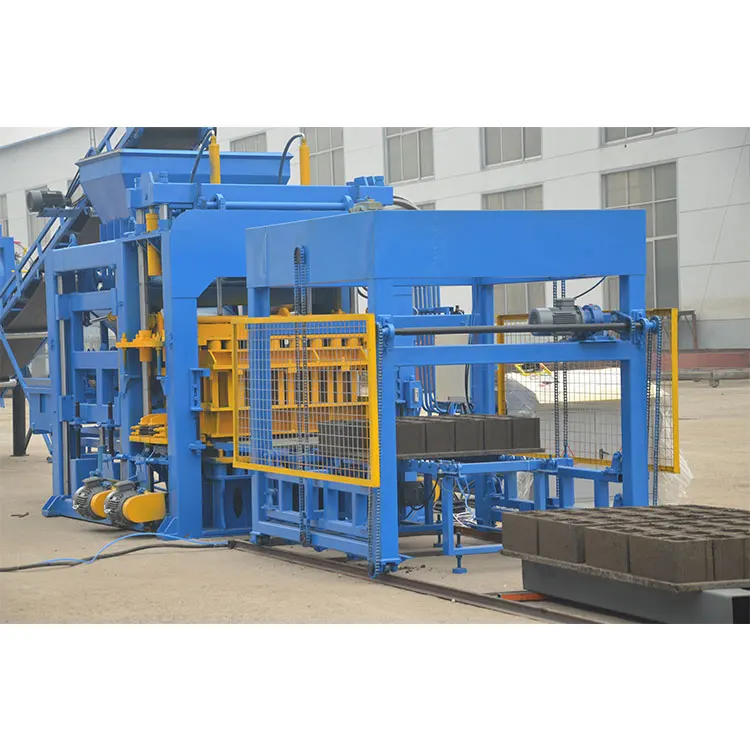
 Automatic block machine