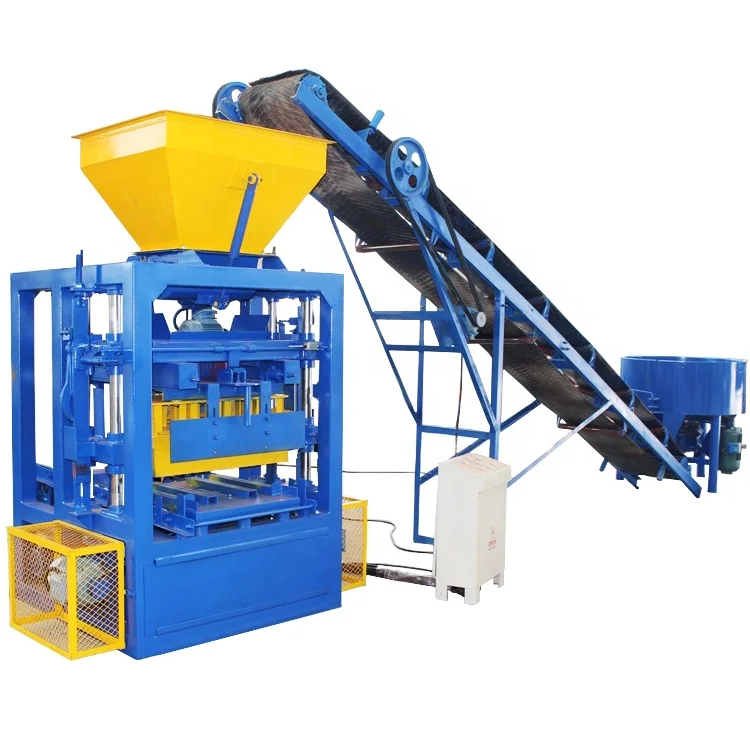
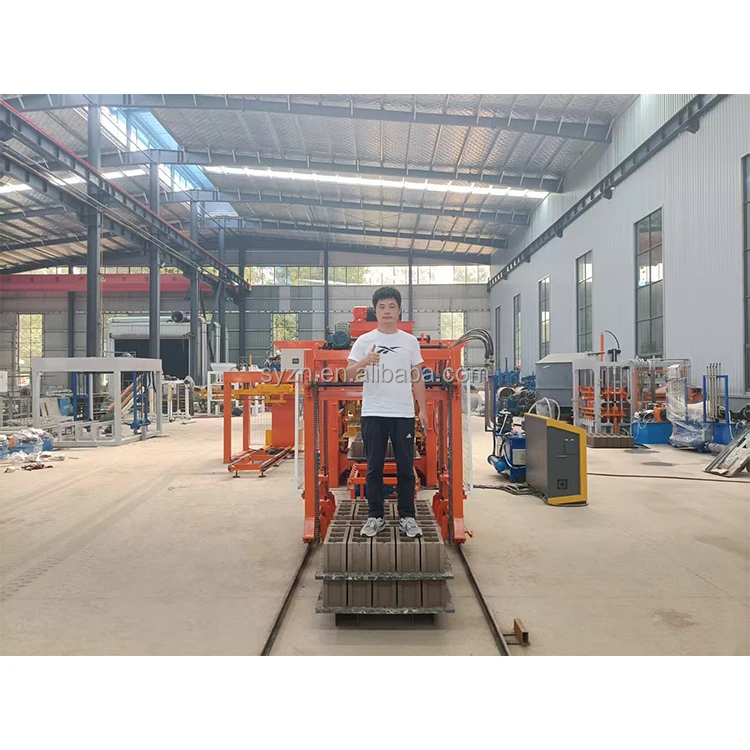
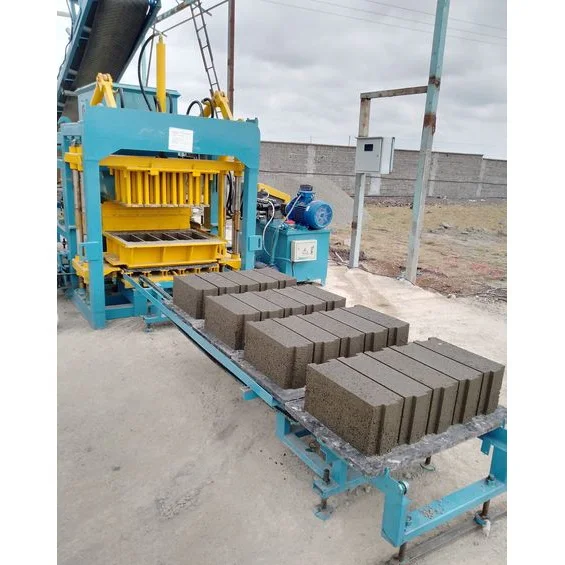
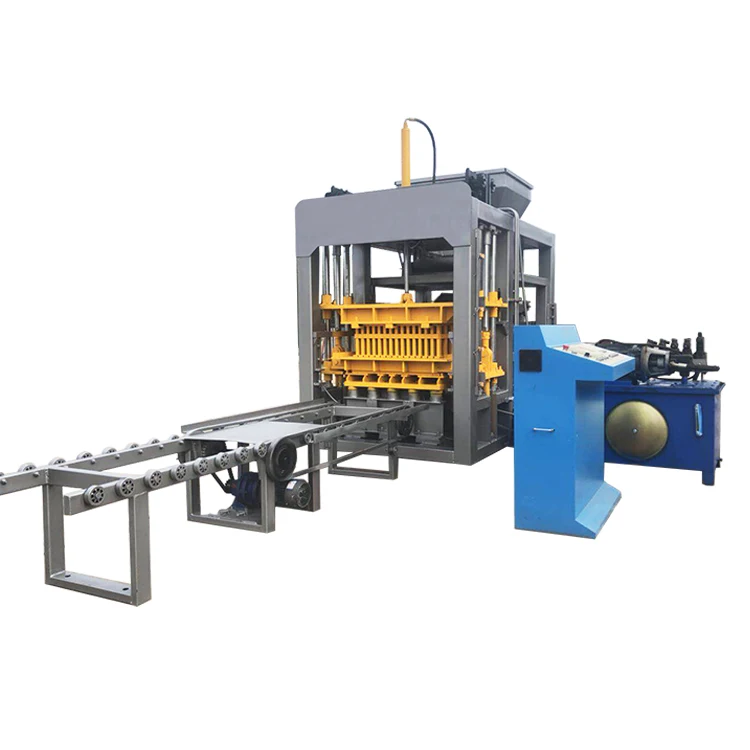
Matched System Design — the QT4-18 is specified as a complete block line with mould, pallet and handling matched to your format, not assembled from separate suppliers.
Technical Specifications
| Parameter |
Value |
| Model |
QT4-18 |
| Product Type |
Automatic Concrete Block Making Machine |
| Overall Dimensions |
2500 × 1750 × 2200 mm |
| Rated Hydraulic Pressure |
16 MPa |
| Vibration Form |
Platform vibration |
| Pallet Size |
950 × 550 mm |
| Molding Cycle |
18–25 s (basis to be confirmed per block format) |
| Overall Power |
27.5 kW |
| Control System |
PLC with frequency converter |
| Electrical Components |
Schneider |
| Material Feeding |
Hopper, feeding box, feeding platform, conveyor |
| Mold Lifting Mechanism |
Double-sided sync gears |
| Mixer (support) |
JQ500 concrete mixer |
| Belt Conveyor |
8 m (6 m option available) |
| Stacking |
Stacker with trolley system |
| Mould Formats |
Hollow, solid, paving, custom on request |
| Automation Level |
Automatic, single-person PLC operation |
| Voltage & Frequency |
Configurable to target market (confirm before order) |
| PLC Language |
Confirm display language before production |
| Certification |
CE (certificate on request) |
Application Suitability
| Application |
Material or Output |
| Hollow block production plants |
Crushed stone, sand, cement blends with local aggregate |
| Solid block manufacturing |
Dense concrete mixes for load-bearing walls |
| Paving block and paver lines |
Fine aggregate face mix with structural backing |
| On-site contractor production |
Mobile or semi-fixed setups for housing projects |
| First-time block plant startups |
Entry-level automatic line with room to add formats |
Why "Cycles per Hour" Does Not Tell You Daily Output
The QT4-18 molding cycle of 18–25 seconds only translates to real output when the block format, mix design, and pallet return time are all stated together.
Suppliers often quote a single cycle time and multiply it into an hourly figure, leaving the buyer to discover on site that the number assumed a small solid block, not the hollow block the market actually demands. I have watched a line in the Middle East fall to half its nameplate output because the local aggregate carried high clay content, which slowed the mix and extended the cycle well beyond what the brochure implied. Before you compare any automatic block making machine for sale, ask for a capacity table that names the exact block format, wall thickness, and pallet cycle behind each number [NEED_CITE: capacity calculation methods in concrete block machinery].

Where the QT4-18 Sits in a Full Machine Range
Buyers surveying a first or replacement line need to place each tier on the same map. The QT4-18 occupies the mid-tier of the automatic block machine lineup: above the semi-automatic machines that rely on manual pallet handling, yet below the high-capacity automatic lines that add full cubing and rack systems. Its 27.5 kW overall power and 950 × 550 mm pallet fit a plant footprint that most first-time entrepreneurs can accommodate without a dedicated curing hall.
Choosing Automation Level Before the Quotation
Automation is selectable, not fixed. A buyer can start the QT4-18 with the standard stacker and trolley, then add automatic pallet feeding or cubing later without replacing the press. This path matters when labor cost or availability shifts after the first year of operation. I always confirm the automation scope line by line — press, mixer, conveyor, stacker — so the quotation matches what actually arrives on site [NEED_CITE: modular automation upgrades in block production lines].
Reading the Specs That Shape Block Quality
The 16 MPa rated hydraulic pressure works together with platform vibration to compact the mix; if either force is too low for the aggregate gradation, block edges crumble and compressive strength drops. Double-sided sync gears on the mold lifting mechanism keep the mold halves aligned during every cycle, reducing lip formation that would otherwise require manual trimming. The 950 × 550 mm pallet must match the curing rack spacing and the forklift tine width already in your yard — a mismatch here stalls the line before the press ever reaches cycle rate. Electrical components from Schneider and a PLC with frequency converter give the operator adjustable vibration timing, which is essential when switching between a lightweight hollow block and a dense paver.
What a Misconfigured Pallet Costs After Arrival
Pallet size and material chosen without checking the curing area lead to hand-stacking, which erases the labor saving the buyer paid for. I have seen pallets arrive too long for the existing rack uprights, forcing the plant to leave half the rack empty and cut daily output accordingly. Voltage and frequency confirmed late can delay commissioning by weeks while a transformer is sourced locally, turning an automatic block making machine for sale into an expensive floor anchor [NEED_CITE: pallet and voltage mismatches in exported block machinery].
Why Buyers Source This Machine Here
Block machinery is the single focus of the Shandong Shiyue workshop, so the QT4-18 press, JQ500 mixer, conveyor, and stacker leave the factory as one matched set rather than separate purchases bolted together on site. Configuration is built around the buyer’s actual mix design and target block format, not a catalogue default. Custom mould drawings are accepted when the standard hollow, solid, or paving formats do not cover the local market. Automation level is selectable, letting a first-time entrepreneur start semi-automatic and upgrade later. Installation support includes operator training so the crew can run the PLC from day one.
Documentation & Verification
- Line layout showing QT4-18 footprint with mixer, conveyor, and stacker positions
- Capacity calculation table stating block format and mix assumed for each cycle time
- Mould drawing and format list for every mould included in the shipment
- Pallet specification sheet matched to your curing rack and forklift dimensions
- Hydraulic and electrical schematic with Schneider component list
- Factory test record on your target block format before dispatch
Installation, Commissioning & Support
- Foundation plan sized to the 2500 × 1750 mm press footprint and vibration load
- Dedicated power circuit for the 27.5 kW total draw, voltage and frequency confirmed before wiring
- Machine shipped in dismantled state with labeled components for on-site reassembly
- PLC language and frequency converter parameters set during first-week commissioning
- Operator training covering mould change, cycle adjustment, and daily lubrication points
- Wear parts list with part numbers for hydraulic seals and vibration springs
What to Send with Your Inquiry
Tell me the block formats your market moves fastest — hollow, solid, or paving — and the wall thickness you need. Share your local aggregate type and any lab test data you have on compressive strength targets. Confirm your site voltage, frequency, and the PLC display language your operators read, so the automatic block making machine for sale arrives ready to run.
Frequently Asked Questions
Q: How is output capacity calculated for the QT4-18, and which block format does the cycle time assume?
A: The 18–25 second molding cycle varies by block format, wall thickness, and mix consistency. We provide a capacity table that names the exact block size and pallet return time behind each figure, rather than a single misleading hourly number. Always compare machines on a per-format basis.
Q: Where does the QT4-18 sit compared to semi-automatic and high-capacity automatic models?
A: It is the mid-tier option: PLC-controlled single-person operation with platform vibration, above manual pallet handling lines yet below full cubing and rack systems. Buyers who expect to scale within a few years often choose this tier and add automation modules later.
Q: What voltage and frequency options are available, and how is PLC language confirmed?
A: Voltage and frequency are configured to your grid before production begins. We confirm the exact PLC display language at the same stage so operators can read alarms and menus from day one, avoiding commissioning delays.
Q: What is the plant footprint for a complete QT4-18 line including mixer, conveyor, and stacker?
A: The press itself measures 2500 × 1750 mm, but the full line with JQ500 mixer, 8 m belt conveyor, and stacker trolley requires a longer bay. We supply a scaled layout drawing with your quotation so you can verify clearances before the foundation is poured.
Q: Can I start with the QT4-18 at a lower automation level and upgrade later?
A: Yes. The mechanical frame and PLC platform are the same regardless of automation level. You can begin with manual pallet handling or a basic stacker, then add automatic pallet feeding or cubing modules as production volume justifies the investment.

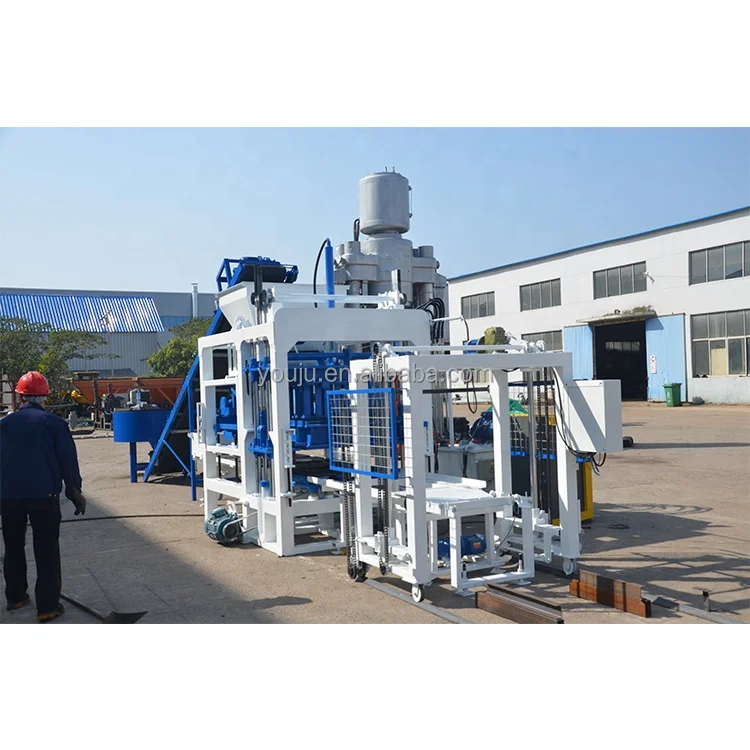
 Automatic block machine