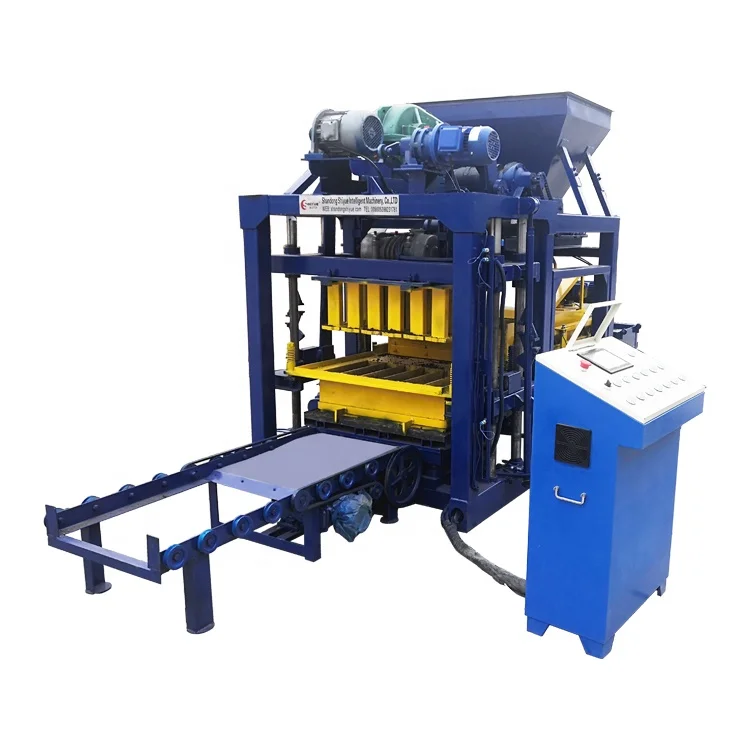
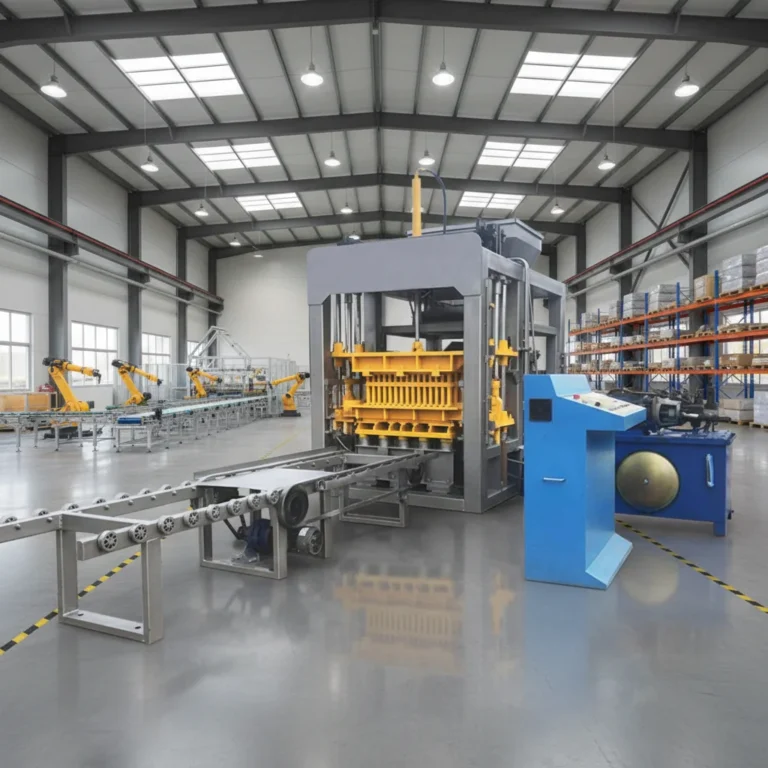
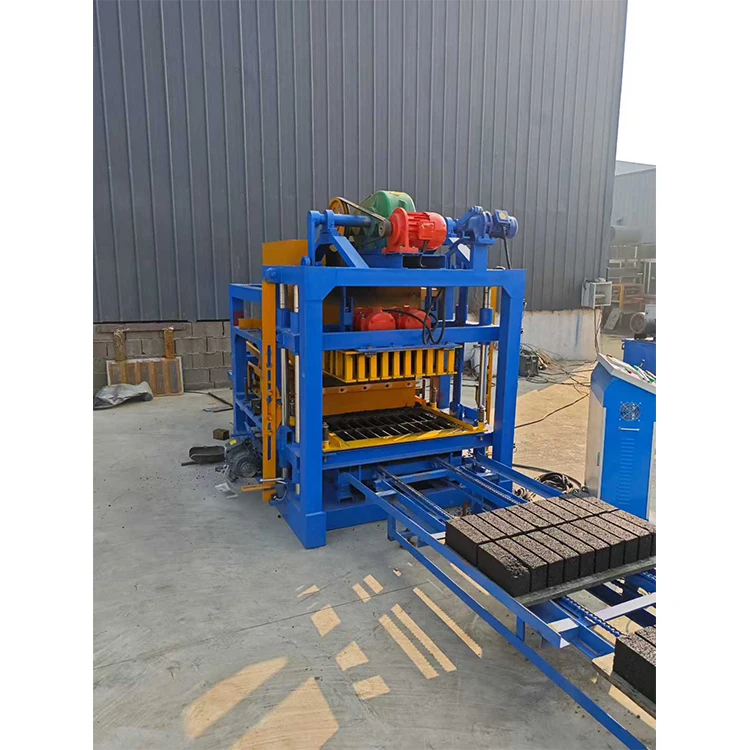
Matched System Configuration — the QT5-15 is quoted with press, mould, pallet and handling specified together against your local aggregate and target block format, so capacity on paper translates to output on your curing racks.
Technical Specifications
| Parameter |
Value |
| Model |
QT5-15 |
| Product Type |
Hydraulic Interlocking Paving Block Machine |
| Overall Dimensions (L×W×H) |
7400×1950×2800 mm |
| Vibration Frequency |
0-60 Hz |
| Vibration Form |
Platform Vibration |
| Moulding Mode |
Load automatically, vibration moulding |
| Pallet Size |
1100×550 mm |
| Molding Cycle |
15-20 s (basis not stated in source — confirm block format / material / thickness) |
| Overall Power |
32 kW |
| Vibration Force |
80 kN |
| Total Mass |
5000 kg |
| Demolding Method |
Hydraulic |
| Recommended Factory Area |
1000 m² |
| Control System |
PLC with touch screen interface |
| Hydraulic System |
Independent integrated hydraulic station |
| Raw Material Compatibility |
Fly ash (up to 70%), slag, gangue, sand, crushed stone, cement, water |
| Block Compressive Strength |
>15 MPa |
| Output Capacity (Hollow Block 400×200×200 mm) |
900-1200 pcs/h, 7200-9600 pcs/8hr (5 pcs/mould, 15-20s cycle) |
| Output Capacity (Hollow Block 400×150×200 mm) |
1080-1440 pcs/h, 8640-11520 pcs/8hr (6 pcs/mould, 15-20s cycle) |
| Output Capacity (Solid Brick 240×115×53 mm) |
5760-7680 pcs/h, 46080-61440 pcs/8hr (32 pcs/mould, 15-20s cycle) |
| Output Capacity (Rectangular Paver 200×100×60 mm) |
3600-4500 pcs/h, 28800-36000 pcs/8hr (25 pcs/mould, 20-25s cycle) |
| Output Capacity (Zigzag Paver 225×112.5×60 mm) |
2304-2880 pcs/h, 18432-23040 pcs/8hr (16 pcs/mould, 20-25s cycle) |
| Mould Change System |
Simple mould replacement for multi-format production |
| Automation Level |
Automatic (pallet feeding, material feeding, vibrating, demoulding) |
| Line Components |
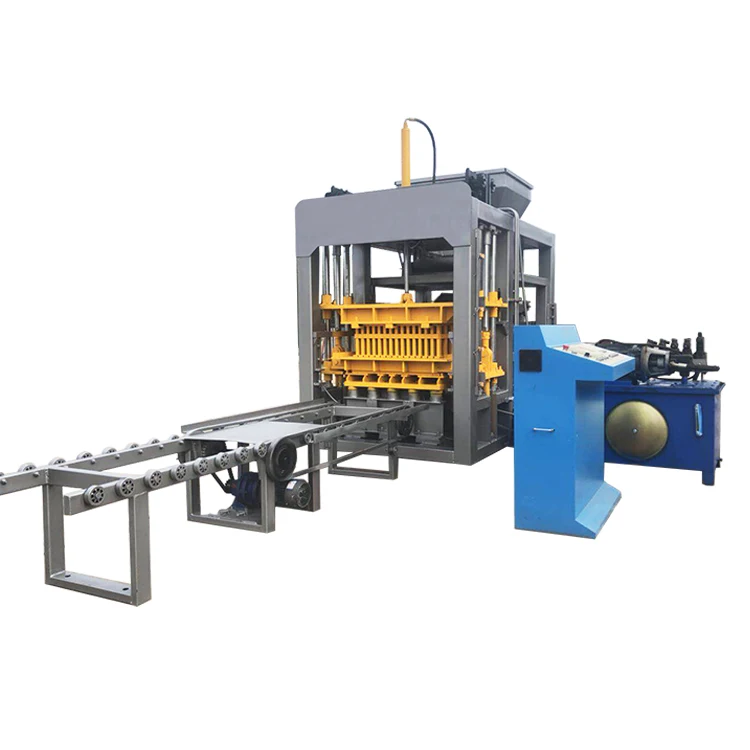
Pallet feed machine, block making machine, storage hopper, conveyor, hydraulic unit, PLC control cabinet |
| Warranty |
1 year for the whole machine (excluding spare parts) |
Application Suitability
| Application |
Material or Output |
| Hollow block production |
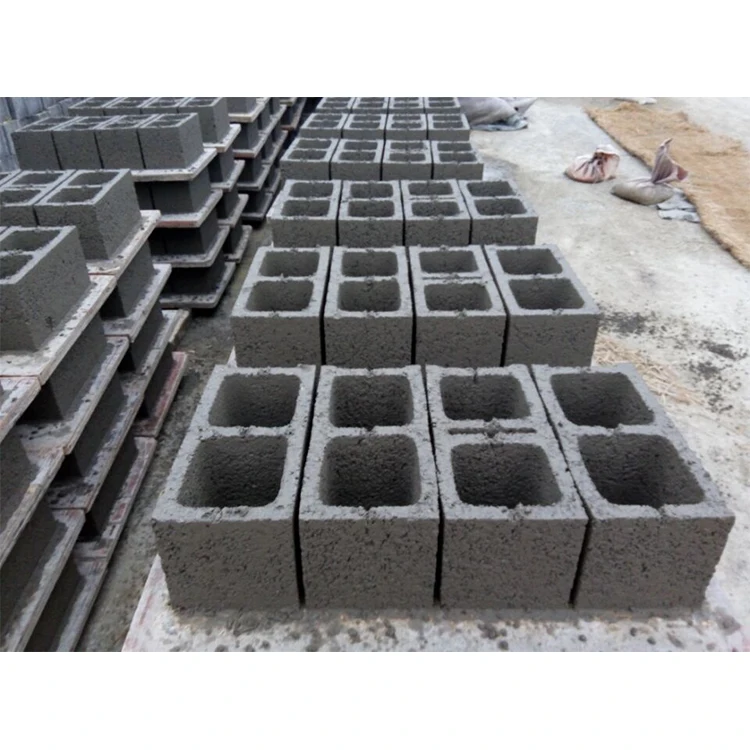
Crushed stone, sand, cement, water mixes for 400×200×200 mm and 400×150×200 mm formats |
| Solid brick manufacturing |
Fly ash (up to 70%), slag, gangue and cement blends for 240×115×53 mm bricks |
| Rectangular paver production |
Sand and crushed stone aggregates for 200×100×60 mm interlocking pavers |
| Zigzag paver production |
Cement-bound aggregate mixes for 225×112.5×60 mm interlocking shapes |
| Construction contractor on-site block making |
Local sand and stone with cement for project-specific hollow and solid formats |
| Building material distributor product expansion |
Multiple formats across hollow, solid and paver categories from one press platform |
Where the Catalogue Capacity Figure Breaks Down in Real Production
A cycle time only becomes a daily output number once you state which block format, mould cavity count and mix design it assumes.
Many quotations lead with a single pieces-per-hour figure and leave the buyer to discover, after installation, that the number was based on a small solid brick rather than the hollow block the plant was built to sell. The resulting gap between quoted and actual throughput has stalled more first-year block plants than any mechanical fault I have encountered in the field. An automatic block machine manufacturer that understands production will tie every capacity claim to a named format, a stated cavity count and a confirmed cycle range. [NEED_CITE: common capacity misrepresentation in block machinery quotations]

Placing the QT5-15 Within the Full Machine Range
Buyers surveying options for a first or replacement automatic block machine manufacturer need to know where each tier sits before narrowing down. The QT5-15 occupies the mid-tier automatic position, delivering multi-format production through a PLC-controlled cycle that covers pallet feeding, material dosing, vibration and hydraulic demoulding without manual intervention at the press. Smaller semi-automatic models reduce capital outlay but require hand pallet handling, while higher-capacity lines add automatic stacking and cubing. This model gives a growing plant the automation foundation to expand upward later.
Footprint and Utility Planning at This Tier
The 7400×1950×2800 mm press footprint and 1000 m² recommended factory area define the space envelope a buyer must secure before ordering. At this tier, the curing yard must accommodate 1100×550 mm pallets moving through a daily cycle, and the electrical supply must support a 32 kW total draw with dedicated circuits for the hydraulic station and vibration motors. Matching the pallet size to the forklift and curing rack system already on site avoids costly rework after the machine arrives. [NEED_CITE: plant layout standards for concrete block production facilities]
How Vibration Force and Hydraulic Pressure Shape Block Density
The 80 kN vibration force operating across a 0-60 Hz adjustable frequency range works together with the independent hydraulic station to compact aggregate into consistent density. Platform vibration transmits energy through the pallet into the mix, and the hydraulic demoulding system releases formed blocks without edge damage. For hollow blocks at 400×200×200 mm, the 15-20 second cycle with five cavities per mould yields 900-1200 pieces per hour when the mix design and aggregate grading match the vibration profile. Solid bricks at 240×115×53 mm run 32 cavities per mould in the same cycle window, producing 5760-7680 pieces per hour. Rectangular pavers at 200×100×60 mm shift to a 20-25 second cycle with 25 cavities, delivering 3600-4500 pieces per hour. These figures hold only when the raw material — whether fly ash, slag, sand or crushed stone — is tested and the vibration frequency is tuned to that specific mix.
What Happens When the Line Is Specified as Separate Pieces
Buying the press, moulds, pallets and handling equipment from different suppliers often means the pallet feed timing does not match the press cycle, leaving the machine waiting between strokes. The mould may not seat correctly on the vibration platform, causing uneven compaction and rejected blocks. Pallet dimensions chosen without considering the curing rack spacing force the buyer to rebuild curing infrastructure or accept manual restacking. At this tier, the line components — pallet feed machine, storage hopper, conveyor, hydraulic unit and PLC cabinet — must be confirmed as a matched set so cycle times align across every station. [NEED_CITE: integration challenges in multi-supplier block production lines]
Why Buyers Source This Tier From a Single-Focus Manufacturer
Block machinery as a single focus means the QT5-15 press, its moulds, pallets and handling are specified as one matched system rather than assembled from separate vendors. Configuration is set against the buyer’s actual mix design, local aggregate and target block format instead of a catalogue default. Mould design covers the formats the buyer’s market actually sells, with custom drawings available for non-standard shapes. The automation level is selectable, allowing a buyer to start at this tier and add stacking or cubing modules as volume grows. Installation support includes on-site commissioning and operator training, so the crew running the machine on day one understands parameter adjustment for different formats.
Documentation & Verification
- Line layout and capacity calculation stating the block format assumed for every output figure on the QT5-15
- Machine specification sheet confirming pallet size, vibration force, hydraulic pressure and 32 kW overall power against your site utilities
- Mould drawing and format list covering hollow, solid, rectangular and zigzag paver cavities before order confirmation
- Voltage, frequency and PLC display language confirmation document to prevent commissioning delays after QT5-15 arrival
- Factory test record produced on your specified raw material mix before the machine leaves the assembly hall
- CE declaration and packing photographs provided with customs documentation support for the QT5-15 shipment
Installation, Commissioning & Support
- Foundation pad leveled to 7400×1950 mm footprint with anchor points matching the 5000 kg total mass of the QT5-15
- Dedicated 32 kW electrical circuit with voltage and frequency confirmed for your local grid before QT5-15 dispatch
- Machine arrives with hydraulic station and PLC cabinet pre-wired, requiring only utility connections and pallet feed alignment
- First-run commissioning includes vibration frequency tuning across the 0-60 Hz range to match your aggregate grading
- Operator training covers mould change procedure, PLC touch screen navigation and hydraulic pressure adjustment on the QT5-15
- Wear parts list and mould maintenance schedule provided at handover, covering hydraulic seals and vibration platform components
What We Need to Quote the Right Configuration
To position the QT5-15 correctly within the full range and confirm it covers your production target, share the block formats you plan to sell, the daily volume you need per format, and the raw materials available locally including aggregate type and any fly ash or slag sources. Confirm your site voltage, frequency and preferred PLC display language so the control cabinet is built to match. If you already have pallets, forklifts or curing racks on site, send their dimensions so the 1100×550 mm pallet system is verified against your existing infrastructure.
Frequently Asked Questions
Q: How do I verify the real daily output of the QT5-15 against my target block format?
A: Every capacity figure we quote is tied to a specific block format, mould cavity count and cycle time. For example, hollow blocks at 400×200×200 mm run five per mould at 15-20 seconds, yielding 7200-9600 pieces per eight-hour shift. We provide a written capacity calculation document stating the format assumed, so you can match it directly to your product plan before ordering.
Q: Where does the QT5-15 sit in the full range — should I consider a semi-automatic or higher-capacity model?
A: The QT5-15 occupies the mid-tier automatic position with PLC-controlled pallet feeding, material dosing and hydraulic demoulding. Smaller semi-automatic models reduce investment but require manual pallet handling, while higher-capacity lines add automatic stacking and cubing. We map your daily volume and labour availability against each tier to recommend where this model fits your growth plan.
Q: What plant footprint and utility connections does this tier require compared to smaller or larger models?
A: The QT5-15 needs a 1000 m² recommended factory area and a 32 kW power supply with dedicated circuits for the hydraulic station and vibration motors. Smaller semi-automatic machines require less space and power, while larger automatic lines need expanded curing yards and higher electrical capacity. We confirm these requirements against your site conditions before the order is placed.
Q: How are pallet size, pallet material and handling equipment specified as a matched system?
A: The 1100×550 mm pallet size is selected to align with the vibration platform dimensions, the curing rack spacing and the forklift capacity you already operate. Pallet material is chosen based on your curing method and expected lifespan. The pallet feed machine is timed to the press cycle so the QT5-15 never waits between strokes, keeping throughput consistent across every format.
Q: Can I start with the QT5-15 and upgrade the automation level later?
A: Yes. The QT5-15 platform supports adding automatic stacking and cubing modules as your volume grows. The PLC control system is designed to integrate these additions without replacing the core press or hydraulic station. We document the upgrade path at the time of initial purchase so the transition is planned and budgeted from the start.

 Automatic block machine