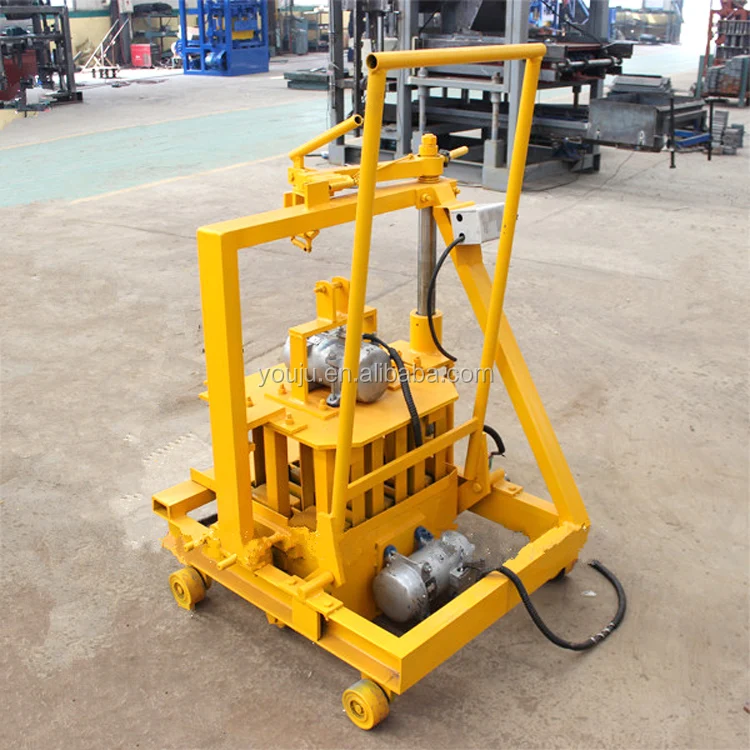
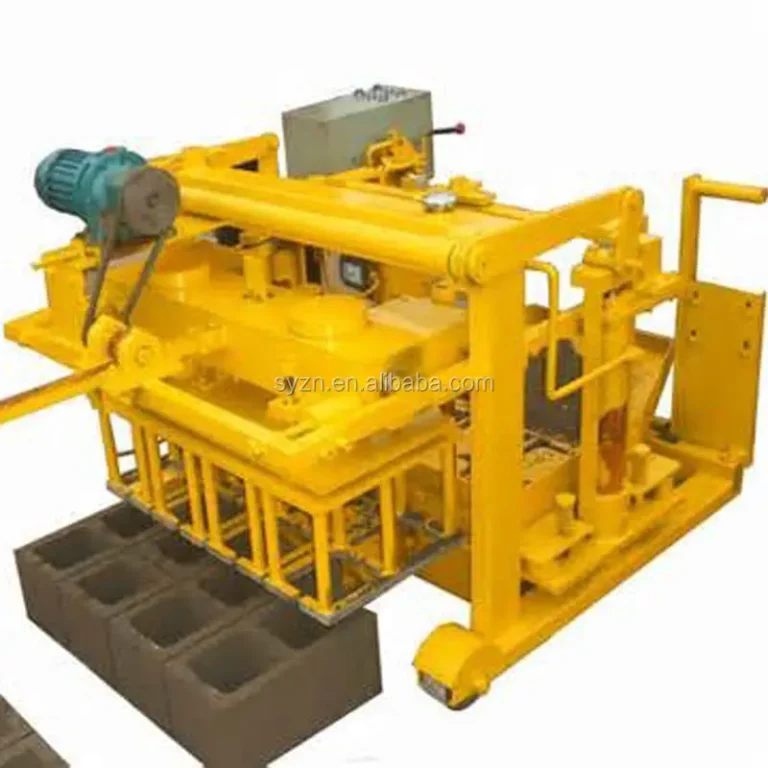
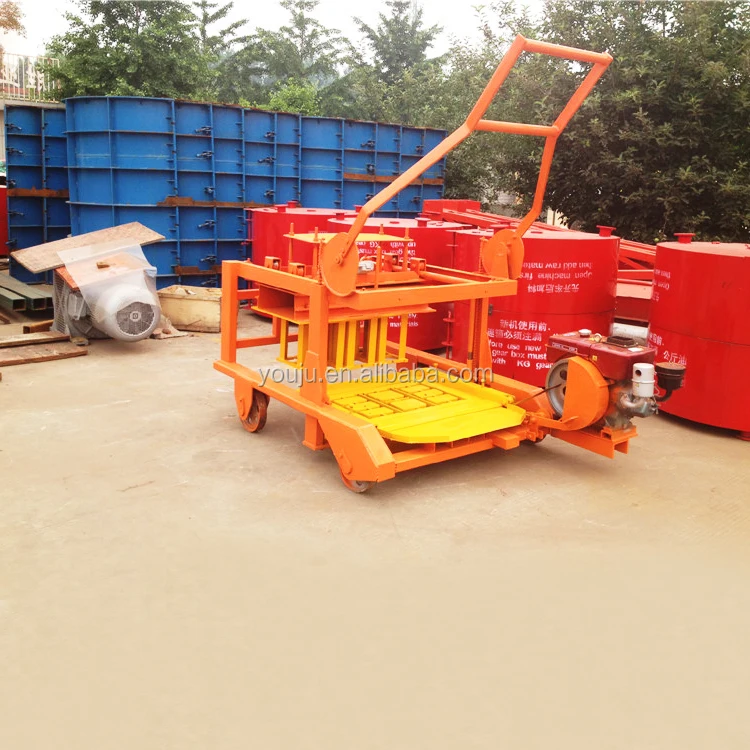
Entry-tier mobility — the QMJ2-45 anchors the bottom of our mobile block machine range, giving first-time producers a no-pallet, engine-driven starting point before they scale into stationary lines.
Technical Specifications
| Parameter |
Value |
| Model |
QMJ2-45 |
| Product Type |
Mobile Concrete Block Making Machine |
| Machine Type |
Manual mobile egg-laying block machine |
| Pallet Requirement |
No pallets required |
| Mould Change |
Interchangeable moulds for different hollow brick formats |
| Molding Cycle |
25–30s (basis not stated in source — confirm block format and mix design) |
| Output Capacity (400×200×200mm hollow brick) |
2 pcs/mould, 160 pcs/hour, 1280 pcs/8hr |
| Output Capacity (400×150×200mm hollow brick) |
3 pcs/mould, 240 pcs/hour (source value — verify; 240×8=1920, listed 4800 inconsistent) |
| Output Capacity (400×100×200mm hollow brick) |
4 pcs/mould, 320 pcs/hour, 2560 pcs/8hr |
| Automation Level |
Manual |
| Labor Requirement |
1 to 3 workers |
| Mobility |
Free-moving, small footprint |
| Hydraulic Pressure |
Engine-driven hydraulic system (pressure rating not stated in source — confirm MPa) |
| Vibration Force |
Not stated in source — confirm kN |
| Rated Power |
Not stated in source — confirm kW |
| Voltage & Frequency |
Not stated in source — confirm |
| Control System |
Manual operation |
| Power Source |
Confirm engine type / voltage / frequency |
| Certification |
ISO 9001, CE (source value — verify current certification status) |
Application Suitability
| Application |
Material or Output |
| On-site hollow block production at housing project sites |
Crushed stone, sand, cement, water |
| First block plant for entrepreneurs in emerging markets |
Local aggregate blended with Portland cement |
| Temporary infrastructure project block supply |
Quarry dust, river sand, cement |
| Remote or off-grid construction locations |
Locally sourced coarse and fine aggregate |
| Building material distributors adding mobile block service |
Standard concrete mix designs adjusted to regional materials |
What "160 Pieces per Hour" Actually Means on a Job Site
Every output figure here is tied to a specific mould size and cycle time — not a single headline number.
Sellers often quote a mobile block making machine manufacturer capacity as a flat hourly rate without disclosing which block format that rate assumes. A buyer sees "up to 320 pieces per hour" and plans their entire project schedule around it, only to discover the machine was rated on a 100mm partition block while they need 200mm structural hollows. The QMJ2-45 produces 160 pieces per hour rated at 400×200×200mm hollow block, and 320 pieces per hour rated at 400×100×200mm hollow brick — two very different products with very different market prices. I once watched a contractor in West Africa base his entire housing project timeline on a catalogue figure that assumed a block format he never intended to make. The delay cost him a penalty clause. [NEED_CITE: capacity calculation methods for concrete block machines by format]

Where the QMJ2-45 Sits in the Full Range
The QMJ2-45 occupies the entry tier of the mobile egg-laying category. It is designed for buyers who need to produce blocks directly on a construction site without investing in a fixed plant, pallet inventory, or electrical grid connection. As a mobile block making machine manufacturer, we position this model for first-time producers and project-based contractors who will later decide whether to scale into a semi-automatic stationary line. The trade-off is clear: lower capital outlay and zero pallet cost, in exchange for manual operation and modest output volumes.
Egg-Laying Mechanics Without Pallet Dependency
Unlike stationary presses that deposit wet blocks onto pallets for curing, the QMJ2-45 moves forward on its own wheels and lays each moulded block directly onto a prepared ground surface. This eliminates the single largest consumable cost in block production — pallets — along with the pallet return loop, pallet storage racks, and the forklift traffic that a conventional line demands. The machine frame carries the mould box, vibration mechanism, and hydraulic clamping as one integrated unit, and an operator simply walks behind it. [NEED_CITE: egg-laying block machine ground preparation standards]
Reading the Specifications That Matter
Vibration force and hydraulic clamping pressure together determine whether a freshly moulded hollow block holds its shape when the mould box lifts. If vibration is too weak for the buyer’s aggregate gradation, the block slumps; if clamping pressure is insufficient, the block edges crumble. The QMJ2-45 uses an engine-driven hydraulic system, but the exact MPa rating and kN vibration force must be confirmed against the buyer’s target block strength and local stone. Moulding cycle time of 25–30 seconds governs how many cycles an operator can complete in a shift, but that cycle assumes a mix design with adequate workability — a stiff, low-slump mix will slow the feed and extend the cycle. Manual operation means the consistency of every block depends on operator discipline: feed volume, vibration duration, and mould release timing are all human-controlled variables rather than PLC-regulated sequences.
The Hidden Cost of Skipping Mix-Design Verification
When a mobile block machine arrives on site and the buyer feeds it an aggregate blend the machine was never configured for, blocks come out weak, porous, or cracked. The vibration frequency that compacts fine river sand will not compact coarse crushed granite with the same effectiveness, and no amount of operator adjustment compensates for a fundamental mismatch between machine settings and material behaviour. I once flew to a site where the buyer had purchased a mobile unit for paving blocks, only to find the local aggregate was far too coarse for the factory-default vibration settings — every block was friable. We spent a week re-tuning the vibration frequency and mould clearance before production quality stabilised. That kind of post-delivery fix is avoidable if the buyer sends a local aggregate sample before the machine ships. [NEED_CITE: aggregate gradation effect on concrete block compressive strength]
Why Buyers Source This Tier from Us
Block machinery is our single focus, so the QMJ2-45 is specified as a matched system — machine, mould, and ground preparation requirements are evaluated together rather than treated as separate purchases. Mould design covers the hollow brick formats the buyer’s market actually sells, and custom moulds can be engineered to buyer drawings when standard sizes do not match local building codes. Configuration is set against the buyer’s actual mix design and local aggregate, not a catalogue default. Automation level is selectable across our range, meaning a buyer can start with the manual QMJ2-45 and step up to a semi-automatic or fully automatic stationary line when volume justifies it. Installation and commissioning support includes operator training on mould change procedure, mix proportioning, and daily maintenance routines. [NEED_CITE: concrete block machine manufacturer quality management standards]
Documentation & Verification
- Line layout and capacity calculation stating the hollow brick format assumed for each output tier
- Machine specification sheet confirming hydraulic pressure and vibration force matched to target block strength
- Mould drawing and format list showing available hollow brick sizes and custom design options
- Voltage, frequency, and engine type confirmation document signed off before production begins
- Factory test record on the buyer’s specified block format before dispatch
- Operation and maintenance manual with wear parts and mould replacement schedule
Installation, Commissioning & Support
- Ground surface preparation guidance specifying compaction and leveling requirements for egg-laying operation
- Engine type and fuel specification confirmed to match local diesel availability and ambient temperature range
- Machine arrives as a single mobile unit requiring no foundation, only a prepared production surface
- First-run commissioning covers mould installation, vibration adjustment, and cycle timing on the buyer’s mix
- Operator training on manual feed technique, mould change procedure, and block quality visual inspection
- Wear parts list and mould maintenance schedule provided at handover for ongoing production continuity
What We Need to Quote Accurately
To size the QMJ2-45 correctly for your operation, share the hollow brick formats your market demands, the daily output you need per format, and the local aggregate type you plan to use. We also need your site’s voltage and frequency if electrical starting is preferred over a diesel engine, and the language required for any control labels or documentation. A sample of your local stone and sand helps us verify that the vibration and hydraulic settings will produce blocks meeting your strength requirements.
Frequently Asked Questions
Q: How is output capacity calculated, and which block format does each figure assume?
A: Each capacity figure for the QMJ2-45 is tied to a specific mould size and a 25–30 second moulding cycle. For example, 160 pieces per hour is rated at 400×200×200mm hollow block, while 320 pieces per hour assumes 400×100×200mm hollow brick. We provide a capacity calculation sheet that lists output per format so buyers plan around realistic numbers.
Q: What voltage, frequency, and engine options are available for different target markets?
A: The QMJ2-45 can be configured with a diesel engine for off-grid sites or an electric motor where grid power is available. Voltage and frequency must be confirmed before production — common options include 220V/50Hz, 380V/50Hz, and 440V/60Hz depending on the destination country. We verify these details during the quotation stage to prevent commissioning delays.
Q: How do I choose between a mobile egg-laying machine and a semi-automatic stationary line?
A: The choice depends on output volume, capital budget, and whether you need pallet-based curing. The QMJ2-45 suits project-site production and first-time producers who want zero pallet cost and minimal infrastructure. When daily output requirements grow beyond what manual operation supports, a semi-automatic stationary line with pallet handling and higher vibration force becomes the logical next step.
Q: What mould formats are available, and can custom moulds be designed to my drawings?
A: Standard moulds cover 400×200×200mm, 400×150×200mm, and 400×100×200mm hollow brick formats. When your local market requires non-standard sizes or specific void patterns, custom moulds can be engineered from buyer drawings. We provide mould drawings and a format list for approval before manufacturing begins.
Q: What installation support and operator training are included with delivery?
A: Our team provides on-site commissioning that covers ground preparation verification, mould installation, vibration tuning, and test production runs. Operator training includes manual feed technique, mould change procedures, and daily maintenance checks. A wear parts list and maintenance schedule are handed over at commissioning to support ongoing production.

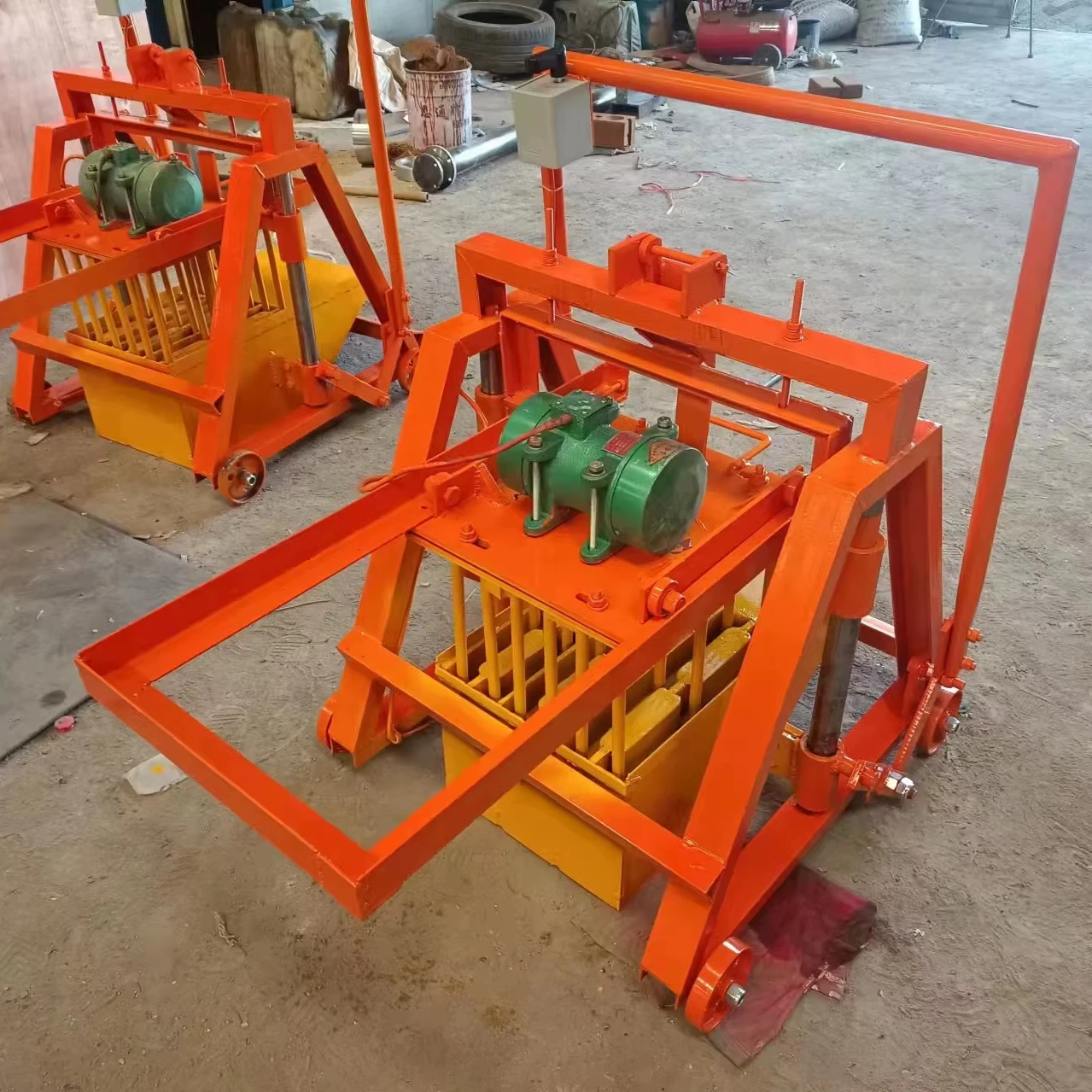
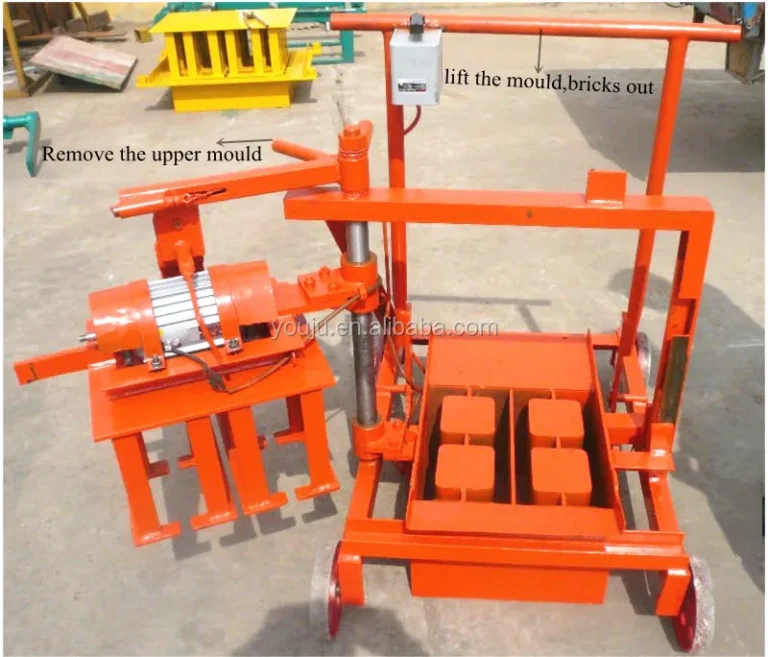 Mobile block machine