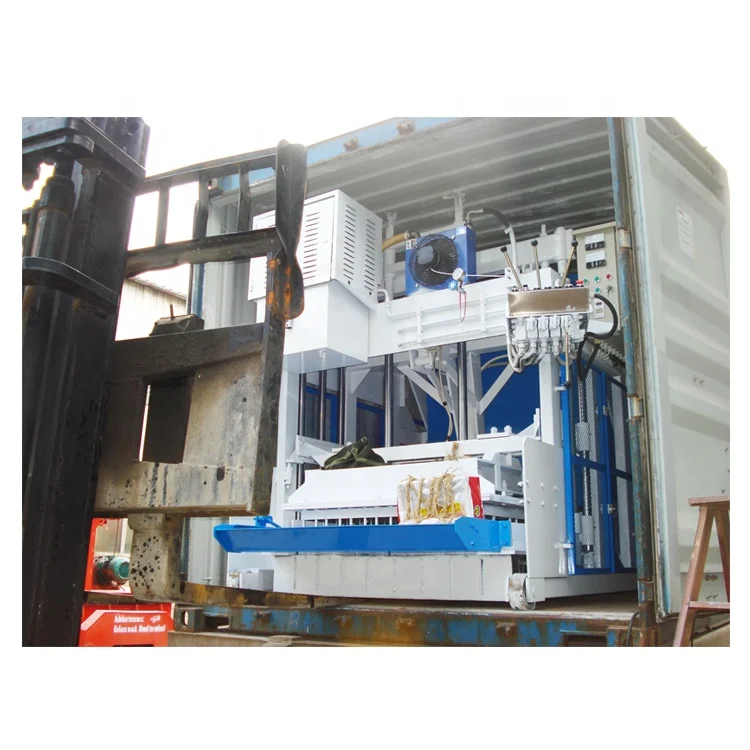
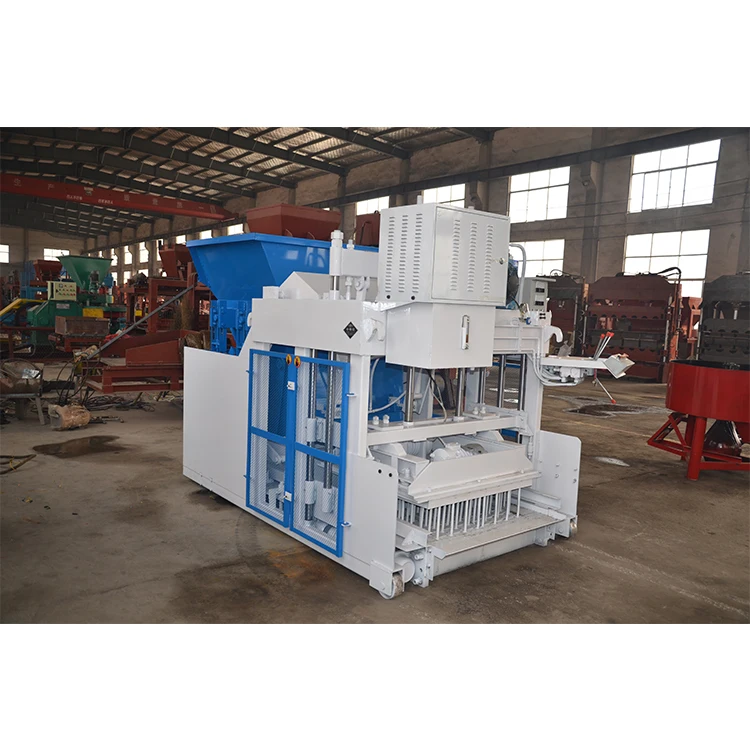
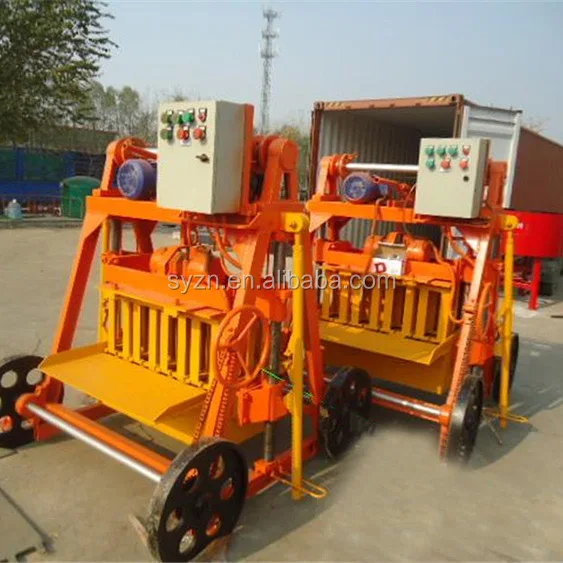
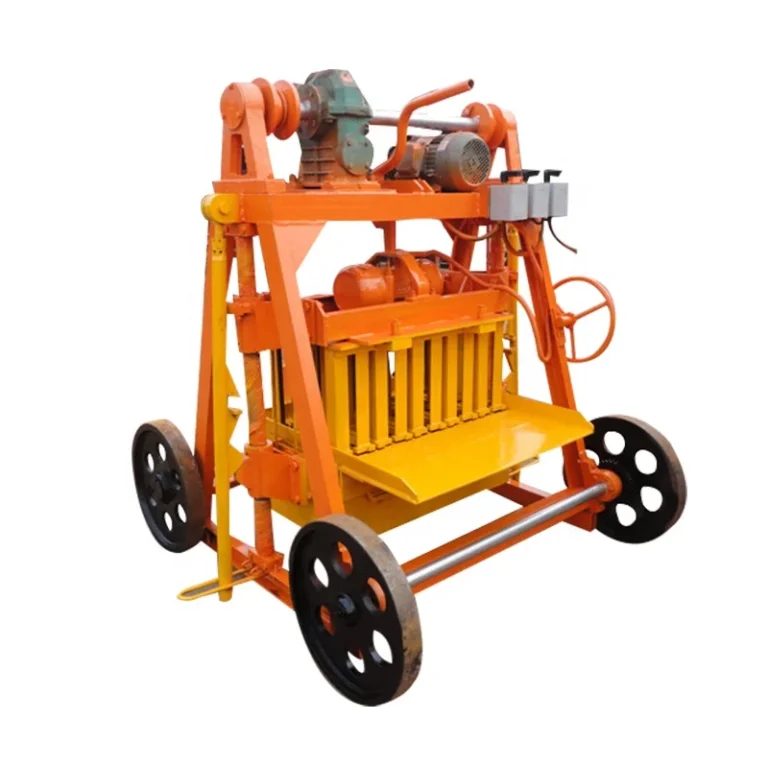
Configuration matched to site conditions — the QMJ2-45 mobile block making machine ships with mould selection and power settings confirmed against your local aggregate and grid, not a catalogue default.
Technical Specifications
| Parameter |
Value |
| Model |
QMJ2-45 |
| Product Type |
Mobile Block Making Machine |
| Machine Operation |
Manual mobile egg-laying |
| Mould Formats |
400×200×200 mm, 400×150×200 mm, 400×100×200 mm |
| Output (400×200×200 mm) |
160 pcs/h, 1280 pcs/8 hr (basis: 2 pcs/mould, 25–30 s cycle) |
| Output (400×150×200 mm) |
240 pcs/h, 1920 pcs/8 hr (basis: 3 pcs/mould, 25–30 s cycle) |
| Output (400×100×200 mm) |
320 pcs/h, 2560 pcs/8 hr (basis: 4 pcs/mould, 25–30 s cycle) |
| Pallet Requirement |
None (palletless / egg-laying) |
| Power Source |
Electric engine |
| Labor Requirement |
1 to 3 workers |
| Mould Material |
Heat treatment & carburization technology |
| Control System |
Manual operation |
| Certification |
ISO 9001:2000, CE |
Application Suitability
| Application |
Material or Output |
| Small-scale hollow block production |
Crushed stone, sand, cement, and local aggregate blends |
| On-site construction manufacturing |
Direct ground-laid hollow bricks without fixed plant infrastructure |
| First-stage block plant startup |
Low-volume hollow formats with minimal capital and footprint |
| Housing project block supply |
Local production of 400×200×200 mm and smaller hollow bricks |
Why Output Figures Without Block Format Are Meaningless
Every capacity number on this page states the exact mould size and cycle time it assumes.
A mobile block making machine manufacturer quoting "2000 blocks per day" without naming the format leaves buyers guessing. I have stood on sites where a machine arrived expecting to run 400×200×200 mm hollow bricks, only to find the capacity figure the seller provided was based on a smaller 400×100×200 mm format. The daily shortfall was immediately obvious once production started. [NEED_CITE: block format assumptions in capacity quotations] The QMJ2-45 output tiers above are each tied to a specific hollow brick size and a 25–30 second cycle, so the gap between quotation and reality closes before the machine ships.

Where the Mobile Tier Sits in the Range
The QMJ2-45 is the entry point for buyers who need hollow block production without committing to a fixed plant, pallet inventory, or a large crew. As a mobile block making machine, it lays blocks directly on a prepared ground surface and moves forward under its own power after each cycle. This removes the entire pallet feeding, return, and curing rack system that a stationary line requires, keeping the investment and the footprint to a minimum while the buyer establishes market demand.
What Egg-Laying Removes and What It Demands
Palletless operation eliminates pallet purchase, pallet storage space, and the forklift traffic a stationary plant needs to move loaded pallets into curing areas. The trade-off is that the ground surface must be flat, level, and strong enough to bear freshly pressed blocks without settling. Curing happens in place, so the production area doubles as the curing area. [NEED_CITE: ground preparation standards for egg-laying block machines] Planning the site layout before the machine arrives prevents a situation where the curing footprint runs out before the shift ends.
How Cycle Time, Mould Count, and Format Interact
The 25–30 second cycle is constant across all three hollow brick formats because the vibration and compaction sequence does not change. What changes is the number of blocks per mould: two for the 400×200×200 mm, three for the 400×150×200 mm, and four for the 400×100×200 mm. This means hourly output scales with block count per mould, not with machine speed. Buyers comparing this mobile block making machine against other models should check the per-mould count, not just the cycle time, to arrive at a realistic shift output.
The Cost of Skipping the Mix-Design Conversation
When a machine is configured for a standard sand-and-cement mix but the buyer’s locally available aggregate includes volcanic ash, lightweight clay, or crusher dust with different moisture absorption, the vibration force and compaction time no longer match the material. Blocks leave the mould looking correct but fail strength tests days later. I have seen this exact mismatch shut down a site for nearly a week while parameters were re-tuned on the ground. [NEED_CITE: aggregate variation effects on block compressive strength] Confirming the mix design and running a test batch before the machine leaves the factory prevents this delay.
Why Buyers Start Here
The QMJ2-45 range exists because block machinery is a single focus here, so the machine, mould, and ground-laying workflow are specified as one matched system. Mould design covers the hollow brick formats the buyer’s market actually sells, with custom drawings available for local sizes outside the three standard formats. The automation level is selectable — a buyer can start with this manual mobile unit and later move to a semi-automatic or automatic stationary line without changing suppliers. Installation support includes operator training on-site, and mould wear parts are documented from day one so the first replacement order is not a surprise.
Documentation & Verification
- Capacity calculation sheet stating the hollow brick format assumed for each output tier
- Mould drawing and format list confirming included and optional brick sizes
- Voltage and frequency confirmation document matched to buyer’s local grid supply
- Factory test record on the buyer’s specified mould format before dispatch
- Operation and maintenance manual with wear parts list for moulds and mechanical components
Installation, Commissioning & Support
- Flat, compacted ground area sized for both production and in-place curing of hollow blocks
- Electric supply confirmed for voltage and frequency before the QMJ2-45 leaves the factory
- Machine arrives fully assembled; only the mould needs mounting for the chosen format
- On-site commissioning includes test runs with the buyer’s actual aggregate blend
- Operator training covers cycle pacing, mould change procedure, and daily greasing points
- Wear parts list provided so first mould and mechanical spares can be ordered early
What to Prepare Before Inquiry
To size the right mobile block making machine and mould combination, share the hollow brick format your market demands, the daily output you need per format, and the locally available aggregate type. Confirm your site’s voltage and frequency, the flat ground area available for production and curing, and whether you plan to stay at manual operation or move to semi-automatic in the near term.
Frequently Asked Questions
Q: How is output capacity verified, and which block format does each figure assume?
A: Each output number is tied to a specific mould size and a 25–30 second cycle. For example, 160 pieces per hour assumes the 400×200×200 mm hollow brick at two pieces per mould. The capacity sheet provided with the quotation lists every format separately so there is no ambiguity about what the machine will produce on your chosen brick size.
Q: What voltage and frequency options are available for my local power supply?
A: The electric motor on the QMJ2-45 is configured to match the buyer’s grid before production begins. Voltage and frequency are confirmed in writing during the sales process so the machine arrives ready to connect. Mismatched power specifications are one of the most common causes of commissioning delays on export machinery.
Q: How do I know which machine tier fits my target output?
A: The manual mobile tier suits buyers producing hollow blocks on-site with one to three workers and no fixed plant. If your daily volume requirement or product range exceeds what a single egg-laying machine delivers within one shift, a semi-automatic or automatic stationary line with pallet handling may be the better starting point.
Q: What mould formats are included, and can I order custom moulds?
A: Three hollow brick formats — 400×200×200, 400×150×200, and 400×100×200 mm — are available. Custom moulds designed to buyer drawings are also supplied for markets that sell sizes outside this range. All moulds use heat-treated and carburized steel to extend service life under daily abrasion.
Q: Does this machine require a fixed foundation or a separate curing area?
A: No fixed foundation is needed. The QMJ2-45 lays blocks directly on flat, compacted ground and moves forward after each cycle. Curing happens in place, so the production area must be large enough to hold a full shift’s output until the blocks reach handling strength.

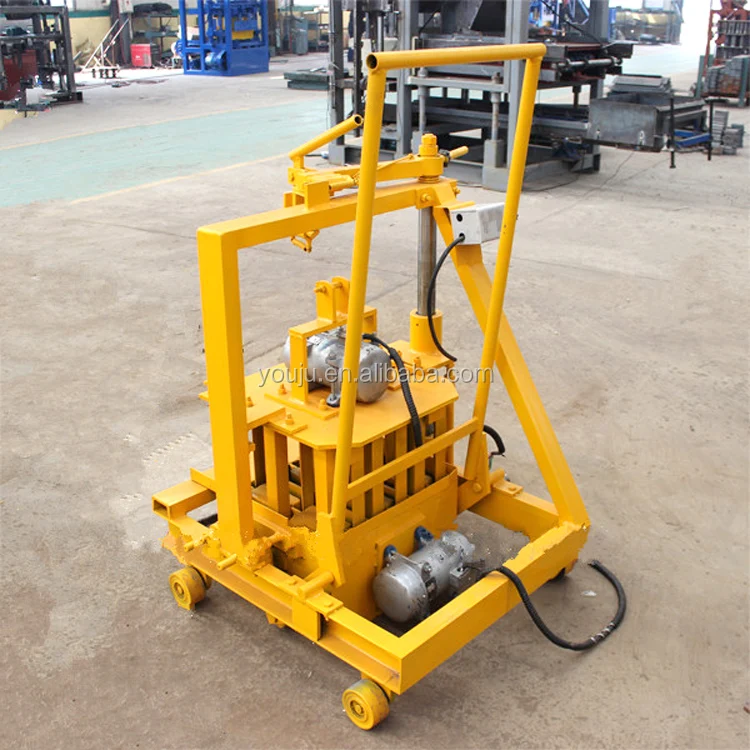
 Mobile block machine