Single-focus machinery sourcing — every QMY4-30 unit is specified against the buyer’s ground conditions and block format before dispatch, not pulled from a catalogue default.
Technical Specifications
| Parameter |
Value |
| Model |
QMY4-30 |
| Product Type |
Mobile Egg Laying Concrete Block Making Machine |
| Hydraulic Method |
Mould vibration |
| Demold Method |
Hydraulic |
| Molding Cycle |
25–30 s (basis not stated in source — confirm block format, material, thickness) |
| Total Power |
5.95 kW |
| Vibration Type |
Mould box excitation |
| Drive System |
Hydraulic transmission |
| Pallet Requirement |
Pallet-free (egg-laying type) |
| Automation Level |
Semi-automatic / Manual operation |
| Output Capacity (400×200×200 mm block) |
480 pcs/hour, 3,840 pcs/8 hr |
| Output Capacity (400×150×200 mm block) |
600 pcs/hour, 4,800 pcs/8 hr |
| Output Capacity (400×100×200 mm block) |
840 pcs/hour, 6,720 pcs/8 hr |
| Standards |
ISO 9001:2000, CE |
Application Suitability
| Application |
Material or Output |
| On-site hollow block production for housing projects |
Crushed stone, sand, cement, water |
| Remote infrastructure block making in mountainous or hilly terrain |
Local aggregate with cement binder |
| Small-scale block plant for first-time entrepreneurs |
River sand, quarry dust, cement |
| Coastal and desert construction site block supply |
Desert sand or coral aggregate with cement adjustment |
| Industrial mining area perimeter wall block production |
Mine tailings or slag aggregate with cement |
What "480 Blocks per Hour" Actually Means on a Mobile Egg Laying Block Machine for Sale
Output figures shift dramatically depending on which hollow block format you run.
Many buyers receive a single cycles-per-hour number in a quotation and assume it applies across every block size they plan to produce. In practice, the QMY4-30 Mobile Block Machine manufacturer rates output differently for each of the three standard hollow formats — 480 pieces per hour for 400×200×200 mm blocks, rising to 840 pieces per hour only when switching to the narrower 400×100×200 mm format. If your market primarily demands the larger 200 mm width, planning your daily target around the highest number will leave you short every shift [NEED_CITE: block format and cycle time relationship in mobile egg laying machines]. I have seen contractors in Southeast Asia base their project timeline on the 6,720-piece daily figure, only to discover their site actually needed the 200 mm hollow block, cutting realistic output nearly in half.

Where the QMY4-30 Sits in the Full Block Machine Range
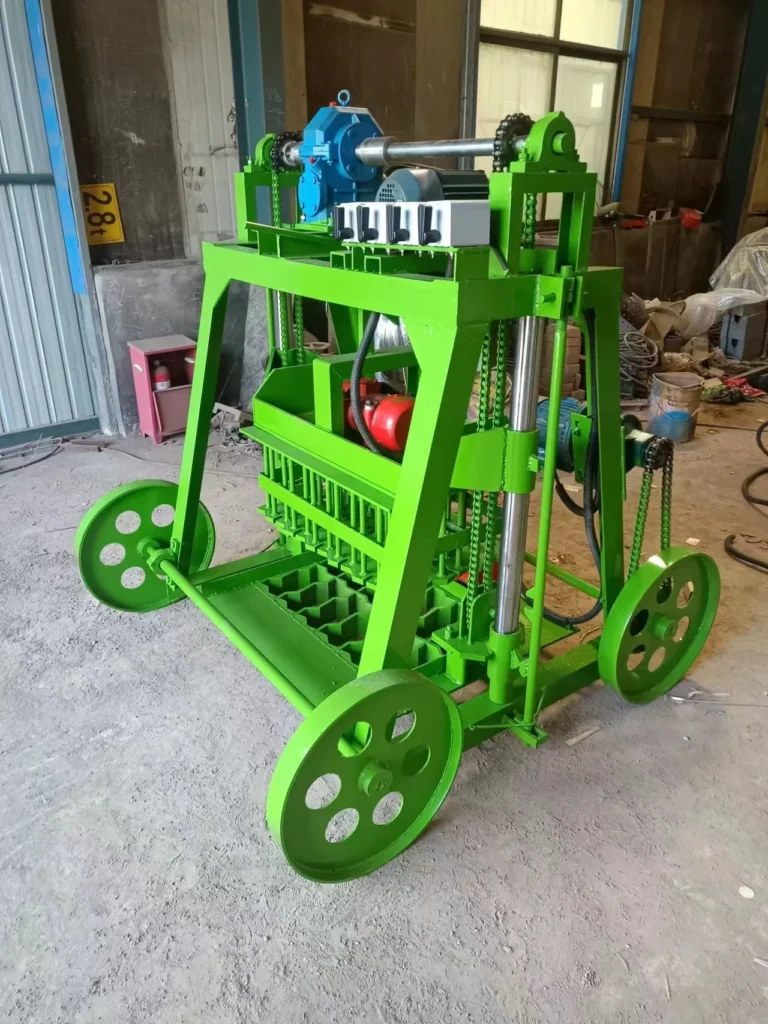
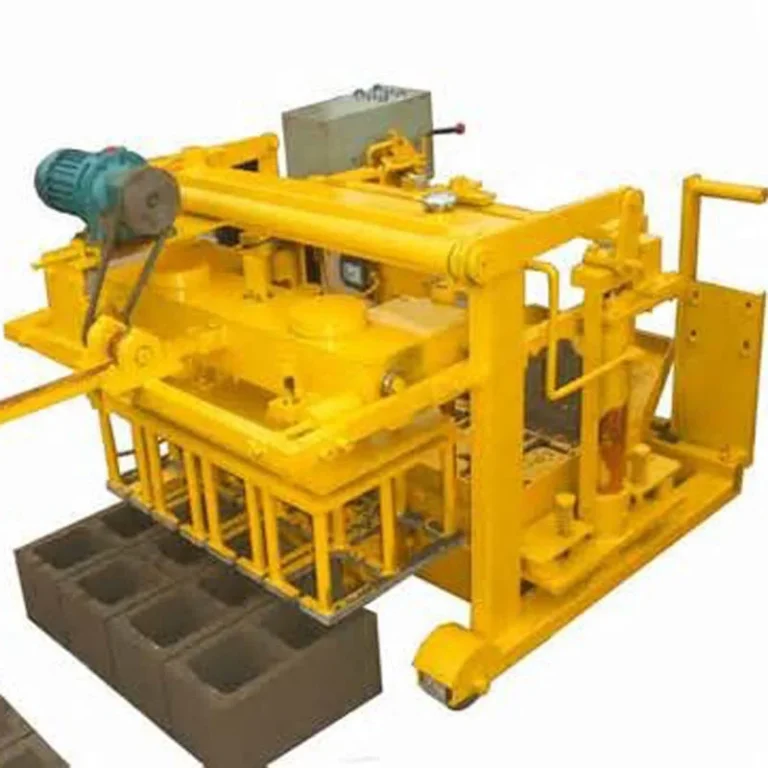
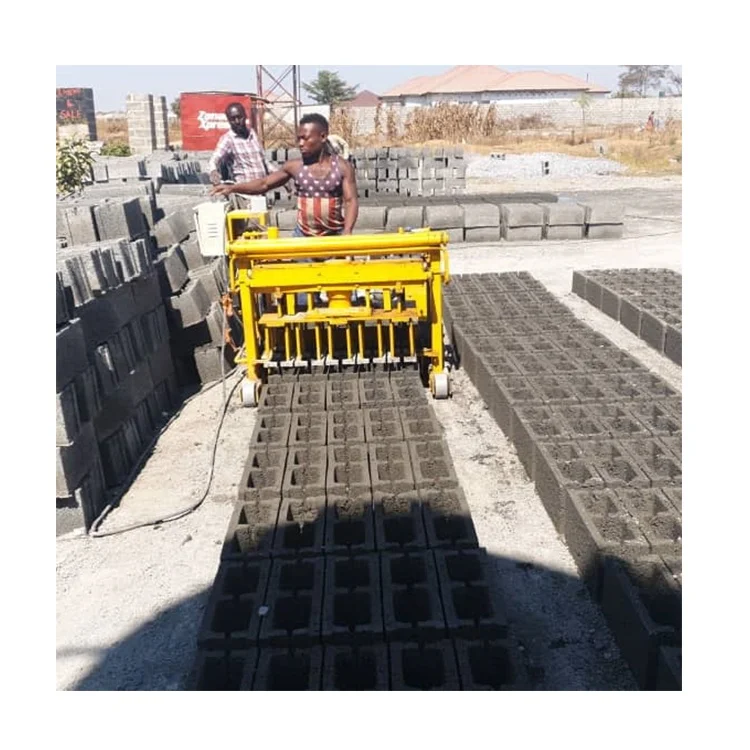
The QMY4-30 occupies the entry-level mobile tier. It requires no pallets, no fixed plant foundation, and no curing rack infrastructure — the machine lays blocks directly onto the ground as it moves forward. For buyers evaluating their first block production investment or contractors needing blocks at a remote project site, this mobile egg laying block machine for sale removes the capital outlay that a static line demands. Once daily volume requirements grow beyond what a single operator can manage with manual pallet handling and ground curing, the next step up is a semi-automatic static press with pallet circulation.
Understanding the Pallet-Free Advantage and Its Limits
Eliminating pallets removes a significant recurring cost from block production. Buyers operating static machines often underestimate how many pallets they need to keep a curing cycle rotating — a pallet fleet can represent a substantial portion of the initial investment. The QMY4-30 sidestarts this entirely by depositing each block directly on the prepared ground surface. However, this design places the burden of surface preparation squarely on the site team. The ground must be flat, compacted, and free of soft spots; otherwise the machine wheels sink unevenly and blocks emerge tilted or cracked [NEED_CITE: ground preparation standards for egg laying block machines]. On a site I visited in the Philippines, a contractor laid blocks on a gravel slope without prior compaction, and an entire day’s output had to be demolished and re-poured.
How Mould Vibration and Hydraulic Demolding Shape Block Density
The QMY4-30 uses mould box excitation rather than table vibration. This means the vibration energy concentrates directly on the concrete mass inside the mould cavity, compacting the mix before hydraulic pressure completes the demolding stroke. For hollow blocks produced on uneven ground, mould vibration tends to deliver more consistent wall thickness than platforms that rely on vibration transmitted through a pallet or table surface. The hydraulic demolding system lifts the mould box vertically, reducing the lateral drag that can scar block faces during extraction. Total power sits at 5.95 kW, which keeps generator sizing manageable for sites without grid connection — a relevant factor for mining areas or coastal projects operating off diesel gensets. The 25 to 30 second molding cycle applies across formats, though actual cycle time will vary with mix workability and operator pace during manual repositioning.
When Ground Conditions Turn a Good Machine Into a Problem
Choosing a mobile machine without confirming site conditions is a recurring source of project losses. The QMY4-30 travels on wheels and deposits blocks in a continuous line, which means any dip, soft patch, or slope in the ground transfers directly into block alignment. I once reviewed a case where a QMY4-30 egg laying machine was set to work on a sandy slope without ground leveling; the resulting hollow blocks leaned progressively, mortar joints could not align during wall construction, and the full batch was rejected. Flat, compacted earth is non-negotiable. Buyers who skip this step effectively void the accuracy the machine is capable of delivering [NEED_CITE: site preparation requirements for mobile block production]. Power supply is another silent issue — running a 5.95 kW machine on an undersized generator causes voltage sag during the vibration cycle, producing under-compacted blocks that fail strength tests weeks later.
Why Buyers Source This Mobile Block Machine Manufacturer for Entry-Level Production
Block machinery is the single focus here, which means the QMY4-30 is not bundled with unrelated equipment to inflate an order. Machine, mould, and handling requirements are specified as one matched set rather than assembled from separate suppliers. Configuration is set against the buyer’s actual mix design and local aggregate — not a generic catalogue default — so the vibration force and hydraulic pressure match what your materials can actually produce. Mould design covers the three standard hollow formats and accommodates custom drawings if your market demands non-standard dimensions. The automation level is selectable, letting a buyer start with manual operation on the QMY4-30 and move to semi-automatic static equipment as volume grows. Installation support includes operator training on ground preparation, cycle pacing, and mould changeover so that first-day output does not depend on trial and error.
Documentation & Verification
- Line layout showing curing area dimensions matched to the QMY4-30 daily block output by format
- Machine specification sheet listing hydraulic pressure and vibration force ratings for your mix design
- Mould drawing and format list confirming 400×200, 400×150, and 400×100 mm hollow block compatibility
- Voltage and control language confirmation document signed before production begins
- Factory test record running your target block format before dispatch
- Operation and maintenance manual covering ground preparation, molding cycle, and mould changeover
Installation, Commissioning & Support
- Ground must be leveled and compacted across a minimum linear run to accommodate continuous egg-laying output from the QMY4-30
- Power supply requires a dedicated circuit matching the 5.95 kW total draw with voltage and frequency confirmed pre-shipment
- Machine ships partially assembled; wheels, mould box, and hydraulic unit require on-site fitting and alignment
- First-day commissioning includes vibration force calibration against your local aggregate and cement mix
- Operator training covers molding cycle pacing, mould change procedure, and troubleshooting uneven block faces
- Wear parts list identifies hydraulic seals and vibration motor components with reorder lead times
Before You Request a Quote
To size the QMY4-30 correctly for your operation, share the hollow block format your market demands most, the daily output you need to hit, and the aggregate source available at your site. Ground condition details — soil type, flatness, and whether a concrete pad exists — determine whether this mobile egg laying block machine for sale can run without prior civil works. Confirm your local voltage, frequency, and preferred control display language so that electrical configuration is locked before the machine enters production.
Frequently Asked Questions
Q: How does daily output change when I switch between block formats on the QMY4-30?
A: Output depends entirely on the block format being produced. Running 400×200×200 mm hollow blocks yields 3,840 pieces over an eight-hour shift, while the narrower 400×100×200 mm format reaches 6,720 pieces in the same period. The 400×150×200 mm size sits between them at 4,800 pieces. Always base your production plan on the specific format your market orders most frequently, not the highest number in the specification sheet.
Q: When should I move from this mobile machine to a semi-automatic static line?
A: The QMY4-30 suits first-time plants and on-site contractors who need blocks without fixed infrastructure. Once your daily volume consistently exceeds what one mobile unit and manual ground curing can sustain, or when your market demands paving blocks and interlocking formats beyond hollow block capability, stepping up to a semi-automatic static machine with pallet circulation becomes the logical next investment within the range.
Q: What voltage and frequency information do I need to confirm before ordering?
A: Provide your site voltage, phase configuration, and frequency before production begins. The QMY4-30 total power is 5.95 kW, and running it on a mismatched supply causes vibration motors to underperform, producing blocks with inconsistent density. Control display language should also be confirmed at this stage so operators can read cycle prompts and fault codes in their working language upon commissioning.
Q: What supporting equipment does the QMY4-30 need to run a full shift?
A: At minimum you need a pan mixer sized to feed the 25 to 30 second molding cycle continuously, a reliable water supply for mix consistency, and manual tools for aggregate batching. Raw material feeding is handled manually at this tier. A wheelbarrow or small loader moves mixed concrete to the machine hopper. Curing requires adequate flat ground area to let blocks set before relocation.
Q: What site conditions are required before the QMY4-30 can start producing?
A: The ground must be flat, compacted, and free of loose sand or soft clay across the entire production and curing area. A slight slope causes the machine to drift during travel, tilting blocks as they are laid. Adequate curing space must extend beyond the daily output footprint so blocks from previous shifts are not disturbed. A stable power source matching the confirmed voltage and frequency is essential before the first molding cycle.

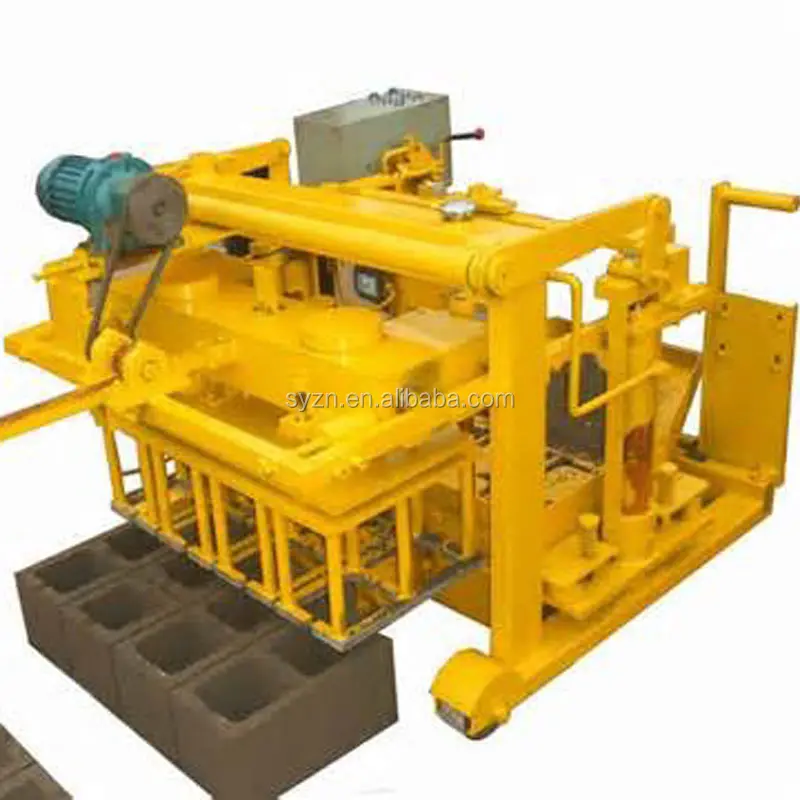
 Mobile block machine