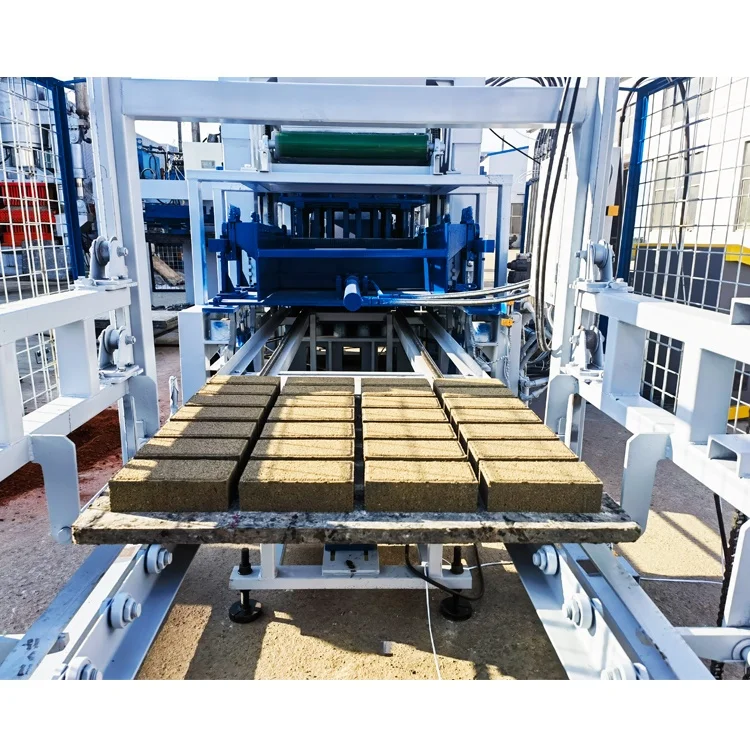
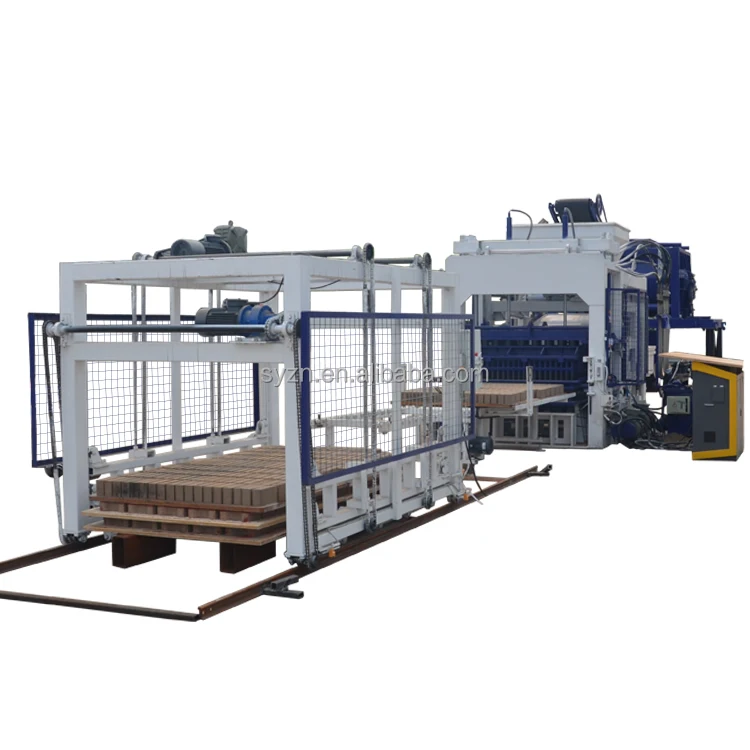
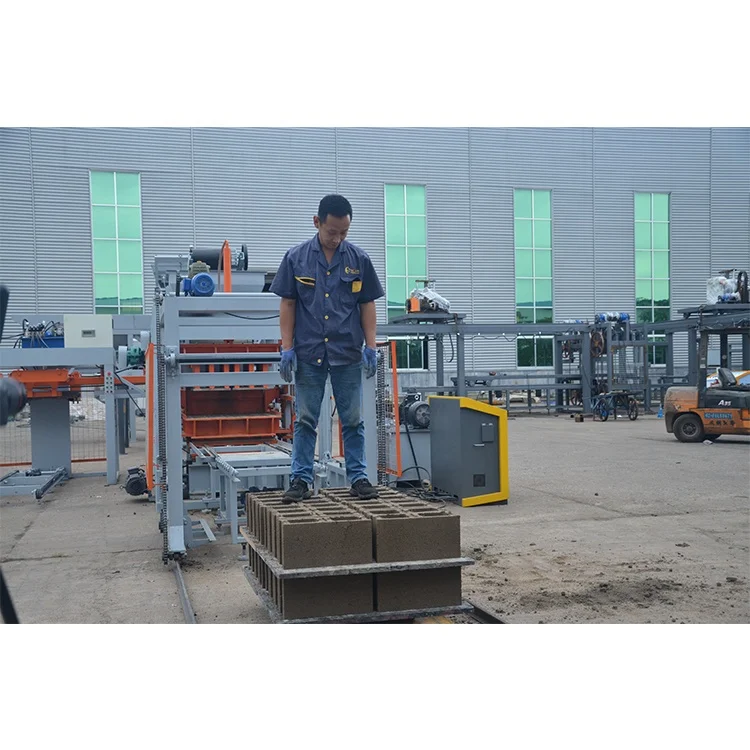
Matched System Supply — Every pallet size, mould format and handling station is specified together with the QTJ4-25, so the press is never waiting on upstream or downstream gaps.
Technical Specifications
| Parameter |
Value |
| Model |
QTJ4-25 |
| Product Type |
Concrete Block Making Machine |
| Overall Dimensions (L×W×H) |
3060×1730×2580 mm |
| Total Mass |
4 T |
| Rated Pressure |
16-21 MPa |
| Main Vibration Form |
Platform Vibration |
| Vibration Frequency |
4200 r/min |
| Vibration Force |
45.5 kN |
| Pallet Size |
850×550 mm |
| Molding Cycle |
25-30 s (basis not stated in source) |
| Overall Power |
14.9 kW |
| Demolding Method |
Vibration |
| Factory Area Required |
200 m² |
| Applied Products |
Concrete blocks, hollow/solid blocks, pavers, interlocking blocks, kerbstone, colored pavers |
| Raw Material |
Crushed stone, sand, cement, dust, fly ash, gravel, slag |
| Warranty |
1 year |
| Loading |
1×40HQ container (for basic equipment) |
Application Suitability
| Application |
Material or Output |
| Small-to-medium block plants |
Hollow and solid blocks from crushed stone, sand, and cement |
| On-site construction production |
Kerbstones and pavers produced locally for housing and infrastructure projects |
| Product range expansion |
Interlocking blocks and colored pavers for building material distributors |
| First-time plant setup |
Semi-automatic workflow for entrepreneurs entering the block market |
Why the Voltage Question Should Come Before the Price
Confirming electrical standards and control language before production prevents days of idle time once the machine arrives on your site.
I once watched a QTJ4-25 sit silent for two days because the control panel shipped in English to a region where the operators only read another language, and the local electrician had to rewire a feed panel because the voltage did not match the site transformer. These are not rare exceptions — they happen often enough to be a pattern [NEED_CITE: typical commissioning delays caused by unconfirmed electrical and language specifications]. A Concrete Block Making Machine manufacturer that leaves these details for "after shipment" is asking the buyer to absorb the cost of avoidable downtime.

Placing the QTJ4-25 Within the Output Tier Range
The QTJ4-25 sits at the entry-to-mid point of the block machine spectrum. It is designed for buyers who need to produce a variety of formats — hollow blocks, pavers, kerbstones — without investing in a fully automatic line. The 200 m² factory area requirement makes it viable for workshops and smaller plots where a high-capacity line would simply not fit. For a buyer surveying options, this model answers the question of whether a semi-automatic tier can cover your target daily volume before you commit capital to higher automation levels.
Matching the Press to Your Downstream Handling
A press does not operate alone. The 850×550 mm pallet size on this machine must align with the curing racks and forklift dimensions you already have or plan to purchase. If your curing yard uses a different pallet standard, you will be moving blocks by hand between systems, which defeats the purpose of selecting a mechanized press. We specify the pallet, the rack spacing, and the handling equipment as one matched set so that cycle times at the press do not create a bottleneck at the stacking end [NEED_CITE: pallet standardization across block production and curing systems].
Reading the Specs Beyond the Brochure Numbers
The platform vibration system delivers 45.5 kN of force at 4200 r/min. In practical terms, this vibration profile works with standard concrete mixes to compact material evenly in the mould cavity, which affects block density and edge finish. The rated pressure range of 16-21 MPa provides the clamping force needed to hold the mould closed during vibration — if your local aggregate is coarse or your mix has a higher stone content, you may need the upper end of that range. The 4-ton total mass gives the machine enough frame weight to absorb its own vibration without transferring excessive force to the factory floor, reducing the need for a heavy reinforced foundation. The vibration demolding method means blocks release from the mould without mechanical ejection pins, lowering the chance of surface damage on formats like colored pavers and interlocking blocks.
The Hidden Cost of Skipping Configuration Details
When a buyer focuses only on the press price and leaves pallet size, voltage, and control language unconfirmed, the real cost appears weeks later. Operators struggle with an interface they cannot read, forcing the plant owner to hire a translator for every shift. Electrical mismatches require a local electrician to rewire panels, voiding warranty coverage on the control system. A pallet size that does not match the curing racks means every block must be handled twice [NEED_CITE: hidden costs of unconfirmed ancillary specifications in block machinery procurement]. These are not equipment failures — they are specification failures that a careful pre-order process would eliminate.
Why Source This Range From a Single-Focus Supplier
We build our reputation on block machinery as our only product line, which means the QTJ4-25 is not assembled from generic press frames and third-party controls. Each machine is configured against the buyer’s actual mix design and local aggregate, not pulled from a catalogue default. Mould design and supply cover the formats your market actually sells, including custom drawings when standard options fall short. The automation level is selectable, so a buyer can start with semi-automatic operation and add automatic stacking or cubing later without replacing the press. Installation support includes operator training on your specific formats, and the documentation package arrives in your language with voltage and control settings already confirmed.
Documentation & Verification
- Line layout and capacity calculation stating the block format assumed for the QTJ4-25 cycle time
- Machine specification sheet confirming pallet size, vibration force, and pressure matched to your mix
- Voltage, frequency, and control panel language confirmation record signed before production begins
- Mould drawing and format list showing which block types are included and which require separate moulds
- Factory test record on your selected block format before the machine leaves the assembly floor
- Operation and maintenance manual with wear parts and mould replacement schedule
Installation, Commissioning & Support
- 200 m² factory area with level concrete floor sufficient for the 4-ton machine mass and vibration load
- 14.9 kW total power draw requiring a dedicated circuit matched to your confirmed voltage and frequency
- Machine ships in one 40HQ container; dismantled for loading and reassembled on your prepared foundation
- On-site commissioning includes vibration force calibration to your local aggregate and mix proportions
- Operator training covers mould change procedure, pallet feeding rhythm, and demolding cycle adjustments
- Wear parts list and mould inventory provided so first replacements can be ordered before production starts
What to Prepare Before Requesting a Quotation
Tell us the specific block formats you plan to produce, the daily volume you need per format, and the raw materials available at your site. Include your local voltage and frequency standard, the control panel language your operators require, and the dimensions of your existing curing area and forklift. If you have an upstream mixer or downstream stacking system already in place, share those details so we can confirm compatibility before the line layout is drawn.
Frequently Asked Questions
Q: What block format is the 25-30 second molding cycle based on, and how does output change across formats?
A: The cycle time in the specification sheet does not state which block format it assumes. In practice, a standard hollow block may complete within that window, while a thicker kerbstone or interlocking paver requires longer vibration and pressing time. We provide a capacity calculation per format so you can see realistic daily output for each product you plan to sell, not a single figure that only applies to the fastest format.
Q: Where does the QTJ4-25 sit compared to semi-automatic and fully automatic tiers?
A: This model occupies the entry-to-mid tier, suited for buyers who want mechanized production without committing to a fully automatic line. It handles semi-automatic workflows where pallet feeding and stacking may involve manual steps. Buyers who later need higher throughput can upgrade to automatic stacking and cubing without replacing the press itself, provided the foundation and pallet system were planned for that path from the start.
Q: How do I confirm voltage, frequency, and PLC display language before shipment?
A: These are confirmed during the quotation stage, before production begins. We document your country’s electrical standard and the language your operators need on the control panel. This confirmation is signed off in writing and checked again during the factory test, so the machine arrives ready to connect and run without waiting for language packs or electrical modifications.
Q: Is the 850×550 mm pallet compatible with my existing curing racks and forklift?
A: Compatibility depends on the rack spacing and fork dimensions you already have on site. We ask for those details before finalizing the order so the pallet size, curing rack layout, and forklift all work as one system. If your existing racks use a different pallet standard, we adjust the specification or advise on what changes are needed to avoid double-handling blocks.
Q: Can I start with the QTJ4-25 and upgrade automation later?
A: Yes, provided the initial line layout accounts for future automation additions. The press itself supports upgrades to automatic pallet feeding, stacking, and cubing. We recommend planning the factory floor space and pallet circulation path for the higher automation level from the beginning, even if you start with manual or semi-automatic handling, so the upgrade does not require structural changes later.

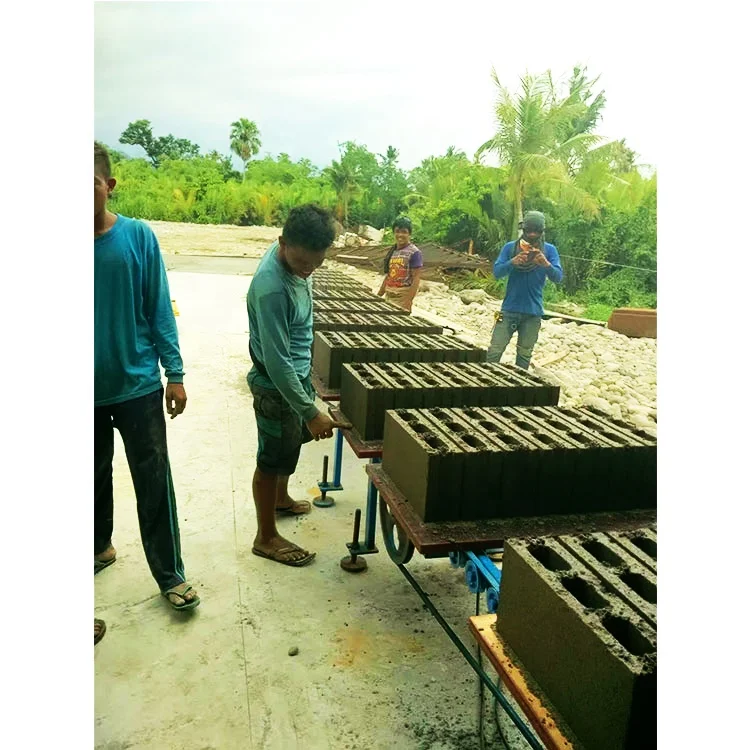
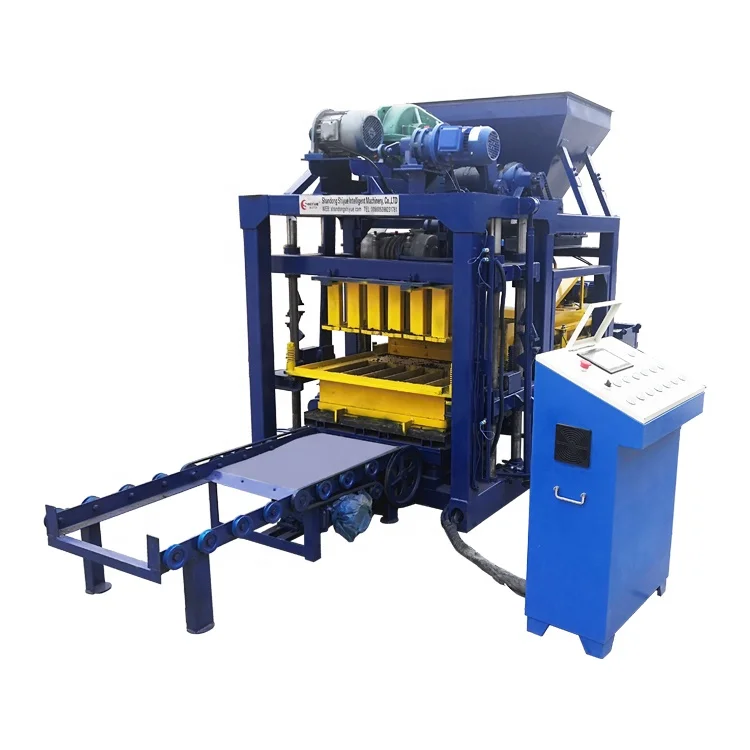 High quality block machine