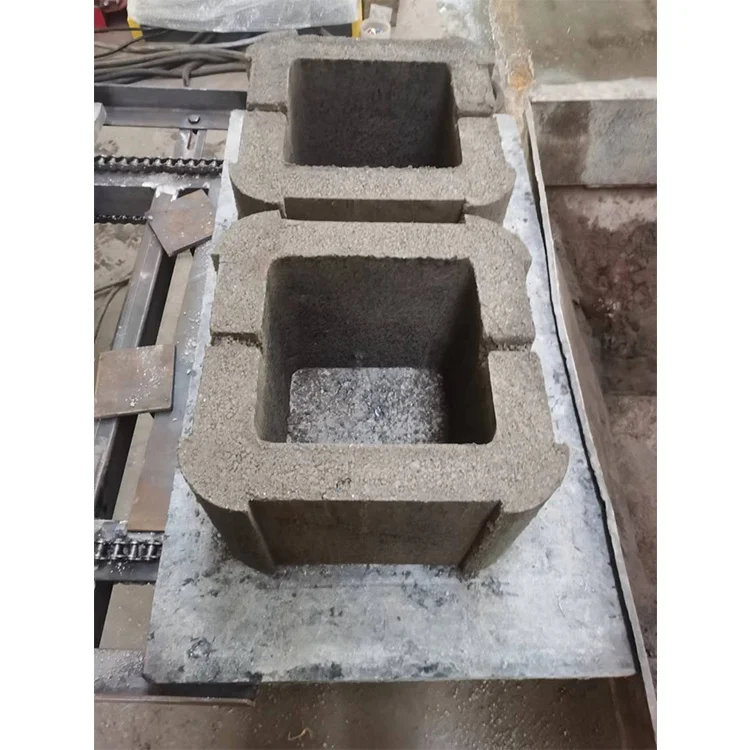
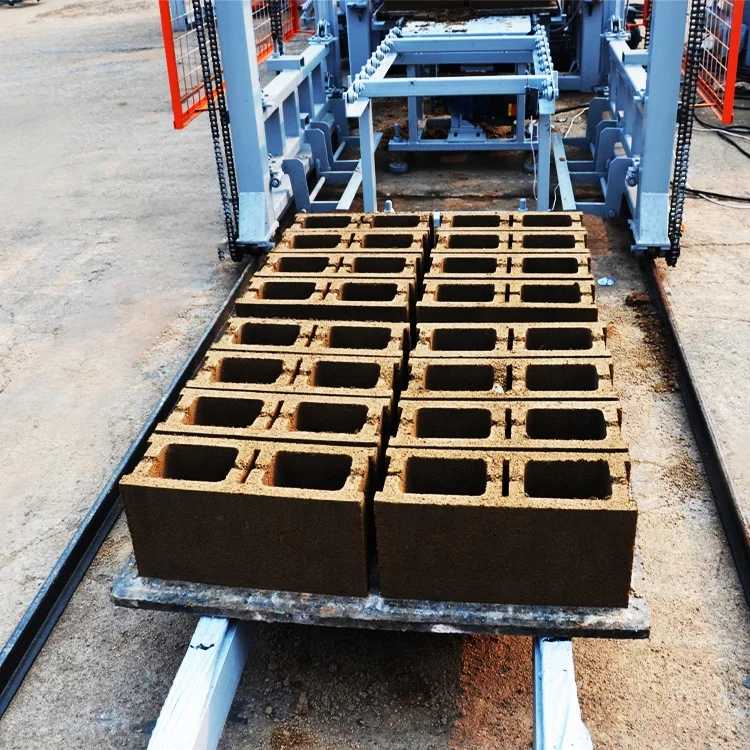
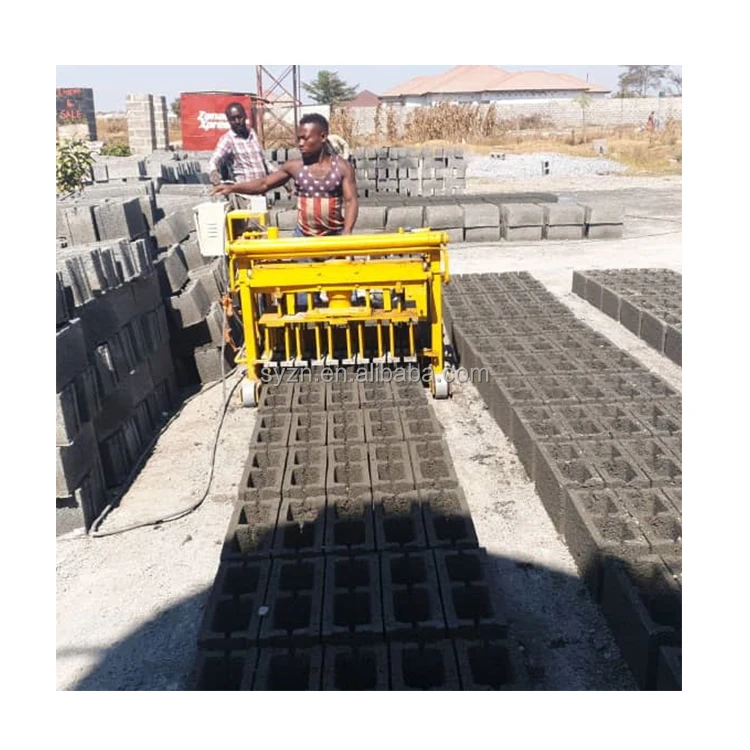
Matched System Design — every QTJ4-25 line we build pairs the press with pallet, mixer and curing rack so cycle time is never lost to a mismatched station.
Technical Specifications
| Parameter |
Value |
| Model |
QTJ4-25 |
| Product Type |
Automatic Concrete Block Making Machine |
| Overall Dimensions (L×W×H) |
6400 × 1500 × 2700 mm |
| Molding Cycle |
25 s (basis not stated in source — confirm block format and mix) |
| Vibration Frequency |
2800–5100 r/min |
| Exciting Force |
60 kN |
| Total Power |
17.9 kW |
| Mixer Model |
JQ350 |
| Pallet Size |
850 × 550 × 20 mm |
| Net Weight |
2500 kg |
| Applied Products |
Concrete hollow blocks (8 inch, 6 inch), solid bricks |
| Raw Materials |
Crushed stones, sand, cement, dust, fly ash |
| Control System |
PLC control |
| Automation Features |
Automatic plate-supplying, material-disturbing, brick-discharging |
| Output — 390×190×190 mm Hollow Block |
480 pcs/h, 3800 pcs/8 hr |
| Output — 400×150×200 mm Hollow Block |
600 pcs/h, 4800 pcs/8 hr |
| Output — 240×115×53 mm Solid Brick |
2100 pcs/h, 17000 pcs/8 hr |
Application Suitability
| Application |
Material or Output |
| Small-to-medium block plant start-up |
Hollow blocks from crushed stone, sand and cement |
| On-site production for housing projects |
Solid bricks using locally available aggregate |
| Building material distributor expanding range |
Fly ash blended hollow blocks and standard bricks |
| Contractor self-supply for masonry work |
6-inch and 8-inch hollow blocks from site material |
Why Capacity Figures Mean Nothing Without the Block Format
A cycle time only tells you the press speed; the block format tells you what you actually ship.
Buyers routinely compare machines on pieces per hour without asking which block was used to calculate that number. A 390×190×190 mm hollow block yields a very different hourly count than a 240×115×53 mm solid brick, yet both can roll off the same press. I have seen purchase decisions made on a single headline figure that turned out to assume the smallest brick in the catalogue, leaving the buyer disappointed when their main product ran slower. With the QTJ4-25 automatic block machine manufacturer quotations we issue, every capacity line carries its format assumption in the same sentence so there is no guesswork after arrival. [NEED_CITE: capacity calculation methods in block machinery tenders]

Where the QTJ4-25 Sits in the Full Range
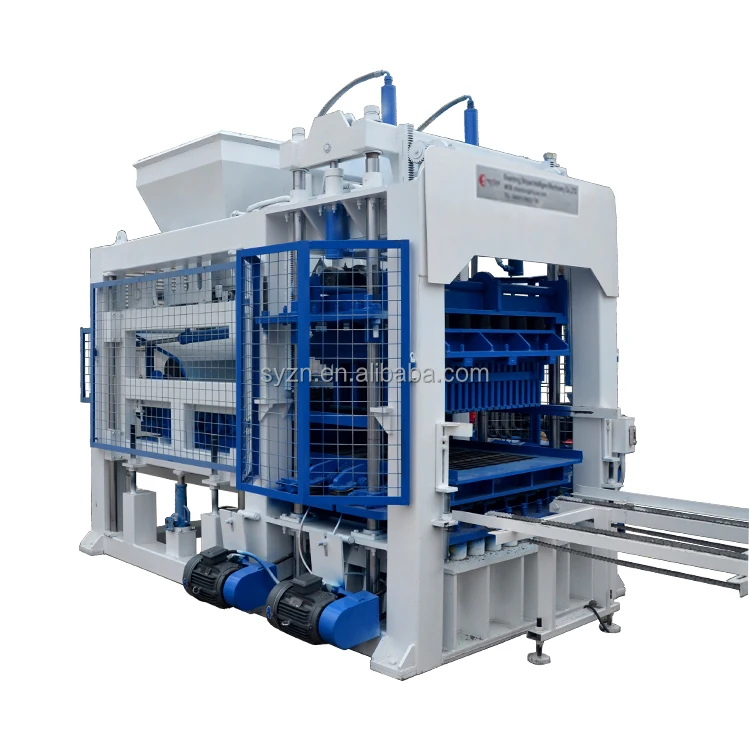
The QTJ4-25 occupies the mid-tier of our automatic lineup, aimed at plants that have outgrown manual pallet handling but are not yet ready for a fully automatic cubing and stacking circuit. The PLC-controlled cycle covers plate-supplying, material-disturbing and brick-discharging, removing the three heaviest manual tasks from the operator. For a buyer comparing options across our complete block machine range, this model offers the first step where one operator can run the press without a helper feeding pallets.
Stepping Up from Semi-Automatic Without Replacing the Press
Several buyers start with a semi-automatic machine and later want the automatic pallet feed and discharge the QTJ4-25 already includes. Because the control architecture is PLC-based rather than relay-wired, adding sensors and actuators later is a wiring exercise, not a cabinet rebuild. We have retrofitted earlier semi-automatic installations with the same plate-supplying and brick-discharging modules that ship standard on this model, giving those plants the next tier of output without a second capital outlay. [NEED_CITE: PLC retrofit pathways for block presses]
How Vibration and Pressure Shape the Block You Sell
The 60 kN exciting force paired with a 2800–5100 r/min vibration frequency range determines how densely the concrete packs into the mould cavity. Lower frequencies suit larger hollow blocks where the concrete must travel deeper before the mould fills; higher frequencies tighten the surface finish on thinner solid bricks. Hydraulic pressure then locks that density in place before the block leaves the press. If the vibration force is too low for your aggregate gradation, blocks crack during curing; too high and the mix segregates, leaving weak spots. We set the QTJ4-25 automatic block machine manufacturer frequency band against a trial mix made from your actual crushed stone and sand before the machine leaves the factory. The 850 × 550 × 20 mm pallet size is fixed so that the curing racks and forklifts you plan around the line match from day one, avoiding a situation where blocks are stacked by hand because the pallets do not fit existing racks. Total connected load of 17.9 kW means a standard 40 A three-phase supply covers the press, the JQ350 mixer and ancillary conveyors without a dedicated transformer.
What Happens When the Mould Change Takes the Whole Shift
A machine sold on format flexibility loses its value if the operator spends four hours swapping moulds. Quick-clamp systems that look simple in the brochure can seize after a week of cement dust exposure, turning a planned two-format day into a single-format week. Buyers who skip the mould-change rehearsal during factory acceptance often discover the problem only after the container is opened on site. [NEED_CITE: mould change time measurement standards in block machinery]
Why Buyers Choose This Range
Every quotation we issue for the QTJ4-25 includes a line layout that states the block format behind each output figure, so the capacity conversation ends before the contract is signed. The pallet specification is confirmed against your existing curing area and forklift dimensions, not picked from a default list. Voltage, frequency and PLC display language are locked in writing before production starts, eliminating the week-long delay of reprogramming a panel after arrival. Mould drawings and a format list ship with the machine, so you can verify which block sizes are covered without waiting for the manual to be translated. Our single-focus approach means the mixer, press, pallet and handling equipment are specified as one system rather than assembled from separate suppliers who blame each other when cycle times drift.
Documentation & Verification
- Line layout showing output per block format with cycle assumptions stated
- Machine specification sheet listing vibration force, pallet size and power draw
- Mould drawing set with every format the buyer has confirmed
- Voltage, frequency and PLC language confirmation sheet signed before build
- Factory test record run on buyer-supplied or agreed trial mix
Installation, Commissioning & Support
- 6400 × 1500 mm footprint requires a level slab with anchor bolt provisions
- 17.9 kW total draw needs a dedicated three-phase breaker at confirmed voltage
- Machine ships nude-packed in a 20GP container for straightforward unloading
- PLC display language set to operator preference before first power-on
- Spare vibration motor and hydraulic seal kit included for first-year coverage
- JQ350 mixer liner inspection scheduled at first 500-hour mark
Moving From Enquiry to Order
Send us the block formats your market actually buys, the daily volume you plan to hit and a sample or assay of your local aggregate. We also need your site voltage and frequency, the PLC display language your operators read, and the dimensions of your curing area so pallet circulation can be calculated. With that information we return a line layout and a quotation that states capacity per format, not a single headline number.
Frequently Asked Questions
Q: How is the QTJ4-25 capacity calculated and which block format does each figure assume?
A: We list output separately for each block size — 390×190×190 mm hollow, 400×150×200 mm hollow and 240×115×53 mm solid brick — so the figure you plan against matches the product you sell. No single headline number is used in quotations.
Q: Where does the QTJ4-25 sit compared to semi-automatic and higher-output models?
A: It is the entry point to our automatic tier, adding plate-supplying and brick-discharging to the PLC cycle. Buyers needing higher volume move to larger pallet machines; those with tighter budgets start semi-automatic and retrofit automatic modules later.
Q: What voltage, frequency and PLC language options are available?
A: Voltage and frequency are configured to your grid before production. PLC display language is confirmed in writing so operators can read alarms and menus on day one, avoiding commissioning delays caused by language reprogramming after arrival.
Q: Can I start with the QTJ4-25 and add automation later?
A: Yes. The PLC architecture allows additional sensors, automatic stackers or cubing units to be wired in without replacing the control cabinet. We have upgraded several semi-automatic installations to the same automation level this model ships with.
Q: What supporting equipment does the line require beyond the press?
A: The JQ350 mixer handles raw material blending, and the 850 × 550 mm pallet size determines curing rack dimensions. Raw material feeding, pallet return conveyors and manual or automatic stacking are specified in the line layout to match your target output per format.

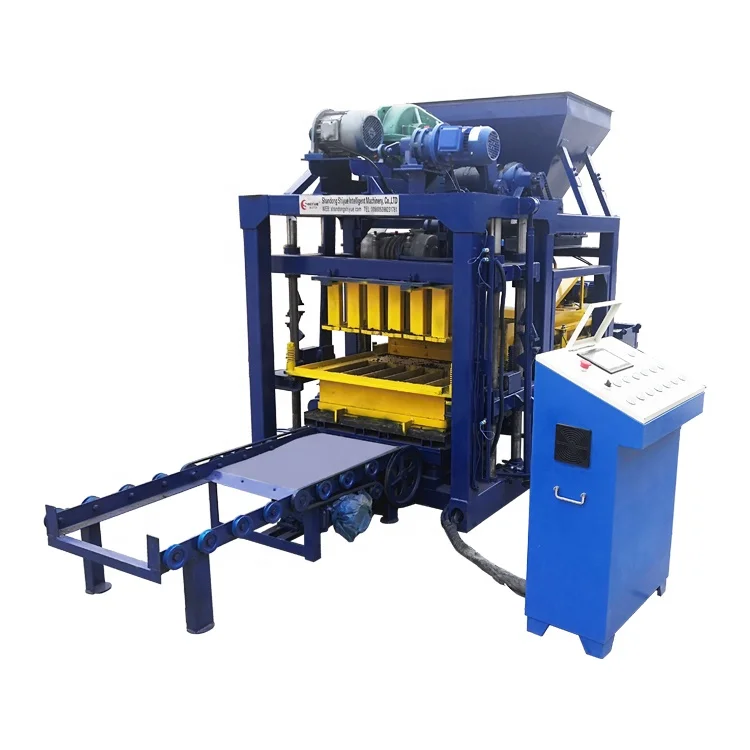
 High quality block machine