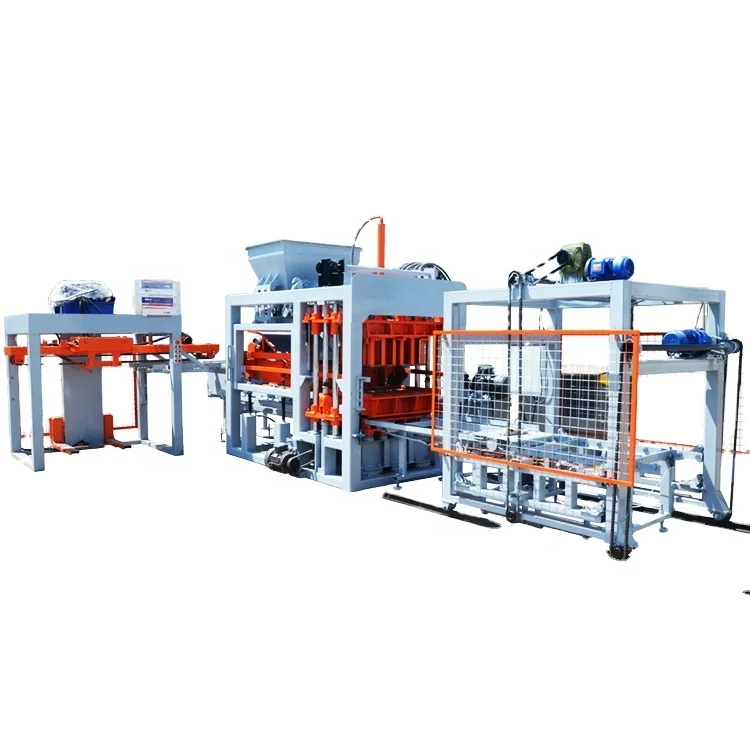
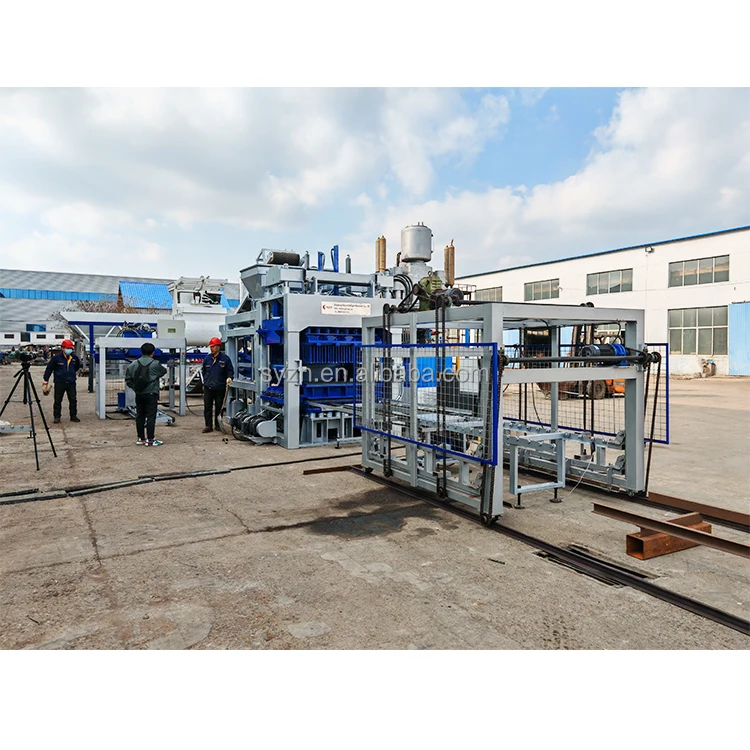
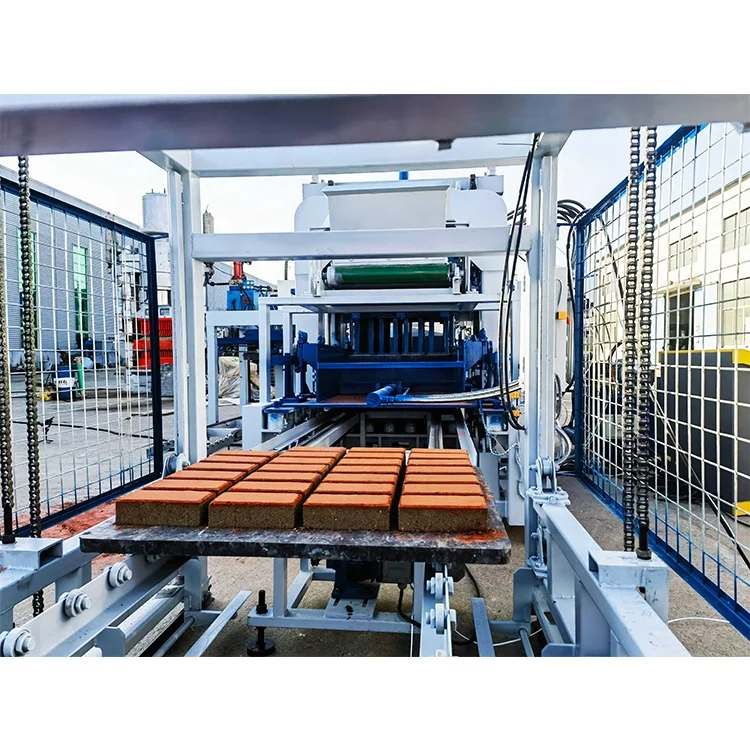
Block Machinery as Single Focus — the QTJ4-24 is specified as one matched system with pallet, mould and handling rather than assembled from separate suppliers.
Technical Specifications
| Parameter |
Value |
| Model |
QTJ4-24 |
| Product Type |
Manual Hollow Block Making Machine |
| Rated Power |
11.95 kW |
| Overall Dimensions |
3600mm × 1700mm × 2560mm |
| Net Weight |
3.5T |
| Pallet Size |
900mm × 450mm |
| Moulding Cycle |
24-26s |
| Vibration Type |
Table vibration feeding, fluctuation vibration moulding |
| Feeding Method |
Manual feeding (two feed ways available) |
| Control |
Electrical control with mechanical interworking |
| Automation Level |
Semi-automatic |
| Mould Format Options |
400×200×200mm (4 pcs/mould); 390×240×190mm (3 pcs/mould); 390×120×190mm (6 pcs/mould); 240×115×53mm (21 pcs/mould) |
| Compatible Line Equipment |
J350 / JQ350 / JQ500 mixer, 6m / 8m belt conveyor |
| Wire Specification (Main Machine) |
3×6mm² |
| Wire Specification (Mixer) |
3×4mm² |
| Wire Specification (Conveyor) |
3×2.5mm² |
| Assembly State |
Stationary, requires precast concrete ground foundation |
| Warranty |
1 year (excluding spare parts) |
Application Suitability
| Application |
Material or Output |
| Small-scale hollow block production |
Crushed stone, sand, cement, and water mix |
| Solid block manufacturing for local construction |
River sand or crushed granite aggregate with cement binder |
| Standard brick production for housing projects |
Clay-blended or fly ash mix depending on regional availability |
| Multicellular brick for lightweight wall systems |
Lightweight aggregate or pumice with cement matrix |
| On-site block production by contractors |
Locally sourced aggregate matching the mix design confirmed at order |
What "Blocks per Hour" Leaves Out When No Format Is Stated
Cycle time only matters once you know which block format that number assumes.
The block machine manufacturer catalogue often quotes a single output figure based on a best-case format. A buyer in West Africa once ordered a small machine rated for a specific daily tonnage, only to find that switching from a 200mm hollow block to a 120mm solid block changed the per-mould piece count and the vibration dwell needed for adequate compaction. The daily output dropped and the construction deadline slipped. The QTJ4-24 lists its moulding cycle at 24-26 seconds alongside every supported mould format and the pieces each mould produces, so daily output can be calculated per format rather than guessed from a headline number [NEED_CITE: importance of stating block format when quoting cycle-based capacity].

Where the QTJ4-24 Sits in the Output Range
The QTJ4-24 occupies the entry-level stationary tier. It is designed for buyers surveying their first block machine manufacturer option or replacing a worn-out unit without committing to a fully automatic line. The footprint is compact enough for a small workshop, and the capital outlay stays within reach for entrepreneurs testing a local market before scaling.
From Entry Tier to Higher Automation Without Replacing the Line
Because the pallet size is fixed at 900mm × 450mm across this tier, a buyer can start with the manual block making machine for sale and later add automatic pallet feeding, stacking, or cubing modules without discarding the curing racks and forklift setup already in place. The line pairs with JQ350 or JQ500 mixers and 6m or 8m belt conveyors, so supporting equipment can be upgraded incrementally [NEED_CITE: block plant upgrade paths from semi-automatic to automatic tiers].
Reading the Specs That Actually Shape Daily Output
The moulding cycle of 24-26 seconds is the mechanical rhythm of the press, but real output depends on how fast the operator feeds raw material and returns the pallet. Table vibration feeding moves mix into the mould cavity while fluctuation vibration moulding compacts the block from below, which together determine block density and wall strength at this tier. The pallet size of 900mm × 450mm governs how many blocks sit on each board and therefore how much curing rack space is consumed per shift. Electrical control interlocked with mechanical parts prevents the press from cycling when the mould is misaligned, reducing the kind of damage that takes a small plant offline for days. The 11.95 kW rated power is modest enough to run on a standard workshop supply without a dedicated transformer, which matters in areas where grid capacity is limited [NEED_CITE: power supply constraints in emerging-market industrial zones].
The Cost of Skipping the Raw Material Conversation
A manual block making machine for sale configured for a clean river-sand mix will struggle when the buyer’s local quarry supplies high-clay laterite. The vibration force and dwell time tuned for one aggregate profile will not compact a different one evenly, producing blocks with inconsistent wall density. Buyers who skip the raw material sample step often discover the problem only after the first production run, when rejection rates climb and the contractor demands a block strength test report [NEED_CITE: aggregate variability effects on block compressive strength].
Why Buyers Source This Tier Here
Block machinery is the single focus, so the QTJ4-24 press, its moulds, pallets, and handling equipment are specified as one matched set rather than sourced from unrelated vendors. Machine configuration is set against the buyer’s actual mix design and local aggregate, not a default catalogue page. Mould design covers the formats the buyer’s market sells, including custom drawings when a non-standard block dimension is required. The automation level is selectable, allowing a plant to begin semi-automatic and add modules as volume grows. Installation and commissioning support includes operator training on the specific controls and safety interlocks fitted to the unit.
Documentation & Verification
- Line layout and capacity calculation stating block format assumed for each output figure
- Machine specification sheet confirming 900mm × 450mm pallet matched to buyer’s curing area
- Mould drawing and format list showing included and optional custom formats
- Voltage, frequency, and control language confirmation record before production
- Factory test record on buyer’s target block format before dispatch
- Operation and maintenance manual covering electrical interlock and vibration system care
Installation, Commissioning & Support
- Precast concrete ground foundation required; dimensions provided with the 3600mm × 1700mm footprint
- 11.95 kW rated power supply with dedicated circuit and correct 3×6mm² cable specification
- Stationary assembly state means the main frame is bolted on-site after delivery
- First-run moulding cycle set to 24-26s and verified with buyer’s confirmed mix design
- Operator training on manual feeding method and electrical-mechanical interlock safety
- Wear parts list covering vibration motor mounts and mould liner replacements
What We Need to Size the Right Machine for You
Provide the block format your market sells most, the daily volume you need to hit, and the aggregate source available near your site. Confirm the local voltage and frequency, plus the language you want on the control panel. If you already own a mixer or curing racks, share their specs so the line can be matched around them.
Frequently Asked Questions
Q: How is daily output calculated for each block format on the QTJ4-24?
A: The moulding cycle is 24-26 seconds. Daily output is calculated by multiplying the pieces per mould — for example 4 pieces for a 400×200×200mm hollow block or 21 pieces for a 240×115×53mm standard brick — by the number of cycles achievable in a working shift, accounting for pallet exchange and feeding time.
Q: Where does this machine sit compared to higher automation tiers?
A: The QTJ4-24 is the entry-level stationary tier with manual feeding and semi-automatic control. Higher tiers add automatic pallet feeding, stacking, and cubing. The pallet size remains compatible, so buyers can upgrade supporting equipment without replacing the curing infrastructure.
Q: What plant footprint and foundation does the QTJ4-24 require?
A: The machine measures 3600mm × 1700mm × 2560mm and weighs 3.5T. It requires a precast concrete ground foundation. The compact footprint suits small workshops, and the curing rack layout is planned around the 900mm × 450mm pallet size and existing forklift capacity.
Q: Can I start with the QTJ4-24 and upgrade automation later?
A: Yes. The 900mm × 450mm pallet size is shared across tiers. Buyers can add automatic pallet feeding, stacking, or cubing modules as volume grows while keeping the same curing racks, forklifts, and floor layout established at the semi-automatic stage.
Q: What supporting equipment completes a line at this tier?
A: A J350, JQ350, or JQ500 mixer handles raw material blending, and a 6m or 8m belt conveyor feeds the press. Pallets, curing racks, and manual stacking equipment round out the setup. The wire specifications for each component are listed so the electrical contractor can plan circuits correctly.

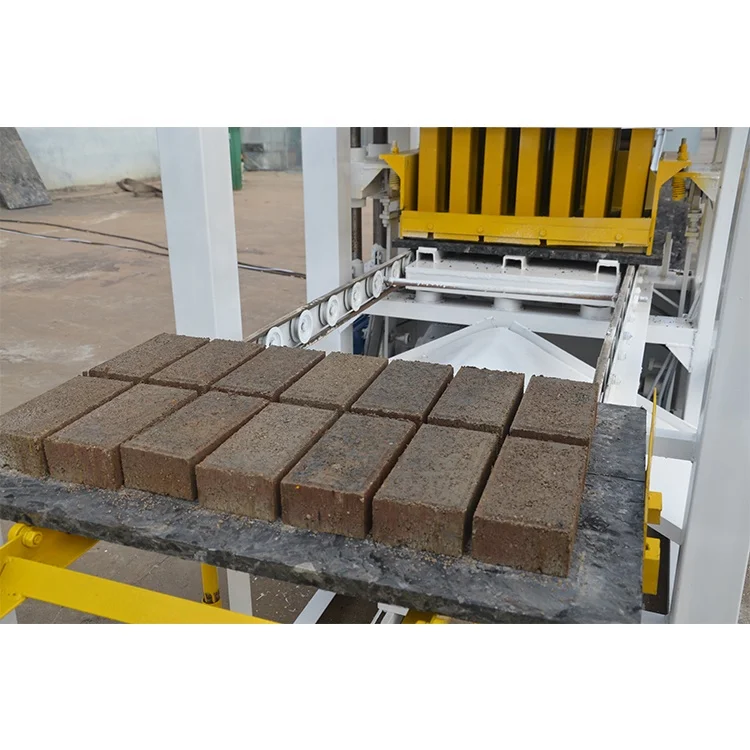
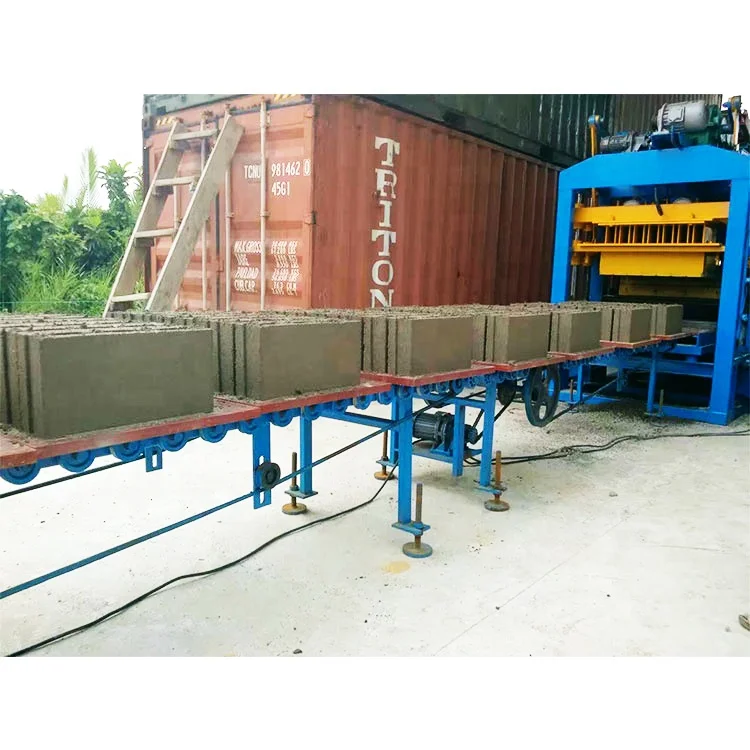 High quality block machine